In this sequel to Meems & Feefs: Ferrets from Planet Ferretonia, Meems & Feefs: The Council of Ferrets, Meems repairs the travel opal and opens a portal to return him and Feefs to Planet Ferretonia and brings Liza along for a visit. However, Meems and Feefs are in quite a bit of trouble due to creating and using banned technology and so must answer to the Council. Together, the three of them uncover more of the mysteries of the banned ancient technology of Ferretonia and Meems’ missing mentor…
Cooper’s world-building is incredibly detailed for a whimsical fantasy graphic novel series for children. The premise of a young girl meeting cute intelligent ferrets is a good one no matter what, but Cooper has developed a full society for her ferret characters as well as depthful lore that is revealed in parts throughout the story. Still, the premise is easy to follow as the human character Liza serves as the reader’s liaison to Meems and Feefs’ world.
Liza is more than just a projection of the reader though. The majority of the first Meems & Feefs book took place on Earth, and the reader was introduced to Liza’s life, and it seems like there is more to be revealed about Liza and her life back on Earth. Liza’s development takes a backseat to the ferrets and the revelations surrounding Ferretonia in this volume, so hopefully future volumes will explore her and some of the Earth characters a little bit more.
The art in Meems & Feefs is perfect for its charming and fantastical story. Cooper’s work is the epitome of a story made for the graphic novel format. Previously, Cooper worked as an Art Director for the animated web series Simon’s Cat, and that animation experience serves her well as a graphic novelist. Her dynamic panels pack a lot of movement into each page without being overwhelming. Her characters are expressive and unique – she is able to make each ferret individuals not only with physical design but with facial expressions as well. They are fully realized characters with their own emotions and motivations. There is one sequence in which Meems and the character Leeloo are trying to escape, and the reader can almost hear their banter instead of simply reading it due to the combination of Cooper’s panels and word bubble placements as well as the characters’ movements. Though the graphic novel format is perfect for the story, it almost feels like an animated series due to Cooper’s mastery of sequential art.
The publisher’s age rating for The Council of Ferrets is ages 10-12 and Grades 3-8. It definitely will appeal to that age range, but older teens and some adults who like a magical adventure with touches of whimsy and humor will enjoy Meems and Feefs’ adventures with Liza. The adventure is ongoing, so it is beneficial for readers to have read Ferrets from Planet Ferretonia before reading The Council of Ferrets, andhopefully their tale continues in future volumes. The Meems & Feefs books would make great additions to libraries with juvenile readers looking for a funny but intriguing fantasy series.
Meems and Feefs: The Council of Ferrets By Liz Cooper Andrews McMeel, 2025 ISBN: 9781524876715
Company Age Rating: Ages 10-12
NFNT Age Recommendation: Middle Grade (7-11), Teen (13-16), Tween (10-13)
Sara’s parents are traveling for work this summer, so she’ll be staying with her aunts while all her friends go to drama camp together. She’s disappointed, but trying to make the best of things. After all, Sara’s family is moving soon, and maybe being in a new place will help her get some practice at making new friends.
But as it turns out, Sara’s aunts live on an island, a boat ride away from the closest neighbors. And it’s not just any island: once you pass through the fog that surrounds it, things start to get magical. Here, trees and rocks and even the wind seem to have personalities. And animals can talk—including her aunts’ two friendly, chatty dogs, who can’t wait to spend the summer with Sara. So maybe she can still practice making new friends. They just won’t be humans.
That isn’t easy, at least at first. Sara is supposed to help with chores (like cleaning the chicken coop) and learn new skills (like paddling a rowboat to nearby islands), and she feels like she’s failing at everything. She doesn’t want to admit she’s struggling, which means she can’t ask for help. Finally, Sara realizes that you don’t make friends by pretending things are fine when they aren’t—you have to be honest, be yourself, and accept help. That’s when the magic really starts happening.
Small Magics is a charming story about a girl who goes from feeling lonely and adrift to connected and capable. The island setting is both whimsical and immersive, with lots of little magical twists for Sara to learn, and lots of settings visited and revisited enough for them to feel like real places. The dogs—who are the characters Sara spends the most time with – are kind and fun-loving, with a bouncy energy that feels very dog-like, but also each with their own hobbies, interests, and fears. They are especially excited to have another human around because, despite accommodations that Sara’s aunts have made, lots of things in their world are still easier to navigate with opposable thumbs. (For instance, dogs can’t row boats. Though one of them can, if absolutely necessary, use the outboard motor.) But of course, there is also plenty they can do that humans can’t, and we get glimpses of their particularly doggy senses and sensibilities.
The artwork is colorful and feels casual even while sometimes being quite detailed. The poses are active and expressive, making good use of postures and the dogs’ ears as well as regular human facial expressions. The outlines are often loose, sometimes barely there, but the colors keep everything clearly defined, and their brightness adds to the art’s playful energy. Much of the creator’s art experience is in background painting, so it’s not surprising that the book has some lush, beautiful settings and backdrops.
Small Magics is a sweet read with humor, heart, and an inventive fantasy setting. Hand it to fans of cozy fantasy or anyone who likes gentle Studio Ghibli vibes.
Small Magics By Emily Tetri Macmillan First Second, 2026 ISBN: 9781250855640
Company Age Rating: 8-12
NFNT Age Recommendation: Middle Grade (7-11), Tween (10-13)
It’s 1999, Sara is about to start sixth grade, her first day of school since her family’s moved to a new house. She’s excited to join a new club but even more excited to spend lots of time with her best friend Monica since they didn’t get to see each other much this past summer. It’s going to be a great year! That is, until Sara wakes up to discover her legs are suddenly… hairy.
Mixed Feelings by Sara Amini and Shadia Amin is a colorful fun semi-fictional memoir of Amini’s own childhood. The book follows Sara through her sixth grade year as she starts dealing with puberty and the dynamics of middle school life. On top of this newfound hair she’s discovering on her legs (and arms… and eyebrows), Monica has a new best friend from her summer camp and Sara can’t seem to escape the two of them, making her feel like a left out third wheel. There’s some standard touchpoints of a first year in middle school story but Amini’s storytelling works in such a way it never feels redundant or overdone.
In an attempt to try something new and fulfill her goal of joining a club, Sara joins drama club, landing a lead role after her first audition. All that time spent watching television is finally paying off! The drama club and the upcoming play are a solid backbone to the story. The depictions of the intricacies of drama clubs and the pre-show warm up games are a particular highlight; any reader who spent time in a drama club will find them very familiar.
As the mixed race daughter of immigrants, Sara begins facing uncomfortable questions and exclusionary remarks from peers at school and her Farsi classes. She’s not Colombian enough, she’s not Iranian enough, she’s not Catholic, she’s not Muslim, so what is she anyway? There’s multiple scenes of other kids belittling her identity with appropriately angry and frustrated reactions from Sara. She watches her mother being discriminated against for her language and accent firsthand. Her pride in her parents’ backgrounds and their respective cultures grows as the story continues, which could be a source of inspiration for young readers dealing with similar experiences themselves.The text features bits of dialog in both Spanish and Farsi throughout the book and includes a glossary at the end.
While it does have serious moments throughout, Mixed Feelings is overall a very fun graphic novel. The scenes of Sara’s ongoing newly sprouted hair drama and subsequent secret shaving are laugh out loud funny. So are many of the moments with her family, especially with her dad. Amin’s art includes great facial expressions that jump off the page, with lots of colors in the panels. The art sets the mood for the story and works alongside the emotions perfectly. For readers interested in retro pop culture, including those beyond their middle grade years, there’s a lot of great 90s references hidden in the very detailed art too.
The first in a new series, Mixed Feelings is a delightful addition to the ever growing collection of middle grade graphic novels. Amini’s love of her family and reflection on her own childhood shines through the story; Amin’s art complements this perfectly. The story deals with serious topics while making you laugh on the next page. Readers will be excited to follow Sara’s story through to the next book in the series.
Mixed Feelings By Sara Amini Art by Shadia Amin Scholastic GRAPHIX, 2026 ISBN: 9781338797398
Company Age Rating: 8-12
NFNT Age Recommendation: Middle Grade (7-11), Tween (10-13) Creator Representation: Colombian-American, Iranian-American, Character Representation: Colombian-American, Iranian-American,
The rules of the game are simple: don’t get tagged, don’t cross the Uphill/Downhill dividing line, and no adults allowed. If you get tagged, you’re immediately placed in the other side’s jail (until the streetlights come on, until the school year starts). Passed down through generations, everyone in Lakeside knows these rules are integral to keeping this decades long capture the flag game going. Newcomers must complete a puzzle in order to show their responsibility and be sworn into the game. When Fred’s family moves to Lakeside, he spends his summer playing The Endless Game, a summer he and the town will never forget.
The Endless Game, written by J.D. Amato with art by Sophie Morse, is a new middle grade graphic novel focusing on Fred’s first summer in his new town. He’s not happy his family’s moved again but almost immediately meets his fellow Downhill kids. After passing the entry test, Fred is sworn in as a member of the Downhill by the Council of Homeschooled Kids and quickly learns all about Lakeside’s infamous game. There’s DIY castles, root beer speakeasies, and bike races, plus years of lore and history to catch up on. As the summer flies by, Fred learns that the game always takes priority, even if winning never seems fully possible.
At home, Fred’s mom is glad he’s made friends and has finally fit in somewhere. She deals with her own job hunting struggles, something hinted at off page and in larger spreads, but not a main focus of Fred’s energy. His dad’s absence, however, is strongly felt throughout the story. Fred just wants his dad to finally move to Lakeside to be with his family, a move being held up by his work situation. They’re all tired of having to uproot their lives for his dad’s job and just want him to be home with them in this new place they love. Amato weaves the more emotional family touchpoints into more of a background plot, while still being a crucial element of Fred’s summer.
The Endless Game reads like the best kind of kids summer movie from the 80’s or 90’s but written for the kids of today, giving it a very timeless feeling. It takes place in a pre-cell phone time, seemingly the 90’s, without constant references to cultural touchpoints of the time, making it enjoyable and welcoming for readers of all ages. The kids of Lakeside are diverse, one benefit of this modern graphic novel over some existing classic “kids in summer” stories, and many young readers will see someone similar to themselves.
Morse’s art is lively, full of motion and movement, an excellent complement to the action-packed story. The colors are warm summer tones to go along with its seasonal setting. The characters are very expressive. One particular highlight is the spreads at the beginning of each chapter, which often feature quick looks into Fred’s life and family beyond the game.
The Endless Game is a fast-paced graphic novel full of summer fun for middle grade readers. It will appeal to readers looking for slice of life graphic novels and those looking for exciting action in their graphic novels. While it is intended for ages 8 to 12, it has appeal beyond that in both directions, as well as older readers as well. It is an excellent summertime read.
The Endless Game By J.D. Amato Art by Sophie Morse Simon & Schuster Books for Young Readers, 2026 ISBN: 9781665927154
Company Age Rating: 8-12
NFNT Age Recommendation: Middle Grade (7-11), Tween (10-13)
Huw Aaron, a Welsh cartoonist, debuted in the US with the picture book, Sleep Night, Disgusting Blob. His first middle grade graphic novel shows a similar sense of humor along with skillful plotting and exuberant art.
After introducing the world of The Garden and the Tree Fairies who live in Oakhold, the story immediately jumps into the Root Stores where an enthusiastic brawl is taking place and we meet Pip, a red-haired, nobody fairy who has wandered into the Root Stores. He’s taken in by the outcast fairies there, but quickly realizes it’s not the place for him (after about four minutes) and happily agrees to take important news up the tree to “The Department.” On his journey he’ll meet a plethora of characters, from a lowly receptionist who always follows the rules to a guard recruit trying to live up to their father’s reputation, to the most important fairies of all. Of course, being Pip, along the way there is chaos galore until he finally saves the day and becomes the hero… or does he? The story ends with a shocking revelation that paves the way for a sequel.
Aaron’s art is bright and the action moves rapidly from panel to panel. Pip is shown as a diminutive, white creature with pointed ears, a wild fluff of red curls and an irrepressible grin. Along the way he meets fairies and creatures of all colors, from green to brown, and body types that range from round and squishy to sharp and pointy. The characters range from grotesque to cute and their backgrounds are messy scrawls of orange, brown, green, and blue. The action-packed panels are periodically interrupted by full spreads showing detailed drawings of the garden, oak tree, or large scale images of important events like meetings of the council or a battle with the vegetable fairy sheriff, a swollen orange character with a leaf toupee.
Although the story is, on the surface, a light-hearted tale of Pip’s anarchic tendencies and goofy antics that drive his new friends wild and accidentally save the day, there’s also a lot of thoughtful commentary below the surface about abuse of power, the dangers of following rules without question, and questioning authority.
Readers who like Dog Man-style antics and enjoy goofy fantasies will be delighted by this series starter and eager to read more of the misadventure of Pip and the fairy world of Oakhold.
Unfairies: A Graphic Novel By Huw Aaron Penguin Random House, 2026 ISBN: 9798217005758
NFNT Age Recommendation: Middle Grade (7-11), Tween (10-13)
Nathan Hale’s Hazardous Tales is a wildly successful series of historical stories told in graphic format. He’s also written short stories with the same style for various anthologies. In his 13th book in the series, he goes full tilt into the short story format with a series of creepy, gross, terrifying, and weird stories, most, but not all, centered around the United States.
The story is framed by his original narrators and characters from history—Nathan Hale, the hangman, the British provost, and, added in Major Impossible, Bill Richmond. Hale starts the story with his narrators peering at a sketch of the front cover, with the historical Nathan Hale explaining that “this book was created by hand by a real human artist.” There’s a humorous warning at the beginning about the scary content, then the framing plot opens.
The four narrators are sheltering from the rain under the gallows and decide to tell scary stories, starting with Captain Hale. Since it’s his thirteenth tale, he tells a scary story about a thirteen baby—the Jersey Devil. Black and white art, picked out with spots of green, illustrates the gruesome creature and its victims, ending with a short discussion on folklore and history. The provost demands a true story, so Hale begins “A Sip of Radiation” and the backgrounds glow a ghostly green as he tells the true story of Radithor, radium-infused water. The story jumps between Curie’s discovery of radium and the effects of Radithor on a welathy young man, Eben Byers, who died a gruesome death due to the “miracle cure” and ends with the radium girls and a creepy correlation between overuse of radium and the possible effects of unlimited internet use. The stories continue with the ghostly “The Demon Cat,” a grotesque tale from Edgar Allan Poe, “Hop-Frog,” and more. They include snapshots of US history, like a dream of Abraham Lincoln, a ghost story from the Civil War, and, of course, reappearances of the Jersey Devil.
Bill Richmond’s contribution, “The Boo Hag” is framed in a slightly darker green and features a cast of Black characters with creepy fleshless monsters, and placid, swirling waters in the South Carolina Sea Islands that hide dark secrets. Hale switches to a sharper contrast in “The Head in the Jar” which features the folk legend of Joaquin Murrieta. Stark white backgrounds on the small panels show the bare desert of the stockades and Gold Rush towns then switch to a mass of grays as Murrieta suffers and reenacts his vengeance in the dark of night.
The story ends with a transition that takes the readers to Denmark and introduces the berserkers of the title. Hale’s characters in this tale show sharply defined faces with pointed, craggy noses and long-haired, narrow faces contrasting with bulky, bearded warriors and fleshy tyrants. The story comes to a gory and dark end, featuring monstrous beasts and dense, packed panels showing heroes battling creatures in the dark. The stories return to the US and the true crime story of “The Butler Goes Berserk” featuring the mysterious crimes at Frank Lloyd Wright’s estate, Taliesin, committed by his butler, Julian Carlton. The collection is finished with a goofy story from the hangman, framed in glowing green and a final appearance of the Jersey Devil.
Hale ends the book with his usual meticulous research; in this case he adds additional information to the sources explaining which parts of each story are factual and which are folklore or legends. He also includes an encouragement for readers to explore short stories and some recommendations and sources.
This is a fitting transition to twelve wonderful historical graphic novels and hopefully marks the beginning of a new set of these histories. It’s also a fun way to get readers to try something new as well as stop to think a little more deeply about the media and stories they consume, since Hale includes lots of discussion points throughout the story as well as plenty of gore, monsters, and creepy happenings. A sure bet for middle school readers and anyone who enjoys creepy stories and interesting historical tidbits, this will delight both old fans of Hale and those new to his work.
Nathan Hale’s Hazardous Tales: Bones and Berserkers By Nathan Hale Abrams, 2025 ISBN: 9781419773204
NFNT Age Recommendation: Middle Grade (7-11), Teen (13-16), Tween (10-13)
This is a relatively new series, focusing on creepy or mysterious stories. However, although written by the same author, the first two books in the series are very different.
In the first title, Area 51, Steve Foxe teams up with Fran Bueno to present a slightly creepy but generally informational explanation of the theories, legends, and facts around “Area 51.” The framing story is a young boy attending his unknown uncle’s funeral. TJ, uncomfortable in a black suit with slicked-back red hair, sneaks off on his own and discovers a secret room in his uncle’s house with CIA classified documents. Bueno illustrates this portion like a, as TJ says, “history textbook.” There are images of Eisenhower, a history of the CIA, an explanation of the popular understanding of the events after nuclear testing, and up through the formation of, and public knowledge, of what came to be known as Area 51.
Throughout this section, the colors vary between dull, sandy browns with a few bright reds showing imagined images of mutants and aliens. The story leads up to the development of aircraft meant for intelligence missions and these planes are shown in sleek blacks with secret night-time scenes in dark blue. As TJ continues reading the files, he is interrupted by men in black suits and his mother and he hastily finishes the tales up through the current day, from humorous denials from public figures like Bill Clinton to a thoughtful look at how conspiracies form and current speculations about Area 51. The story ends with an anticlimactic confrontation with the suited men and TJ returns home with his parents, a single bright disc shooting across the night sky.
The second title, Unwanted Guests, features a different illustrator, Naomi Franquiz, and blends several “true” ghost stories into the framing story. Franquiz’ art in the opening story is colorful and includes lots of folds and lines in clothing as well as the background. Foxe sets the framing story by introducing a biracial family moving to a new neighborhood. Minnie, the younger sister, has thick black eyebrows, an exuberant bush of brown curls, a missing tooth, and freckles. She’s dressed in blue overalls and a pink striped shirt. She’s followed by her older brother Jackson. His curls are shaved on the sides with a pompadour style on top and he wears khaki pants and a bright checked orange and yellow sweater. The two siblings bicker over mysterious stains and noises until their dad, with darker skin and a chinstrap beard, sends them off to the park to play. At the park they meet “Theo” a spookily pale kid who presents Asian. Franquiz continues the bright colors with a reddish playscape surface and bright autumn colors in the leaves.
Theo drops hints about their house and then tells them two scary stories. In the first story, a ghost tale from the 1920s, Franquiz switches to a more subdued palette with sepia tones that contrast with the brightly colored contemporary neighborhood. Minnie and Jackson interrupt for explanations of terms like spiritualism and poltergeists and Theo ends the story on an ambiguous, creepy note. After a very nervous night, the siblings approach Theo again and he tells them a second story about yet another Minnie – Minnie Clyde Winston and her bleeding house. This story, which is from the late 1980s, has brighter, more contemporary colors. Minnie is shown as a Black woman with light skin and curly hair and the pools of inexplicable blood are a viscous red. There are a few gruesome images of blood-drenched monsters but the story fades away as Minnie gradually denies the events to reporters to get some peace. As the story ends, readers return to the bright autumn park and Theo hints at a third story, about a young boy named Theodore who disappears in an attic… echoes of the earlier stories he told are revisited in the siblings’ experiences that night and the book ends with a final, ghostly shiver.
Both titles include sources for the unsolved mysteries, but the first book has a more straightforward, historical approach which is mirrored in the simpler, more basic tones of Bueno’s art. The second book, with the lengthier and creepier framing story, has a more gruesome tinge which pairs well with Franquiz’ colorful art and heavily emphasized lines. While both books will appeal to young readers, the first is more likely to interest those who already have an interest in aliens, unsolved mysteries, and history while the second will appeal more to fans of ghost stories and scary tales.
Archives of the Unexplained By Steve Foxe Art by Fran Bueno, and Naomi Franquiz Macmillan First Second, 2025
Volume
ISBN
1 Area 51
9781250850287
2 Unwanted guests
9781250850263
NFNT Age Recommendation: Middle Grade (7-11), Tween (10-13)
A lunchtime party under the bleachers leads to a group of middle schoolers facing a week of detention. Except instead of regular old boring detention, they’re roped into helping out with the school’s new Enviro-Club. In The Greenies by Emma Mills, with art from Sarah Nicole Kennedy, readers meet kids just like them who want to make their world a more environmentally friendly place and have some fun doing it too.
After her parents’ divorce, Violet moved to St. Louis with her mom, where she’s about to start a brand new school halfway through the school year. She’s thankful for having her cousin Kris there to help out but she mostly plans on relying on faking it till she makes it. When she gets invited to the Best Under Bleachers Party of the Century, she figures it’s a great way to meet her classmates. It’s fun, everyone’s having a good time… until they’re caught by a teacher who makes them clean up and assigns a week’s worth of detention to all the kids under the bleachers.
This week of detention turns into forced participation in the Enviro-Club, a group with a very passionate leader but very little interest from other students. The Greenies take on tasks around the school to make it into a greener, more beautiful space. There are some mishaps along the way, including a big one involving the mysterious 4th floor of their school and missing recycling, but there’s lots of joyful and funny moments. One standout is when the group rescues a chipmunk at school, which animal lovers will appreciate. The group also deals with some minor infighting and squabbles, showing readers that even when you’re working together, sometimes personalities and ideas will clash and it’s okay.
As the first book in a new middle grade graphic novel series, much of the action and story in this particular book involves the group as we get to know them, with a special focus on Violet as our main character. She realistically struggles with sharing her true emotions and trying her best to fit in at a new school in a new city. She misses her friends from home and seeing her dad everyday. Mills’ writing does a good job including these emotions in the novel without them overtaking the storyline. Yes, Violet is the main character but there’s more to the story than just her.
Kennedy’s art complements the story perfectly and is pleasantly reminiscent of other popular middle grade graphic novels, a selling point for voracious graphic novel readers. The characters in the book are diverse and expressive, with their facial expressions being a particular highlight for how realistic they are and their part in driving the book forward.
The Greenies is very focused on social responsibility and how small acts can make a difference. This particular aspect of the group makes it a fine choice for a classroom or book club read, where readers can consider what they can do and work together to make changes like the group does. The focus on a neighborhood clean up makes it an excellent springtime choice that may spur middle grader readers into action in the environment around them.
The Greenies By Emma Mills Art by Sarah Nicole Kennedy Macmillan, 2026 ISBN: 9781250815767
Company Age Rating: 8-12
NFNT Age Recommendation: Middle Grade (7-11), Tween (10-13)
Stories can make you sigh for all sorts of reasons. Frustration, contentment, resolve. Angelica and the Bear Prince, published by Random House Graphix in October 2025, pulls a deep, comforting, swoon-like sigh from the reader, at least this reader. This is a cup of cocoa of a graphic novel. A warm, joint popping hug of a graphic novel. A fully broken-in hoodie of a graphic novel. It’s the best kind of sweet, romantic, comfort read.
Angelica and the Bear Prince, author/illustrator Trung Le Nguyen’s follow up to the award winning The Magic Fish, is a very loose reimagining of the Norwegian fairy tale East of the Sun and West of the Moon. It follows Angelica, Jelly to her friends, who is picking herself back up after hitting a pretty serious burnout wall. Jelly is an over-achiever and a people-pleaser who got so wrapped up in her desperation not to disappoint people that she ran herself right into the ground.
With perfect timing for her to realign herself, Jelly gets an internship at the theater company that was her happy place as a child. She gets to spend the whole winter stage managing her favorite play with her best friend Christine who is starring opposite the play’s lead and the theater’s mascot Peri the bear in Jelly’s favorite play. The mascot whose social media account Jelly has developed a pen pal style relationship with. The mascot who is embodied by a figure from Jelly’s past who is desperate to reconnect with her. The reveal here and the shift in their relationship takes a while to develop but is so, so satisfying.
Per Nguyen, this is a story about grief and it drips off every page. The grief that comes with growing up, grief of mourning a loved one, grief of dealing with mental health struggles. And with all that heaviness, this is an incredibly light, hopeful graphic, partially because of Nguyen’s stunning art. The illustrations are like a manga processed through a Disney lens, giving the graphic a bright, beautiful flow that is incredibly easy to read. The characters feel lived in and real and their hopes and struggles are incredibly relatable. The story is romantic and sweet and so beautifully told.
One of my favorite things about this graphic is that all the characters are given room to grow. So frequently in stories like this anyone who is not the central romantic couple just fade into the background, but Nguyen doesn’t fall into that. Jelly’s mom, still mourning the loss of her own mother, is anxious and uncertain and desperate to help her daughter grow while keeping Jelly her little girl. The stern manager of the theater is learning how to keep loving after their own loss and massive life changes. Christine, who easily could have been relegated to the barely-seen-best-friend role or the focus of Jelly’s jealous for landing the lead role of the Princess in the play, is a ride or die bestie throughout both being there for Jelly to lean on and going to her for support when she realizes her relationship isn’t what she deserves.
Angelica and the Bear Prince is such a lovely, cozy graphic. Teens and preteens alike can easily get wrapped into the romance and coming of age elements of the story and the focus on transformation and growth. It’s a legit pleasure to read.
Angelica and the Bear Prince By Trung Le Nguyen Penguin Random House Graphic, 2025 ISBN: 9781984892669
Company Age Rating: 12+
NFNT Age Recommendation: Older Teen (16-18), Teen (13-16), Tween (10-13) Creator Representation: Vietnamese, Nonbinary , Character Representation: South Asian, Trans, Anxiety, Depression
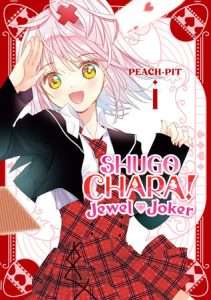
Amu Hinamora sometimes feels like an anxious mess, but seen from the outside, she’s popular and cool. It helps that she’s one of the Guardians: rare kids who have tiny magical companions called Guardian Characters, which grant special powers. In fact, where most Guardians have a single Guardian Character each, Amu has four. Perhaps it’s no surprise that she is chosen for a special mission: unraveling a mystery at a prestigious but strange middle school called Arcana Academy.
In the world of Shugo Chara!, every child has an egg in their heart that represents an ideal version of themselves that they want to be. Most children never discover their eggs, but some rare eggs hatch into tiny chibi people called Guardian Characters. Guardian Characters mostly hang around offering commentary, but they can also help their Guardians transform into powered-up versions of themselves.
Arcana Academy has a problem: students are losing confidence in themselves, which can turn their eggs into X Eggs. These hatch into not heroic and helpful Guardian Characters but mischievous and dangerous X Characters. As a Guardian, Amu specializes in restoring X Eggs. That’s her main mission at Arcana Academy, but she also has a secret assignment: to learn about the Academy’s powerful treasures, the Arcana Jewels.
This is a cute adventure with lots of humor. Amu is an entertaining protagonist: since readers can see her thought bubbles, we know when, beneath her Cool Girl exterior, she’s confused or panicking or paying less attention to her mission than to her crush’s cute school uniform. Her four Guardian Characters can also see her thoughts, and they have lots to say about them, which is often funny.
Guardian Characters are a fun element: each one represents an aspirational version of their Guardian, often in an over-the-top way. For instance, Amu’s crush has a princely, chivalrous personality; his Guardian Character is an actual king who gives him the ability to transform into a monarch in full regalia and use a defensive power called Holy Crown. Amu’s four Guardian Characters have personas ranging from artistic to athletic, and enable her to transform into four different superpowered versions of herself.
The supporting cast adds to the fun. There’s Amu’s crush, whose sweet personality contrasts humorously with his tyrannical Guardian Character. Another Arcana student, Niya, is a video streamer with a pair of cat ears (thanks to his Guardian Character being an anthropomorphic cat), lots of silly energy, and a crush on Amu. Amu’s new roommate is so shy and quiet that for awhile Amu doesn’t realize there is another person in her room at all.
The Guardians’ transformations and magical powers have major magical girl vibes, complete with elaborate outfits. The art throughout the manga is rich with detail, from the gothic architecture of Arcana Academy to the flowers, stars, bubbles, and sparkles sprinkled through the backgrounds. Playing card suits are a major theme: Arcana Academy’s four dorms are Heart Tower, Diamond Tower, Spade Tower, and Clover Tower, and are decorated with the corresponding symbols (“clover” being clubs). The four suits also appear on Amu’s four Guardian Characters and seem to be connected to the Arcana Jewels.
At the end of this volume is a collection of translation notes to clarify elements of the story that are otherwise hard to translate. For instance, the headmaster of Arcana Academy uses a Japanese counting word that implies that Guardian Characters are objects, while everyone else counts them using the word that is used for people. The notes offer a fascinating glimpse into the differences between Japanese and English and the ways translators try to bridge them.
There is a brief introduction to the main cast and the concept of Guardian Characters at the beginning of the book—a helpful reference, especially for readers new to Shugo Chara! With a new setting and largely new cast, this volume can stand alone or serve as an entry point to the series, though new readers may get a sense they are missing a little bit of context. Still, the story holds up well on its own as a light, fun magical-girl-style adventure.
Shugo Chara! Jewel Joker By Peach-Pit Kodansha, 2026 ISBN: 9798888777107

 In this sequel to Meems & Feefs: Ferrets from Planet Ferretonia, Meems & Feefs: The Council of Ferrets, Meems repairs the travel opal and opens a portal to return him and Feefs to Planet Ferretonia and brings Liza along for a visit. However, Meems and Feefs are in quite a bit of trouble due to creating and using banned technology and so must answer to the Council. Together, the three of them uncover more of the mysteries of the banned ancient technology of Ferretonia and Meems’ missing mentor…
 her friends go to drama camp together. She’s disappointed, but trying to make the best of things. After all, Sara’s family is moving soon, and maybe being in a new place will help her get some practice at making new friends.
 a new house. She’s excited to join a new club but even
  line, and no adults allowed. If you get tagged, you’re immediately placed in the other side’s jail (until the streetlights come on, until the school year starts). Passed down through generations, everyone in Lakeside knows these rules are integral to keeping this decades long capture the flag game going. Newcomers must complete a puzzle in order to show their responsibility and be sworn into the game. When Fred’s family moves to Lakeside, he spends his summer playing The Endless Game, a summer he and the town will never forget.
  with the same style for various anthologies. In his 13th book in the series, he goes full tilt into the short story format with a series of creepy, gross, terrifying, and weird stories, most, but not all, centered around the United States.
 boring detention, they’re roped into helping out with the school’s new Enviro-Club. In The Greenies by Emma Mills, with art from Sarah Nicole Kennedy, readers meet kids just like them who want to make their world a more environmentally friendly place and have some fun doing it too.
 Random House Graphix in October 2025, pulls a deep, comforting, swoon-like sigh from the reader, at least this reader. This is a cup of cocoa of a graphic novel. A warm, joint popping hug of a graphic novel. A fully broken-in hoodie of a graphic novel. It’s the best kind of sweet, romantic, comfort read.
 Guardians: rare kids who have tiny magical companions called Guardian Characters, which grant special powers. In fact, where most Guardians have a single Guardian Character each, Amu has four. Perhaps it’s no surprise that she is chosen for a special mission: unraveling a mystery at a prestigious but strange middle school called Arcana Academy.
