Tasha is absolutely thrilled to relive her Gramp Abominable’s stories of Camp Yeti, even if things will look a little different. Due to the low numbers of yetis, she’s convinced her parents to turn it into Camp Monster and welcome everyone, but things don’t go as expected.
The new campers—and Tasha’s cousin—don’t seem to appreciate the traditions or the changes at Camp Monster and there are lots of clashes from mischievous goblins using their magic to a nervous werewolf who doesn’t want to learn to swim. Even worse, there are rumors and signs of humans in the area! Will Tasha get to experience the joys of summer camp as she’s imagined or will the camp have to close down as soon as it’s reopened?
Falynn Koch has previously collaborated with Kate Messner, but this is her first fully fictional graphic novel; her previous titles included entries in the Science Comics and History Comics series. Her art is well-suited for middle grade fiction, leaning towards simple lines and colorful images. Koch introduces the diverse monsters at the beginning of the book, combining with Messner’s dialogue to create individual portraits of each creature. Tasha and her cousin Kami have fluffy white fur, curved yellow horns and yellow tongues, varying shades of blue skin on their face masks, hands, and feet. Kami wears a blue fedora, making it easy to tell the yetis apart. The campers include a pair of green goblin twins, with slightly different fur patterns, a nervous red werewolf, soccer-loving vampire in shades of purple, ballet-loving ogress with blonde hair and green skin, and a bright orange griffin who is eager to get swimming. The monsters are divided up into two cabins roughly along gender lines at the beginning of the story, but Koch does not portray them as conforming to human (or monster) gender norms throughout the book. They wear (or don’t wear) a variety of clothing, from a pink tutu to loose tunic-like shirts.
In this first book, the creators focus on getting to know the characters and Koch moves the story through various scenarios and running storylines at the camp that give readers a feel for each camper’s individual personality. Lupo, the werewolf, struggles to swim and while Coach Q, a mermaid, is understanding, the bulky sea serpent, Coach J, doesn’t really get it. Their confused faces and Lupo’s misery are shown in their features, regardless of fur and scales, as the campers interact with the lake in different ways. The most striking contrast is shown between Isabelle, the ballet-loving ogress and Vera, the soccer-loving vampire. Isabelle is clear on her love of all things pink and fancy, always shown in pink, her blonde hair in a bun, while Vera prefers more active clothing (all purple to match her hair and skin) and would rather be out playing soccer than doing her nails. On the other hand, Vera is a confirmed vegetarian and recoils from Isabelle’s collection of live spiders she keeps for snacks. Koch keeps the reader from stereotyping either of the two as she constantly introduces new facets of their personalities and interests while keeping their basic portrayal consistent.
The creators move the story through all the ups and downs of very different monsters trying to enjoy camp together until they end up faced with an enemy that makes them all scared – humans! To keep the camp from being shutdown due to the dangers of humans, the monsters will have to put aside their differences and work together, but do they even want to stay at camp? Messner includes letters home from each of the campers that fill out the story and keep the plot moving while Koch focuses on the humor and drama of the monsters’ daily interactions.
This story is full of pranks, jokes, and fantastical creatures while carrying an underlying message of diversity, acceptance, and cooperation. There are several layers of humor, making this appeal to a wide range of readers, and middle grade readers are unlikely to outgrow their interest in the characters before the next book in the series is released.
Recommend to young readers ready to move on from Kevin Sherry’s Yeti Files and those who enjoy light-hearted graphic novels with bright, appealing illustrations like The Investigators.
Camp Monster By Kate Messner Art by Falynn Koch Bloomsbury, 2026 ISBN: 9781547609413
Science Comics is a long-running series, which invites a wide variety of skilled creators to explore different scientific subjects. All of the titles in the series have a certain amount of narrative story holding the information together, but some definitely lean more towards the expository, which is the case in this title
A prose introduction from Emily Lindsay, a paleontologist who works at La Brea Tar Pits, gives some context for the book, explaining the rise and extinction of megafauna and prehistoric mammals and the importance of large mammals today. Flood begins the narration with an iconic sequence of panels showing a line of mammoths tramping across a glacier in Siberia, where they are then attacked by a pack of cave lions and one young mammoth plunges into the icy water below.
He uses this sequence to kick off the basic concepts being introduced in the book, showing the modern relatives of mammoths and cave lions – elephants and African lions – and then jumping back to the origin of mammals and their gradual development over millions of years. These pages are filled with neatly drawn charts of evolution and cartoon creatures in bright colors who comment on each other’s adaptions with jokes.
Flood helps readers follow the evolutionary development of mammals with a yellow diapsid, “Dia” and a red synapsid, “Sid.” Eventually, Dia evolves into the dinosaurs, eyeing Sid hungrily, while Sid evolves into the early mammals, brownish-yellow, blue, and purple creatures. In the next big extinction, Dia’s survivors shrink down to a feathery yellow bird while Sid returns to his red, basic mammalian form. Flood’s color-coded animal adaptations make it easy for young readers to follow the complex concepts of evolution and adaptation over the huge periods of time represented.
The story next moves on to the Cenozoic, the age of mammals. Flood illustrates the early mammals in soft browns and grays with faint black patterns, setting them amidst lush green jungles and forests. This morphs into the more colorful variety of mammals we’re more familiar with today, as well as gradually diversifying plant life, with colorful flowers, birds, insects, and more. Dia and Sid continue to show up—Dia staying in her yellow bird form while Sid changes frequently, although generally keeping to a four-footed, small red mammal shape.
Flood continues the story, showing how the changes in climate and habitat prompted evolutionary changes in mammals and drawing more and more parallels between prehistoric and modern creatures as evolution progresses. The original red of Sid the synapsid shows up again here, in the arrows and charts, while extinct animals are generally shown in plain greys and browns, allowing the animals who have contemporary survivors to show up more clearly in the artwork.
Sid shows up again, illustrating the evolution of herbivores from small to large, to survive the large carnivores. Dia flies along above a fleeing Sid, making comments on the predator and prey racing about. The two follow along as the story nears the modern day, showing the niche animals that evolved on the now-distinct continents and the convergent evolution of different species. When the narration reaches the ice ages of the Pleistocene, Flood steps away from animals in a spread to illustrate the climate changes with blue and green diagrams and a fiery sun shooting rays of orange and red toward earth.
The narrative begins to return to the introduction, showing the migration of mammoths and describing the La Brea Tar Pits, as well as introducing the evolution of a new mammal – humans. Sid and Dia show up again, watching the arrival of humans. Flood illustrates the changing evolution of different human species, showing a variety of darker skin colors, postures, and hair textures. He has a distinctive style when drawing human faces and this begins to show up in this last section of the book, with larger eyes, square, blocky hands, and thick lips. The story ends with a discussion of the current extinction event we are living through and the effect it has on mammals, including humans.
Flood has written or illustrated several other Science Comics titles and his blocky, simply style with lightly humorous touches and clear, simple diagrams is well-suited to the series. He does an excellent job in this title of connecting the complicated and wide-ranging topic together, moving between epochs and eras and tying the exposition together with narrative touches from beginning to end. The text is very readable, although the number of Latin species names may daunt some young readers. However, those who are interested in prehistoric life will be generally familiar with the nomenclature and the text is very understandable even if readers stumble over some of the names. This is another excellent entry in a strong series that should be represented in all public and school libraries.
Prehistoric Mammals From the Jurassic to the Ice Age By Joe Flood Macmillan First Second, 2026 ISBN: 9781250868428
NFNT Age Recommendation: Middle Grade (7-11), Tween (10-13)
A near apocalypse at the hands of an Aztec Earth goddess has led to the impossible: Pablo Ortiz is popular again. Since the publication of the first Monster Locker in October 2024, Pablo and his friends Takashi and Maggie have been working to banish the demons and mythical creatures that use Pablo’s basement locker as a FastPass into the human world back into their own dimension. Most of our trio is burnt out with all of their monster fighting, but Pablo is feeling the rush of finally being seen in a good way again and is pushing his friends to keep the monster banishing and their social capital up. The problem with being seen, though, is sometimes the wrong things are looking.
Monster Locker: Nine-Tail Trouble, scheduled for release April 21, 2026, sees creators Jorge Aguirre and Andrés Vera Martínez diving back into the world of the first book with a new focus and an equally lovely story. While monster banisher Pablo still acts as the protagonist, this story is really about his friend, the charmingly unhinged Takashi Rosenberg. Takashi is not overly thrilled with their heavily monster focused schedule and has a lot on his mind. He wants to get back to RPGs and becoming a J-Pop sensation and worrying about his upcoming Bar Mitzvah and missing his mom in Japan. Like many children from different, distinct backgrounds, Takashi doesn’t know how to reconcile his Judaism with his Japanese heritage and vice versa. He feels out of place in both, a situation escalated by his parents divorce and his mother’s physical distance. And this also leaves him vulnerable when a new, dangerous monster threatens not just the trio’s school and popularity, but the roots of their friendship.
I loved the first Monster Locker when it came out but felt like the side characters, like Takashi, didn’t get a lot of fleshing out and it’s like Aguirre and Martínez were reading my dream journal. This second volume not only gives Takashi amazing depth and a massive struggle with identity, but pulls folkloric characters from both of his heritages into the story. While the first book was like an ode to Pablo’s Meso American ancestry and Aztec gods, Nine-Tail Trouble sees Kitsune (the Japanese nine-tailed fox trickster) and a Golem (an animated, humanoid chunk of clay from Jew folklore) doing battle, turning Takashi’s internal struggle into a visibly destructive one.
With the shift in focus comes a shift in artistic style. While the first Monster Locker took a lot of visual inspiration from Meso American art, this one pulls in references to Medieval Jewish art to draw in the Golem’s background and soft Japanese watercolor for the Kitsune. It’s lovely to look at and the emotional heft is clear without being overpowering. Takashi’s struggle is universal and makes a powerful framework for this story.As much as I love the focus on Takashi, much like the first Monster Locker, the other characters are not given much time to grow. The story sees many of the characters from the first book return but all, even Pablo, our protagonist, take a backseat. I would love to see more balance between the characters and their growth in future volumes.
Aguirre and Martínez have created a world that has some of my favorite things about graphic novels: the stories are fun and surprising, the characters are unique but grounded in real emotional stakes, and the art is gorgeous. This series continues to please and I can’t wait for more.
Monster Locker: Nine-Tail Trouble By Jorge Aguirre Art by Andrés Vera Martínez Macmillan First Second, 2026 ISBN: 9781250749765
Company Age Rating: 10-14
NFNT Age Recommendation: Middle Grade (7-11), Teen (13-16), Tween (10-13) Creator Representation: Colombian-American, , Character Representation: Japanese, Mexican-American, Jewish ,
Shy Cat and the Stuff-the-Bus Challenge by Dian Day and Amanda White teaches young readers about food insecurity through the story of Mila and her best friend Kit. Mila, a budding cartoonist, splits her time between her moms’ houses. Kit lives with his mom in an apartment. After bonding over being new kids at school, they are inseparable. Mila even gets to school early to join Kit for the school breakfast program since he doesn’t like to go alone. Between school, petting neighborhood cats, and DIY movie making, things are great between the two! Until Kit has a meltdown at school, setting the main story in motion.
The Stuff-the-Bus Challenge asks the students to bring goods to be donated to a local food bank. The challenge is simple – stuff the bus with food! The winning class gets their own pizza party. Students are excited to meet the challenge, when Kit discovers a dented can amongst the donated items. Who would donate something imperfect? Why do his classmates think it’s okay to give their dented cans to people who need food? This tipping point spurs Mila to better understand food insecurity and how close to home it can be.
Throughout the story, Kit’s hunger and how it affects him personally day to day is hinted at: headaches, crankiness, being secretive. Mila recounts a time she thought Kit was being rude upon quickly eating three bananas at her house. Her mom explains that “sometimes rude was just hungry” and it shouldn’t take away from Mila’s time spent with Kit. The story makes it clear that, even though she cares about Kit dearly, Mila struggles with her own emotions and how to be a good friend, even when your friend is being off-putting, because you don’t always know what they’re going through. In learning more about Kit’s situation, she’s forced to deal with and control her own emotions.
Shy Cat and the Stuff-the-Bus Challenge covers a lot within its pages. As Mila speaks with the adults in her life, there’s several pages that are fairly text heavy. These honest conversations are worthwhile. The graphic novel introduces different ways to fight food insecurity, including a great introduction to community gardening. Mila realizes the importance of speaking your mind and standing up for what’s right, something readers may find especially inspiring. The book includes some backmatter on the Hungry Stories project, which both author and artist are members of, for anyone looking to learn more about the topic at hand.
White’s art in Shy Cat and the Stuff-the-Bus Challenge is colorful, realistic, and cozy when it needs to be. Individuals of different races, abilities, and bodies are shown around Kit and Mila’s community. Lots of cats too! Mila’s Shy Cat comics are interspersed throughout the story, they become a way for her to express her emotions, almost like a graphic diary, and these work quite well in doing that.
Shy Cat and the Stuff-the-Bus Challenge would be a great choice for a middle grade book club or classroom read along. The Good Question Bus in the story, where students can ask questions anonymously, can even be adopted for individual classrooms. This graphic novel deals with topics that must be spoken about openly and honestly in a way that its intended audience can relate to.
Shy Cat and the Stuff-the-Bus Challenge By Dian Day Art by Amanda White Not in listSecond Story Press, 2026 ISBN: 9781772604450
Company Age Rating: 9-12
NFNT Age Recommendation: Middle Grade (7-11), Tween (10-13)
Orange Grove Junior High just held its graduation ceremony, and now it’s officially summer vacation. For some of the newly-minted rising ninth graders, the summer is off to a rocky start. Rose is disappointed to realize that she went through junior high without making much of an impression—no one seems to even remember her name. Best friends Juhi and Liv just had a huge fight—maybe even a friend breakup. Paul just wants to game and be left alone, but his parents are making him attend a pool party thrown by classmate Dustin. Paul’s popular cousin Maya will be there, too—her mom is forcing her to go and apologize for semi-accidentally humiliating Dustin in a viral video.
Dustin thought inviting the whole graduating class to a pool party might help him shake off his reputation as a loser. But it seemed like no one was interested, and then Maya’s video came out and made Dustin feel worse than ever. Now he just wants to hide. Then guests start arriving: Paul and Maya, plus a gaggle of Maya’s friends. Juhi and Liv, who are still fighting. Rose, who is determined to finally make an impression on her classmates. Emotions are high, and Orange Grove’s recent graduates are running wild. For some of them, what happens at this party will change everything.
Last Day Pool Party reads like watching a summery tween movie. The characters have enough unusual details to keep them from being flat, but they are familiar: the social outcast looking to prove himself, the wallflower desperate to be noticed, the best friends rocked by a major fight, the popular girl wondering if she’s become someone she doesn’t want to be. The focus shifts between these characters, following them from the pool deck crowded with an audience of fellow students to the living room where Paul is determined to ignore everyone and play video games to Dustin’s bedroom for an impromptu makeover scene to a bathroom where two characters go to hide and end up having a heart-to-heart. The characters’ stories start out separate but eventually converge in a cinematically dramatic climax, then stay mingled together as they sort things out afterward.
The art is fun, vibrant, and colorful. The cast features a variety of races and body types as well as wildly different personalities, which are highlighted by their expressive faces and dynamic body language. The main setting—Dustin’s house, inside and out – is well established and feels solid and consistent, like the set of a play, with the same locations hosting different characters throughout the party. Bright colors add to the sunny, summery feel.
This is a funny and ultimately optimistic story exploring lots of topics of interest to young readers: making and keeping friendships, discovering and developing your own identity, apologizing and forgiving. It is also a bouncy, quick read with lots of slightly over-the-top but relatable characters. Hand it to middle schoolers who want a fun romp with drama, humor, and heart.
Last Day Pool Party By Emma Steinkellner Labyrinth Road, 2026 ISBN: 9798217031429
Company Age Rating: 8-12
NFNT Age Recommendation: Middle Grade (7-11), Tween (10-13)
Of Swamp & Sea is a delightful series by super spousal team Mia Jay Boulton and Laurel Boulton. It originally premiered as a comic on Web Toon, and Macmillan picked it up for printing. It follows the story of Mercy Harding, a young woman trying to confront the fact that she might not be human any more. A monster hunt gone wrong has lead her to being possessed by a creature simply referred to as “the wolf.” She finds herself partnered up (and maybe pining for) Jonah, the hunter who led her to her current state. In his guilt, he offers to try to rid her of the curse, but feelings of all sorts arise and Mercy isn’t so certain about what she wants anymore.
I don’t know how controversial a statement this is, but here goes: High fantasy and romances are hard sells for me. Of course, your mileage may vary, but for me, I think a lot of it boils down to how the story is told. I am not opposed to formulaic storytelling, but both romance (the exploration of feelings) and high fantasy (world building, magic systems, etc.) tend to rely on a lot of information, but the narrative does not have time to really dig in and explain.
Of Swamp & Sea, at least the second volume, manages to navigate this challenge in a way that is very balanced and satisfying without sacrificing pacing. For me, this title is an example of an ideal fantasy romance.
The art tends to stay pretty tight, allowing the panels to focus on characters and individual emotions. Not to say there is no atmosphere, but this is definitely more about the characters than the overall world. I am impressed with the gestural facial expressions and emotive body language. The color palette is soft and limited from page to page, but not restrictive. In presentation, not content, the art resembles the Critical Role animated series. The characters are diverse in their appearance, the story moves well, and there are many fascinating fantasy creatures and myths that are explored. Vol. 2 is an overall speedy and interesting read.
The book does not contain anything particularly graphic, but I would say there is some violence and some horror-adjacent moments. Recommended for readers aged 12 & up.
It looks like the entire series is no longer available through Web Toon, so Macmillan is the way to go if you want to read more (and I hope you do).
Of Swamp & Sea, Vol. 02 By Mia Jay Boulton and Laurel Boulton Macmillan, 2025 ISBN: 9781250387004
NFNT Age Recommendation: Teen (13-16), Tween (10-13) Creator Representation: Queer,
Have you ever felt like you needed to talk but the words just wouldn’t come out? How about wanting to be social, outgoing, and funny but finding yourself overwhelmed at the prospect? Aron Nels Steinke’s Speechless is a middle grade graphic novel about Mira, a sixth grader who can’t always find her voice and what she wants to say, no matter how hard she tries at it.
Mira doesn’t talk in school; it started years ago when she was little and it just… hasn’t stopped. But this year, it’s time for middle school and time for her to finally speak at school! Except, by this point, her classmates are used to her not talking, so they fill in for her and thus begins another school year of being speechless. Mira retreats to her sanctuary, her bedroom, where she spends her free time creating stop motion animated films for her channel Danger Cat Studios. Filmmaking is a safe place where she can be herself, as loud as she wants to be.
Throughout the book, and the first year of middle school, Mira attempts finding her confidence and voice. She makes a new friend, develops her first crush, and deals with her former best friend suddenly being inescapable. (Literally, she moves in with Mira’s family!) Her personal struggles lead to school struggles and disappointing grades. Her parents learn she hasn’t been speaking at school and start her in therapy, where she learns more about herself.
Speechless is a welcome addition to any graphic novel bookshelf. With everything going on in Mira’s life throughout the story, Steinke keeps the story light enough that readers will find it enjoyable and still relatable. Her therapy visits and subsequent diagnoses are just another aspect of who Mira is, rather than overtaking her sixth grade story. Learning she has selective mutism and social anxiety leads to Mira better understanding herself. She struggles with the intensity of her emotions and often jumps to the worst possible scenario. Readers facing their similar anxiety will see it’s just one aspect of who they are, along with a lot of other wonderful things about them, and that they’re not alone in how they feel.
Throughout Speechless, Steinke shows Mira’s crafting process in detail, with specifics of how she made her creations out of everyday objects. Her filmmaking process is shown in smaller panels to better appear like a stop motion animation film. With social media being so prominent in readers’ lives and often presented in other books, it’s fun to see the internet being used as a place of creativity and originality in this particular graphic novel.
Steinke’s art is colorful and realistic, there’s lots for readers to pick apart in certain panels. It reflects Mira’s mood and current situations too. When she’s angry, the pages are darker and busier. When she’s feeling trapped in a classroom and not able to speak, there’s more movement from other characters, leading the reader to feel like they’re right there alongside her.
Readers of Steinke’s Mr. Wolf’s Class series should enjoy this standalone graphic novel, as will fans of middle grade stories centered on fitting in, new struggles, and embracing what makes you you. Like other popular middle grade graphic novels, Steinke’s own experiences inform the story he tells. He also includes an afterward with his experiences and recommended resources. Readers who’ve enjoyed similar graphic novels are sure to enjoy this one too.
Speechless By Aron Nels Steinke Scholastic GRAPHIX, 2025 ISBN: 9781338849325
Company Age Rating: 8-1
NFNT Age Recommendation: Middle Grade (7-11), Tween (10-13) Creator Representation: , Anxiety Character Representation: Mute, Jewish , Anxiety
A lot of the graphics I’ve read recently are BIG stories: epic adventures, fantastic settings, or, in more realistic pieces, life or death stakes. It’s easy to make even a straightforward coming of age tale a BIG story with the angst, drama, and anxiety of even the most bog standard puberty. What’s hard is telling an entertaining small story, one that feels honest and real and intimate, something that at once feels universal and unique. Turning Twelve by Kathryn Ormsbee and illustrated by Molly Brooks is a small story. And it is completely lovely.
This follow up to Growing Pains by the same pair and released by Penguin Random House in October 2024, picks up with central character Katie as she turns twelve. Twelve is looking to be a big year for her: the threat of her first period is lurking around every corner, she’s going to her youth groups annual retreat, she gets to start babysitting, and she’s positive she’ll be cast as the lead in an upcoming musical. The Obsessive Compulsive Disorder that was central in the first book still buzzes in the background, but Katie is learning to accept that as part of how her brain works. Things turn sideways for Katie quickly—her best friends move out of town, she doesn’t get the lead in Annie, and things that felt natural and easy last year are filling her with questions and doubt. The biggest question is her new friend Grace. Grace is pretty. Really pretty. Really really pretty and nice and talented and makes her heart go thump thump thump. This is a big problem for Katie whose church makes it very clear that being gay is not okay.
Visually, Turning Twelve is nearly a perfect middle grade graphic. The art is cute and there are a few recurring visual themes that do a lot of story work, like the thumps of Katie’s heart or the buzzing bees of her anxious thoughts. The panels have a smooth, clean layout that moves the story along at a quick clip. This is a really quick read which is good because there isn’t really a lot going on in this story. Even in slow moments, the story doesn’t drag or meander. Katie is a very compelling character who breathes life into the story and gives the reader a solid anchor into the world of the story. Katie is so well developed in fact that the other characters don’t get much beyond a surface level treatment. Hazel, the would be new youth group friend, is never more than just there, and even Grace, the object of Katie’s confusing affection, doesn’t get a whole lot of characterization. The reader never really sees Katie’s parents so there’s no sense of how founding her stress in her awakening sexuality is. This is Katie’s story and Katie’s conflict and the other characters aren’t given much beyond her lens.
When I say Turning Twelve is small, that’s not to say it’s not saying big or important things. It absolutely is. But it’s not trying to solve those big important things. There are no big confessions or clear answers. Just like the mental health struggles Katie had in the first book, there are no fixes in this story because there is nothing to fix, just new ways for Katie to interact with her world and an acceptance of herself. The story ends with the hope that that world will be kind to our main character and that, while her road may still be bumpy ahead, Katie is going to be okay.
Turning Twelve Vol. 2 By Kathryn Ormsbee Art by Molly Brooks Penguin Random House, 2024 ISBN: 9780593650066
Company Age Rating: 8-12
NFNT Age Recommendation: Middle Grade (7-11), Tween (10-13) Creator Representation: Lesbian, Character Representation: Lesbian, Obsessive Compulsive Disorder (OCD)
Twin sisters Sloane and Ash love to draw. For years, they have dreamed of becoming animators, working on movies like the Disney films they love. Now, at thirteen, they are taking the first step toward making that dream a reality: both girls have been accepted to a prestigious local animation summer program. Sloane is nervous, but she’s always nervous about starting new things and meeting new people. Ash can’t wait to learn from the pros—including the maker of her favorite animated movie, Monstrous.
Despite Sloane’s first-day jitters, both girls make friends at the program right away. But Ash soon finds herself struggling with the challenging animation assignments, and the creator of Monstrous isn’t the encouraging mentor figure she hoped for. Meanwhile, Sloane does well with the assignments, but is starting to question whether a career in animation is really what she wants. While Ash pushes herself hard to try and improve her craft, Sloane worries about how Ash will handle the idea of losing their shared goal.
The summer is teaching the twins a lot: about art skills, about different paths in animation (not all roads lead to Disney!), and about themselves. These discoveries are sometimes stressful, putting pressure on Sloane and Ash’s relationship. But if they listen to each other, their new friends, and an unexpected mentor from the animation program, then this could be a summer of exciting new possibilities.
These characters have a lot going on emotionally. Ash’s enthusiasm helps her connect to people, but can spiral into a stressful kind of overexcitement. Sloane struggles with discovering that art, her passion, feels more like a chore at animation camp. New friend Nisha used to bond with her grandmother over drawing, but is now losing that connection to her grandmother’s dementia. Two of the animation instructors provide an interesting contrast: Douglas Frye is has had exactly the kind of career Ash wants, working at Disney before starting his own studio. Ash is starstruck by him, but eventually comes to realize he’s an unhelpful teacher, a bit self-obsessed, and seems to unfairly favor male students over female ones. Film studies teacher Lisa Sato doesn’t have Frye’s celebrity sparkle, but she offers supportive advice and introduces her students to different styles of animation and career path possibilities.
Like author/illustrator Faith Erin Hicks, Sloane and Ash are aspiring young artists in Canada in what seems to be the 90s. (The exact year is never stated, but the characters watch VHS tapes, the newest film explicitly referenced came out in 1989, and anime is not yet mainstream in North America.) Hicks worked in the animation industry before switching to graphic novels, so she also has that experience to draw on (pun not intended but also not deleted) in creating the animation summer camp and its instructors.
The art style will be familiar to fans of Hicks’ work: a slightly cartoonified realism, expressive and dynamic, rich with detail. Given that animation is art plus movement, it is interesting to read a story centered on it in a medium that does not move. We see lots of drawing exercises from the summer program, like animating a bouncing ball or a person walking. We also see Sloane being introduced to anime, which she finds thrilling and inspiring in a time when she is struggling to reignite her passion for drawing. The book illustrates Ash and Sloane’s experience of spending a summer immersed in art.
Inbetweens shows us a fun, challenging, important summer in the lives of its young protagonists. It doesn’t tie up every little thing, like Ash’s trouble with overexcitement or Sloane’s questions about her future, but it ends in a happy and hopeful place. And after all, these characters are thirteen, so it makes sense that they don’t have everything figured out. Hand Inbetweens to fans of middle grade realistic fiction, especially those who like school stories or film and animation.
Inbetweens By Faith Erin Hicks Macmillan First Second, 2026 ISBN: 9781250838742
Amy spends most of her time absorbed in mystery novels. Severe social anxiety makes it hard for her to connect to her middle school classmates. She’s working on it with a therapist, but so far Amy is still too nervous to try talking to her peers or raising her hand in class. And that’s before she freezes up during her science presentation and runs to hide in the bathroom.
The next day, Amy is so embarrassed and nervous, she tries extra hard to avoid talking to anyone. So naturally, she’s flustered when her classmate Reagan unexpectedly hands her a birthday party invitation. Amy doesn’t know Reagan well, and she’s terrified that she could embarrass herself in front of everyone, or even ruin the party. But on the other hand, this could be a chance to actually connect with some classmates. And it’s a murder mystery party! Can mystery lover Amy really pass that up?
At the party, Amy discovers that when she’s caught up in the mystery game—and in playing her in-game character, a scientist named Millie—her social anxiety fades away. After all, Millie wouldn’t be nervous about speaking up and being noticed. As she and the other kids interact both as their characters and as themselves, Amy starts to feel more comfortable. Reagan and her friends seem really nice. But the murder mystery game grows tenser, suspicion begins to fall on Millie, and Amy’s anxiety rises again. Can she solve the mystery? How will her new friends react if she freezes up?
This book uses the fun scenario of a murder mystery game – plus a group of sympathetic peers – to help anxious Amy come out of her shell. We follow Amy closely, seeing her thoughts and fears: the panicky physical sensations that accompany her social anxiety, her worries about being judged by other kids, and the ways she strategizes to avoid stressful situations. We even see some of the techniques her therapist teaches her to help her calm herself. By the time she gets the party invitation, her social anxiety is well-established, as is her love of mystery novels, inviting the reader to root for Amy to let her passion lead her rather than her fear.
The mystery game sees Amy, Reagan, and three other kids playing adults in a Clue-style manor, trying to determine which of them committed a murder. All the kids are enthusiastic and seem goodhearted, and they have some fun silly moments that make them feel like real kids, like when they break from the game for snacks and compete over who can stuff more pizza bites in their mouth. This works especially well when Amy eventually tells the others that she has social anxiety. They are supportive without being unrealistically mature: they offer sympathy and understanding, but then—like real kids—they quickly jump topics, from anxiety to eczema to poison oak, leaving Amy to marvel that her freeze-up didn’t ruin the party at all.
The visuals effectively illustrate Amy’s headspace. When she starts getting anxious, the background and other characters go from full color to grayscale. This keeps the focus on Amy and her thought bubbles, making it clear that she is stuck in her head and feels removed from the world around her. When Amy and the other kids at the party are immersed in the mystery game, they are drawn as their characters, who are adults but look enough like their real selves to be recognizable. Reagan’s house becomes an elaborate manor, with lavish settings like a library and formal dining room. Throughout, the characters are soft and cartoony, the colors rich. The book is divided into ten chapters, with each one marked by a page patterned like fancy wallpaper.
This is a sympathetic and optimistic story of Amy learning that social anxiety doesn’t have to make her miss out on life. Hand it to fans of realistic fiction and gentle mysteries.
Millie of the Manor By Karina Evans Art by Andrea Bell Harper Collins Harper Alley, 2025 ISBN: 9780063282483
Company Age Rating: 8-12
NFNT Age Recommendation: Middle Grade (7-11), Tween (10-13)

 low numbers of yetis, she’s convinced her parents to turn it into Camp Monster and welcome everyone, but things don’t go as expected.
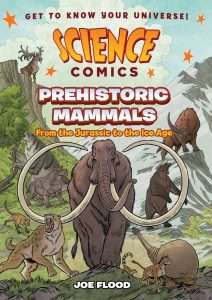 titles in the series have a certain amount of narrative story holding the information together, but some definitely lean more towards the expository, which is the case in this title
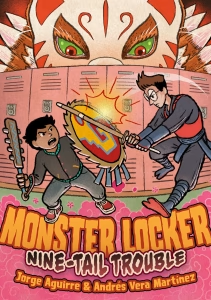 of the first Monster Locker in October 2024, Pablo and his friends Takashi and Maggie have been working to banish the demons and mythical creatures that use Pablo’s basement locker as a FastPass into the human world back into their own dimension. Most of our trio is burnt out with all of their monster fighting, but Pablo is feeling the rush of finally being seen in a good way again and is pushing his friends to keep the monster banishing and their social capital up. The problem with being seen, though, is sometimes the wrong things are looking.
 story of Mila and her best friend Kit. Mila, a budding cartoonist, splits her time between her moms’ houses. Kit lives with his mom in an apartment. After bonding over being new kids at school, they are inseparable. Mila even gets to school early to join Kit for the school breakfast program since he doesn’t like to go alone. Between school, petting neighborhood cats, and DIY movie making, things are great between the two! Until Kit has a meltdown at school, setting the main story in motion.
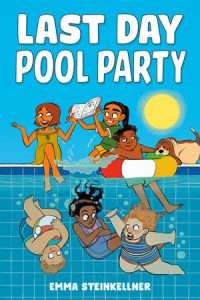 rising ninth graders, the summer is off to a rocky start. Rose is disappointed to realize that she went through junior high without making much of an impression—no one seems to even remember her name. Best friends Juhi and Liv just had a huge fight—maybe even a friend breakup. Paul just wants to game and be left alone, but his parents are making him attend a pool party thrown by classmate Dustin. Paul’s popular cousin Maya will be there, too—her mom is forcing her to go and apologize for semi-accidentally humiliating Dustin in a viral video.
 Mercy Harding is a monster.
 but finding yourself overwhelmed at the prospect? Aron Nels Steinke’s Speechless is a middle grade graphic novel about Mira, a sixth grader who can’t always find her voice and what she wants to say, no matter how hard she tries at it.
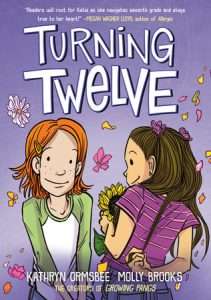 stakes. It’s easy to make even a straightforward coming of age tale a BIG story with the angst, drama, and anxiety of even the most bog standard puberty. What’s hard is telling an entertaining small story, one that feels honest and real and intimate, something that at once feels universal and unique. Turning Twelve by Kathryn Ormsbee and illustrated by Molly Brooks is a small story. And it is completely lovely.
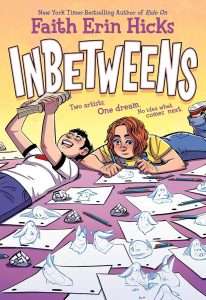 films they love. Now, at thirteen, they are taking the first step toward making that dream a reality: both girls have been accepted to a prestigious local animation summer program. Sloane is nervous, but she’s always nervous about starting new things and meeting new people. Ash can’t wait to learn from the pros—including the maker of her favorite animated movie, Monstrous.
 classmates. She’s working on it with a therapist, but so far Amy is still too nervous to try talking to her peers or raising her hand in class. And that’s before she freezes up during her science presentation and runs to hide in the bathroom.
