It’s 1999, Sara is about to start sixth grade, her first day of school since her family’s moved to a new house. She’s excited to join a new club but even more excited to spend lots of time with her best friend Monica since they didn’t get to see each other much this past summer. It’s going to be a great year! That is, until Sara wakes up to discover her legs are suddenly… hairy.
Mixed Feelings by Sara Amini and Shadia Amin is a colorful fun semi-fictional memoir of Amini’s own childhood. The book follows Sara through her sixth grade year as she starts dealing with puberty and the dynamics of middle school life. On top of this newfound hair she’s discovering on her legs (and arms… and eyebrows), Monica has a new best friend from her summer camp and Sara can’t seem to escape the two of them, making her feel like a left out third wheel. There’s some standard touchpoints of a first year in middle school story but Amini’s storytelling works in such a way it never feels redundant or overdone.
In an attempt to try something new and fulfill her goal of joining a club, Sara joins drama club, landing a lead role after her first audition. All that time spent watching television is finally paying off! The drama club and the upcoming play are a solid backbone to the story. The depictions of the intricacies of drama clubs and the pre-show warm up games are a particular highlight; any reader who spent time in a drama club will find them very familiar.
As the mixed race daughter of immigrants, Sara begins facing uncomfortable questions and exclusionary remarks from peers at school and her Farsi classes. She’s not Colombian enough, she’s not Iranian enough, she’s not Catholic, she’s not Muslim, so what is she anyway? There’s multiple scenes of other kids belittling her identity with appropriately angry and frustrated reactions from Sara. She watches her mother being discriminated against for her language and accent firsthand. Her pride in her parents’ backgrounds and their respective cultures grows as the story continues, which could be a source of inspiration for young readers dealing with similar experiences themselves.The text features bits of dialog in both Spanish and Farsi throughout the book and includes a glossary at the end.
While it does have serious moments throughout, Mixed Feelings is overall a very fun graphic novel. The scenes of Sara’s ongoing newly sprouted hair drama and subsequent secret shaving are laugh out loud funny. So are many of the moments with her family, especially with her dad. Amin’s art includes great facial expressions that jump off the page, with lots of colors in the panels. The art sets the mood for the story and works alongside the emotions perfectly. For readers interested in retro pop culture, including those beyond their middle grade years, there’s a lot of great 90s references hidden in the very detailed art too.
The first in a new series, Mixed Feelings is a delightful addition to the ever growing collection of middle grade graphic novels. Amini’s love of her family and reflection on her own childhood shines through the story; Amin’s art complements this perfectly. The story deals with serious topics while making you laugh on the next page. Readers will be excited to follow Sara’s story through to the next book in the series.
Mixed Feelings By Sara Amini Art by Shadia Amin Scholastic GRAPHIX, 2026 ISBN: 9781338797398
Company Age Rating: 8-12
NFNT Age Recommendation: Middle Grade (7-11), Tween (10-13) Creator Representation: Colombian-American, Iranian-American, Character Representation: Colombian-American, Iranian-American,
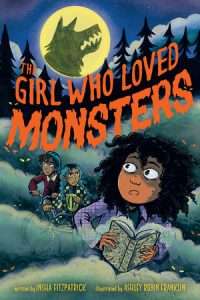
Charlotte Bissett seems to be a pretty average middle school girl in the quaint town of Devilfish Bay. She lives with her internet chef father, Raymond, and her loyal canine companion, Vincent. She is a bookworm and devours any book put in front of her.
However, the cracks in her personal life slowly make themselves clear. Charlotte’s mother had gone missing in the recent past on a boating trip and her father is attempting to move on and begin to date again. On top of this, Charlotte doesn’t appear to have any friends, yet when two kids from her past, Molly and Griffin, move back to town it soon becomes clear why Charlotte is so guarded in her social life. Molly used to be Charlotte’s ride-or-die bestfriend, and yet after Molly moved away the girls had a falling out. Molly wants nothing more than to have a fresh start, but Charlotte is resistant and does her best to avoid Molly. Eventually, Charlotte reveals that the reason she is upset with Molly is because when Charlotte told Molly that a sea creature was responsible for her mother’s disappearance, Charlotte didn’t believe her. It is in that atmosphere of uncertainty and pre-teen angst that Charlotte, taking refuge in her safe place, the school library, is combing the shelves when a book falls off the shelf next to her. The book appears to be bound in green, improperly prepared leather of some kind, the pieces of rotted looking material stitched together in phantasmagoric fashion reminiscent of the Necronomicon from the Evil Dead franchise. The title of the book is “Liber de Monstrum” and true to that name appears to be a grimoire of supernatural information. Taking it home, Charlotte reads from the book, very carefully sounding out the words in an unknown language and upon uttering the last word the windows of her room blow open, the electricity goes out in the area around her house and in the morning Devilfish Bay experiences the first snowfall in fifty years.
On top of these strange occurrences, that day it’s announced that one of Charlotte’s favorite teachers, Mr Cooper, has gone missing and an enigmatic woman with platinum blond hair, who doesn’t appear to be who or what she seems, takes over the class in the interim. Clearly, Charlotte has awoken something or some things from their slumber, and it’s up to her to try and fight these unknown forces. The question is whether her recently returned friends will believe her this time and offer her their help, because it is clear Charlotte cannot fight these monsters alone.
The Girl Who Loves Monsters follows spectacularly in the “kids on bikes” tradition, creating a very real and present danger in a small community and presenting the kids willing to stand up to that danger when the rest of the community can’t see it or believe in it. Charlotte, Molly, and Griffin make a compelling trio bound by their history, common interests, friendships, and burgeoning teenage emotions. In this first volume in the Devilfish Bay series, writer Insha Fitzpatrick sets the scene brilliantly for future adventures and the various mundane trials and tribulations that will also stand in the main characters’ way as they attempt to combat the enigmatic evil that has come forth from the Liber de Monstrum.
The art by Ashley Robin Franklin creates a beautiful balance between the soft, cartoonish style that sets a relaxed tone to the everyday world of the story with the sharp, phantasmagoric elements that truly evoke the horror and supernatural elements. From the first page to the last, The Girl Who Loves Monsters is a compelling read that deals with very relatable parts of adolescence, such as being taken seriously by those around you, mixed with the eerie supernatural elements that could only take place in a small town somewhat set apart from the wider world.
The Girl Who Loved Monsters By Insha Fitzpatrick Art by Ashley Franklin Penguin Random House Viking Books for Young Readers, 2026 ISBN: 9780593690901
Company Age Rating: 8-12
NFNT Age Recommendation: Middle Grade (7-11) Creator Representation: African-American, Queer, Character Representation: African-American,
Nathan Hale’s Hazardous Tales is a wildly successful series of historical stories told in graphic format. He’s also written short stories with the same style for various anthologies. In his 13th book in the series, he goes full tilt into the short story format with a series of creepy, gross, terrifying, and weird stories, most, but not all, centered around the United States.
The story is framed by his original narrators and characters from history—Nathan Hale, the hangman, the British provost, and, added in Major Impossible, Bill Richmond. Hale starts the story with his narrators peering at a sketch of the front cover, with the historical Nathan Hale explaining that “this book was created by hand by a real human artist.” There’s a humorous warning at the beginning about the scary content, then the framing plot opens.
The four narrators are sheltering from the rain under the gallows and decide to tell scary stories, starting with Captain Hale. Since it’s his thirteenth tale, he tells a scary story about a thirteen baby—the Jersey Devil. Black and white art, picked out with spots of green, illustrates the gruesome creature and its victims, ending with a short discussion on folklore and history. The provost demands a true story, so Hale begins “A Sip of Radiation” and the backgrounds glow a ghostly green as he tells the true story of Radithor, radium-infused water. The story jumps between Curie’s discovery of radium and the effects of Radithor on a welathy young man, Eben Byers, who died a gruesome death due to the “miracle cure” and ends with the radium girls and a creepy correlation between overuse of radium and the possible effects of unlimited internet use. The stories continue with the ghostly “The Demon Cat,” a grotesque tale from Edgar Allan Poe, “Hop-Frog,” and more. They include snapshots of US history, like a dream of Abraham Lincoln, a ghost story from the Civil War, and, of course, reappearances of the Jersey Devil.
Bill Richmond’s contribution, “The Boo Hag” is framed in a slightly darker green and features a cast of Black characters with creepy fleshless monsters, and placid, swirling waters in the South Carolina Sea Islands that hide dark secrets. Hale switches to a sharper contrast in “The Head in the Jar” which features the folk legend of Joaquin Murrieta. Stark white backgrounds on the small panels show the bare desert of the stockades and Gold Rush towns then switch to a mass of grays as Murrieta suffers and reenacts his vengeance in the dark of night.
The story ends with a transition that takes the readers to Denmark and introduces the berserkers of the title. Hale’s characters in this tale show sharply defined faces with pointed, craggy noses and long-haired, narrow faces contrasting with bulky, bearded warriors and fleshy tyrants. The story comes to a gory and dark end, featuring monstrous beasts and dense, packed panels showing heroes battling creatures in the dark. The stories return to the US and the true crime story of “The Butler Goes Berserk” featuring the mysterious crimes at Frank Lloyd Wright’s estate, Taliesin, committed by his butler, Julian Carlton. The collection is finished with a goofy story from the hangman, framed in glowing green and a final appearance of the Jersey Devil.
Hale ends the book with his usual meticulous research; in this case he adds additional information to the sources explaining which parts of each story are factual and which are folklore or legends. He also includes an encouragement for readers to explore short stories and some recommendations and sources.
This is a fitting transition to twelve wonderful historical graphic novels and hopefully marks the beginning of a new set of these histories. It’s also a fun way to get readers to try something new as well as stop to think a little more deeply about the media and stories they consume, since Hale includes lots of discussion points throughout the story as well as plenty of gore, monsters, and creepy happenings. A sure bet for middle school readers and anyone who enjoys creepy stories and interesting historical tidbits, this will delight both old fans of Hale and those new to his work.
Nathan Hale’s Hazardous Tales: Bones and Berserkers By Nathan Hale Abrams, 2025 ISBN: 9781419773204
NFNT Age Recommendation: Middle Grade (7-11), Teen (13-16), Tween (10-13)
Tasha is absolutely thrilled to relive her Gramp Abominable’s stories of Camp Yeti, even if things will look a little different. Due to the low numbers of yetis, she’s convinced her parents to turn it into Camp Monster and welcome everyone, but things don’t go as expected.
The new campers—and Tasha’s cousin—don’t seem to appreciate the traditions or the changes at Camp Monster and there are lots of clashes from mischievous goblins using their magic to a nervous werewolf who doesn’t want to learn to swim. Even worse, there are rumors and signs of humans in the area! Will Tasha get to experience the joys of summer camp as she’s imagined or will the camp have to close down as soon as it’s reopened?
Falynn Koch has previously collaborated with Kate Messner, but this is her first fully fictional graphic novel; her previous titles included entries in the Science Comics and History Comics series. Her art is well-suited for middle grade fiction, leaning towards simple lines and colorful images. Koch introduces the diverse monsters at the beginning of the book, combining with Messner’s dialogue to create individual portraits of each creature. Tasha and her cousin Kami have fluffy white fur, curved yellow horns and yellow tongues, varying shades of blue skin on their face masks, hands, and feet. Kami wears a blue fedora, making it easy to tell the yetis apart. The campers include a pair of green goblin twins, with slightly different fur patterns, a nervous red werewolf, soccer-loving vampire in shades of purple, ballet-loving ogress with blonde hair and green skin, and a bright orange griffin who is eager to get swimming. The monsters are divided up into two cabins roughly along gender lines at the beginning of the story, but Koch does not portray them as conforming to human (or monster) gender norms throughout the book. They wear (or don’t wear) a variety of clothing, from a pink tutu to loose tunic-like shirts.
In this first book, the creators focus on getting to know the characters and Koch moves the story through various scenarios and running storylines at the camp that give readers a feel for each camper’s individual personality. Lupo, the werewolf, struggles to swim and while Coach Q, a mermaid, is understanding, the bulky sea serpent, Coach J, doesn’t really get it. Their confused faces and Lupo’s misery are shown in their features, regardless of fur and scales, as the campers interact with the lake in different ways. The most striking contrast is shown between Isabelle, the ballet-loving ogress and Vera, the soccer-loving vampire. Isabelle is clear on her love of all things pink and fancy, always shown in pink, her blonde hair in a bun, while Vera prefers more active clothing (all purple to match her hair and skin) and would rather be out playing soccer than doing her nails. On the other hand, Vera is a confirmed vegetarian and recoils from Isabelle’s collection of live spiders she keeps for snacks. Koch keeps the reader from stereotyping either of the two as she constantly introduces new facets of their personalities and interests while keeping their basic portrayal consistent.
The creators move the story through all the ups and downs of very different monsters trying to enjoy camp together until they end up faced with an enemy that makes them all scared – humans! To keep the camp from being shutdown due to the dangers of humans, the monsters will have to put aside their differences and work together, but do they even want to stay at camp? Messner includes letters home from each of the campers that fill out the story and keep the plot moving while Koch focuses on the humor and drama of the monsters’ daily interactions.
This story is full of pranks, jokes, and fantastical creatures while carrying an underlying message of diversity, acceptance, and cooperation. There are several layers of humor, making this appeal to a wide range of readers, and middle grade readers are unlikely to outgrow their interest in the characters before the next book in the series is released.
Recommend to young readers ready to move on from Kevin Sherry’s Yeti Files and those who enjoy light-hearted graphic novels with bright, appealing illustrations like The Investigators.
Camp Monster By Kate Messner Art by Falynn Koch Bloomsbury, 2026 ISBN: 9781547609413
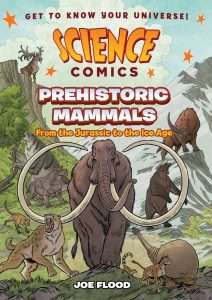
Science Comics is a long-running series, which invites a wide variety of skilled creators to explore different scientific subjects. All of the titles in the series have a certain amount of narrative story holding the information together, but some definitely lean more towards the expository, which is the case in this title
A prose introduction from Emily Lindsay, a paleontologist who works at La Brea Tar Pits, gives some context for the book, explaining the rise and extinction of megafauna and prehistoric mammals and the importance of large mammals today. Flood begins the narration with an iconic sequence of panels showing a line of mammoths tramping across a glacier in Siberia, where they are then attacked by a pack of cave lions and one young mammoth plunges into the icy water below.
He uses this sequence to kick off the basic concepts being introduced in the book, showing the modern relatives of mammoths and cave lions – elephants and African lions – and then jumping back to the origin of mammals and their gradual development over millions of years. These pages are filled with neatly drawn charts of evolution and cartoon creatures in bright colors who comment on each other’s adaptions with jokes.
Flood helps readers follow the evolutionary development of mammals with a yellow diapsid, “Dia” and a red synapsid, “Sid.” Eventually, Dia evolves into the dinosaurs, eyeing Sid hungrily, while Sid evolves into the early mammals, brownish-yellow, blue, and purple creatures. In the next big extinction, Dia’s survivors shrink down to a feathery yellow bird while Sid returns to his red, basic mammalian form. Flood’s color-coded animal adaptations make it easy for young readers to follow the complex concepts of evolution and adaptation over the huge periods of time represented.
The story next moves on to the Cenozoic, the age of mammals. Flood illustrates the early mammals in soft browns and grays with faint black patterns, setting them amidst lush green jungles and forests. This morphs into the more colorful variety of mammals we’re more familiar with today, as well as gradually diversifying plant life, with colorful flowers, birds, insects, and more. Dia and Sid continue to show up—Dia staying in her yellow bird form while Sid changes frequently, although generally keeping to a four-footed, small red mammal shape.
Flood continues the story, showing how the changes in climate and habitat prompted evolutionary changes in mammals and drawing more and more parallels between prehistoric and modern creatures as evolution progresses. The original red of Sid the synapsid shows up again here, in the arrows and charts, while extinct animals are generally shown in plain greys and browns, allowing the animals who have contemporary survivors to show up more clearly in the artwork.
Sid shows up again, illustrating the evolution of herbivores from small to large, to survive the large carnivores. Dia flies along above a fleeing Sid, making comments on the predator and prey racing about. The two follow along as the story nears the modern day, showing the niche animals that evolved on the now-distinct continents and the convergent evolution of different species. When the narration reaches the ice ages of the Pleistocene, Flood steps away from animals in a spread to illustrate the climate changes with blue and green diagrams and a fiery sun shooting rays of orange and red toward earth.
The narrative begins to return to the introduction, showing the migration of mammoths and describing the La Brea Tar Pits, as well as introducing the evolution of a new mammal – humans. Sid and Dia show up again, watching the arrival of humans. Flood illustrates the changing evolution of different human species, showing a variety of darker skin colors, postures, and hair textures. He has a distinctive style when drawing human faces and this begins to show up in this last section of the book, with larger eyes, square, blocky hands, and thick lips. The story ends with a discussion of the current extinction event we are living through and the effect it has on mammals, including humans.
Flood has written or illustrated several other Science Comics titles and his blocky, simply style with lightly humorous touches and clear, simple diagrams is well-suited to the series. He does an excellent job in this title of connecting the complicated and wide-ranging topic together, moving between epochs and eras and tying the exposition together with narrative touches from beginning to end. The text is very readable, although the number of Latin species names may daunt some young readers. However, those who are interested in prehistoric life will be generally familiar with the nomenclature and the text is very understandable even if readers stumble over some of the names. This is another excellent entry in a strong series that should be represented in all public and school libraries.
Prehistoric Mammals From the Jurassic to the Ice Age By Joe Flood Macmillan First Second, 2026 ISBN: 9781250868428
NFNT Age Recommendation: Middle Grade (7-11), Tween (10-13)
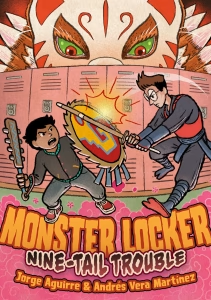
A near apocalypse at the hands of an Aztec Earth goddess has led to the impossible: Pablo Ortiz is popular again. Since the publication of the first Monster Locker in October 2024, Pablo and his friends Takashi and Maggie have been working to banish the demons and mythical creatures that use Pablo’s basement locker as a FastPass into the human world back into their own dimension. Most of our trio is burnt out with all of their monster fighting, but Pablo is feeling the rush of finally being seen in a good way again and is pushing his friends to keep the monster banishing and their social capital up. The problem with being seen, though, is sometimes the wrong things are looking.
Monster Locker: Nine-Tail Trouble, scheduled for release April 21, 2026, sees creators Jorge Aguirre and Andrés Vera Martínez diving back into the world of the first book with a new focus and an equally lovely story. While monster banisher Pablo still acts as the protagonist, this story is really about his friend, the charmingly unhinged Takashi Rosenberg. Takashi is not overly thrilled with their heavily monster focused schedule and has a lot on his mind. He wants to get back to RPGs and becoming a J-Pop sensation and worrying about his upcoming Bar Mitzvah and missing his mom in Japan. Like many children from different, distinct backgrounds, Takashi doesn’t know how to reconcile his Judaism with his Japanese heritage and vice versa. He feels out of place in both, a situation escalated by his parents divorce and his mother’s physical distance. And this also leaves him vulnerable when a new, dangerous monster threatens not just the trio’s school and popularity, but the roots of their friendship.
I loved the first Monster Locker when it came out but felt like the side characters, like Takashi, didn’t get a lot of fleshing out and it’s like Aguirre and Martínez were reading my dream journal. This second volume not only gives Takashi amazing depth and a massive struggle with identity, but pulls folkloric characters from both of his heritages into the story. While the first book was like an ode to Pablo’s Meso American ancestry and Aztec gods, Nine-Tail Trouble sees Kitsune (the Japanese nine-tailed fox trickster) and a Golem (an animated, humanoid chunk of clay from Jew folklore) doing battle, turning Takashi’s internal struggle into a visibly destructive one.
With the shift in focus comes a shift in artistic style. While the first Monster Locker took a lot of visual inspiration from Meso American art, this one pulls in references to Medieval Jewish art to draw in the Golem’s background and soft Japanese watercolor for the Kitsune. It’s lovely to look at and the emotional heft is clear without being overpowering. Takashi’s struggle is universal and makes a powerful framework for this story.As much as I love the focus on Takashi, much like the first Monster Locker, the other characters are not given much time to grow. The story sees many of the characters from the first book return but all, even Pablo, our protagonist, take a backseat. I would love to see more balance between the characters and their growth in future volumes.
Aguirre and Martínez have created a world that has some of my favorite things about graphic novels: the stories are fun and surprising, the characters are unique but grounded in real emotional stakes, and the art is gorgeous. This series continues to please and I can’t wait for more.
Monster Locker: Nine-Tail Trouble By Jorge Aguirre Art by Andrés Vera Martínez Macmillan First Second, 2026 ISBN: 9781250749765
Company Age Rating: 10-14
NFNT Age Recommendation: Middle Grade (7-11), Teen (13-16), Tween (10-13) Creator Representation: Colombian-American, , Character Representation: Japanese, Mexican-American, Jewish ,
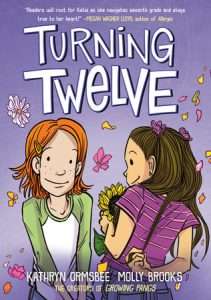
A lot of the graphics I’ve read recently are BIG stories: epic adventures, fantastic settings, or, in more realistic pieces, life or death stakes. It’s easy to make even a straightforward coming of age tale a BIG story with the angst, drama, and anxiety of even the most bog standard puberty. What’s hard is telling an entertaining small story, one that feels honest and real and intimate, something that at once feels universal and unique. Turning Twelve by Kathryn Ormsbee and illustrated by Molly Brooks is a small story. And it is completely lovely.
This follow up to Growing Pains by the same pair and released by Penguin Random House in October 2024, picks up with central character Katie as she turns twelve. Twelve is looking to be a big year for her: the threat of her first period is lurking around every corner, she’s going to her youth groups annual retreat, she gets to start babysitting, and she’s positive she’ll be cast as the lead in an upcoming musical. The Obsessive Compulsive Disorder that was central in the first book still buzzes in the background, but Katie is learning to accept that as part of how her brain works. Things turn sideways for Katie quickly—her best friends move out of town, she doesn’t get the lead in Annie, and things that felt natural and easy last year are filling her with questions and doubt. The biggest question is her new friend Grace. Grace is pretty. Really pretty. Really really pretty and nice and talented and makes her heart go thump thump thump. This is a big problem for Katie whose church makes it very clear that being gay is not okay.
Visually, Turning Twelve is nearly a perfect middle grade graphic. The art is cute and there are a few recurring visual themes that do a lot of story work, like the thumps of Katie’s heart or the buzzing bees of her anxious thoughts. The panels have a smooth, clean layout that moves the story along at a quick clip. This is a really quick read which is good because there isn’t really a lot going on in this story. Even in slow moments, the story doesn’t drag or meander. Katie is a very compelling character who breathes life into the story and gives the reader a solid anchor into the world of the story. Katie is so well developed in fact that the other characters don’t get much beyond a surface level treatment. Hazel, the would be new youth group friend, is never more than just there, and even Grace, the object of Katie’s confusing affection, doesn’t get a whole lot of characterization. The reader never really sees Katie’s parents so there’s no sense of how founding her stress in her awakening sexuality is. This is Katie’s story and Katie’s conflict and the other characters aren’t given much beyond her lens.
When I say Turning Twelve is small, that’s not to say it’s not saying big or important things. It absolutely is. But it’s not trying to solve those big important things. There are no big confessions or clear answers. Just like the mental health struggles Katie had in the first book, there are no fixes in this story because there is nothing to fix, just new ways for Katie to interact with her world and an acceptance of herself. The story ends with the hope that that world will be kind to our main character and that, while her road may still be bumpy ahead, Katie is going to be okay.
Turning Twelve Vol. 2 By Kathryn Ormsbee Art by Molly Brooks Penguin Random House, 2024 ISBN: 9780593650066
Company Age Rating: 8-12
NFNT Age Recommendation: Middle Grade (7-11), Tween (10-13) Creator Representation: Lesbian, Character Representation: Lesbian, Obsessive Compulsive Disorder (OCD)
Sashimi is new in Barnacle Bay school. He has a hoodie pulled over his wide eyes and orange skin. And he’s squishy – he sweats all the time! All the kids he meets at his school are surly, critical and awkward, (or even mean!) but he doesn’t seem to notice. He even thinks the school bully and the bully’s toadies are funny!
There’s a lot that Sashimi doesn’t know. Everything is new to him, and he’s seeing everything for the first time. Even though he’s a sweet…whatever, he sometimes doesn’t realize his behavior isn’t appropriate. So he gets whacked a lot. There’s lots of whacking. But regardless of how the kids treat him, he refuses to be embarrassed – he’s completely confident and authentic about who he is and constantly amazed by everything.
Still, it’s A LOT. Good thing he’s got his friend, the classroom goldfish, to answer some of the more pressing questions he has. There’s also Joseph, the friend who says he’s not a friend. Unfortunately, Sashimi finds some disturbing information out in the supermarket while on a trip downtown. And THEN he meets his friend Joseph’s grandfather, and things get….well…complicated. Just like Clark Kent taking off his glasses, Sashimi’s secret gets found out. But will his friends help him keep his secret? What exactly WOULD a good friend do?
Santat’s broad marker lines and manga-like expressions add to the comic action and made me laugh out loud at some pages – “I can see through time!” “Holy Smokes, kill it with FIRE!”
This is a warm story about making friends, how hard that can be sometimes, and learning to be your authentic self. It’s appropriately placed for middle grades, ages 6-12.
Sashimi By Dan Santat Macmillan Roaring Brook, 2026 ISBN: 9781250360007
Echoes of October is built around a simple yet difficult question. The sort of question that children often ask and adults wish they could answer.
Why can’t we just get along?
That question is asked around the world in many ways and many languages. Yet it has taken on a particular vibrancy within the Middle East and especially regarding the Gaza conflict. This is the focal point of Echoes in October, which builds to the Hamas attack on Israel on October 7, 2023.
The story is told through the eyes of four children. All of them are 11 years old, but all of them were born of drastically different circumstances. Jannah is a Muslim girl from Gaza City. Amir is a Druze boy from Daliyat-al-Karmel. Lily is a Canadian Evangelical Christian, born in Toronto but recently relocated to Kibbut Kfar Aza. Eli is a Jewish boy from Tel Aviv. The children do not meet as a group over the course of the novel, though Eli and Amir are cousins. Lily and Jannah also meet briefly, as Lily’s father works as a volunteer driver who escorts Jannah into Israel for medical treatment.
However, despite its setting, Echoes of October plays out as a slice-of-life comic rather than a political thriller. The story remains firmly focused upon the children and their individual issues. This drives home their common ground and makes them more relatable to the young readers for who Echoes of October was written.
Eli, for instance, is worried about his parents talk of moving away from Israel. Their only concern is the safety of their family and what the threat of war may do to Eli. Yet Eli’s biggest fear is moving away from his friends, his school, and everything he knows. This is counterbalanced by the story of Lily, who has already undergone this trauma. She misses her friends in Canada and worries that her dream of being the next Taylor Swift may be short-circuited by moving halfway around the world.
Amir, an aspiring comic creator, has similarly big dreams of creating the first Druze superhero – a Captain America figure modeled on his soldier father. Unfortunately, most of his family have no use for his art and intend to put him to work in their restaurant instead of letting him continue school. Jannah also has issues with her family, for she has dreams of becoming a politician and bringing peace to the region so the people around her can be happy. Unfortunately, the people calling for violence on both sides are so much louder and so many refuse to listen to women, let alone girls.
Echoes of October does not pretend there are any easy answers. It does, however, offer one of the most heartfelt and well-structured introductions to the conflict in Gaza and how there is more than one side involved in the conflict. While the artwork and language used by Ami Adan are simple, they deliver a powerful idea that ultimately boils down to that one big question.
Why can’t we just get along?
Echoes of October is recommended by the author for readers 10 and up. This is a fair rating, as there is no objectionable content to be found here. Doubtless some will object to the idea of a children’s graphic novel that discusses the conflict in Gaza sight unseen. Yet this book is not entirely about that conflict. It is about four young people struggling to cling to some sense of normalcy in an increasingly angry world. That is something that all too many of us can related to in modern times and why I would recommend this graphic novel to readers of all ages rather than just children.
Echoes of October By Ami Adan Self-Published, 2025
Company Age Rating: 10+
NFNT Age Recommendation: Adult (18+), Older Teen (16-18), Teen (13-16), Tween (10-13) Creator Representation: Israeli, Palestinian, Jewish, Muslim, Character Representation: Canadian, Israeli, Palestinian, Jewish, Muslim, Protestant ,
Aren’t dogs great? Mr. Muffins is an active Corgi that lives with his human Reuben. They enjoy Frisbee and their days at the park. Reuben has his hands full with school and sports life, a very active and loyal Mr. Muffins, and his mom who has high expectations. In Reuben’s family, family comes first, before anything he wants. When does Reuben get to do what he wants? He wishes he had no responsibilities, like Mr. Muffins.
THEN, a spaceship crashes into the park, and an alien tries to kidnap Mr. Muffins because he’s apparently the vessel of a space hero whose light can defeat some invading alien bullies, and then the bullies show up! Phew, that’s a lot. But after a quick text to Mom, Corgi and Human to the rescue! The homework can wait, right? Mr. Muffins (and Reuben) are off to space to defend the homeworld of the Voltarian Alliance from the Hakaran Armada. Mr. Muffins has his paws full leading the Voltarian defense, but Reuben finds ways to contribute too. After all, he has a responsibility to family, right? Mr. Muffin’s responsibility is to save the galaxy, but will he succeed? Two words: Mecha-Corgi! Yikes!
Reuben’s family is Muslim, which adds to a needed diversity. The pages are paced perfectly, and they’re very funny. (“wait….where is she going? …oh. Oh no.”) Mr. Muffins’ flight path is marked by a very Nyan Cat-type rainbow. The frames and gutters are mostly rectangular and traditional, except when they take on a Manga-type trapezoidal arrangement with manpu galore!
This is a very enjoyable story about family, responsibility, the unique relationship between dogs and humans, and being there for friends. It’s appropriate for ages 6-14 and has no violence or adult themes.
Mr. Muffin: Defender of the Stars By Ben Kahn Art by Georgeo Brooks Oni Press, 2025 ISBN: 9781620108321
NFNT Age Recommendation: Middle Grade (7-11) Creator Representation: Muslim Character Representation: Egyptian-American,

 a new house. She’s excited to join a new club but even more excited to spend lots of time with her best friend Monica since they didn’t get to see each other much this past summer. It’s going to be a great year! That is, until Sara wakes up to discover her legs are suddenly… hairy.
  Devilfish Bay. She lives with her internet chef father, Raymond, and her loyal canine companion, Vincent. She is a bookworm and devours any book put in front of her.
  with the same style for various anthologies. In his 13th book in the series, he goes full tilt into the short story format with a series of creepy, gross, terrifying, and weird stories, most, but not all, centered around the United States.
 low numbers of yetis, she’s convinced her parents to turn it into Camp Monster and welcome everyone, but things don’t go as expected.
 titles in the series have a certain amount of narrative story holding the information together, but some definitely lean more towards the expository, which is the case in this title
 of the first Monster Locker in October 2024, Pablo and his friends Takashi and Maggie have been working to banish the demons and mythical creatures that use Pablo’s basement locker as a FastPass into the human world back into their own dimension. Most of our trio is burnt out with all of their monster fighting, but Pablo is feeling the rush of finally being seen in a good way again and is pushing his friends to keep the monster banishing and their social capital up. The problem with being seen, though, is sometimes the wrong things are looking.
 stakes. It’s easy to make even a straightforward coming of age tale a BIG story with the angst, drama, and anxiety of even the most bog standard puberty. What’s hard is telling an entertaining small story, one that feels honest and real and intimate, something that at once feels universal and unique. Turning Twelve by Kathryn Ormsbee and illustrated by Molly Brooks is a small story. And it is completely lovely.
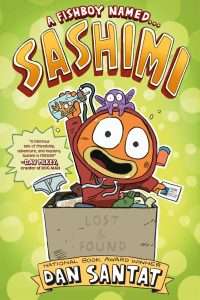 Sashimi is new in Barnacle Bay school. He has a hoodie pulled over his wide eyes and orange skin. And he’s squishy – he sweats all the time! All the kids he meets at his school are surly, critical and awkward, (or even mean!) but he doesn’t seem to notice. He even thinks the school bully and the bully’s toadies are funny!
 Echoes of October is built around a simple yet difficult question. The sort of question that children often ask and adults wish they could answer.
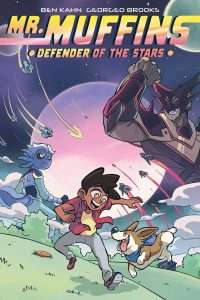 Reuben has his hands full with school and sports life, a very active and loyal Mr. Muffins, and his mom who has high expectations. In Reuben’s family, family comes first, before anything he wants. When does Reuben get to do what he wants? He wishes he had no responsibilities, like Mr. Muffins.