I really enjoy a book that finds a way to surprise the reader by making small changes to our standard expectations. I was delighted by the turns this story took and the way it managed to confound expectations early on. This was fun, intriguing, and quick to read.
Ryudo Konosuke is a samurai down on his luck and struggling to get by. He goes to the unemployment office and we learn everyone thinks he’s simply afraid of blades and he’s a local joke. At his lowest and ready to give up, he allows some locals who are picking on him to start a fight. He believes they will give him the honorable death he seeks to end his misery, only for us to find out that his skin turns their blades away. He cannot be killed by the sword and even though he has the skill, he cannot handle one himself. One of the men kicks him into the water and as he is drowning we see a flashback to his mother being killed in front of him as a child. A woman tells him he cannot die as they have not met yet and he wakes up in his home with no memory of how he got there. That night he receives a letter which is a marriage proposal from a woman he’s never met, and THAT is just the first chapter.
Ryudo has a hard time believing any of this is real, as the proposal comes with a 100 Ryo dowry. He is ready to believe it’s a trap; she’s beautiful, kind and helpful—why would she choose him? Otsuki says she knows all about his “curse” and that she doesn’t measure a man by his ability to hold a sword; she picked him because of this. He is a tortured man though, as he swore to his father to be an honorable samurai and he feels his failure every day. Otsuki has come to save him and to do that she will have to win him over.
Fate intervenes on the day she finally convinces him to leave the house. Ryudo has to defend Otsuki from the same guy who broke his sword fighting him in the first chapter. Ryudo’s skill is real: he wins and they share a quiet moment where he finally feels some self worth, as she has only gratitude for him risking his life. When they look to be happy and things are going well, a mysterious stranger appears and puts a hex upon the house. The stranger has the ability to control water and he will remove the water from their bodies if Otsuki does not come with him. She tells Ryudo to live on for her and she knows they will meet again, but they cannot fight this type of occult power. She says it is like his power to control metal, but we do not know what her power is, only that she’s involved with things far beyond his understanding. He tries to fight this stranger only to find himself losing and drowning once again.
The cliffhanger ending is a really great button to where the story is and I’m not even mad at where it leaves us. This book keeps you turning pages and investing in the people as much as the plot. The art feels familiar to a lot of shonen manga, but there are moments, especially with Otsuki, where instead of heavy lines, the art becomes more delicate and detailed. It is used sparingly, but to great effect. There is some violence, no bad language, and exactly one exposed breast. Viz Media has this labeled for a Teen Plus audience, but I didn’t think there was anything prohibitive here and most Teen sections would be fine with this book. I am certainly looking forward to the next volume and will be recommending this often!
Steel of the Celestial Shadows, Vol. 1 By Daruma Matsuura VIZ Signature, 2024 ISBN: 9781974742745
Publisher Age Rating: T+ NFNT Age Recommendation: Adult (18+), Older Teen (16-18), Teen (13-16)
Award winning mangaka Taiyo Matsumoto brings pathos and humanity to Tokyo These Days as he examines the idea of finding one’s purpose through the lens of manga publishing. This was easily the most interesting and compelling book I’ve read in a while and the layout feels very cinematic.
The first chapter is titled “Today I’m Retiring for Personal Reasons” and this convention carries throughout the rest of the book with the chapters titled like they are calendar or journal entries. We get a glimpse at the inner life of Shiozawa, a manga editor, as he reaches a personal and professional crossroad. We’ll see the larger affect he has on his environment and its inhabitants dealing with this decision and how it opens this story up.
We find Shiozawa getting ready for work and having a conversation with his pet bird, who tells him it’s sad he’s retiring (he understands birds, but it’s not commented on.) He’s been editing manga for 30 years, but his latest magazine folded and he feels responsible. He realizes he’s spent 230 days total on this particular train getting to and from work and the scope of how entirely his life revolves around the field of manga begins to overwhelm him. He goes to meet an old colleague and we learn about just how different they are.
Chosaku is an artist who smokes, drinks, is overweight and generally overindulges in all the ways Shiozawa doesn’t. The dichotomy of these two is reflected in the lives of the other characters we’ll meet, but the thing they have in common is how they have devoted their whole lives to manga and how drained they are. Chosaku is still going through the motions, but Shiozawa points out his books have lost their shine and his heart isn’t in it. He wants Chosaku’s work to shine again, he loved that work. The rest of this first volume shows these men dealing with their sense of purpose and direction, but they wind up influencing others around them.
Liliko Hayashi was a young editor who looked up to Shiozawa and seeks out his help with a troublesome artist, Aoki. Shiozawa used to edit his work before assigning him to Liliko and the relationship is in bad shape. She is frustrated by Aoki’s hollow work and terrible attitude. Aoki is frustrated by what he sees as her interference and lack of support. They both hope Shiozawa will intervene and help, but he has stepped back and no longer wants to be involved with the field.
Their development will mirror the affect Shiozawa has on others around him; everyone in his sphere winds up asking larger questions about their commitment to manga, art, their lives, their purpose and the future. Shiozawa eventually decides to try and make one last book, one perfect manga that is just for him. It doesn’t have to be successful, there is no publisher supporting him, he’s just putting his retirement money into this idea. He decides to recruit artists and creators whose work he loved, but some of them no longer work in manga and he needs to try and lure them back.
Describing this book as cinematic is to say that there are quiet moments where the story is allowed to breathe and the audience can sit in the emotional impact of what just happened. There are wide shots of the skyline or cityscape to show just how small Shiozawa feels. There are small, everyday occurrences that fill out the background and give the world a more textured and authentic feel. The art isn’t what I would describe as clean, but it is also very intentional and highly detailed. It is a believable, modern Tokyo illustrated here, and it is very much another character in the story.
Viz rated this book Teen, which I believe is the right designation for it, but I think older readers likely will experience the book differently and more fully. There is very little in the way of bad language and a character smokes. Outside of that there is nothing objectionable in this book and teen readers should have no trouble understanding this world. The emotional journey of the characters will likely land differently with adults who have experienced some of the adult life experiences the characters here reflect on. I wholeheartedly recommend this book to libraries that are looking for manga that isn’t action, adventure, love or mystery.
Tokyo These Days Vol 1 By Taiyo Matsumoto VIZ Signature, 2024 ISBN: 9781974738809
Publisher Age Rating: Teen
NFNT Age Recommendation: Adult (18+), Older Teen (16-18), Teen (13-16)
Junji Ito’s Mimi’s Tales of Terror is an adaptation of Hirokatsu Kihara and Ichiro Nakayama’s collection of urban legends, Shin Mimibukuro. Each of the tales in the original compilation is reworked by Ito and features Mimi, an original character. The book consists of nine stories featuring college student Mimi, a bonus tale introducing different protagonists, and two afterwords describing how he altered the tales. This is a treasure trove for those who are fans of Ito, horror, contemporary legends, and evocative and haunting illustrations.
The first tale “On the Utility Pole,” is only a few pages long and takes place in only a few minutes, during a car ride on a rainy dark night. It sets the stage for the spookiness that will follow in the rest of the collection. Several of the tales focus on Mimi’s various problems with her disturbing neighbours while offering relevant background about modern Japanese culture. In “The Woman Next Door,” Mimi is annoyed by her noisy neighbour, but soon realizes that the problem is much scarier than she anticipated. Mimi survives to feature in the next story, assuring the reader that she has moved to a different apartment building. The legend in this tale reminded me of the legend of “Teke Teke” because of the significance of the sound effects in both.
“Rustling in the Grass,” offers another horrific interlude for Mimi and her boyfriend, this time while they are walking in the woods. The story, like many legends, does not have a tidy conclusion…it just is! Mimi’s new apartment in the next tale, “Grave Placement,” also features an eccentric neighbour and an eerie setting. Obviously, Mimi needs to be more selective of her living arrangements. Mimi and her friends take a trip to the beach but, of course, things cannot be straightforward for her. In “Seashore” one of her friends is drawn to ghostly spectres that only he can see. One of the creepiest tales in the collection for me is “Just the Two of Us,” in which Mimi meets a child who is haunted by her mother’s burnt corpse. Through his illustrations and pacing, Ito conveys both dread and affection in this almost intimate tale. The next tale, “Scarlet Circle,” is also dreadfully affectionate, but not in a warm or comforting way. Mimi is the target of an extremely jealous classmate who wants Mimi’s boyfriend for herself. “Sign in the Field” is the final tale featuring Mimi and is the shortest one in the book. The images strongly echo those of the legendary Slender Man.
The first afterword is told through two pages of panels featuring Ito himself. It is followed by two coloured pages, one of which is the splash title page for the bonus story “Monster Prop.” Haunted house attractions can be very disturbing, but when it includes a very dubious monster prop, the attraction can be even more dangerous than anyone imagines. It is a perfect tale for Halloween and those who admire horror films. The collection concludes with a two-page written appreciation by Ito for the original material, the chance to introduce the bonus tale to the audience, and the work of art of the book itself.
I must admit that I purchased this hardcover volume for my personal collection. It is truly a work of art, perhaps macabre art, but a gorgeous example of book making. The red-covered minimalist cover and endpapers are wrapped in a dust jacket that contains numerous spooky visual references to the stories inside. The illustrations inside are striking, unsettling, and sinister. The characters are distinctive, the settings evocative and realistic, and the monsters truly chilling and horrific. The pacing is well organized, with the panels offering just enough information to foster anticipation and activate the reader’s imaginings.
The essence of these tales may be familiar to those who know the three folklore collections of Alvin Schwartz and Stephen Gammel’s Scary Stories to Tell in the Dark. Both this book and those by Schwartz and Gammel are sourced from urban legends that have been circulating for years and both were newly adapted and illustrated for a contemporary audience. Highly enjoyable for those who like their horror based on folklore and those who like to be creeped out by things that may go bump, not only in the night, but in their ordinary habitats. Recommended for older teens and adults.
Mimi’s Tales of Terror By Junji Ito VIZ Signature, 2023 ISBN: 9781974738519
Publisher Age Rating: T+ Related media: Classic to Comic
NFNT Age Recommendation: Adult (18+), Older Teen (16-18) Creator Representation: Japanese Character Representation: Japanese
Insomniacs After School is the most surprising, delightful, and charming book I have read in quite some time. It is a simple slice of life book that, thanks to its sincerity, at no point let me down. I wondered constantly if something exciting, paranormal or extraordinary might happen. It had all the hallmarks of a book that was about to toss a curveball at the reader, but it didn’t and yet I was never disappointed.
The books opens with a student at Kuyo High School telling another why they no longer have an astronomy club. It is a ghost story about a girl who supposedly threw herself off the top of the astronomy tower. Then other members of the club started dying mysteriously. It’s an interesting way to open the book, and it is what set me up to think something unusual might happen at any time. However, we learn in time that one of our protagonists made up the story to keep people away from the astronomy tower. Isaki Magari cannot sleep and as someone who had childhood illnesses, she doesn’t want people making a big deal about her sleep now and fussing over her. Ganta Nakami can’t sleep either and it makes him grumpy which keeps people at bay, so he doesn’t have many friends. He doesn’t want to go to the nurse because he’d be going all the time and he doesn’t want people to think there is something wrong with him. They both discover that the disused observatory is quiet, comfortable, and entirely theirs for the taking.
Magari and Nakami bond over their inability to sleep and the feeling of being an outsider because of it. There is a cat that befriends them and harasses one of their teachers, stealing lettuce from Kurashiki Sensei’s sandwich. They find they can actually sleep when together in the observatory and so they try to make time to be there together. Kurashiki Sensei one day chases the cat all the way up to the observatory trying to get her food back and stumbles upon their secret. She isn’t mad, she isn’t judgmental, but she is required to report it to the school. Fortunately, they work around this by reviving the astronomy club and Nakami and Magari become the first members.
The publisher has this tagged as a romance genre book, which may be true later, but in this volume I would say you only get a glimpse of attraction. Magari certainly seems to sense she has feelings for Nakami, but never speaks them out loud, even to herself. Nakami realizes he only wants to come to school to see Magari, but he can’t quite sort out if it’s more than to be able to sleep. This may develop into a relationship in further installments, but for now it’s entirely chaste as two high school students try to navigate making friends with someone very different from themselves. That said, the art certainly wants you to find Magari adorable and charming.
The strength of the art is how effectively it’s used to forward the plot with wonderful subtlety. Characters are framed in-panel to help shape our feelings about them, much like a movie director giving us cues wordlessly. Each character is distinct and the world is fully recognizable without any panel being overstuffed or too busy to enjoy. It feels like choices were made specifically for pace and atmosphere so that there is never a wasted moment; everything is about creating an almost ethereal world for our sleepy protagonists even in the middle of a school day.
This book is rated Teen and while I understand that rating, there is nothing here that would prohibit tweens/junior high readers from enjoying it. As an adult, the art and tone captivated me immediately and I have already preordered all available volumes for our library. For libraries considering this book, at the time of this writing there are 13 volumes available in Japanese. English translations may be slow to follow, but there will be a lot more to come. I am recommending this to readers at my library who are looking for books that are not heavy action or high emotion stakes. This is a gentle read that still satisfies, and I think will find a lot of different types of fans.
Insomniacs After School, Vol. 01 By Makoto Ojiro VIZ Signature, 2023 ISBN: 9781974736577
Publisher Age Rating: Teen NFNT Age Recommendation: Adult (18+), Older Teen (16-18), Teen (13-16), Tween (10-13)
Creator Representation: Japanese Character Representation: Japanese

 I really enjoy a book that finds a way to surprise the reader by making small changes to our standard expectations. I was delighted by the turns this story took and the way it managed to confound expectations early on. This was fun, intriguing, and quick to read.
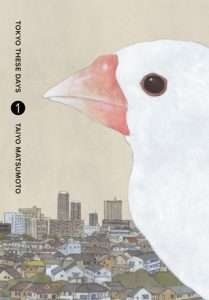 finding one’s purpose through the lens of manga publishing. This was easily the most interesting and compelling book I’ve read in a while and the layout feels very cinematic.
 Junji Ito’s Mimi’s Tales of Terror is an adaptation of Hirokatsu Kihara and Ichiro Nakayama’s collection of urban legends, Shin Mimibukuro. Each of the tales in the original compilation is reworked by Ito and features Mimi, an original character. The book consists of nine stories featuring college student Mimi, a bonus tale introducing different protagonists, and two afterwords describing how he altered the tales. This is a treasure trove for those who are fans of Ito, horror, contemporary legends, and evocative and haunting illustrations.
 Insomniacs After School is the most surprising, delightful, and charming book I have read in quite some time. It is a simple slice of life book that, thanks to its sincerity, at no point let me down. I wondered constantly if something exciting, paranormal or extraordinary might happen. It had all the hallmarks of a book that was about to toss a curveball at the reader, but it didn’t and yet I was never disappointed.
