Charlotte Bissett seems to be a pretty average middle school girl in the quaint town of Devilfish Bay. She lives with her internet chef father, Raymond, and her loyal canine companion, Vincent. She is a bookworm and devours any book put in front of her.
However, the cracks in her personal life slowly make themselves clear. Charlotte’s mother had gone missing in the recent past on a boating trip and her father is attempting to move on and begin to date again. On top of this, Charlotte doesn’t appear to have any friends, yet when two kids from her past, Molly and Griffin, move back to town it soon becomes clear why Charlotte is so guarded in her social life. Molly used to be Charlotte’s ride-or-die bestfriend, and yet after Molly moved away the girls had a falling out. Molly wants nothing more than to have a fresh start, but Charlotte is resistant and does her best to avoid Molly. Eventually, Charlotte reveals that the reason she is upset with Molly is because when Charlotte told Molly that a sea creature was responsible for her mother’s disappearance, Charlotte didn’t believe her. It is in that atmosphere of uncertainty and pre-teen angst that Charlotte, taking refuge in her safe place, the school library, is combing the shelves when a book falls off the shelf next to her. The book appears to be bound in green, improperly prepared leather of some kind, the pieces of rotted looking material stitched together in phantasmagoric fashion reminiscent of the Necronomicon from the Evil Dead franchise. The title of the book is “Liber de Monstrum” and true to that name appears to be a grimoire of supernatural information. Taking it home, Charlotte reads from the book, very carefully sounding out the words in an unknown language and upon uttering the last word the windows of her room blow open, the electricity goes out in the area around her house and in the morning Devilfish Bay experiences the first snowfall in fifty years.
On top of these strange occurrences, that day it’s announced that one of Charlotte’s favorite teachers, Mr Cooper, has gone missing and an enigmatic woman with platinum blond hair, who doesn’t appear to be who or what she seems, takes over the class in the interim. Clearly, Charlotte has awoken something or some things from their slumber, and it’s up to her to try and fight these unknown forces. The question is whether her recently returned friends will believe her this time and offer her their help, because it is clear Charlotte cannot fight these monsters alone.
The Girl Who Loves Monsters follows spectacularly in the “kids on bikes” tradition, creating a very real and present danger in a small community and presenting the kids willing to stand up to that danger when the rest of the community can’t see it or believe in it. Charlotte, Molly, and Griffin make a compelling trio bound by their history, common interests, friendships, and burgeoning teenage emotions. In this first volume in the Devilfish Bay series, writer Insha Fitzpatrick sets the scene brilliantly for future adventures and the various mundane trials and tribulations that will also stand in the main characters’ way as they attempt to combat the enigmatic evil that has come forth from the Liber de Monstrum.
The art by Ashley Robin Franklin creates a beautiful balance between the soft, cartoonish style that sets a relaxed tone to the everyday world of the story with the sharp, phantasmagoric elements that truly evoke the horror and supernatural elements. From the first page to the last, The Girl Who Loves Monsters is a compelling read that deals with very relatable parts of adolescence, such as being taken seriously by those around you, mixed with the eerie supernatural elements that could only take place in a small town somewhat set apart from the wider world.
The Girl Who Loved Monsters By Insha Fitzpatrick Art by Ashley Franklin Penguin Random House Viking Books for Young Readers, 2026 ISBN: 9780593690901
Company Age Rating: 8-12
NFNT Age Recommendation: Middle Grade (7-11) Creator Representation: African-American, Queer, Character Representation: African-American,
There is a long and storied tradition of bratty kids in children’s literature: Ramona B. Quimby, Max, basically every kid except Charlie in Charlie and the Chocolate Factory. And, of course, Junie B. Jones. Barbara Parks’ kindergarten heroine first entered the scene in 1992 and has graced 31 books, multiple stage plays, and a video game, even finding her way into Banned status in the early 2000s for not displaying good social values, poor grammar, and “mouthiness”. That by itself, in addition to being a straight up mood, could attract new readers to this legacy series. Now our kindergarten sass mouth is starring in her own graphic novel series from Penguin Random House, adapted by Colleen AF Venable and illustrated by Honie Beam. The first three books, Junie B. Jones and the Stupid Smelly Bus, Junie B. Jones and a Little Monkey Business, and Junie B. Jones and Her Big Fat Mouth, are already available and the fourth is expected September 2026.
All three graphics follow the original books closely with mild nods towards modernization (a fidget seat in Junie B.’s classroom and the appearance of a cell phone) but no real structural changes. Junie B. Jones and the Stupid Smelly Bus sees Junie B. on her first day of kindergarten and her dread over the too loud, too crowded, too much bus pushes her to hide in her school overnight with disastrous results. Junie B. Jones and a Little Monkey Business has Junie B. get confused over the arrival of her new baby sibling and telling an oopsie lie about him being a monkey. Finally, Junie B. Jones and Her Big Fat Mouth follows our main character dealing with an upcoming job day at school and realizing that she occasionally talks before she thinks things through.
Visually, the graphic is cute with a bright, animated art style and easy to follow panel flow. Beam adds fun, wavy cell borders when Junie B. is imagining wild scenarios and the book plays with different text styles for moments of emphasis. Venable sticks incredibly closely to the source material, in fact a little too closely.
I’m not sure this graphic does enough that’s different from the books. I mentioned nods towards modernization and they really are only nods. Venable didn’t leave room for changes in how contemporary children move through what is essentially a new world from what Junie B. inhabited. I’m not saying kids today can’t be “mouthy” or opinionated, there’s just something about this that feels out of step for me. Not only Junie B.’s behavior, but the reactions from the adults in her life seem really far removed from how kids today may behave. The books are filled with moments of Junie B. struggling or lashing out in a way that’s played for laughs, but reads as almost upset and none of the adults in the book seem to acknowledge or provide thoughtful help. I really wanted to like this -I love a mouthy, rude kid- but I finished feeling a little indifferent.
Junie B. is a hard character to like and that has always been part of her draw. She represents that main character part of us that remembers each questionable childhood moment or sees others having those same moments and can take a minute to laugh at them. Having these stories in a new format may introduce a new generation to their parent’s favorite sassy, mouthy rude kid. But, I suspect they’re going to meet her and not know what to do with her.
Junie B. Jones By Colleen AF Venable Art by Honie Beam Penguin Random House Viking Books for Young Readers, 202
Volume
ISBN
Junie. B. Jones and the Stinky Smelly Bus
9780593706701
Junie B. Jones and a Little Monkey Business
9780593706718
Junie B. Jones and Her Big Fat Mouth
9780593706725
Company Age Rating: 6-9
NFNT Age Recommendation: Easy Readers (5-9), Picture Books (3-8)
Ten years ago, Max Brallier ended the world for the first time with the illustrated middle grade reader The Last Kids on Earth, a funny romp through a zombie and monster infected post-Apocalyptic suburbia. The interceding decade brought about nine books, three seasons of a Netflix animated series, and now a graphic novel.
This new graphic novel, still written by Brallier with art by Brian Churilla, follows the original book very faithfully, introducing readers to our everykid protagonist 13-year-old Jack Sullivan who sees himself as “…totally not a hero. Totally not a tough guy. Totally not fighting giant monsters” as he fights a giant monster. Jack is joined by fellow survivors and former classmates Quint, June, and Dirk as the four try to figure out how to navigate this new, adult-free world and the perils that await them at every turn. Cleverness and curiosity are both key to survival and the kids’ differences add to their collective strength. Despite the extreme circumstances, the characters are intensely real. They are incredibly well drawn, realistic kids who may be caught up in the wild adventure of the zombie world around them, but they are also scared or lonely or overwhelmed. They are kids who felt forgotten or alone. These are characters the target readers see themselves in and want to grow with.
It’s tricky to review a graphic adaptation of an illustrated chapter book, especially one that stays this true to its source material. Churilla’s art mirrors the style and aesthetic of the original illustrations by Douglas Holgate, with only minor changes in sharpness and the depth that comes with full color art. The characters still look like their original concepts as do the monsters and the only real difference in the story is the formatting. The graphic is a nice, quick read and, like the original, will appeal to Captain Underpants and Diary of a Wimpy Kid readers.
The graphic version of The Last Kids on Earth is not doing anything new: it’s the same story with almost the same illustrations. There’s even a 4th wall breaking joke about it on the back cover, with Quint mentioning a sense of deja vu. But it’s also not trying to be new and it doesn’t need to be. It’s still fun and it’s still exciting and it still strikes a cord with its readers. I’ve had to hide my copy while working on this review because my kids kept trying to steal it from me. All three of them, with ages from 7 to 14, read the original and all three have been fighting me for their turn with this. They don’t care that it’s not new. They care that it’s there.
Sometimes graphic adaptations are a chance to update narratives and change perspective with changing sensibilities or to expand a universe or otherwise give readers something unexpected. And sometimes they’re a chance to see the thing you loved in a slightly different way. This adaptation doesn’t reinvent the wheel because the wheel still works. This new version not only has the potential to give longtime fans something new to enjoy, but to introduce new readers to the series.
The Last Kids on Earth The Graphic Novel Vol. 1 By Max Brallier Art by Brian Churilla Penguin Random House Viking Books for Young Readers, 2024 ISBN: 9780593622162
Company Age Rating: 13-18
NFNT Age Recommendation: Middle Grade (7-11), Older Teen (16-18), Teen (13-16), Tween (10-13)
The best friends are back, this time participating in their school’s Halloween festivities. Cookie is his (?) normal outgoing self, but Broccoli is not sure about this whole dressing up, scaring others and getting candy thing. Especially the scaring part.
The book has three short chapters during which children read about the right way to treat others, after seeing the students do the wrong way. Cookie helps the other students at their school learn that Halloween should be fun for everyone, not just themselves. Cookie also learns that friends and graciousness are more important than having all the candy. Finally, a very shy Sasquatch turns up in the second chapter! Or is it a student in a Sasquatch costume? Read and find out!
Cookie and Broccoli books are aimed at readers 4-8 years old. The colors and action are bright and bombastic, with many funny sections throughout. The text bubbles are brief, and the frames move in a predictable way throughout the book, which is easy for beginning readers. This is the fourth Cookie and Broccoli comic, but you don’t need to have read the first three. The book is 99 pages and includes an Epilogue and a “Halloween Tricks for Awesome Treats”; tips for safety and politeness during trick-or-treating.
Cookie and Broccoli: Scariest Halloween Ever! By Bob McMahon Penguin Random House Viking Books for Young Readers, 2024 ISBN: 9780593530023
Do you know what a wombat is? I had to look it up. They live in Australia and can get to 1 meter in length! They’re marsupials whose pocket is on their back, not stomach! (They are good diggers; this way, the dirt doesn’t fill the pocket.)
The wombats in is this book are Albert, experienced outback camper, and hopelessly mistaken Pickles, who brings a huge rolling suitcase, a large glass jar of pickles, donut-colored innertube, pineapple-shaped sunglasses, and huge expectations for glamping. Pickles thinks they’ll be taking a bus to their luxury cabin where he can eat rich food by the fireplace and swim in a pool! BOY, will HE be surprised! He doesn’t know how a compass works, he has trouble setting up his tent, and everything seems to make a sound or a tooting smell! He’s SURE that “…there’s nothing amazing about nature, Albert.”
Albert is very patient with him and is sure that Pickles just hasn’t had his “one special moment in nature” yet. You know, the moment that makes you FEEL ALIVE! Things begin to take a turn when they find a lost baby koala and need to find the baby’s mama, with help from Platters the Platypus.
This is a very funny and well-paced story with lots going on around the edges of the main action. Panels are mostly side by side and square or rectangular, with not a whole lot of text in each frame. Middle readers should find it an easy read. There are lots of surprises within the pacing of the story too, the main one being who baby koala’s mama really is! (There’s a doorbell on Mama’s cave! Ha!) Even though he’s scared, Pickles faces his fear, surprises himself and does some really amazing things on his camping adventure. But will he find his “one special moment?” No matter what kind of camping adventure they have, Albert, Pickles and Platters know it’s their friendship that’s the best thing about anything they do together.
This is an easy addition to a middle readers graphic novel collection for schools or public libraries. The book is marked “Age Range: 6-9”, but I think kids aged 6-12 should love the silliness and the Aussie accents and jargon. This is a complete story arc, and there is no violent content or adult themes. The art is clear-lined, colorful and sharp, with white gutters that brighten the page.
I reviewed the print copy. The hardcover and binding are very sturdy and should withstand many circulations and shoves into and out of the shelving for the reasonable price of $12.99!
Wombats! Go Camping By Jen Stutesman Penguin Random House Viking Books for Young Readers, 2023 ISBN: 9780593465295

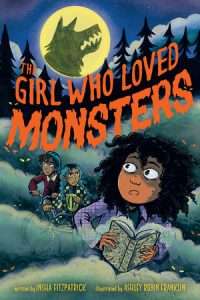 Devilfish Bay. She lives with her internet chef father, Raymond, and her loyal canine companion, Vincent. She is a bookworm and devours any book put in front of her.
 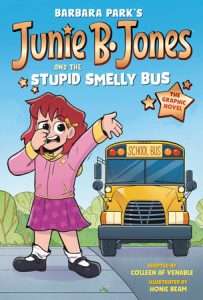 Charlie and the Chocolate Factory. And, of course, Junie B. Jones. Barbara Parks’ kindergarten heroine first entered the scene in 1992 and has graced 31 books, multiple stage plays, and a video game, even finding her way into Banned status in the early 2000s for not displaying good social values, poor grammar, and “mouthiness”. That by itself, in addition to being a straight up mood, could attract new readers to this legacy series. Now our kindergarten sass mouth is starring in her own graphic novel series from Penguin Random House, adapted by Colleen AF Venable and illustrated by Honie Beam. The first three books, Junie B. Jones and the Stupid Smelly Bus, Junie B. Jones and a Little Monkey Business, and Junie B. Jones and Her Big Fat Mouth, are already available and the fourth is expected September 2026.
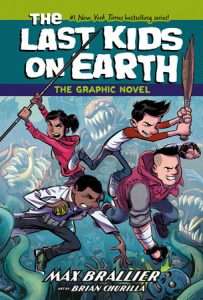 Ten years ago, Max Brallier ended the world for the first time with the illustrated middle grade reader The Last Kids on Earth, a funny romp through a zombie and monster infected post-Apocalyptic suburbia. The interceding decade brought about nine books, three seasons of a Netflix animated series, and now a graphic novel.
 this time participating in their school’s Halloween festivities. Cookie is his (?) normal outgoing self, but Broccoli is not sure about this whole dressing up, scaring others and getting candy thing. Especially the scaring part.
 Do you know what a wombat is? I had to look it up. They live in Australia and can get to 1 meter in length! They’re marsupials whose pocket is on their back, not stomach! (They are good diggers; this way, the dirt doesn’t fill the pocket.)