What starts out as a slice-of-life story about a young man who works at a coffee shop, quickly becomes so much more as the reader discovers that Eli has magic, and the new hot guy from the coffee shop, James, catches him trying to practice in secret. James introduces Eli to the magical world that regular humans don’t know about, as well as his friends. And in the process, they start dating.
Each chapter follows one of the ensemble characters through their day, which allows readers to connect with them while the story’s mystery progresses. Each character encounters something odd, so they bring the information back to the group and discuss a strategy to uncover what the adults are trying to conceal from them. When their questions go unanswered, and they can’t find anything through their research, the group decides to summon a spirit from the past to find answers. But all they find is more questions as volume one concludes.
This story starts with chapters that show the same sequence of events but from different points of view, which I really liked and thought the rest of the story might do the same thing. However, since the other characters did not overlap as much, this was not the case. As the series title, Arcana, suggests, there is allusion to the major arcana of tarot origin in the chapter titles and portrayal of character roles within the group. One character does use tarot cards to divine events, so this does happen on the page.
The author is inclusive with characterization and artwork. The Lost Heirs features a gay dating relationship, LGBTQ+ representation in side characters, and none of it feels forced nor does the inclusion of various body types of the main ensemble. The body types (thick and thin, short and tall) are rarely mentioned in the story and are portrayed with cartoon coloring and body proportions, which works to naturalize them. The color palette is rather limited, using a brighter color to highlight an important character or emotion when necessary.
There is non-graphic, consensual sex between two young men that happens behind closed doors, so no nudity is shown (apart from naked male chests while cuddling in bed afterwards). If you are looking to diversify your graphic novel collection, and want a story that happens to have healthy LGBTQ+ relationships and characters as well as different body types, this is a great addition. Just beware that volume one ends on a cliffhanger, so readers will be wanting volume two!
The Lost Heirs By Sam Prentice-Jones Feiwel and Friends, 2025 ISBN: 9781250290229
Hawthorne Vandecast is entering their villain era… or trying to. If anyone would start taking them seriously. Instead, they’re a potion barista being prepped by their mother to take over the family coffee shop in the aptly named Idlewood -a painfully common village only recently released from the horrifying rule of Lady Wrath and her Brigade of Shade. Released, but not freed because Lady Wrath and her team’s influence still sits over the town like an evil, alluring mist. And they’re looking for new recruits. Hawthorne yearns for the rock star lifestyle promised by the Brigade and the chance it gives them to finally be more than a boring, common potion barista. How hard could it be when their biggest competition seems to be sweet as syrup Maple, who couldn’t have an ounce of Evil in her whole body?
Hard. Very hard. Like, embarrassingly hard. A nightmare audition leads to an oopsie assassination leaving Hawthorne in charge and finally seeing what being a villain is. Will they like it? Will it finally make them feel different and special? Or is being Evil more than wearing cool long coats and living in a castle?
There is a sweetness and irreverence to Evil-ish that is incredibly charming. Debut creator Kennedy Tarrell gives this YA graphic the feel of a 90’s Disney fairytale (which fits with the career outlined in their bio) while twisting tropes and appealing to the cheeky bent that’s so big in that genre right now. Readers want the villain’s story and Tarrell offers a view of the hurt people behind villainous tropes and how their stories might not match what we expect.
The pseudo-Medieval village of Idlewood is both comforting and obviously grating for a growing independent spirit like Hawthorne. Tarrell’s art adds to that comfort and familiarity, leading the reader to expect something predictable and basic and this book is neither. Tarrell’s subtlety in small character moments gives the story and the figures populating it a depth and humanity that defy the fairytale aesthetic of the art. The dialogue is almost perfectly matched to that. You can practically hear the giggle in Maple’s early dialogue and the disdain dripping from Hawthorne’s. It’s immediately immersive and exciting.
Hawthorne is an amazing character, immediately recognizable to teen readers as someone desperate to be more than people see them as while not being sure how to be. They are relatable and earnest while also being just a little clueless. Hawthorne is presented as nonbinary and this is an element that’s just part of the story in such a beautiful way. They feel different from the village not because they’re non-binary, but because -like a lot of teens- they want to be more special than they feel like they are. It’s a character element that is universal tied to a character identity that is underrepresented.
Evil-ish, available for purchase July 22, 2025, is so much of what I love: it’s funny, different, and shockingly heartwarming without taking itself too seriously. It’s an easy next read for fans of Nimona or Maelstrom: A Prince of Evil. Teen readers can easily find characters to relate to in this story while also, hopefully, recognizing that every character and person has a backstory that may be worth learning.
Evil-ish By Kennedy Tarrell Feiwel and Friends, 2025 ISBN: 9781250839954
Company Age Rating: 14-18
NFNT Age Recommendation: Older Teen (16-18), Teen (13-16)
Tabitha—Tabi to her friends—has always been enchanted by Sommerland. When she was little, the Sommerland movies made her believe in true love and happily-ever-afters. Then she visited the Sommerland theme park, where she had a beautiful moment with her favorite character, Princess Madeline. After that, Tabi became determined to get a job at the park. She wants to bring others the kind of joy that visit brought her. And ideally, she wants to do it as one of the actors portraying Princess Madeline.
So far, so good: Tabi gets into the Sommerland High School Summer Program. She may be starting in a pretty unglamorous position—slinging chips and cheese at a nacho stand—but auditions for new character actors are coming up. And in the meantime, she can bring joy to park guests right where she is.
Tabi’s love for Sommerland is undeniable. She is passionate about creating magical experiences for guests—and she’s good at it. Not every staff member at Sommerland has her enthusiasm, but she meets a cute boy named James who loves bringing joy as much as she does—and seems to like hanging out with Tabi, too. Now, if she can just ace her audition, everything will be perfect. This is Tabi’s chance to show her knowledge of, and love for, the Sommerland characters. No one knows Princess Madeline better than she does. Surely the judges will see that.
But character actors are expected to, when in costume, look as much as possible like their characters. And Princess Madeline is thin. All the Sommerland princesses are. Tabi is not. Is this the end of her childhood dream? Or is there another path to becoming a princess?
Tabi is exuberant, kind, and hard-working. After failing her first audition because she didn’t realize dancing would be required, she practices dance steps constantly to be ready for the next audition. She holds onto her dream even as it becomes clear that only a certain type of girl – with a certain type of body – has ever been cast as a Sommerland princess. Well-intentioned and determined, Tabi is easy to like and to root for. She even manages to win over her jaded, skeptical roommate, who ends up helping Tabi and James with an audacious plan.
Sommerland is clearly a Disney analog: it’s both a movie studio and a massively popular theme park sometimes described as “the most magical place on Earth.” It even has its own versions of Disneyland quirks, like hidden kitties (for the Sommerland mascot, Kitty Wise) instead of Hidden Mickeys (images of Mickey Mouse hidden around Disneyland). These details help the park feel lived-in and real, and will be fun Easter eggs for Disneyland fans.
The art is colorful and vibrant, full of whimsical theme park landscapes, fantastical costumes, and a wide variety of uniforms and outfits. The characters are just on the realistic side of cartoony, with expressive faces and postures. There is clear contrast between the bright, magical world of the Sommerland park and the more utilitarian world behind the scenes: employee dorms, costume and uniform storage, actor auditions, and so on. Still, even when Tabi is just in her dorm watching videos, the art is lively and fun.
This is a charming romp with a goodhearted, sympathetic heroine and a fun and interesting setting. Hand it to Disney fans and anyone looking for a sweet, summery romance.
We Could Be Magic By Marissa Meyer Art by Joelle Murray Feiwel and Friends, 2025 ISBN: 9781250379399
Company Age Rating: 12-18
NFNT Age Recommendation: Older Teen (16-18), Teen (13-16), Tween (10-13)
Character Representation: African-American, Black,
Emma feels jealous, inadequate, and alone. To make it worse, she feels like she can’t talk about her feelings with anyone. Instead, she has outbursts and treats everyone harshly. She is guarded and defensive, causing the distance between her and her family and friends to grow and grow. This affects her social life, her family life, and her role on the All-Star basketball team. Then, Emma’s guardian spirit appears in the form of a cute french bulldog called Lexi. Lexi seems to be an ordinary dog to everyone, except Emma, who she can talk with. With Lexi’s help, Emma slowly learns how to open up, share her feelings, and get close with others again.
No Such Thing as Perfect is a well-written book addressing perfectionism, jealousy, and the power of communication. The author beautifully exemplifies the complexity of these feelings. The reactions and responses of Emma and the people she struggles with feel realistic, common, and relatable. I recognize many of the scenes and characters from my own life. All of the characters feel like real people. Some of the characters are understanding and forgiving of Emma’s bad behavior; others aren’t. The author does a great job of showing the inability to express yourself. Many characters wanted to say something and, as a reader, I could see how difficult it was for them. When Emma learns how to talk through her feelings with others and discovers that others have been experiencing similar issues, she feels better, like she’s not alone. Seeing these feelings and thoughts in a book character can give an almost cathartic feeling to the reader. The acceptance of her family and friends when Emma finally expresses herself gives her the freedom to let go of her perfectionism and be herself. This sentiment may encourage readers to talk through their feelings with their loved ones. Overall, the story has a serious tone and covers serious matters. However, the guardian spirit adds a bit of humor, creating a pleasant balance.
Visually, this book is cute and appealing. The art style carries a lighter tone than the topics and feelings addressed, making the story more digestible. The colors, soft lines, and big eyes provide a welcoming atmosphere for the reader. Facial expressions and movement are clearly conveyed. The guardian spirits’ animals have hearts in their fur patterns, which I think was a beautiful connection to their roles. There is a broad range of dress styles represented. Each character has their own style and many fun outfits throughout the book. There is a large representation of different skin tones and hair colors. However, I feel that the author should have included even more skin tones and hair types, especially considering that this story takes place in diverse New York City. This book is appropriate for people aged 9-14, especially those struggling with perfectionism, those interested in basketball, and those learning to manage relationships.
Bounce Back, vol 2: No Such Thing as Perfect By Misako Rocks! Feiwel and Friends, 2023 ISBN: 9781250838919
Publisher Age Rating: 9-13
NFNT Age Recommendation: Middle Grade (7-11), Tween (10-13)
Juniper and Hadley are good friends living in Larkspur, a town of fantastical people where horns, gills, and vibrant skin colors are commonplace. Juniper is an apprentice baker, while Hadley is a musician hungry for adventure. After a bakery customer requests an unusual pastry, the two friends volunteer to gather ingredients in the nearby forest. On this errand, they learn that a mystery creature is eating local crops, and they decide to investigate. Soon, Juniper and Hadley are meeting unusual creatures, making discoveries about themselves, and helping to mediate between the townsfolk and a magical new friend.
This is a gentle story full of well-intentioned characters. There are no villains, only misunderstandings, and no one gets hurt. In addition to the main plot, which involves respecting nature and animal habitats, there is an emotional arc in which Hadley becomes more comfortable with their nonbinary identity and Hadley and Juniper finally acknowledge their mutual crush and get together as a couple.
In addition to having no violence, this book has no sexual content beyond a quick kiss. There is a little discussion of gender: Hadley feels insecure about their nonbinary identity, and is reassured by a conversation with a fey who explains that most fey “don’t really relate to gender at all… a rigid binary like that doesn’t exist for us.” The publisher recommends the book for ages 12 and up, but I think it would be perfectly appropriate for kids a few years younger as well.
The art is straightforward and character-focused, with simple backgrounds and sparse detail. The color palette is soft, leaning heavily on earth tones, especially in the settings. The page layouts vary: there are many full-page images, especially when magic is involved or a new location is introduced, but other pages are divided into anywhere from two to six borderless panels. The art matches the relaxed pace and gentle feel of the story, making for an easy, comfortable read.
There is some bonus material at the end of the book; a rough recipe for the mushroom galettes that sent Juniper and Hadley into the forest for ingredients, and some character sketches of the two protagonists. The author’s bio reveals that Fern Haught is nonbinary like Hadley and works in a bakery like Juniper.
Cozy fantasy has been gaining popularity recently, and this book is a great example of that genre. Hand it to fans of The Tea Dragon Society and other readers who like their adventures sweet and not scary.
The Baker and the Bard A Cozy Fantasy Adventure By Fern Haught Feiwel and Friends, 2024 ISBN: 9781250828507
Publisher Age Rating: 12 and up
NFNT Age Recommendation: Teen (13-16), Tween (10-13) Creator Representation: Nonbinary , Character Representation: Nonbinary,
Magnus, Zoey, Pickles, and Tonka are four doggy pals who are playing their first game of Dungeons & Dragons. They’ve made their characters: Zoey plays a thoughtful cleric, Pickles a swaggering fighter, and Tonka a playful bard. As game master, Magnus sets the scene and plays all the other characters, like villains and townsfolk.
The adventure is off to a great start. After retrieving a lost magical collar, they are the toast of the town of Tail’s Bend. (The town is, of course, also populated with dogs, so they toast with hot dog water.) But Tail’s Bend has another problem: all the squeaky toys in town have disappeared, and the mayor’s son Squish—who is just a puppy—has run off to look for them. Sounds like a job for the DnDoggos! With the real-life players rolling dice, getting creative, and taking plenty of snack breaks, their characters brave a creepy forest, magical monsters, and a doggy gang that is up to no good.
This cute, funny story doesn’t require readers to understand Dungeons & Dragons. In fact, the players in the book are new to the game, so Magnus sometimes gives a brief, beginner-friendly explanation of how something works. Readers who are familiar with D&D, however, will get an extra kick out of some jokes, like the fact that the players keep asking random villagers their names, forcing Magnus to scramble to name them.
Because D&D includes combat, there are a few battle scenes in the in-game portion of this book. They are totally bloodless, and often a bit silly, with the only harm done to a couple of supernatural monsters. There is never a real sense that any dogs might get seriously hurt. (And if they get a little hurt, well, that’s what the cleric is for.)
The art is colorful and active. Each of the DnDoggos looks similar to the dog playing them, but the fantasy world and its characters are far more detailed than the players at their gaming table. This makes it easy to remember which character goes with which player, but also easy to tell whether a given panel is set inside or outside the game. It also helps that the DnDoggos are outfitted as adventurers, dressed in medieval tunics, cloaks, armor, and such, while the doggy players do not wear clothes. There is lots of variety in the page layouts, with regular panels interspersed with borderless panels that spill across whole sections of the page, giving a sense of uncontained exuberance and movement.
Silly jokes abound, both in the fantasy world and at the gaming table. Some of the humor is based on the characters and their personalities—Tonka plays a bard with a magic kazoo, Pickles has very little tact, and Zoey can’t lie even to the bad guys—while some is about D&D or about dogs. The jokes keep things light, which works well given the overall feeling of friends having fun together, inside and outside the game.
This is a fun, silly romp with cute dogs and an accessible introduction to what a session of Dungeons & Dragons looks like. Hand it to anyone with an interest in D&D, whether or not they have played before.
DnDoggos vol. 1: Get the Party Started By Scout Underhill Art by Scout Underhill Feiwel and Friends, 2024 ISBN: 9781250834348
Publisher Age Rating: 9-12 NFNT Age Recommendation: Middle Grade (7-11), Tween (10-13) Creator Representation: Queer, Nonbinary
Frankie is having a hard day at their middle school. Make that a hard year. They recently came out to their best friend Dallas as non-binary, and now Dallas is besties with the “mean girls” group and doesn’t hang around with Frankie at all. On top of that, they have a big band recital coming up, and none of the clothes Frankie has tried on for it seem to “fit”.
Frankie feels like they don’t fit anywhere. Their lawyer mom is supportive of their announcement, but school is a hard slog right now, except for the drums. When Frankie plays the drums, they feel like “I know exactly where and what I’m supposed to be.” When Frankie meets a strange dog on the street who really, really wants Frankie to follow her. Frankie has always loved dogs, “because dogs aren’t bullies. They never hide what they’re thinking.” But Frankie’s mom is allergic, so no dogs are allowed at home.
Frankie meets Platinum again in a park. They get knocked out and wake up in the Omniversal Doghouse in front of a pantheon (or Pawtheon) of Dog Gods who want them to be the next Dog Knight! Unbeknownst to humans, the Pawtheon has watched over, protected, and warned humans against the evil chaos gremlins since time immemorial, and the Dog Knight is the human who vows to protect, serve, and help dogs “wherever humans need them.” The Pawtheon is headed by the Omnidog, who tells Frankie “We are the most Good Boy.”
This is a book any dog lover will love. Dogs who are gods, magical pacts, helmets that allow you to talk to dogs, swords, bullies who are shown the errors of their ways, and the value of friendship triumphing over the awkwardness of middle school – what’s not to love? The writing is snappy and funny and knows dogs and dog behavior – there are many very funny parts I giggled at. (“Oh, sorry…I got caught up in the scritchins.”) The dog expressions are depicted thoughtfully. My favorite dog god was the Yorkshire Terror, who chases away robbers, gremlins, shadows, and people who are up to no good. He also has the best B-grade superhero lines, like “You can’t run from the paws of justice!”
Frankie will be tested several times by the Pawtheon, not unlike the tests of faith Percival underwent in his quest for the Grail in Le Morte d’Arthur. Will they pass? How will they handle the frenemy Dallas? Will they find a perfect outfit for the band recital?
This book is so empathetic. On page 122, when Frankie is trying to reach out to Dallas, they observe “How sad it must be to be so popular and still have no one you can trust.” I wish I had had such wisdom then. The book provides a window into the Big Hard Feelings and Changes that middle schoolers are trying to deal with and portrays how they, too, can get through them. Sometimes it’s messy, but they can.
The comic has a content warning inside the front cover that there is bullying, misgendering and displays of transphobia. Also portrayed are test anxiety, anticipation anxiety, difficult conversations, and lots of face licks and good belly scritches! The book is appropriate for middle school libraries and public libraries and represents a minority in a humane way. Librarians should be aware that there are some heart-warming depictions of trans people. This book is a stand-alone and is not part of a series.
The Dog Knight By Jeremy Whitley Art by Bre Indigo, Melissa Capriglione, , Feiwel and Friends, 2022 ISBN: 9781250756725
Doggo and Pupper is the first book in what will certainly become a popular new early reader chapter book series. Acclaimed novelist Katherine Applegate, famous primarily for fantasy and animal characters featured in books like The One and Only Ivan, the Endling trilogy, and the Animorphsseries, makes a successful debut into early reader fiction with Doggo and Pupper. The volume features seven short chapters of simple prose text, with each page fully illustrated. Charlie Adler’s illustrations perfectly complement the story, adding detail and whimsy that make this book a delightful offering for young readers.
Doggo is the trusty family dog who finds his mundane and predictable life quite satisfactory, if a little boring. His family starts to think he might need a little more excitement, though, and they think bringing home a new puppy, Pupper, is just the thing. Doggo soon grows frustrated with Pupper, who is silly, messy, and untrained. Doggo’s ever-present companion Cat reminds Doggo that he used to be a little more carefree himself, but he doesn’t seem to recall those days. After the family sends Pupper to charm school, the younger dog’s behavior changes drastically. He seems like a perfect pup. But has he changed too much? Maybe Doggo needs to show him how to have fun again while reminding himself at the same time.
Charlie Alder’s artwork is winsome and expressive. His illustrations illuminate Doggo’s daily activities in a humorous fashion showing us all the adventures even an older dog might have when his humans aren’t around, e.g. baking, dancing, toilet drinking. Each character is portrayed with a clear personality: Doggo, relaxed and settled; Pupper, fresh and energetic; Cat, the voice of reason. The images are cartoonish and warm, and the emphasis is clearly on the pets rather than their owners. While we see the people, it’s never their faces, but rather their legs and torsos that are featured. The animals also walk upright and use human mannerisms. Their postures and expressions are entertaining and give the book a very whimsical quality.
Young readers will really enjoy Doggo and Pupper and will look forward to more books in the series. The chapter divisions are well-placed, with clear titles, making the book accessible for young readers. The heartwarming story and humorous illustrations combine to create a winning product. This is surely the start of a lasting collaboration for Applegate and Alder, and readers will be clamoring for more adventures from Cat, Doggo, and Pupper. This series is a great investment for all youth and elementary school libraries.
Doggo and Pupper By Katherine Applegate Art by Charlie Alder Feiwel and Friends, 2021 ISBN: 9781250620972 Publisher Age Rating: 5-7
Although there’s a long tradition of goofy animal detectives, the wild success of Dav Pilkey’s Dogman series has inspired a fresh spurt and this latest furry investigator is a hilarious addition to the genre.
Mo O’Hara’s signature humor is well-established in previous series like My Big Fat Zombie Goldfish, and she’s teamed up with British artist Jess Bradley for her first graphic novel. Special Agent Anonymoose and his sidekick, Not-Quite-So-Special Agent Owlfred are introduced via their personnel files. Then the first chapter starts with a, well, he meant well… ok, it was a disaster. Instead of successfully solving his 100th case, Anonymoose has flopped, big time. As Owlfred says, “It wasn’t technically a crime, sir. More of a meteorological event.” To add insult to injury, Anonymoose is ordered down to headquarters to help celebrate the 100th case of his rival Camo Chameleon, and clean up the loose ends of Camo’s last case by finding a missing turtle who’s needed as a witness.
Anonymoose has the disguises, Owlfred has the smarts, and together they’re one great team. Can they solve the mystery, put up with Camo’s boasting, and prove that Anonymoose has what it takes to complete his 100th case? Or will they disappear before they solve all the strange happenings?
The silly text, full of jokes, puns, and general hilarity, is complemented by Bradley’s goofy art. Anonymoose’s disguises are each funnier than the last, and will keep readers giggling as they quickly find him disguised as a palm tree, giant turtle, and more while the onlookers are completely fooled. Owlfred reluctantly goes along, getting dressed up as a complementary coconut and other wacky disguises that fit his small owl form, and even use his big, wire-rimmed glasses. The art is bright and colorful with lots of action and movement among the plethora of animal characters and many dramatic close-ups as Revelations Are Made. The speech bubbles and panels are easy to follow and the bold art and simple lines work together well with the intermediate text for readers not yet ready to tackle more complex graphic novels. The chapter headings are included on each page, along with moose tracks and owl feathers, so readers can keep track of how far they’ve gotten in the story and the goofy fun comes full circle with another newspaper headline, this time about Anonymoose and Owlfred’s success.
This is pure fun and I laughed all the way through. It’s got some gentle lessons about paying attention to the facts and looking below the surface and Anonymoose does learn to appreciate the rather stereotyped Owlfred more, especially when he’s gone and Anonymoose realizes he hasn’t always been the good friend he should have been. Although most of the characters who are given a gender are designated as male, the head of Special Branch is a very snazzy skunk in pant suit and pearls. This is sure to be wildly popular with both Dogman fans and Mo O’Hara’s own readers. The next volume in the series is planned for 2021, so be ready for Anonymoose and Owlfred’s next exciting case!
Agent Moose 1 By Mo O’Hara Art by Jess Bradley ISBN: 9781250222213 Feiwel and Friends, 2020 Publisher Age Rating: Series ISBNS and Order
Title Details and Representation NFNT Age Recommendation: Middle Grade (7-11)

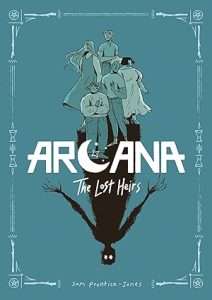 What starts out as a slice-of-life story about a young man who works at a coffee shop, quickly becomes so much more as the reader discovers that Eli has magic, and the new hot guy from the coffee shop, James, catches him trying to practice in secret. James introduces Eli to the magical world that regular humans don’t know about, as well as his friends. And in the process, they start dating.
 —Tabi to her friends—has always been enchanted by Sommerland. When she was little, the Sommerland movies made her believe in true love and happily-ever-afters. Then she visited the Sommerland theme park, where she had a beautiful moment with her favorite character, Princess Madeline. After that, Tabi became determined to get a job at the park. She wants to bring others the kind of joy that visit brought her. And ideally, she wants to do it as one of the actors portraying Princess Madeline.
 Emma feels jealous, inadequate, and alone. To make it worse, she feels like she can’t talk about her feelings with anyone. Instead, she has outbursts and treats everyone harshly. She is guarded and defensive, causing the distance between her and her family and friends to grow and grow. This affects her social life, her family life, and her role on the All-Star basketball team. Then, Emma’s guardian spirit appears in the form of a cute french bulldog called Lexi. Lexi seems to be an ordinary dog to everyone, except Emma, who she can talk with. With Lexi’s help, Emma slowly learns how to open up, share her feelings, and get close with others again.
 are commonplace. Juniper is an apprentice baker, while Hadley is a musician hungry for adventure. After a bakery customer requests an unusual pastry, the two friends volunteer to gather ingredients in the nearby forest. On this errand, they learn that a mystery creature is eating local crops, and they decide to investigate. Soon, Juniper and Hadley are meeting unusual creatures, making discoveries about themselves, and helping to mediate between the townsfolk and a magical new friend.
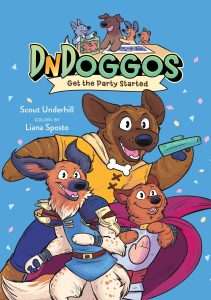 Magnus, Zoey, Pickles, and Tonka are four doggy pals who are playing their first game of Dungeons & Dragons. They’ve made their characters: Zoey plays a thoughtful cleric, Pickles a swaggering fighter, and Tonka a playful bard. As game master, Magnus sets the scene and plays all the other characters, like villains and townsfolk.
 Dallas as non-binary, and now Dallas is besties with the “mean girls” group and doesn’t hang around with Frankie at all. On top of that, they have a big band recital coming up, and none of the clothes Frankie has tried on for it seem to “fit”.
 Although there’s a long tradition of goofy animal detectives, the wild success of Dav Pilkey’s Dogman series has inspired a fresh spurt and this latest furry investigator is a hilarious addition to the genre.
