Iranian Love Stories is a journalistic look at Iranians in their 20s heavily controlled by a conservative regime. Ten vignettes cover individuals and couples, their dreams, fears, and political angst. Jane Deuxard is the pseudonym of two journalists, a man and a woman, who conducted the interviews that make up the script of the graphic novel. They are also a romantic couple, opening the book by talking about the rings they purchased to make them appear married as part of the costume that would allow them to move freely in Iran, along with the woman’s veil and ¾ length coat. Most of the women in the book, including the blonde female journalist, are shown wearing loose headscarves in public in accordance with the local law. Originally published in 2016 in France, the 1979 Iranian Revolution and the Green Movement of 2009 are discussed by interviewees, but the book predates the political unrest and bloody governmental responses that have occurred in the last 5 years.
The unspoken word in the title is “forbidden.” The writers sought out specific kinds of stories that are outside of the accepted traditional social structure. One of the brief interludes between profiles shows a handful of people the authors try to talk to giving pat answers such as, “I want a good, pious husband. I’d like an interesting job and children… etc., blah blah blah.” While their work mostly likely does reveal concerns felt by a large swath of Iranian youth, the book makes no attempt to give a balanced look at all Iranians. I appreciate that the authors made their goal clear in their approach. The anger in the stories is targeted at the regime; there’s less discussion of Islam in general. It’s not about bashing Islam. Instead, it’s a nuanced look at the different perspectives of a wide variety of men and women with complex ideas about the roles of men, women, and religion in their lives. No LGBTQ subjects are covered.
Many of the interviews reveal details of sex lives and purity tests, others focus on family conflicts and precise dances between obeying and breaking laws. It’s stressed many times that simply discussing all of these matters is not allowed, let alone performing the specific acts. In one astonishing vignette, a woman discovers from the authors’ conversation with her partner that he disagrees completely on their future, where they will live, and what their roles will be. She admits to the journalists that, even though they’ve been together for more than a year, they’re allowed so little time to speak openly that she didn’t know how he thought about these things at all. Throughout there are references to revolutions of the past and frustration with the political system, especially a feeling that future mass actions are not worth the danger. It’s jarring to see the degree to which the government is tied to their romantic lives. The stories vary in length and give their characters depth and development. Between each focused profile is a page or two that places in context some of what the journalists had to do to find subjects and their time together, including a stint of being held and questioned about their motives and cavorting in their hotel room. While they are present in all of the discussions, the journalists focus on their subjects’ stories more than their own.
The art by Deloupy is arresting. With thick lines and a muted color palette, the stories come to life with a dynamism unexpected from largely depicted conversations. He captures a great deal of expression in eyes, mouths, and body language. Backgrounds provide sweeping views from the Isfahan cable cars to stark cemeteries, juxtaposed with claustrophobic interiors. You feel like you’re traveling the country with the journalists. The vignettes each start with the names of the subjects, their ages, and location. The interludes are shown surrounded by a notebook corner, similar to a moleskin, giving the impression of a journal and visually separating the sections. In the stories there are realistic depictions of the lives described as well as political cartoon style flights of fantasy, such as Pez dispenser politicians and arachnid mother-in-laws. The stories unfold in panels without lined borders, often delineated by colored backgrounds or leaving heads and shoulders floating on the page. This adds to the travelogue feel and provides opportunities for a contrasting shock in the moments the images bleed to the edges of the page. The pages are frequently dense with illustration.
This is an excellent addition to any adult nonfiction graphic novel collection. Readers of Marjane Sartrapi and Joe Sacco will especially enjoy it. The subject matter and presence of a few sexually graphic parts make it better suited to adults, though older teens may find it interesting. It could be a deep conversation starter for weighty book clubs and college classes. For a broader comparison of approaches to marriage in Muslim culture, try reading this alongside the bubbly and cartoonish memoir That Can Be Arranged by Huda Fahmy.
Iranian Love Stories By Jane Deuxard Art by Deloupy Graphic Mundi, 2021 ISBN: 9781637790045
Publisher Age Rating: 16+
NFNT Age Recommendation: Adult (18+) Character Representation: Iranian
This book opens with the free speech portion of the first amendment from the US Constitution, followed by writer Ian Rosenberg, who is Jewish, explaining the events that led to this book. Several events are referenced within the first three pages, including the 2018 mass shooting at Marjory Stoneman Douglas High School in Parkland, Florida, National School Walkout protests, 2017 Women’s March, and Mollie Steimer’s arrival at Ellis Island from Russia in 1913. Steimer’s foundational court battles lead into a key consideration: “Who is truly heard in the marketplace [of ideas]? If women, minorities, and the poor are not granted equal opportunity to enter the market, how can their voices participate in the competition for truth?” This question is immediately followed by talking-head quotes from law professors Charles Lawrence III, who is black, and Catharine A. MacKinnon, who is white.
The second chapter looks at Colin Kaepernick and the act of taking a knee (originally staying seated, but changed to kneeling as a sign of respect to fallen soldiers, an oft-overlooked nuance I was glad to see highlighted). After comparing reactions for and against that act of protest, the narrative shifts to the 1935 case of a child not participating in his classroom’s pledge of allegiance. There, as in Steimer’s case and many others used in this book, Rosenberg quotes and contextualizes judges’ rulings, their immediate fallout, and what they mean for Americans’ freedoms today. In each chapter, Rosenberg cites different scholars, justices, authors, and legal precedents, ensuring that his teacherly perspective is never unilateral or unsupported by facts and expertise. This is important when debunking Donald Trump and Clarence Thomas’s hypothetical rewriting of libel laws to go after the media, for example. Further issues include but are not limited to civil rights protests, propaganda on social media, Westboro Baptist Church’s protesting at funerals, and the Unite The Right rally in Charlottesville. There’s a lot to chew on in every chapter!
All of this history and legal analysis needs a skilled cartoonist to weave its various threads into a cohesive whole, and artist Mike Cavallaro is mostly up to the task. There can be paragraphs of dry text on some pages, and Cavallaro makes sure to break up each block of text with a related image, often a picture of someone in portrait. Layouts will include images designed to guide readers across the page; other times, they use broad, straightforward grids. Some metaphorical imagery underlines Rosenberg’s points, but more often than not the art is rather literal, depicting flatly delivered quotes, exposition, talking heads, and book covers. The first amendment appears as an anthropomorphic #1 wearing a red cape, battling laws aimed at restricting it. I can’t help but think back to my previous review of What Unites Us, which used color and figurative imagery more frequently and effectively. That’s not a knock against the arguments presented in this book, only its presentation.
An afterword including quick summaries of first amendment concepts, as well as a glossary of legal terms and chapter-by-chapter bibliography, provide resources for learning and recall. As one might expect in a thorough review of free speech, some of the book’s examples involve swearing, from celebrities cursing at awards shows to George Carlin’s “seven words you can’t say on television” bit, Samantha Bee’s callout of Ivanka Trump over immigration policy in 2018, and “fuck the draft” printed on a jacket during the Vietnam War. A section about Larry Flynt’s legal battles over Hustler, a pornographic magazine, does not include porn. The issues discussed in this book are undeniably pertinent to all Americans, as well as historians and legal scholars. To make another comparison to What Unites Us, this is another powerful teaching tool from the World Citizen Comics line of publisher First Second that demonstrates over and over the impact of people standing up for their rights, even (especially!) if doing so is unpopular. The presentation is scholarly, as well it should be. Close reading and factual analysis should be considered signs of respect for “the most American of virtues.”
Free Speech Handbook By Ian Rosenberg Art by Mike Cavallaro First Second, 2021 ISBN: 9781250619754
Series ISBNs and Order
NFNT Age Recommendation: Adult (18+), Older Teen (16-18), Teen (13-16) Creator Representation: Jewish Character Representation: African-American, Russian, Mobility Impairment, Jehovah’s Witness, Jewish, Protestant ,
Guerilla Green opens with author and narrator Ophélie Damblé on the Paris Metro to Boulogne-Billancourt, surrounded by people on their phones who are slowly driving her crazy. She snaps, begins handing out seeds (and green advice) to those around her and makes a dramatic exit by quoting Green Guerilla icon Ron Finley, “Let’s plant some @#*%!” Just like that, you are in the headspace this book will occupy. It swings between history lessons on green guerillas around the world, indignation at the state of the world we are in today and actions you can take today to start changing your city. It is a call to action book that uses the graphic novel format to reach out to a broader audience and soften the grim reality it’s trying to bring attention to.
Damblé’s entry into the world of guerilla gardening started when she was approaching age 30 and, having spent a decade in public relations, decided it was time for a life change. She saw friends her age fleeing from the city to the countryside, but she wanted to stay and put in the work to make Paris more beautiful and livable. She shares her research on the notion of rebellious gardening beginning in the 17th century through to today with examples of people and groups around the world continuing this work. Over the next several chapters we get lessons on topics including how to clean up your city, civil disobedience for the greater good, how and where to garden, saving biodiversity and her hopes for the future.
While she does admit that some of these acts and works might seem pretty big, Damblé makes the argument that every movement and change has to start somewhere and it can start with one person. This book is her pitch for each of us to become that one person. Any one of us can start to make a positive change in our city and help the planet by doing a little digging. She’s giving you an outline on how to get started and at the end of the book there is even a list of both French and English resources to keep reading and a list of websites to check out to stay motivated. There are interstitial breaks after each chapter titled “Ophélie explains it all” with a real life photo of Ophélie and friends from that chapter. Ophélie then elaborates on some of the facts from that chapter and any of the details she feels could use more context. These were helpful sections and I could appreciate that they were set aside to give them more serious weight.
The art by Cookie Kalkair feels reminiscent of Noelle Stevenson’s work on Nimona and Lumberjanes (which was also published by BOOM! Box) and the art is the saving grace of this graphic novel. It’s lighthearted, whimsical, and helps with the rather uneven pacing of the storytelling. The earnestness of the message was undercut at times with some curmudgeonly jabs at younger readers and an unspecified rival’s book, as well as some ill-advised references to historic figures like Rosa Parks. The pacing also varies wildly throughout the book and reading feels stilted as such. While there are some pie-in-the-sky ambitions in Guerilla Green, the hope it exudes, that we can all make a difference, is undeniable. The militaristic mindset, some of the history lessons, and the nature of the topic makes this book better suited to high school teens and older readers. Younger readers may have trouble with context for some of the biggest planetary issues addressed. Big city dwellers will also have more familiarity with some of issues addressed, but that doesn’t mean that it can’t be enjoyed by those with the luxury of a backyard.
Guerilla Green By Ophélie Damblé Art by Cookie Kalkair BOOM! Box, 2021 ISBN: 978-1684156634
NFNT Age Recommendation: Adult (18+), Older Teen (16-18) Creator Representation: French
Re: Constitutions: Connecting Citizens with the Rules of the Game, the latest title from First Second’s World Citizen Comics series, tackles constitutional law through the medium of comics. Bringing an international perspective to her subject matter, political adviser Beka Feathers explores the impact of constitutional documents on everyday life. She also delivers a political call to action, emphasizing the role of civic engagement in defending our constitutional rights. The content in this youth-friendly title is compelling, but its storytelling choices may fail to appeal to a broad audience.
Re: Constitutions follows Marcus, a teenager struggling to write a citizenship essay for his summer internship. As Marcus and his jokey kid sister Aaliyah attend social gatherings and complete volunteer projects around town, neighbors help Marcus with his assignment, telling personal stories that illustrate how our founding documents set the “rules of the game” for our public lives.
As a civics lesson, Re: Constitutions is an impressive read. This book draws on examples as diverse as Kosovo, Argentina, and the United States to demonstrate how constitutions affect the lives of citizens. For an Albanian speaker in Kosovo, a fair constitution guarantees the right to speak a native language; for a woman in Rwanda, the right to female representation in government; and for Marcus’s own grandparents in the United States, the right to buy a house in a formerly segregated neighborhood. In each case, the book is upfront about constitutional failures, lingering on moments when founding documents missed the mark or were betrayed by politicians. Readers learn that it’s up to ordinary citizens to take action and uphold our shared values.
Re: Constitutions is intelligent and incisive, but I worry it’s a book without a clearly defined readership. The teenage protagonists, paired with Kasia Babis’s crisp, colorful art, feel aimed at a middle- or high-school audience. However, this book isn’t an obvious choice for a civics classroom—it’s just too unstructured, more longform essay than textbook. The one exception is the “Guide to Drafting Your Own Constitution” included in the appendix, which gets into the nuts and bolts of constitutional documents and would be an engaging exercise for the classroom.
Though I can’t see this book as a class assignment, I’d be equally surprised if a politically-minded teenager picked it up for leisure reading. In short, Re: Constitutions reads like edutainment. Its artificial framing device and sweetly earnest cast of characters are well-executed but unmemorable, a formula likely to turn off readers. I think this book would have been better served if it had leaned into its own wonkiness and adopted the “explainer” format popularized by Scott McCloud’s Understanding Comics, where a stand-in for the author walks readers through a complex topic.
Consider purchasing Re: Constitutions for larger young adult or school library collections, particularly those that emphasize nonfiction comics or civics titles. There’s a chance this book might have relevance for the right reader—perhaps a civics student completing their own citizenship assignment. However, I don’t see this as an essential title for the average public or school library.
Re: Constitutions: Connecting Citizens with the Rules of the Game By Beka Feathers Art by Kasia Babis First Second, 2021 ISBN: 9781250235435
NFNT Age Recommendation: Older Teen (16-18), Teen (13-16), Tween (10-13) Character Representation: African-American, Black
Dan Rather has seen some stuff. If current events and recent history get you down, Rather’s autobiographical examination of American history and its lessons offers an opportunity to zoom out to consider the long arc of justice as well as zoom in to see help and progress on the ground. He opens the book reminiscing about his family vacation in their ‘38 Oldsmobile back in the ‘40s, waxing nostalgic about a time in his life and a bygone era before offering this statement that is also a crux of the book:
“I know now that the country I was growing to love had its flaws. I already knew the pain of the Great Depression and would soon live through the crisis of world war. I would then go on to a career that forced me to confront the often simmering and sometimes explosive injustices of the United States; its bigotry, exploitation, callousness, and corruption. It may seem counterintuitive, but these flaws made me love my country even more.”
Artist Tim Foley uses imagery that directly ties Rather’s words to the flow of history and spirit of citizenship. Examples include protesting, helping others in a crisis, draping oneself in the American flag to feel superior, Native Americans standing in the shadow of the American flag, and a crowd drenched in red and blue stripes. While the colors red, white, and blue are used throughout, they are also signifiers of when a given issue has permeated one person or group of people and not another. Juxtaposition is also important, as when Rather discusses America’s poor decisions following the attacks of 9/11. As the text descends next to the wreckage of the World Trade Center, the words become white on black and describe progressively worse decisions America made in response. As with all thoughtful graphic novels, simply reading the words will not convey the full meaning of each page.
Each chapter of the book focuses on a general trait that, ideally, unites the American people. Each trait is viewed through the lens of Rather’s personal experience, whether from his youth or assignments as a professional reporter. The general narrative for each chapter follows a similar arc of describing a problem in America that used to be a lot worse or virtue that used to be a lot more evident, followed by describing some historical and recent examples that give Rather hope for the future. What is commendable in this rather even-keeled approach to American history, with its shame and achievement, is Rather’s humility regarding his place in it all. He acknowledges his own blind spots and lapses in judgment over the decades. He presents himself as a growing, learning person, not a finished, perfect standard everyone else must strive toward.
There’s plenty to learn from Rather, whether it’s about meeting Martin Luther King, Jr. and Medgar Evers in the ‘60s, examining how books and literacy connect Thomas Jefferson, Frederick Douglass, and Dolly Parton, or how the spirit of civic duty manifested in Rather’s day compared to now. He also covers McCarthyism, electoral populism, science deniers, artistic movements, America’s immigration policies and treatment of immigrants, and lessons in community and empathy from his modest childhood among neighbors so poor their houses didn’t have floors.
If there’s a weakness to the book, it’s repetition from Rather. True to its title, the book is always looking to make connections and speak to people’s better nature and shared principles, but that also leads to hearing non-specific calls to action with each chapter. We should all band together, look out for each other, do our best, look at the big picture, and… do something! Respect your neighbors, education, journalism, and voting rights, at the least. Vague advice, but it seems to come from the heart. There’s a lengthy afterword where Rather reiterates in text everything the graphic novel just said.
This is a wholesome accounting of American history, including anecdotes from Rather’s life and career, whether as a passive observer or active participant/reporter. The visual elements do a lot to avoid boredom or potential eyerolling at the “stories from grandpa” effect. This book is recommended for teens and older who are looking for stories of America’s promise, whether unfulfilled, under fire, or still in progress. This is a great title for personal enrichment as well as social studies collections.
What Unites Us: The Graphic Novel By Dan Rather, Elliot Kirschner Art by Tim Foley First Second, 2021 ISBN: 9781250239945
The Nib compiles approximately fifty webcomics (many of which were previously published on thenib.com) from forty creators on a wide variety of LGBTQ+-related topics into this Kickstarter-backed anthology. The comics run the gamut from one-page funnies to ten-plus-page detailed glimpses into queer history. Associate Editor Matt Lubchansky’s introduction explains the origin of the title’s source, the phrase “Be Gay, Do Crime.” Lubchansky also discusses the significance of comics as a means to express queer identity in a singularly accessible manner.
Some of the most interesting comics in the anthology serve to educate readers about various aspects of the queer experience. These include histories, cultural and national disparities in treatments of queer people, and procedures like embryo adoption and securing birth control as an asexual person. One historical highlight is The Life of Gad Beck, written by Dorian Alexander, which details gay Jewish Beck’s resistance under Nazi Germany. Levi Hastings’ gorgeous illustrations are rendered in black, white, and pale blue, with thick outlines (there is no art tool information in the book, but it looks like Hastings used oil pastels). Another particularly informative contribution is Sam Wallman’s A Covert Gaze at Conservative Gays, an illuminating piece about historical and contemporary right-wing activism among queer people. At first glance, Wallman’s panelless comic closely resembles a infographic by a Mad Magazine artist; Al Jaffee comes to mind. But this black, white, and pink comic strikes a perfect balance between discussing “gay supervillains” like Milo Yiannopolous and more sympathetic conservatives like gun advocates in the wake of the Pulse Nightclub shooting. Kazimir Lee’s What’s It Like to Raise Kids in Malaysia When You’re LGBT? is another interesting piece which details political perspectives and individual experiences of queer people in Malaysia. The standout art is reminiscent of a mid-20th century picture book; the full-color illustrations are predominantly in earthy reds, pinks, yellows, and browns, and there are minimal outlines in the characters’ block-like head and body shapes.
The anthology balances its drier informational pieces with funny one-page strips and relatable memoirs. A memoir highlight is Dancing with Pride by Maia Kobabe (Gender Queer) and is about eir experience in a folk dancing class where dancers are assigned different roles based on their perceived genders. The simple illustrations appear to be in pencil and watercolor, and feature a page where the dancers are lined up in order so their shirts make a rainbow, a very subtle and sweet nod to queerness in non-queer spaces. Another moving piece is written by Sarah Mirk and details activist Pidgeon Pagonis’s experience as an intersex child. The piece, Gender Isn’t Binary and Neither Is Anatomy, is illustrated by Archie Bongiovanni (A Quick & Easy Guide to Pronouns, Grease Bats). A couple laugh-out-loud funny highlights include Joey Alison Sayers’s The Final Reveal, in which the extremes of gender reveal parties are spoofed, and Shelby Criswell’s Astrological Signs as Classic Queer Haircuts.
As is always the case when I read comic anthologies, there were pieces that didn’t resonate as well with me as those I’ve named above. Rather than specify them, I will argue that it is because this book features something for every reader. If a piece didn’t resonate with me, it is sure to resonate with someone else. The queer representation is so varied, with gay, lesbian, bisexual, trans, nonbinary, intersex, and ace representation, and with countless intersectional queer identities, that I am confident every queer reader will find something to relate to in this book. Due to its array of art styles and queer representations, I would particularly recommend Be Gay, Do Comics for fans of Iron Circus’s anthologies, like FTL, Y’all, Smut Peddler, and The Sleep of Reason.
Be Gay, Do Comics Edited by Matt Bors ISBN: 9781684057771 IDW, 2020
Title Details and Representation NFNT Age Recommendation: Adult (18+), Older Teen (16-18) Character Traits: Asexual, Bisexual, Gay, Lesbian, Queer Gender Nonconforming, Genderqueer, Intersex, Nonbinary, Trans Creator Highlights: Black, Filipino-American, Puerto Rican Asexual, Bisexual, Gay, Lesbian, Queer Gender Nonconforming, Genderqueer, Nonbinary, Trans
Reading Unrig: How to Fix Our Broken Democracy felt like an important act. After finishing another contentious election season where it was clear many politicians wanted to limit how many people could vote, finding any source of hope with fresh new ideas is important. While Unrig lays out in frank, informative detail all the ways our democracy is ailing, remedying these problems seems challenging at best.
Published by First Second as the first of a new graphic nonfiction series called World Citizen Comics, Unrig is written by government accountability expert Daniel Newman. Newman is depicted in cartoon form throughout the book as the voice that guides us through various problems with our democracy and some of the solutions. George O’Connor is the artist and he draws Newman consistently throughout the book. His lines are simple and clean and it is easy to follow what is happening. When he draws a real person, it is usually a good likeness. Choosing to write this book as a comic indicates that the authors hope to connect a wider, possibly younger audience to many reform ideas from around the country.
The first chapter starts in a promising way by laying out how difficult it is for regular people to run for office because of how expensive and time consuming it is. It focuses on the Seattle area and an innovative program involving democracy vouchers. Each citizen receives vouchers that they can donate to a political candidate whether they have a lot of money or not and the vouchers translate into real money for candidates. This allows people who don’t usually get to participate in democracy to have their voices and interests heard. Younger citizen activists who may have student loan debt may be viable candidates if they can get enough vouchers. It’s an inspiring idea and a good way to start the book.
Later chapters focus on lobbying, gerrymandering, something Newman calls the “wealth hoarders,” and how our Democracy does and doesn’t work. Possible solutions that get discussed are ranked choice voting, early voting, same day registration and on-ad disclosure statements. All of the solutions discussed are good ideas and worth implementing, but the problems he discusses are so enormous, that these solutions seem like grains of sand in a sandstorm. The artist consistently depicts the big moneyed interests as a dark, tentacled creature that is subsuming our whole system. It’s clear from the final chapter that they want to spur more citizen action as they give several ways that people can make positive changes, including visiting their website, unrigbook.com. My worry is that they paint so bleak a picture that people may stop reading or give up before they get to the end. Devoting more time to individuals who are successfully making changes might provide more inspiration.
This book and series is a welcome addition to the growing graphic nonfiction scene. It could easily go in a teen or adult nonfiction section in any library, or a nonfiction comics section if you have one. There is an extensive well researched notes section in the back as well with a lot of ideas for next steps. I’m hopeful that future volumes provide a little more inspiration and hope along with outlining our problems.
Unrig: How to Fix Our Broken Democracy By Daniel Newman Art by George O’Connor ISBN: 9781250295309 First Second, 2020 Publisher Age Rating: (Teen 13+) Series ISBNS and Order
Title Details and Representation NFNT Age Recommendation: Adult (18+), Older Teen (16-18), Teen (13-16) Related to…: Book to Comic
“What do you mean by paying the land, Fredrick?” “You give it something, he says. ‘A bullet, perhaps, water, tobacco, or tea. It’s like visiting someone. You bring the land a gift’” (p. 50).
As much as I have appreciated Joe Sacco’s graphic journalism in the past, I opened Paying the Land in trepidation that the western view would once again supplant the reality of the Canadian Northwest Territories and its inhabitants. I gave a heavy sigh of relief when I realized that the first and last chapters completed a circle, an important element in both Indigenous communities and in the world of traditional storytelling. The circle made me feel that I was safe with the maestro. “You find yourself in the circle” introduces the reader to the land, the people, and the traditional lifestyle of the Dene. “The circle is closed” leaves the reader in the contemporary world of the land and people but now the lifestyle is more conflict than tradition.
Between these two chapters Sacco, through the words of the people of the communities visited in his research, tells the complex and ongoing story of how the Dene became so conflicted and affected by colonialism, sovereignty, cultural genocide, commodification, appropriation, and contemporary resource extraction practices. Sacco successfully manages his massive undertaking of illustrating the intricacies of the area, from the first arrival of European settlers, the fur trade, and specifically the Canadian government’s tactics of treating the Indigenous people through the years while sustaining his initial focus on climate change.
The land has always been central to the Dene but the resource extraction of gas, oil, and diamonds, while creating jobs, also created havoc with the building of pipelines, roads, and toxic waste, which scarred the landscape and damaged its inhabitants with the escalating issues of debt, drugs, and alcohol. For non-residents to understand the situation more fully, Sacco delved into the background of colonialism with the ongoing residue of the destructive residential school system and the progression from living on the land to becoming wage earners living in settlements. “Dear Reader,” Sacco clarifies, in tiny narration rectangles at the onset of the chapter entitled “A savage who can read,” “something has been circling above these stories, in fact, haunting this entire project. Perhaps I should have mentioned it before…” (p. 121).
While Canadians may be more aware of this recent history, readers from elsewhere need to address the disastrous effects of residential schools and the several generations of children removed by the Canadian government to attend institutions with the express purpose of “removing the Indian from the child.” When these children finally return to the north and their families from these schools, their self-worth, their language, and their culture have been, for the most part, eradicated. What remains is intergenerational trauma with the severing of connections to community, family, and the land. Sacco also clarifies the historic and contemporary background of treaty negotiations and land claims that add to the complexity of the situation of the Indigenous north. He also engages the reader with the intricacy and balance of a multiplicity of viewpoints within the various Indigenous communities. Some of the residents are inclined to encourage resource extraction as beneficial for their communities for wide-ranging reasons while others oppose it because they favor the return to a more traditional land-based lifestyle. Still others are inclined to marry the two polar perspectives as the most positive outcome for the people, balancing the two by maintaining many of the elements of the traditional lifestyle while also engaging in the mining and construction in their local area. Self-determination is a positive force and one that Sacco respects and offers without judgement.
Canada’s Truth and Reconciliation Commission also figures in the balanced journaling of the narrative. Sacco credits the opportunities to relate and record the stories the Indigenous population shared with the Commission as a valuable aid in his own research. All is not gloom in the north, and Sacco demonstrates this continuous resilience through various community celebrations and numerous bursts of humour. He displays his fascination with traditional games and contests and, by enlightening his readership with his personal commentary, he continually educates non Indigenous readers without being condescending.
Sacco visited the sprawling Mackenzie River Valley in March 2015 for research material for a magazine article and returned in March 2016 when he realized the larger scope of the story. He interviewed approximately 35 residents of Tulita, Norman Wells, Sambaa K’e (Trout Lake), Fort Simpson, Fort Liard and Yellowknife. Among those featured are former Paul Andrew, Premier Stephen Kakfwi and the late Father Rene Fumoleau, among others. A big part of the four-year process in creating the book was taking the time to ensure that his quotes were reviewed and approved by the informants before the publication of the book. This was my second pleasant surprise in reading the book.
Father Rene Fumoleau, who is featured in the book, was a good friend of mine. We had shared many stories and glasses of wine when he visited Edmonton and had several surreal experiences when traveling together to storytelling festivals and library-related conferences. He was also told his stories as part of a storytelling project that I was involved in.[1] Reading the brief chapter featuring my old friend relaxed me even more as I could hear him through the pages. I have also visited several of the locations depicted in Paying the Land and felt that Sacco was giving the land and the people quality service and voice.
Sacco’s realistic black and white illustrations, heavily hatched with lines, effectively and economically complement the journalism and storytelling. His landscapes are breathtaking and evocative, bringing an immediate awareness of the vastness of the area and the modifications that have occurred over time. He establishes a robust sense of place of the land and of the small communities and larger cities. His depictions of the characters, including himself, are likewise superb. The faces are promptly distinguishable, the body language telling, and the dogs and machinery equally realistically rendered. The panels are organic, following the flow of the storytelling. Many of the backgrounds are simple and uncomplicated but those that are not are filled with meticulous details that add immense depth to the vignettes. Sacco pays homage to the land and the people by portraying them and their environment as accurately as possible. The only character who is portrayed in a slightly cartoony manner is Sacco himself. Readers familiar with his work, however, would easily recognize his caricature. This is an outstanding documentary in print.
This book is highly recommended for high school students and adult readers in and outside of Canada. There is much to digest and reread here.
Second Coming was a source of controversy long before its first issue was published. How could it not be? A comic based around the idea of Jesus of Nazareth returning to Earth after 2000 years (give or take) and sharing a two-bedroom apartment with a Superman parody, in an Odd Couple-style comedy where the two argue about the best ways to go about saving humanity? Clearly, this would be a work of total blasphemy that would end with fire falling from the skies, dogs and cats lying with one another and people thinking Jesus was some long-haired hippie who just wanted people to be nice to each other!
While Vertigo canceled the series before the initial launch after a public backlash, Second Coming ultimately saw publication under the Ahoy Comics banner and proved to be far less shocking than the base description suggested. Rather than an attack on organized religion in general and Christianity in specific, Second Coming proved to be a thoughtful examination of how the message of Jesus of Nazareth’s teachings often gets lost in translation. True, Mark Russell presents that message through a God depicted as a loving but distant father who believes in tough love, and a Jesus who is sheltered and overly optimistic, but there is nothing here that goes against the Old or New Testament, even if God does try to drive home the cruelty of practical jokes to one new arrival in Heaven by telling him the paperwork got mixed up and he was supposed to get tossed in the Lake of Fire.
There are some who may be displeased with the idea of God kicking back with a chilled wine at the end of a hard day, declaring that he is done with humanity and lamenting that he’s tried his best to get humans to stop hurting each other and even drowning the planet didn’t stop them. Yet there is nothing in Second Coming that is any more blasphemous than the sections dealing with God and Jesus in the films History of the World, Part I or Bruce Almighty. That puts Russell and his artistic collaborators in good company. Quite honestly, Superman fans are far more likely to take offense at Second Coming and the “punch first, ask questions later” characterization of the hero Sunstar, than Christians will to the book’s depiction of Jesus.
The artwork matches Russell’s script in quality. Richard Pace illustrated the entire series, but subtle differences in inking and coloration coupled with him subtly altering his usual style result in an interesting visual effect that makes it seem as if they had two different artists illustrating the sections of the story set on Heaven and those set on Earth. This is thanks to Leonard Kirk and Andy Troy, who worked on the Earth sequences as inker and colorist, respectively. Pace captures the humor of Russell’s script, while still crafting images that would not look out of place in a traditional superhero book or an Illustrated Bible.
Second Coming is rated 18+ only, and fairly so. This series does not shy away from depicting man’s inhumanity to man or the more adult portions of the Bible, including a fully naked Adam and Eve. This and the occasional profanity are far more likely to upset certain audiences than the adult situations discussed as part of the story, including Sunstar’s difficulties in having a child with his girlfriend, which are implied to be due to her infertility or his, rather than the fact that they’re two different species.
Second Coming, vol. 1 By Mark Russell Art by Richard Pace, Leonard Kirk, Andy Troy ISBN: 9780998044279 Ahoy Comics, 2020 Publisher Age Rating: 18+ Only
Browse for more like this title NFNT Age Recommendation: Adult (18+) Character Traits: Middle Eastern
Spring Rain: A Graphic Memoir of Love, Madness, and Revolutions by Andy Warner is an evocative story about one man’s experience battling mental illness and uncertainty whilst living in the middle of the 2005 Cedar Revolution in Beirut, Lebanon. Pulling from both personal memory and historic fact, Warner pieces together the everyday and the revolutionary in a thorough and thought-provoking memoir.
Andy Warner traveled to Beirut to study literature in 2005. He broke up with his girlfriend and was completely miserable, despite living in a city that has rebuilt itself after years of upset and war and is a glowing source of potential in the Middle East. He befriended a small group of mainly LGBTQ+ expats and students who showed him around the city and took him to all the trendy spots. They were having a great time smoking, drinking, and imbibing in a variety of illicit substances, but slowly shards of unrest and unhappiness in the city began to break. Meanwhile, Andy himself is going through the beginnings of a mental breakdown. Protests continue, the city divides, and Andy spirals deeper and deeper into his own mind.
Warner’s storytelling is powerful. He brings to light the physicality of mental illness by including his own experiences and feelings. He describes his breakdown as it felt to him and how his body and mind reacted to it. His ability to illustrate thoughts and feelings that are already abstract is excellent. The illustrations are clear and concise with just enough reality imbued within to remind the reader that these are real events with real historical figures. The use of illustrated maps is also helpful during the explanation of the Syrian Civil War and the events that happened prior to Andy’s arrival in the city. Overall, Warner’s use of real-life experience in regards to his own experiences with the revolution and mental illness paired with his simple yet eye-catching illustrations makes this graphic novel particularly powerful.
Spring Rain: A Graphic Memoir of Love, Madness, and Revolutions is appropriate for readers 16+ due to explicit drug use and sexual situations. Those interested in the history of the Arab Spring in particular will find this an interesting and informative read as it describes events as they were to those on the ground and living in the city of Beirut. It is enjoyable to readers of Erin William’s Commute: An Illustrated Memoir of Female Shame and Riad Sattouf’s The Arab of the Future: A Graphic Memoir.
Spring Rain: A Graphic Memoir of Love, Madness, and Revolutions By Andy Warner ISBN: 9781250165978 St. Martin’s Press, 2020
Browse for more like this title NFNT Age Recommendation: Older Teen (16-18), Adult (18+) Character Traits: Gay, Bisexual, Queer

 Iranian Love Stories is a journalistic look at Iranians in their 20s heavily controlled by a conservative regime. Ten vignettes cover individuals and couples, their dreams, fears, and political angst. Jane Deuxard is the pseudonym of two journalists, a man and a woman, who conducted the interviews that make up the script of the graphic novel. They are also a romantic couple, opening the book by talking about the rings they purchased to make them appear married as part of the costume that would allow them to move freely in Iran, along with the woman’s veil and ¾ length coat. Most of the women in the book, including the blonde female journalist, are shown wearing loose headscarves in public in accordance with the local law. Originally published in 2016 in France, the 1979 Iranian Revolution and the Green Movement of 2009 are discussed by interviewees, but the book predates the political unrest and bloody governmental responses that have occurred in the last 5 years.
  This book opens with the free speech portion of the first amendment from the US Constitution, followed by writer Ian Rosenberg, who is Jewish, explaining the events that led to this book. Several events are referenced within the first three pages, including the 2018 mass shooting at Marjory Stoneman Douglas High School in Parkland, Florida, National School Walkout protests, 2017 Women’s March, and Mollie Steimer’s arrival at Ellis Island from Russia in 1913. Steimer’s foundational court battles lead into a key consideration: “Who is truly heard in the marketplace [of ideas]? If women, minorities, and the poor are not granted equal opportunity to enter the market, how can their voices participate in the competition for truth?” This question is immediately followed by talking-head quotes from law professors Charles Lawrence III, who is black, and Catharine A. MacKinnon, who is white.
 Re: Constitutions: Connecting Citizens with the Rules of the Game, the latest title from First Second’s World Citizen Comics series, tackles constitutional law through the medium of comics. Bringing an international perspective to her subject matter, political adviser Beka Feathers explores the impact of constitutional documents on everyday life. She also delivers a political call to action, emphasizing the role of civic engagement in defending our constitutional rights. The content in this youth-friendly title is compelling, but its storytelling choices may fail to appeal to a broad audience.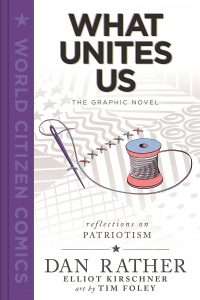
 The Nib compiles approximately fifty webcomics (many of which were previously published on thenib.com) from forty creators on a wide variety of LGBTQ+-related topics into this Kickstarter-backed anthology. The comics run the gamut from one-page funnies to ten-plus-page detailed glimpses into queer history. Associate Editor Matt Lubchansky’s introduction explains the origin of the title’s source, the phrase “Be Gay, Do Crime.” Lubchansky also discusses the significance of comics as a means to express queer identity in a singularly accessible manner.

