I won’t lie, seeing this book (or any) pitched as a retelling of The Beauty and the Beast is what caught my eye. I am what the kids call “a sucker.” But we can unpack all that later.
Brielle and Bear might have the vague skeleton of the classic fairy tale it was based on, but it definitely has its own narrative—a fact that I think is a positive for the story.
That being said, this story is a little hard to get into. There is certainly a lot to like, but ultimately this book is the opposite of the whole being greater than the sum of its parts.
Brielle is our heroine, and she knows it. She exudes Main Character Confidence and narrates her life using a set of rules that she pulled from her familiarity with fairy tales. She meets Atohi “Bear” Yona while at work at Once Upon A Time University’s bookshop. It’s charmed at first sight, and the story expands on their relationship and the friends they surround themselves with.
Before I get into criticism, let’s look at what slaps:
The art is gorgeous. Brielle and Bear is full of color, whimsy, visual motifs, and beautiful homage to both western-style animation and manga. The atmosphere (and names of every location and character) is very dreamy and perfect for this fairy tale-esque story.
The cast is very diverse. The author specifically wrote that she wanted to create a cast that reflected her time at university, and there was care taken to make every identity unique and specific.
There is some very kind and sympathetic discussion of neurodiversity and physical disability. Brielle has vitiligo, it is seen as running in her family. Bear has dyslexia. One of the things I thought was really beautiful about the story was how much Bear enjoys writing poetry and reading—passions that I do no typically see paired with this particular condition.
Unfortunately, each of these items tend to fall apart under close scrutiny. The art for the settings and environments and locations is so beautiful, but it tends not get center stage with lots of rendering and color. The line drawings are beautiful, but the structures sit with a selected color pallet for the page and remain, well, in the background. It is a logical choice, but it does feel like leaving free points on the floor.
The cast is diverse, but then what? Apart from some phrases in Spanish, this is an aspect of the story that is not referenced or acknowledged. Again, perhaps I have misinterpreted this choice. It might be nice to just see this as a way things are, without it being worthy of commentary.
The vitiligo and dyslexia do pertain to the plot, but it is incredibly minimal. Each character has already overcome the trauma and difficulty that comes with having these conditions. I would say this is consistent through the story as a whole – the stakes are incredibly low. I was never worried about a resolution to an issue, and each issue was small; the biggest one being 2 arguments between Brielle and Bear that are resolved through straightforward communication.
I fear this comic is trying to push its fairy tale origins into its pages, but there really is no need for that. There doesn’t seem to be any magical elements to this world—there are no spells, curses, prophecies, and certainly no beasts. I would have liked to see this story develop on its own, flown far from its magical origins. It sounds like more volumes are coming out, and maybe those books will address some of my concerns, but for now, this story is a slice of cake that is mostly frosting.
Although I personally didn’t enjoy this narrative, I would encourage everyone to look at Doku’s website to look at the visual development journey that these illustrations went on—they are simply gorgeous.
NOTE: Author is black and from England; African-American was picked as creator representation as this was the closest option that is available through NFNT.
Brielle and Bear By Salomey Doku Harper Collins, 2024 ISBN: 9780008617561
Company Age Rating: 13+
NFNT Age Recommendation: Older Teen (16-18), Teen (13-16) Creator Representation: African-American, Character Representation: African-American, First Nations or Indigenous, Disability,
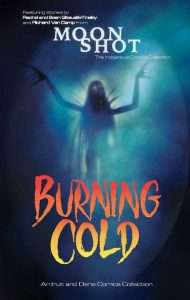
This collection of seven stories honoring the northern regions of Canada and the Indigenous residents has been reprinted from the three-anthology series, Moonshot: The Indigenous Comics Collection, featuring these three authors with strong ties to the region and the people. Rachel Qitsualik-Tinsley is of Inuit-Cree ancestry from Baffin Island, Nunavut, Canada. She is an Inuit scholar who studies world religions and cultures. Sean Qitsualik-Tinsley, of Scottish-Mohawk ancestry, was born in southern Ontario, Canada and is a folklorist and fantasist specializing in magic, mythology, and Inuit lore. Richard Van Camp is a member of the Dogrib (Tlicho) Nation from Fort Smith, NWT. Tlicho are Dene First Nation people living in the Northwest Territories. He currently lives in Edmonton, Alberta not far from this reviewer and is a well-known storyteller, author, and educator.
Each of the entries in this new collection include new splash pages as an introduction to the stories but do not include the prefaces that accompanied the stories in their original publications. For this reason, I am offering some of the material included in the Moonshot anthologies for additional context.
All three awarding winning authors have shared their knowledge of traditional teachings, the history of Arctic shamanism and cosmology, and the joy of storytelling, and the awareness of the solid intersections of their rich backgrounds with the wider contemporary culture. The stories in this collection continue this practice, bringing awareness of non-Indigenous as well as Indigenous readers to the magic of the Canadian far northern regions. The various illustrators for the individual stories are not from the region but are well versed in the geography and culture of the people they are bringing to vivid life. The collection was published separately in two languages, English and Inuktitut. I will be discussing the English collection.
Burning Cold opens with prefaces explaining the authors’ objectives in writing these tales. Rachel and Sean explain that while much of what they create is based on traditional tales and figures, their stories are fiction immersed in traditional lore. However, they do not tend to offer the reader clues to which is which and, as they write, “You’ll just have to make a game at guessing which parts are exactly that [traditional lore], as opposed to flights of our fancy. In this sense, with a smile, but no joke, we are actually being quite traditional” (4). Richard, in his preface, contends that “comics and illustrated literature are the perfect ways to welcome readers of all ages into the grace, dignity, stories, and medicines of our culture” (6).
The first story, “Tlicho Naowa” by Van Camp, indicates a contemporary family blending the traditional ceremony with the trick and treat ceremony that both occur on October 31. The Dene ritual expresses love and respect to family members who are no longer alive as well as imploring the spirits of the Caribou people for a safe and plentiful upcoming hunting season. This is the significant time of year for Caribou herds and their migration in the area. Nicholas Burns’ colourful illustrations effectively illuminate the modern home and customs of the family, both Indigenous and non-Indigenous, placing the reader warmly inside the family. The dialogue also highlights the Indigenous language of the area. The following story, also from the first volume of Moonshot, is an illustrated tale written by Rachel and Sean Qitsualik-Tinsley and illustrated by menton3. The story evokes the danger presented by the traditional Qallupilik to the people, especially young children who wander too close to the edge of ice floes. The Qallupilik, at times formless, are known shapeshifters and child-snatchers and in this tale, it assumes the shape of a human female to collect a young female who taunted them, perhaps unknowingly. The white text is presented on black pages alternating with full page coloured atmospheric and striking illustrations.
The next three stories are from the second volume of Moonshot. Richard Van Camp’s ‘Water Spirits” continues the theme of the contemporary infused with traditional belief systems. The school field trip to the gold mine offers accurate information about the history of the mine as well as the implications of the poisoning of the waters that led to its demise. Within the tale, told by a fictional guide, is knowledge rarely shared outside of the culture. “The tradition of respecting the Spirits and never placing drinking cups directly on the ground as described in the story is typically told by Elders to youth, only in the spoken word, making this story a unique experience”. The Arctic fantasy tale “Winter’s Shell”, by the Qitsualik-Tinsleys, is told through the comic format with illustrations by Alexandria Neonakis. Several Inuit shamanic symbols are adapted in order to share teachings and world understanding not usually discussed openly in the culture but instead are shared through art, story, and aangakkuuniq (shamanism). The story and art evoke a feeling of mysticism and mystery and does not offer any immediate answers for the reader. This feeling of unexplained magic and wonder continues in Van Camp’s “Magic of Wolverines”. The Wolverine is a trickster spirit and to the Tlicho Dene, it represents an unending source of strength, beauty, and respect, the most important facets of life. This concise tale explains the authority of wolverines through narration boxes and the powerful illustrations by Scott Henderson.
The final two stories, from the third volume of Moonshot, demonstrate the power of belief and living and environmental knowledge of the people of the far north. “Waterward”, told in prose by the Qitsualik-Tinsleys in white text on a black background, is a dark, disturbing, and ominous tale that is effectively accompanied by the haunting full-page illustrations of Sadekaronhes Esquivel. The final tale by Van Camp is filled with colour and hope, bringing the collection of tales full circle with the distribution of meat from a successful caribou hunt. The hunt was apparently a success due to the Sky People, whose lights danced in the night sky. For readers who are familiar with Van Camp’s previous stories about Benny and his hometown of Fort Smith will recognize some of the main characters in the story creatively illustrated by Kyle Charles, a Cree illustrator now living in Edmonton, Alberta, Canada.
Although these stories are reprinted with additional splash pages instead of the introductory material of the original, the fact that they are presented as a united whole provides the reader with a more intense reading experience and understanding of the environment, mystic, power, people, and the culture of the Canadian far North. Highly recommended for library collections of Indigenous materials, Canadian materials, and world views.
i. Moonshot, Vol. 1, page 122. ii. Moonshot, Vol. 2, page 95. iii. Moonshot, Vol 2, page 78.
Burning Cold An Inuit and Dene Comics Collection Vol. By Rachel Qitsualik-Tinsley, Sean Qitsualik-Tinsley, and Richard Van Camp, Art by Various Arvaaq Press, 2024 ISBN: 9781774506547
Publisher Age Rating: 12-18
NFNT Age Recommendation: Adult (18+), Older Teen (16-18) Creator Representation: Canadian, Dogrib Dene, Inuit, Character Representation: Canadian, Dene, First Nations or Indigenous, Inuit,
As I Enfold You in Petals begins with several pages of wordless panels and near wordless panels depicting people in a huge line waiting to enter, one family at a time, the home of Benny the Bank, a notorious bootlegger first met in the first volume. The people are waiting to impress Benny on his birthday with promises and gifts. The winner will receive a substantial amount of cash, but it is an almost impossible task.
Curtis joins the line. He has just returned to Fort Smith, Northwest Territories, after fighting forest fires and six weeks in rehab for alcoholism. His gift is definitely a surprise for Benny: his lost watch, found when Curtis was fighting fires. Curtis does not want the cash; he wants title to his grandfather’s home which is now owned by Benny. Curtis is interested in helping others in Fort Smith in the struggle with alcoholism and wishes to connect with Louis, his grandfather. Louis’ legacy is as a healer who received his gifts from the Little People and Spirit Helpers.
Curtis’s invitation to the Little People is through a song which is witnessed by Benny and Crow, a mysterious female friend of Benny’s. Benny tells her “As I Enfold You in Petals,” a poetic phrase borrowed from letters he read from Curtis’s father to his wife. The reader also discovers Benny’s secret wishes and his illness in his conversations with his sons. All is dependent on Curtis regaining the trust and support of the Little People.
As I Enfold You in Petals is the second volume in The Spirit of Denendeh series. The first is A Blanket of Butterflies.
Written byRichard Van Camp (he/him/his) a proud member of the Tlicho Nation from Fort Smith, Northwest Territories, illustrated by Scott B. Henderson, Donovan Yaciuk and Nickolej Villiger. The first volume, originally published in black and white, has been completely revised by the four creators to provide a fresh and colorful rendition of the story. The newly released volume (2022) includes a precise essay regarding the background of this story as well as an essay on the interactions between the Japanese and the Dene.
It is a delight to have such a positive depiction of Dene spirituality and the people in this superb story of hope, strength of spirit, and redemption. The story celebrates family connections, memories, and stories through the text and the stunningly illustrated and colored illustrations. The pacing created by the panels, along with the rich and diverse coloring scheme, enfold readers into this story of cultural awakening and knowledge, leaving them satiated and complete. The characters and setting are vivid and authentically brought to life while the revisiting of memories is clearly delineated by sepia tones providing an accessible and seamless reading experience. Materials in the back provide information and cultural context about traditional Inuit tattoos that appear in the graphic novel.
The Spirit of Denendeh: As I Enfold You in Petals Vol. 2 By Richard van Camp Art by Scott B. Henderson, Donovan Vaciuk, Nickolej Villiger, Highwater Press, 2023 ISBN: 9781774920411
Publisher Age Rating: 15+
NFNT Age Recommendation: Adult (18+), Older Teen (16-18) Creator Representation: Indian American, Dogrib Dene, Character Representation: Indian American, Dene, First Nations or Indigenous, Addiction
Aiyana would rather impress her new classmates than talk about old, boring Lakota stories with her cousin, Kola. Unfortunately, this leads to a fight on the bus during their field trip to Black Elk Peak, which results in Aiyana telling Kola to go away and stop talking to her. When they arrive at their destination, the “cool” girls dare Aiyana to take a selfie from the top of the building that is undergoing repair work and is off limits to the students. She climbs up and attempts to take a picture; however, a thunderstorm has rolled in, and lightning strikes the building, sending Aiyana tumbling down.
When Aiyana wakes up, she is in the spirit world and encounters the trickster Raven who tells her she must bring four offerings to Iktomi in order to return to the human world. If Aiyana cannot do that, she’ll be stuck in the spirit world with Raven forever. This starts Aiyana on a journey of self-discovery and cultural connection as she makes new friends on her way home.
I enjoyed the storytelling and Lakota culture. As I am not familiar with their stories, I cannot speak to the accuracy, but I thought it was a good introduction to several culturally significant figures. I did not like the cartoony art style of the interior, which does not match the cover art made by a different artist. I was also confused by some of the color choices. At first, I thought the artist was differentiating between day and night, but that was not consistent. So, then I thought maybe it was to highlight the difference between our world and the spirit world, but that doesn’t seem to be the case either. Sometimes the art is bright and colorful and other times it is muted or monochromatic. If there is a pattern, I was not able to identify it.
I think this would make a good addition to a middle grade collection looking to add diverse stories inspired by and made by Lakota creators. A brief explanation of language and the chosen spellings of Lakota words included in the story is provided on the back inside cover.
Thunderous By M.L. Smoker, Natalie Peeterse Art by Dale Deforest Dynamite, 2022 ISBN: 9781948206464
Publisher Age Rating: 8-12 years NFNT Age Recommendation: Middle Grade (7-11)
Creator Representation: Anisinaabe, Sioux Character Representation: First Nations or Indigenous
In Season of the Bruja, Aaron Durán depicts the conflict of surviving cultural practices vs. rampant colonialism, while also delivering a touching story of grief and self-discovery.
Being the last bruja, Althalia carries a tremendous weight on her shoulders. Immense powers dwell inside her, and she needs to ensure that the history and ways of her ancestors live on. Her beloved abuela teaches Althalia all she can about her growing magical skills and the traditions of their people, but, after a chance encounter with a fanatic priest, the young bruja’s world is thrown into chaos. Facing a centuries-old and deadly prejudice, Althalia must fully realize her role as a bruja before everything she has worked hard to protect becomes lost to time forever.
Durán, over the course of the comic, presents readers with an intriguing, yet somewhat cryptic world. At many points, it feels as if one would need a basic understanding of Mexican folklore going in, as certain creatures, concepts, and figures go unnamed and unexplained, which may confuse some readers as to their significance in the story and to the characters. It is not enough to bring down the story as a whole, but may lead one to backtrack their reading several times to make sure they did not miss anything. I especially felt the shakiness of this world going into the third act, with characters moving from place to place so quickly, mythologies intertwining, and new, mysterious adversaries cropping up in the last thirty pages with little to no explanation. I didn’t even realize where much of the climax was taking place until I had finished and was reflecting on what I had read.
Overall, the world Durán has created is not an unrealized one, but one that could have used some more definition. At several points, it feels more like the second volume of a series rather than the first as the story expects the reader to take several plot threads at face value. From the very first page, readers are thrust immediately into action as we see Althalia taking on a possessed child with her friends Dana and Chuey, a werecoyote and chupacabra, respectively. The dynamics of their relationships have already been fully developed, which makes the scene almost feel like an intrusion rather than an introduction. The reader may struggle to engage with the conflict as these characters are still strangers to them, and the reason as to why these specific characters are here is a mystery. While the rash Althalia, passionate Dana and kind, paternal Chuey become endearing characters as the story goes on, the beginning paints a disorienting view of them.
All issues aside, Season of the Bruja is essential reading when it comes to its message of the importance of preserving traditional customs and the destructive impact of colonialism. Durán does not shy away from depicting the historical and enduring prejudices of the Christian church against Indigenous practices, making Althalia and her abuela’s commitment to the survival of their heritage all the more empowering and inspiring. Though Althalia struggles to find her place in her identity, her pride and dedication to those who came before her ultimately shine through. This is a comic that celebrates its culture and the love for it is shown on every page.
Sara Soler’s illustrations only add to the magic of Durán’s story, with eye-catching, lively colors and atmospheric lighting. The designs of the supernatural characters are a real treat, especially the otherworldly palettes of Althalia and abuela’s alebrijes, as well as the sinister, imposing forms of multiple demons. Full page spreads accompany significant moments in the story, each one beautiful and impactful as Althalia’s emotions start to run high and her magic takes center stage. Unfortunately, there are several moments in which it is difficult to track the action of the main characters, whether due to the lack of a panel showing transitions between movements or a hasty layout. Characters will suddenly appear in different places than shown before without explanation or have an interaction off panel that could have contextualized the scene better. In its calmer moments, the flow is more natural and easier to grasp, though there is still the odd messy transition here and there. Still, it is a style that matches the heart and soul of Althalia’s journey, giving it a standout look that is familiar and resonating.
The world may need some settling into, but Season of the Bruja remains a graphic novel with a captivating, strong identity, and heartfelt representation of Mexican culture. Those looking for a supernatural, emotional story with a heavy mythical and familial aspects will find an engaging read here. Due to its heavier themes underlaid with a lighter tone, this title may resonate the most with teens and adults. Librarians and educators in search of materials that give meaningful representation as well as cover rarely explored topics in graphic novels, such as systemic cultural erasure and preservation of Indigenous history, should consider purchasing this title.
Season of the Bruja, Vol. 1 By Aaron Durán Art by Sara Soler Oni Press, 2023 ISBN: 9781549308161
Publisher Age Rating: grade 7-9
NFNT Age Recommendation: Adult (18+), Older Teen (16-18), Teen (13-16) Creator Representation: Latinx, Spanish, Bisexual Character Representation: Latinx, First Nations or Indigenous,
Eugene Bullard lived the kind of life that demands biographers take notice. He was the first Black fighter pilot from the United States, as well as a decorated soldier, boxer, vaudeville performer, and Paris businessman. His social circles included early 20th-century notables like Josephine Baker, Langston Hughes, and boxer Aaron Lister “Dixie Kid” Brown. During his pilot career, he had a pet monkey named Jimmy who accompanied him on all of his combat flights.
Now Let Me Fly: A Portrait of Eugene Bullard captures the kinetic energy of Bullard’s biography but also gives it weight. It’s a sensitive portrait of a daring young man encountering the possibilities and complexities of the world beyond his birthplace—small-town Georgia at the dawn of Jim Crow. The book’s success is due to a seamless collaboration between cartoonists Ronald Wimberly and Brahm Revel; Wimberly’s deft script allows Revel’s emotionally rich, vintage-inflected art to speak for itself and makes use of a clever frame story that positions Gene as the author of his own story.
Bullard did tell his story to the American public more than once, most notably on the Today Show in 1959. By that time, he was an unknown figure working as an elevator operator at New York’s Rockefeller Center. Now Let Me Fly imagines Gene trapped in an elevator with a white advertising worker who’s spellbound by Gene’s stories and later arranges for him to appear on the show. This accidental interviewer serves as an audience proxy, giving us space to process the emotional highs and lows of Gene’s story but also bookmarking moments when Gene’s story complicates the expectations of a non-Black audience.
Gene’s story opens with trauma—the near-lynching of Gene’s father by the Klan after he stands up for himself against an abusive supervisor. The episode underscores the precarity of the family’s life in the Deep South, and despite a tender relationship with his father, Gene begins running away from home. At thirteen he leaves for good, joining a group of traveling Romani and learning to race and perform with horses. At this time, many African Americans are moving north in the Great Migration, but Gene is determined to go farther—he’ll make his way to Europe, where he believes he’ll find true racial equality.
Perseverance, charisma, and a stint as a stowaway allow Gene to make his way to Britain and then Paris. Racism is still present in his career as a street and vaudeville performer, but to Gene, none of it compares to the violent apartheid of the South. He trains as a boxer and settles into a seemingly charmed life as one of many African American exiles living in Paris—but then World War I strikes, and the city he loves requires defense. Gene enlists as an infantry soldier in the Foreign Legion, the boldness that’s defined his life propelling him to courageous feats amidst a dehumanizing war. Sent home with grievous injuries, he nevertheless talks his way into being selected as a fighter pilot, finishing out the war as one of the few Black pilots in the air.
In Wimberly and Revel’s hands Bullard’s story is powerful, but it’s rarely sensational. His story has room to breathe, with wordless panels lingering on the bittersweet beauty of the Deep South and lively adventure of Gene’s life abroad, as well as frankly depicting his experiences with violence, both at home and at war. This frankness extends to use of language; the book reproduces historical slurs, including “gypsy” to refer to Romani people. The inclusion of slurs in historical works is a debated topic, and this word in particular gave me pause, but the author’s intention appears to be an honest rendering of history, which includes sympathetic characters using problematic language. I do think it would have been useful to include an author’s note discussing this choice, as readers may be unaware that “gypsy” is now broadly considered offensive.
“A man can be a lot of things in life, and there’s a lot of ways to tell his story,” Gene says in the final pages of the book. Now Let Me Fly is particularly interested in how Gene’s travels shed light on the systems of power that define the modern world. As Gene escapes the uniquely American racism of his birth and makes new connections, he glimpses opportunities for solidarity among people of different oppressed backgrounds, whether they’re terrorized Black Americans, ostracized Roma, colonized Moroccans, or infantry soldiers of all ethnicities caught up in the mechanized horrors of modern warfare. Yet the book acknowledges how fragile these possibilities are—for instance, in an episode when a Jewish tailor calls Gene by a racial slur, only to make amends when passersby verbally attack both Gene and the tailor’s assistant. “Most people can’t see how they’re wrong till something similar happens to them,” Gene observes. “For some, they still won’t.”
I read Now Let Me Fly in a single sitting, and I think many readers will have the same experience—this book, and Bullard’s story, are just that compelling. This is a standout in the field of graphic biographies and highly recommended for adult and teen readers.
Now Let Me Fly: A Portrait ofEugene Bullard Vol. By Ronald Wimberly Art by Brahm Revel Macmillan First Second, 2023 ISBN: 9781626728523
NFNT Age Recommendation: Adult (18+), Older Teen (16-18), Teen (13-16) Creator Representation: African-American Character Representation: African-American, First Nations or Indigenous
The Woman in the Woods and other North American Stories marks the fifth volume in the series of cautionary fables and fairy tales. The eight tales in this volume are from Indigenous nations, told and illustrated by Indigenous artists, and highlighting tales from Odawa, Chickasaw, Métis/Cree, Métis, Ojibwe, Tania, Navajo, and S’Kallam societies. The editors asked each of the authors to ask for permission from the Elders and/or nations to retell and rework the stories for inclusion in this anthology as they recognized and respected the protocol inherent in the gathering of the stories from the people. Unfortunately, there are no source notes included in the collection, making it of less value to educators, librarians, and storytellers than I had hoped. True, the intended audience is middle school readers, not scholars, but the authenticity of each of the tales should be paramount for them as well. I do appreciate the fact that each of the tribal affiliations has been identified for the tales.
While the tales are rendered in black and white with various hues of grey, the cover itself jumps with colour. Ironically, the story alluded to on the cover is not included in the collection. Editor and cover artist Alina Pete remarked that she had hoped to include the creation story of Sky Woman and Turtle Island, but she could not find anyone that had permission to tell this story. Sky Woman fell to the water-covered world and fell on the back of Turtle. One by one, the animals dive into the water to try and find land until Muskrat is successful in bringing back soil. Sky woman spreads the soil on Turtle’s back to create the world as we know it. She shows Sky Woman dancing for joy and two constellations on the back cover featuring two of the characters from the tales within the covers.
Most of the illustrations in the book itself have simple backgrounds, focusing on the characters of each tale. The different styles of illustrations make each of the stories individual in a collection continuous from tale to tale without any commentary. Most of the illustrations are rendered realistically, although one or two stories have manga-like characteristics and vary between historical and contemporary settings. They also vary in length.
The anthology begins with the Odawa creation story, “As it was told to Me,” retold and illustrated by Elijah Forbes, which demonstrates that the world needs the balance of good and bad to exist. It is followed by a trickster rabbit story about the cost of vanity from the Chickasaw people. “Chokfi” is written by Jordaan Arledge and illustrated by Mekala Nava. The next two stories are located closer to this reviewer. “White Horse Plains,” from the Métis settlement St. Francois Xavier, relates the tale of the dangers of greed and conflict. It is written and illustrated by Rhael McGregor. The second Métis tale is possibly the most familiar character in the collection for me. Written by Maija Ambrose Plamondon and illustrated by Milo Applejohn, “The Rougarou” tells the story of a werewolf like monster and a young boy who befriends the Rougarou. I must admit that while I am familiar with many Rougarou tales, this is the first time I have encountered this one. Alice RL’s Ojibwe tale of “Agonjin in the Water” relates a tale of another story of friendship between a human and a mythical creature: the mythical, Mishipeshu the Great Water Guardian of the lakes and rivers.
The Taino story that follows gave its title to the anthology. It is written and illustrated by Mercedes Acosta and also focuses on the relationship between a woman and a spirit of a young girl who sees the mysterious “Woman in the Woods.” The penultimate tale, “Into the Darkness,” is a Navaho shapeshifter tale about a character so frightful that no one dares to speak its name. It is written by Izzy Roberts and illustrated by Aubrie Warner. The final tale, written by Jeffrey Veregge and illustrated by Alina Pete, is a romantic tale from the S’Kallam people. The Moon in “By the Light of the Moon” falls in love with Octopus Woman, the Queen of the Salish Sea in Puget Sound. The bright light of the Moon makes it possible for the Moon to watch her dance and to send her kisses. The power of the kisses has a surprising repercussion.
The stories are followed by two pages of concise biographies of the creators including their tribal affiliations and, in most cases, their sexual orientations.
Recommended for middle school and public library collections. Because the book is part of the cautionary fables and fairy tales series, most of the stories have strong lessons imparted in the story line, but they are not dogmatic and do allow the power of the storytelling to shine through. I just wish there were adequate source notes—did I say that already?
Cautionary Fables & Fairy Tales, vol. 5: The Woman in the Woods and Other North American Stories Edited by Kate Ashwin, Kel McDonald, Alina Pete Iron Circus, 2022 ISBN: 9781945820977
Publisher Age Rating: 10-12 Series ISBNs and Order
NFNT Age Recommendation: Middle Grade (7-11) Creator Representation: Cree, Metis, Navajo, Bisexual, Queer, Genderqueer, Nonbinary, Trans, Two Spirit Character Representation: Cree, First Nations or Indigenous, Metis, Navajo
In this book’s opening, the titular Waluk, a young polar bear orphaned as a cub, happens upon an older bear named Manitou. The two form a beneficial partnership in which Manitou shares his wisdom with the young Waluk, and Waluk helps Manitou (who’s missing a few teeth) hunt for food. The story moves through a series of episodes in which the two polar bears interact with other bears, humans, a snowy owl, and a team of sled dogs. The events of the story highlight real challenges faced by animals in the Arctic. These include difficulty finding enough food, which leads a mother polar bear to team up with Waluk and Manitou, and the encroachment of shipping lanes into the bears’ habitat as the ice caps thaw. While portraying realistic conditions, the book also contains fantastical elements such as great animals who appear in the sky to assist in times of trouble, and a giant white dog who comes to the rescue when sled dogs are threatened by their owner.
The full-color watercolor illustrations present the animals and the Arctic landscape in beautiful detail. The book is laid out with typically four to six panels per page in a landscape style, allowing the art to take center stage, while the text per page is minimal. Characters are clearly defined, with a few brief moments when some of the polar bears can be difficult to tell apart. A clear contrast is shown between the animals with their shades of white, brown, and black, and the humans who introduce colors unnatural to the setting such as red, and yellow.
While episodic, the events of the book tie together as Waluk and Manitou encounter a pair of humans and their team of sled dogs in multiple circumstances. One small episode that stands apart from this continuity is when Waluk is briefly entangled in a research robot of some kind. This event seems out of place, though it does continue the theme of the bears facing off against human intervention. The majority of the humans present in the book cause trouble for the animals, whether intentionally or through ignorance. Nevertheless, while humans might meddle with nature, the story shows the natural world with the power to overcome those challenges.
While Waluk: The Great Journey contains beautiful artwork and a positive message about conservation, its portrayal of the culture and mythology of indigenous Northern peoples is problematic, and the book has proved controversial. The many animals which appear in the sky at the book’s climax, along with a great dog which helps the animals, seem designed to mimic Native beliefs while not corresponding to the true mythology of any indigenous group. Furthermore, the character of Manitou was named “Eskimo” in advance copies of the book and later changed. Scattered textual errors, probably due to translation problems, make the text awkward in places. It is unfortunate that a book with such beautiful artwork and an important message about protecting the environment is marred by cultural insensitivity.
Waluk: The Great Journey By Emilio Ruiz Art by Ana Miralles Abrams, 2021 ISBN: 9781951719050
Publisher Age Rating: grades 4-6
NFNT Age Recommendation: Middle Grade (7-11), Tween (10-13) Creator Representation: Spanish Character Representation: First Nations or Indigenous,
This review is on the first three of four volumes of a visually poignant and enthralling graphic novel series about the Métis people of western Canada. The fourth and final volume, The Road Allowance Era, is forthcoming in April 2021. Contrasting the critical Canadian historical events with contemporary Echo’s current story, the series reveals how past governmental policies have shaped the current day experiences of a people.
Echo Desjardins, a thirteen-year-old Métis girl discovers that she has the magical ability to time travel back and forth to witness important events in Canadian Métis history. For readers outside of Canada, the Métis have a distinct collective identity, with customs and culture, that are unique from Indigenous or European roots. Their roles in Western Canadian history have been contentious and distinctive, and often persists to be misconstrued and ignored today. Echo’s magic allows her, and the reader, to more fully understand critical events of 19th century Canadian history and their repercussions through the individual entries in the series: The Pemmican Wars, the Red River Resistance, and the Northwest Resistance.
Echo, an extremely quiet and reserved teen, is in a new foster home, missing her mother, and attending a new school when she first slips through time, and back, while attending her social studies class. These vivid and active time slips offer insight and augment her knowledge about her own family background, heritage, and history. Present day Echo is mostly silent as is a large portion of the graphic novel series, superbly written by Katherena Vermette, an award-winning Métis poet and writer and effectively and brilliantly illustrated by Scott B. Henderson and coloured by Donovan Yaciuk. Their combined understanding of the issues, landscape, and people of the area bring an added vitality and realism to the series. Much of the story arc is delivered by narration boxes augmented by brief dialogue amongst characters mostly in the historical sections of the story. Poignant images throughout the series are those of “Mom’s play list” that Echo constantly listens to when not attending classes. The importance of the music and the connection with her mother are echoed (pardon the pun) in all the cover illustrations where her earbuds are resolutely visible as part of her personality.
In the first volume, Echo, a troubled and lonely teen, finds herself, without warning, transported out of her Winnipeg, Manitoba social studies classroom into a buffalo hunt in 1814 in the Qu’Appelle Valley, Saskatchewan during The Pemmican Wars. [1] During the following few weeks, Echo finds herself transported back and forth in time to visit the old fur-trade routes and a Métis camp where she is befriended by a young girl. Oddly enough, the fact that Echo remains in her contemporary clothing does not seem to evoke notice or comment by anyone in the historical segments. The volume concludes with Echo sharing her new found knowledge with her mother as she visits with her in her group home. I was enchanted by the school library sequences in this volume and the selection of books that Echo selects to read.
Echo’s story is continued in volume 2 when she travels between her contemporary life and a Métis community in 1869 during the Red River Resistance.[2] Her contemporary life seems to be settling down as Echo adjusts to the school, the foster home, the visits with her mother, and the continual discovery of her Métis heritage and history. A delightful humourous aside occurs in a illustration of the bake sale sign up sheet where Echo signs her name below that of Katherena Vermette (page 14). Echo shares her time slip adventures with Benjamin, a young Métis man she meets when first transported into this historical era. The volume concludes with Echo in tears as she witnesses her new friends being forced to leave their land.
The third volume begins with Echo’s mother coming to stay with her in the foster home. Echo’s historical travels take her to 1885, to the Northwest Resistance.[3] Riel has returned from exile to resist encroaching forces to ensure his people’s rights. Amongst the chaos Echo meets Josephine, Benjamin’s daughter. She also discovers, in conversations with her mother, a treasury of family photographs and her family tree. Benjamin is her grandmother’s great grandfather who lived to be 102, living through both resistances. The series will conclude with Volume 4, The Road Allowance Era.
Through the insight of major past events, Echo develops her own strength and sense of belonging. She is no longer the lost and lonely individual that related more to the playlist on her iPhone than the people around her. I eagerly await to see how it all comes together by the end of volume 4. I have included footnotes for readers who may not be aware of the struggles of the Métis people and much of their history is largely unknown.
The vibrant colour palate, the realistic illustrations, and the creative panel layout add to the vivacity of the history and the tales being told. Effective depiction of body language and facial features plus the historical accuracy of the writing and art make this series a highly recommended purchase for middle school, high school, public library, and academic library collections. Each volume includes a brief time line of the historical era explored in that volume plus additional material such as a recipe for pemmican, brief introductions to admirable historical characters, and maps.
[1] The Pemmican War was a series of armed confrontations during the North American fur trade between the Hudson’s Bay Company (HBC) and the North West Company (NWC) in the years following the establishment of the Red River Colony in 1812. It ended in 1821 when the NWC merged with the HBC. Unlike the Hudson’s Bay Company, which imported most of its provisions from England, the NWC relied heavily upon locally procured pemmican, the majority of which was purchased from the local Métis. Pemmican was made of dried buffalo meat pounded into a powder and mixed with melted buffalo fat.
[2] The Red River Rebellion (or the Red River Resistance, Red River uprising, or First Riel Rebellion) was the sequence of events that led up to the 1869 establishment of a provisional government by the Métis leader Louis Riel at the Red River Colony, in what is now Manitoba.
[3] The North-West Rebellion of 1885 was a rebellion by the Métis led by Louis Riel against the Canadian government. Many Métis felt that Canada was not protecting their rights, their land, and their survival as a distinct people. During the rebellion, Riel was captured, put on trial, and convicted of treason. Despite many pleas across Canada for clemency, he was hanged. Riel became a heroic martyr to the Métis and Francophone Canada.
A Girl Called Echo: Pemmican Wars By Katherena Vermette Art by Scott B. Henderson and Donovan Yaciuk
Title Details and Representation NFNT Age Recommendation: Adult (18+), Middle Grade (7-11), Older Teen (16-18), Teen (13-16) Character Traits: First Nations or Indigenous Creator Highlights: Metis Related to…: Book to Comic
This is the first of a new nonfiction graphic novel series highlighting, as the series says, “marginalized trailblazers.” This volume tells the story of the life of Edmonia Lewis, a Black/Ojibway woman born in 1844 in New York, who triumphed over prejudices against her race and sex, the challenges of poverty and lack of education, to become a well-known sculptor.
Information on her early life is sketchy, but she apparently spent much of her childhood with her Ojibway aunts, after her parents’ death. Her brother, who supported her artistic career, followed his father’s career as a barber from the age of twelve. Supported by abolitionists, Lewis struggled to get an education despite prejudices against her race and sex, present even in the partially-integrated schools available. Her college career at Oberlin ended disastrously, when she was falsely accused of poisoning two of her classmates and attacked and left for dead before the trial. Although she was acquitted, the school continued to suspect her and, accusing her of theft, forced her to leave without matriculating.
She started her sculpting career in Boston, under the aegis of the Abolitionist movement, and then traveled to Italy with the help of various Abolitionist patrons. There she found her skin color less of a hindrance than her sex and poverty, but she continued to forge her own pathway, although she sometimes angered her patrons and fellow sculptors. She reached the zenith of her career with her sculpture, The Death of Cleopatra, exhibited at the 1876 Centennial Exposition in Philadelphia. After this triumph, she returned to Rome, but the changing artistic trends and decline in the popularity of Neoclassic sculpture eventually left her in obscurity. She eventually moved to London and died there in 1907. Her greatest work fell into obscurity only a few years after its exhibition and was only found and restored in the 1990s. Contemporaries and visitors of Lewis reported her as continuing to work and maintain her bright and cheerful personality until her death. She maintained a close relationship with her brother, who continued to support her as well.
Notes, sources, and an extensive study guide are included in this slim volume. The art is detailed and focuses on red-tinged earth hues. Edmonia is shown as a determined, strong woman with curly black hair, dark brown skin, and a red cap perched on her curls. She moves through the panels as the central figure in a swirl of historical characters and her white contemporaries. Her Neoclassic style is well-represented in the lines and faces of her white marble statues and busts. While the art focuses primarily on faces and the eponymous “talking heads,” action and interest is added by interposing examples of Lewis’ work and shifting from panels to spreads of her surrounded by action and movement as she moves through her career.
The unique subject matter, accessible art, and extensive resources for teaching in the back (they include educational standards, a multiplicity of questions on the art and subject, and educational activities) should make this a stand-out title. However, there’s one serious problem – the size and layout of the book. It’s a tiny volume, 7×5 inches, and the font and art is correspondingly reduced. While there is plenty of detail and emotion in the faces shown, it’s difficult to catch the nuances when the faces are so tiny and many readers will find the small size of the font frustrating. At less than a hundred pages, this title will quickly disappear on a shelf or be lost and only the most dedicated readers are likely to work through the small size of the font.
Nonfiction graphic novels are extremely popular with my middle school and high school readers, the best audience for this small but dense volume, but sadly, this one is likely to go unnoticed. However, with its very affordable price point and availability in paperback, schools may find it useful to purchase in bulk for a class read. The publisher appears to be planning one volume per year (Rachel Carson in 2021 and Willem Arondeus in 2022) and I can only hope that they will perhaps consider binding them into one large volume and enlarging the art and text to correspond.
Seen: Edmonia Lewis By Jasmine Walls Art by Bex Glendining, Kieran Quigley (Colorist), DC Hopkins (Letters) ISBN: 9781684156344 Boom, 2020 Publisher Age Rating: Series ISBNS and Order
Title Details and Representation NFNT Age Recommendation: Teen (13-16), Tween (10-13) Character Traits: Black First Nations or Indigenous Creator Highlights: Black

 sucker.” But we can unpack all that later.
 from the three-anthology series, Moonshot: The Indigenous Comics Collection, featuring these three authors with strong ties to the region and the people. Rachel Qitsualik-Tinsley is of Inuit-Cree ancestry from Baffin Island, Nunavut, Canada. She is an Inuit scholar who studies world religions and cultures. Sean Qitsualik-Tinsley, of Scottish-Mohawk ancestry, was born in southern Ontario, Canada and is a folklorist and fantasist specializing in magic, mythology, and Inuit lore. Richard Van Camp is a member of the Dogrib (Tlicho) Nation from Fort Smith, NWT. Tlicho are Dene First Nation people living in the Northwest Territories. He currently lives in Edmonton, Alberta not far from this reviewer and is a well-known storyteller, author, and educator.
 line waiting to enter, one family at a time, the home of Benny the Bank, a notorious bootlegger first met in the first volume. The people are waiting to impress Benny on his birthday with promises and gifts. The winner will receive a substantial amount of cash, but it is an almost impossible task.
 Aiyana would rather impress her new classmates than talk about old, boring Lakota stories with her cousin, Kola. Unfortunately, this leads to a fight on the bus during their field trip to Black Elk Peak, which results in Aiyana telling Kola to go away and stop talking to her. When they arrive at their destination, the “cool” girls dare Aiyana to take a selfie from the top of the building that is undergoing repair work and is off limits to the students. She climbs up and attempts to take a picture; however, a thunderstorm has rolled in, and lightning strikes the building, sending Aiyana tumbling down.
 In Season of the Bruja, Aaron Durán depicts the conflict of surviving cultural practices vs. rampant colonialism, while also delivering a touching story of grief and self-discovery.
 States, as well as a decorated soldier, boxer, vaudeville performer, and Paris businessman. His social circles included early 20th-century notables like Josephine Baker, Langston Hughes, and boxer Aaron Lister “Dixie Kid” Brown. During his pilot career, he had a pet monkey named Jimmy who accompanied him on all of his combat flights.
 The Woman in the Woods and other North American Stories marks the fifth volume in the series of cautionary fables and fairy tales. The eight tales in this volume are from Indigenous nations, told and illustrated by Indigenous artists, and highlighting tales from Odawa, Chickasaw, Métis/Cree, Métis, Ojibwe, Tania, Navajo, and S’Kallam societies. The editors asked each of the authors to ask for permission from the Elders and/or nations to retell and rework the stories for inclusion in this anthology as they recognized and respected the protocol inherent in the gathering of the stories from the people. Unfortunately, there are no source notes included in the collection, making it of less value to educators, librarians, and storytellers than I had hoped. True, the intended audience is middle school readers, not scholars, but the authenticity of each of the tales should be paramount for them as well. I do appreciate the fact that each of the tribal affiliations has been identified for the tales.
 This review is on the first three of four volumes of a visually poignant and enthralling graphic novel series about the Métis people of western Canada. The fourth and final volume, The Road Allowance Era, is forthcoming in April 2021. Contrasting the critical Canadian historical events with contemporary Echo’s current story, the series reveals how past governmental policies have shaped the current day experiences of a people.
 This is the first of a new nonfiction graphic novel series highlighting, as the series says, “marginalized trailblazers.” This volume tells the story of the life of Edmonia Lewis, a Black/Ojibway woman born in 1844 in New York, who triumphed over prejudices against her race and sex, the challenges of poverty and lack of education, to become a well-known sculptor.
