In this sequel to Meems & Feefs: Ferrets from Planet Ferretonia, Meems & Feefs: The Council of Ferrets, Meems repairs the travel opal and opens a portal to return him and Feefs to Planet Ferretonia and brings Liza along for a visit. However, Meems and Feefs are in quite a bit of trouble due to creating and using banned technology and so must answer to the Council. Together, the three of them uncover more of the mysteries of the banned ancient technology of Ferretonia and Meems’ missing mentor…
Cooper’s world-building is incredibly detailed for a whimsical fantasy graphic novel series for children. The premise of a young girl meeting cute intelligent ferrets is a good one no matter what, but Cooper has developed a full society for her ferret characters as well as depthful lore that is revealed in parts throughout the story. Still, the premise is easy to follow as the human character Liza serves as the reader’s liaison to Meems and Feefs’ world.
Liza is more than just a projection of the reader though. The majority of the first Meems & Feefs book took place on Earth, and the reader was introduced to Liza’s life, and it seems like there is more to be revealed about Liza and her life back on Earth. Liza’s development takes a backseat to the ferrets and the revelations surrounding Ferretonia in this volume, so hopefully future volumes will explore her and some of the Earth characters a little bit more.
The art in Meems & Feefs is perfect for its charming and fantastical story. Cooper’s work is the epitome of a story made for the graphic novel format. Previously, Cooper worked as an Art Director for the animated web series Simon’s Cat, and that animation experience serves her well as a graphic novelist. Her dynamic panels pack a lot of movement into each page without being overwhelming. Her characters are expressive and unique – she is able to make each ferret individuals not only with physical design but with facial expressions as well. They are fully realized characters with their own emotions and motivations. There is one sequence in which Meems and the character Leeloo are trying to escape, and the reader can almost hear their banter instead of simply reading it due to the combination of Cooper’s panels and word bubble placements as well as the characters’ movements. Though the graphic novel format is perfect for the story, it almost feels like an animated series due to Cooper’s mastery of sequential art.
The publisher’s age rating for The Council of Ferrets is ages 10-12 and Grades 3-8. It definitely will appeal to that age range, but older teens and some adults who like a magical adventure with touches of whimsy and humor will enjoy Meems and Feefs’ adventures with Liza. The adventure is ongoing, so it is beneficial for readers to have read Ferrets from Planet Ferretonia before reading The Council of Ferrets, andhopefully their tale continues in future volumes. The Meems & Feefs books would make great additions to libraries with juvenile readers looking for a funny but intriguing fantasy series.
Meems and Feefs: The Council of Ferrets By Liz Cooper Andrews McMeel, 2025 ISBN: 9781524876715
Company Age Rating: Ages 10-12
NFNT Age Recommendation: Middle Grade (7-11), Teen (13-16), Tween (10-13)
The monsters in horror fiction, whether those monsters are ghosts, vampires, or zombies, always seem to represent something beyond the natural fear a person would have against something with fangs and claws. Many times, these monsters are symbolic of a more universal fear involving a person’s space in society or in the universe at large (at least according to critics). Ghosts, for example, are often connected to humanity’s universal fear of death. Zombies are often symbols of death as well as disease. Author and illustrator Jon Claytor, however, presents an interesting idea in his book Nowhere, the world of zombies, vampires, and aliens represents the very modern fear of growing up.
Nowhere takes place in Beauséjour. Beauséjour, a small town in Canada and it’s where teenage Joel ends up, along with his morose mother, his verbally abusive but generally useless stepfather, and various animals. When the family’s car breaks down in Beauséjour, they stay at a roadside motel and slowly become accustomed to what makes Beauséjour different from other towns. Those differences include vampires that talk to therapists, ghosts that look like sheets and who actively engage with the living, and a massive cube that sits on the edge of town. And don’t forget about the zombies that wander around at night.
People might look at Claytor’s story and think of shows that run on late 20th century nostalgia like Stranger Things, especially when Joel finds a group of his friends close to his own age to hang out with. However, these friends don’t battle the various monsters that show up in town; they simply accept them as part of living in Beauséjour. In fact, no one within this book expresses any emotions other than melancholy, even when more apocalyptic elements start happening. Many have likely read action/adventure stories with a coming-of-age element that has the protagonist learns more about who they are and who they’re going to be due to the events in the book, but if Joel comes of age within Nowhere’s pages, Joel grows to realize that banality is the norm, which is perhaps the most terrifying thing to realize.
Banality could be used to describe the book’s artwork, which, in any other book, would be a critique, but the banality fits into the book’s overall tone. Claytor uses a deceptively simplistic art style that nevertheless depicts realistic human faces that are struggling to emote within a muted black and white world. Colors are also used sparingly, such as the blood on the vampire’s teeth when he talks with his therapist, and only provide a speck of brightness in Claytor’s universe. Even the aliens, typical grays with bulbous eyes and small mouths, approach their job of manipulation with the enthusiasm of security guards who’d much rather watch the clock tick toward the end of their shift, which is not surprising considering the universe they inhabit.
While lacking the excitement of Stranger Things, this book does share some DNA with an intellectual property well-known for weirdness. “Welcome to Night Vale,” a novel and podcast created by Joseph Fink and Jeffrey Cranor, features a supernatural town where residents accept the supernatural to an absurd degree. Fans of that book/series will want to visit Beauséjour, as well as fans of shows like “X-Files” and “Supernatural,” particularly of their sillier episodes.
Nowhere By John Claytor Goose Lane Editions, 2026 ISBN: 9781773104584
Company Age Rating: 14 Years and Up
NFNT Age Recommendation: Adult (18+), Older Teen (16-18)
There is a long and storied tradition of bratty kids in children’s literature: Ramona B. Quimby, Max, basically every kid except Charlie in Charlie and the Chocolate Factory. And, of course, Junie B. Jones. Barbara Parks’ kindergarten heroine first entered the scene in 1992 and has graced 31 books, multiple stage plays, and a video game, even finding her way into Banned status in the early 2000s for not displaying good social values, poor grammar, and “mouthiness”. That by itself, in addition to being a straight up mood, could attract new readers to this legacy series. Now our kindergarten sass mouth is starring in her own graphic novel series from Penguin Random House, adapted by Colleen AF Venable and illustrated by Honie Beam. The first three books, Junie B. Jones and the Stupid Smelly Bus, Junie B. Jones and a Little Monkey Business, and Junie B. Jones and Her Big Fat Mouth, are already available and the fourth is expected September 2026.
All three graphics follow the original books closely with mild nods towards modernization (a fidget seat in Junie B.’s classroom and the appearance of a cell phone) but no real structural changes. Junie B. Jones and the Stupid Smelly Bus sees Junie B. on her first day of kindergarten and her dread over the too loud, too crowded, too much bus pushes her to hide in her school overnight with disastrous results. Junie B. Jones and a Little Monkey Business has Junie B. get confused over the arrival of her new baby sibling and telling an oopsie lie about him being a monkey. Finally, Junie B. Jones and Her Big Fat Mouth follows our main character dealing with an upcoming job day at school and realizing that she occasionally talks before she thinks things through.
Visually, the graphic is cute with a bright, animated art style and easy to follow panel flow. Beam adds fun, wavy cell borders when Junie B. is imagining wild scenarios and the book plays with different text styles for moments of emphasis. Venable sticks incredibly closely to the source material, in fact a little too closely.
I’m not sure this graphic does enough that’s different from the books. I mentioned nods towards modernization and they really are only nods. Venable didn’t leave room for changes in how contemporary children move through what is essentially a new world from what Junie B. inhabited. I’m not saying kids today can’t be “mouthy” or opinionated, there’s just something about this that feels out of step for me. Not only Junie B.’s behavior, but the reactions from the adults in her life seem really far removed from how kids today may behave. The books are filled with moments of Junie B. struggling or lashing out in a way that’s played for laughs, but reads as almost upset and none of the adults in the book seem to acknowledge or provide thoughtful help. I really wanted to like this -I love a mouthy, rude kid- but I finished feeling a little indifferent.
Junie B. is a hard character to like and that has always been part of her draw. She represents that main character part of us that remembers each questionable childhood moment or sees others having those same moments and can take a minute to laugh at them. Having these stories in a new format may introduce a new generation to their parent’s favorite sassy, mouthy rude kid. But, I suspect they’re going to meet her and not know what to do with her.
Junie B. Jones By Colleen AF Venable Art by Honie Beam Penguin Random House Viking Books for Young Readers, 202
Volume
ISBN
Junie. B. Jones and the Stinky Smelly Bus
9780593706701
Junie B. Jones and a Little Monkey Business
9780593706718
Junie B. Jones and Her Big Fat Mouth
9780593706725
Company Age Rating: 6-9
NFNT Age Recommendation: Easy Readers (5-9), Picture Books (3-8)
Lindsey Cheng is like most college freshmen, trying to find herself even as everyone is trying to tell her who she should be. This includes everyone from her overbearing and very traditional Chinese mother to her best friends and bandmates. It seems like everyone has an opinion on who Lindsey should be and where her attention should be focused, be it the band or her studies.
The sole exception to this is Jason—the super-chill lead-singer of a different band, who stuns Lindsey by calling her his girlfriend as he tries to give her a gift while shopping for old records. This stuns Lindsey, who barely started dating Jason and never had a boyfriend before. This makes her anxious to be everything a good girlfriend should be. More, she wants to be cool enough to be the girlfriend of a cool guy like Jason. But is Jason really the best thing to ever happen to her? Or is she just stunned at the idea of any boy being interested in her after a sheltered childhood?
The early press for Lindsey Cheng Dates a White Boy described it as “perfect for fans of Bryan Lee O’Malley and Mariko Tamaki.” I can see why it might draw comparison to the Scott Pilgrim series. It is based around young adults and indie band culture in the early 21st century and Asia Miller’s art shares a certain aesthetic. The general plot even emulates the lessons of that comic, albeit through the female lens. However, it dramatically oversimplifies the story to write Lindsey Cheng off as an older Knives Chau, who has the good sense to realize that Jason is scum before it is too late.
What really sets this comic apart—and indeed inspires the need for a sequel—is the final chapter. This is told from the perspective of Lindsey’s friend and bandmate Mel; a fierce romantic who loves love. It is she who first gets an inkling of who Jason really is but puts on a false face because she wants to support her friend. At the same time, Mel copes with her growing attraction to their third bandmate, V, and the hint that V (who loves video games and hates boys) might return her feelings.
The opening of the book focused on Lindsey does deliver an important message upon the dangers of repressing yourself for the sake of a relationship. And yet, the chapter with Mel is the strongest and feels the most genuine. Personally, I’d love to read a comic about the awkward romance between tomboy V and girly girl Mel as a follow-up to Lindsey’s hard lessons regarding her first love.
There’s no official publisher rating for Lindsey Cheng Dates a White Boy!!! I would personally consider it appropriate for most teen audiences and indeed perfectly suited for that audience given the ultimate moral of the story. There is no sex or even so much of a mention of it. The closest we get is Lindsey taking off her T-shirt to reveal her bra while hanging out with Jason while lounging on his bed. There’s no violence or nudity and no language worse than what might be heard on broadcast cable.
Lindsey Cheng Dates a White Boy!!! By Asia Miller Andrews McMeel, 2026 ISBN: 9798881605827
NFNT Age Recommendation: Adult (18+), Older Teen (16-18), Teen (13-16) Creator Representation: Chinese-American, Queer, Character Representation: Chinese-American, Bisexual,
Judith Henderson is a Canadian author who previously teamed up with illustrator T. L. McBeth for a series of highly-illustrated easy readers, Big Words, Small Stories. She’s launched a new series with a new illustrator Sara Sarhangpour, which has the same lively sense of humor and fun cartoon illustrations.
In their first adventure, “Willa and Wade and the way-up-there”, Willa, an ostrich, and Wade, a penguin, are thinking about flying. They both imagine what it would be like to soar through the skies, but, as Willa says, they have “no lift.” Willa, drawn as a lanky peach-colored bird with a round red body, creamy white wings, tail, and ruff, and snazzy running shoes and Wade, a squashy blue blob with a cream belly and giant wire spectacles, go through a series of adventures to try to experience flight. The pages alternate between the two drawn against a white background with speech bubbles, simple panels outlined in black, and a few full-page panels with green or blue backgrounds and simple objects like a pool, cliff, or ocean. The open-ended final spread of the story shows the two temporarily suspended against a golden sky, dotted with fluffy white clouds and blue birds, as they finally manage to “fly”.
In their second adventure, “The Museum of Willa and Wade” we see a little more of their personalities when they find a sparkly button and start a museum. The art in this book, although still depicting the same characters in the first, includes more close-ups and Willa and Wade are drawn more simply and in broader outlines. There are still lots of individual panels and images of the two collecting items for their museum, discussing their arrangement, and having a few minor squabbles between each other and the other animals who come to view their museum. This story ends on a humorous note as the two examine a possible exhibit to be loaned to their mini museum – and the final page shows the item looming over their handful of items in a box.
These simple comics are intended to be easy readers, although parents and teachers expecting the carefully leveled words of an “easy reader” from US publishers will be disappointed. There are a few simple captions, shown in a thick, dark font against a peach background, and short, simple sentences in speech balloons. However, while the text is brief, it does include more complex words like “ancient” and “fabulous”. Henderson and Sarhangpour do a good job though of pairing simple art and relatively simple text; a big challenge in early comics is not putting too many things on the page for the learning reader to decode. This is a strong choice of an intermediate easy reader for kids who have mastered the basics and enjoy gentle humor and for parents and teachers looking for portrayals of curiosity and positive, healthy friendships.
Willa and Wade By Judith Henderson Art by Sara Sarhangpour Kids Can Press, 2025
Three goofy characters deal with “superpowers” in this black and white New Zealand import. The Ministry of Superpowers has opened and is offering superpowers to every animal in the world! Marge, Barry, and Zeb are extremely excited—especially Zeb—and line up to receive their powers. Zeb, a somewhat neurotic zebra, stands on his hind feet and has wildly changing and dramatic expressions, heightened by his spiky, mohawk-style mane. Barry the lemur has a long, stripy tail and is used to Zeb’s dramatics. The two meet Marge (Margarine), a placid penguin with a plump, pillow-shaped body, when they line up and the three bond while waiting in line—behind the massive butt of a water buffalo.
But when they finally get to the Ministry, the be-wigged minister, a squirrel, is done for the day! He gives in and hands out superpowers for them, but they’re not at all what they expected. Marge is surprised—but pleased—at her mac ‘n’ cheese powers and promptly starts whisking everything in sight. She and Barry both agree that Barry’s new gift of handwriting is an excellent power. Zeb can’t believe how lame their powers are… and is horrified when his is even worse. As he sobs in despair, his power is basically just… being a zebra! Throughout the rest of the story, Zeb struggles to come to terms with his “superpower” while Marge and Barry try to deal with their friend’s dramatics.
Stapleton waltzes through Haddow’s goofy story with raucous caricatures—a chicken with super-strength karate-chops villains while wildly flapping her wings, Marge spins her flipper into a tornado as she panic-stirs everything in sight into lumps of mac ‘n’ cheese, and Barry dreamily fantasizes about calligraphy pens. Zeb, meanwhile, gallops from one crisis to another, his wilder moments explained helpfully to Marge by Barry in asides, and a cast of animals big and small make continual appearances in Zeb’s story. The prison he and the others “break into” is dark and spooky, but the “villainous” animals aren’t particularly stereotyped, other than a giant, toothy crocodile.
The story is laid out in panels, but most of the text is written in captions and there is minimal dialogue in speech balloons – mostly arguments between the three and complaints from Zeb, who is, despite his denials, quite the “whiny unicorn.”
While the plotline of this story, and the art style of Stapleton, is very different, this is obviously meant to appeal to fans of Aaron Blabey’s Bad Guys. The black and white cartoon art, humorous anthropomorphic animals, and unexpected actions and powers make this an automatic read-alike for that very popular series. Whether young readers will embrace the emotionally dramatic Zeb, cheerful Marge, and practical Barry will depend on their interest in future adventures, but this first book at least is likely to be a hit.
The (Not So) Superheroes: The Terrible Trio By Swapna Haddow Art by Minky Stapleton Scholastic, 2025 ISBN: 9781546182986
Jade is a hot-tempered teenaged aristocrat in modern-day France. Her family has prestige but no money, so Jade’s mom keeps pushing her to cozy up to her wealthier peers—and, ideally, marry one of them. But Jade is focused on her secret passion: serious weightlifting.
In fact, Jade has already made so much progress with her lifting that it can be hard to hide her strength. Like when she gets mad at a boorish young rich boy at a party and sort of… launches him into the refreshments table. Society would never approve of her lifting weights, so Jade scrambles to explain her feat of strength before blurting out that she must have been overcome by… love!
Jade’s matchmaking mother is, of course, thrilled. She would be a lot less thrilled to know that the only boy Jade actually likes is a groom in a rich family’s stables—a groom with huge muscles, whose workout routine Jade is determined to discover. Not that Jade has time for romance anyway – she’s juggling friends and frenemies, high school and high society events, all while keeping her weightlifting a secret. But with multiple boys now pursuing her, romance may be in Jade’s future whether she’s ready for it or not.
Originally a successful French webcomic (Colossale), Colossal is a fun rom-com with a shojo manga vibe and an oddball premise that grabs your attention. Who would expect the feisty young socialite to be obsessed with weightlifting? But Jade’s passion for lifting isn’t just a weird quirk: the story weaves it into her backstory and the way she thinks. Jade can be impulsive and irritable, though she usually keeps her temper in check. Early in the book, she sometimes imagines using her huge strength to punch people she finds annoying, which feels a little extreme, but Jade stops doing it after the first few scenes. She often fumbles social situations, but she cares about her friends and doing the right thing.
The rest of the cast has plenty of personality, too. There’s thoughtful Alexander, the groom Jade likes, who is much more than an enviable set of muscles; his employer, a rich mean girl who is struggling to fit into high society; the handsome but unpleasant rich boy who becomes far more interested in Jade after she pitches him into a buffet; Jade’s new friend, a do-gooder who convinces Jade to help with a charity function; and a cute but ruthless boy who discovers Jade’s weightlifting secret and demands she train him. There are also various family members and Jade’s supportive and quirky weightlifting buddies.
The art style is grounded in realism but with touches of a more fanciful shojo manga style. It focuses on the characters, giving them expressive (sometimes comically exaggerated) faces and postures. Their outfits change frequently to fit the occasion as the plot romps through lively scenarios and settings: riding lessons from Alexander, a stag hunt, preparing and staging a costumed charity ball, working out at the gym, hosting a sleepover, and more. Backgrounds are mostly minimal, with just enough detail to establish the settings.
There is no nudity (though Alexander sometimes gets shirtless for non-sexual reasons), but there are a few references to sex and a few swear words. Mostly, though, the story is funny and silly, with some heartfelt moments and sweet emotional connections between characters. Hand it to fans of rom-coms and shojo manga who like the sound of the premise.
Colossal By Rutile Willcox Art by Diane Truc Abrams, 2026 ISBN: 9781419777813
Company Age Rating: 14-18
NFNT Age Recommendation: Older Teen (16-18), Teen (13-16) Creator Representation: French, Mauritian, Character Representation: French,
Tasha is absolutely thrilled to relive her Gramp Abominable’s stories of Camp Yeti, even if things will look a little different. Due to the low numbers of yetis, she’s convinced her parents to turn it into Camp Monster and welcome everyone, but things don’t go as expected.
The new campers—and Tasha’s cousin—don’t seem to appreciate the traditions or the changes at Camp Monster and there are lots of clashes from mischievous goblins using their magic to a nervous werewolf who doesn’t want to learn to swim. Even worse, there are rumors and signs of humans in the area! Will Tasha get to experience the joys of summer camp as she’s imagined or will the camp have to close down as soon as it’s reopened?
Falynn Koch has previously collaborated with Kate Messner, but this is her first fully fictional graphic novel; her previous titles included entries in the Science Comics and History Comics series. Her art is well-suited for middle grade fiction, leaning towards simple lines and colorful images. Koch introduces the diverse monsters at the beginning of the book, combining with Messner’s dialogue to create individual portraits of each creature. Tasha and her cousin Kami have fluffy white fur, curved yellow horns and yellow tongues, varying shades of blue skin on their face masks, hands, and feet. Kami wears a blue fedora, making it easy to tell the yetis apart. The campers include a pair of green goblin twins, with slightly different fur patterns, a nervous red werewolf, soccer-loving vampire in shades of purple, ballet-loving ogress with blonde hair and green skin, and a bright orange griffin who is eager to get swimming. The monsters are divided up into two cabins roughly along gender lines at the beginning of the story, but Koch does not portray them as conforming to human (or monster) gender norms throughout the book. They wear (or don’t wear) a variety of clothing, from a pink tutu to loose tunic-like shirts.
In this first book, the creators focus on getting to know the characters and Koch moves the story through various scenarios and running storylines at the camp that give readers a feel for each camper’s individual personality. Lupo, the werewolf, struggles to swim and while Coach Q, a mermaid, is understanding, the bulky sea serpent, Coach J, doesn’t really get it. Their confused faces and Lupo’s misery are shown in their features, regardless of fur and scales, as the campers interact with the lake in different ways. The most striking contrast is shown between Isabelle, the ballet-loving ogress and Vera, the soccer-loving vampire. Isabelle is clear on her love of all things pink and fancy, always shown in pink, her blonde hair in a bun, while Vera prefers more active clothing (all purple to match her hair and skin) and would rather be out playing soccer than doing her nails. On the other hand, Vera is a confirmed vegetarian and recoils from Isabelle’s collection of live spiders she keeps for snacks. Koch keeps the reader from stereotyping either of the two as she constantly introduces new facets of their personalities and interests while keeping their basic portrayal consistent.
The creators move the story through all the ups and downs of very different monsters trying to enjoy camp together until they end up faced with an enemy that makes them all scared – humans! To keep the camp from being shutdown due to the dangers of humans, the monsters will have to put aside their differences and work together, but do they even want to stay at camp? Messner includes letters home from each of the campers that fill out the story and keep the plot moving while Koch focuses on the humor and drama of the monsters’ daily interactions.
This story is full of pranks, jokes, and fantastical creatures while carrying an underlying message of diversity, acceptance, and cooperation. There are several layers of humor, making this appeal to a wide range of readers, and middle grade readers are unlikely to outgrow their interest in the characters before the next book in the series is released.
Recommend to young readers ready to move on from Kevin Sherry’s Yeti Files and those who enjoy light-hearted graphic novels with bright, appealing illustrations like The Investigators.
Camp Monster By Kate Messner Art by Falynn Koch Bloomsbury, 2026 ISBN: 9781547609413
A near apocalypse at the hands of an Aztec Earth goddess has led to the impossible: Pablo Ortiz is popular again. Since the publication of the first Monster Locker in October 2024, Pablo and his friends Takashi and Maggie have been working to banish the demons and mythical creatures that use Pablo’s basement locker as a FastPass into the human world back into their own dimension. Most of our trio is burnt out with all of their monster fighting, but Pablo is feeling the rush of finally being seen in a good way again and is pushing his friends to keep the monster banishing and their social capital up. The problem with being seen, though, is sometimes the wrong things are looking.
Monster Locker: Nine-Tail Trouble, scheduled for release April 21, 2026, sees creators Jorge Aguirre and Andrés Vera Martínez diving back into the world of the first book with a new focus and an equally lovely story. While monster banisher Pablo still acts as the protagonist, this story is really about his friend, the charmingly unhinged Takashi Rosenberg. Takashi is not overly thrilled with their heavily monster focused schedule and has a lot on his mind. He wants to get back to RPGs and becoming a J-Pop sensation and worrying about his upcoming Bar Mitzvah and missing his mom in Japan. Like many children from different, distinct backgrounds, Takashi doesn’t know how to reconcile his Judaism with his Japanese heritage and vice versa. He feels out of place in both, a situation escalated by his parents divorce and his mother’s physical distance. And this also leaves him vulnerable when a new, dangerous monster threatens not just the trio’s school and popularity, but the roots of their friendship.
I loved the first Monster Locker when it came out but felt like the side characters, like Takashi, didn’t get a lot of fleshing out and it’s like Aguirre and Martínez were reading my dream journal. This second volume not only gives Takashi amazing depth and a massive struggle with identity, but pulls folkloric characters from both of his heritages into the story. While the first book was like an ode to Pablo’s Meso American ancestry and Aztec gods, Nine-Tail Trouble sees Kitsune (the Japanese nine-tailed fox trickster) and a Golem (an animated, humanoid chunk of clay from Jew folklore) doing battle, turning Takashi’s internal struggle into a visibly destructive one.
With the shift in focus comes a shift in artistic style. While the first Monster Locker took a lot of visual inspiration from Meso American art, this one pulls in references to Medieval Jewish art to draw in the Golem’s background and soft Japanese watercolor for the Kitsune. It’s lovely to look at and the emotional heft is clear without being overpowering. Takashi’s struggle is universal and makes a powerful framework for this story.As much as I love the focus on Takashi, much like the first Monster Locker, the other characters are not given much time to grow. The story sees many of the characters from the first book return but all, even Pablo, our protagonist, take a backseat. I would love to see more balance between the characters and their growth in future volumes.
Aguirre and Martínez have created a world that has some of my favorite things about graphic novels: the stories are fun and surprising, the characters are unique but grounded in real emotional stakes, and the art is gorgeous. This series continues to please and I can’t wait for more.
Monster Locker: Nine-Tail Trouble By Jorge Aguirre Art by Andrés Vera Martínez Macmillan First Second, 2026 ISBN: 9781250749765
Company Age Rating: 10-14
NFNT Age Recommendation: Middle Grade (7-11), Teen (13-16), Tween (10-13) Creator Representation: Colombian-American, , Character Representation: Japanese, Mexican-American, Jewish ,
Orange Grove Junior High just held its graduation ceremony, and now it’s officially summer vacation. For some of the newly-minted rising ninth graders, the summer is off to a rocky start. Rose is disappointed to realize that she went through junior high without making much of an impression—no one seems to even remember her name. Best friends Juhi and Liv just had a huge fight—maybe even a friend breakup. Paul just wants to game and be left alone, but his parents are making him attend a pool party thrown by classmate Dustin. Paul’s popular cousin Maya will be there, too—her mom is forcing her to go and apologize for semi-accidentally humiliating Dustin in a viral video.
Dustin thought inviting the whole graduating class to a pool party might help him shake off his reputation as a loser. But it seemed like no one was interested, and then Maya’s video came out and made Dustin feel worse than ever. Now he just wants to hide. Then guests start arriving: Paul and Maya, plus a gaggle of Maya’s friends. Juhi and Liv, who are still fighting. Rose, who is determined to finally make an impression on her classmates. Emotions are high, and Orange Grove’s recent graduates are running wild. For some of them, what happens at this party will change everything.
Last Day Pool Party reads like watching a summery tween movie. The characters have enough unusual details to keep them from being flat, but they are familiar: the social outcast looking to prove himself, the wallflower desperate to be noticed, the best friends rocked by a major fight, the popular girl wondering if she’s become someone she doesn’t want to be. The focus shifts between these characters, following them from the pool deck crowded with an audience of fellow students to the living room where Paul is determined to ignore everyone and play video games to Dustin’s bedroom for an impromptu makeover scene to a bathroom where two characters go to hide and end up having a heart-to-heart. The characters’ stories start out separate but eventually converge in a cinematically dramatic climax, then stay mingled together as they sort things out afterward.
The art is fun, vibrant, and colorful. The cast features a variety of races and body types as well as wildly different personalities, which are highlighted by their expressive faces and dynamic body language. The main setting—Dustin’s house, inside and out – is well established and feels solid and consistent, like the set of a play, with the same locations hosting different characters throughout the party. Bright colors add to the sunny, summery feel.
This is a funny and ultimately optimistic story exploring lots of topics of interest to young readers: making and keeping friendships, discovering and developing your own identity, apologizing and forgiving. It is also a bouncy, quick read with lots of slightly over-the-top but relatable characters. Hand it to middle schoolers who want a fun romp with drama, humor, and heart.
Last Day Pool Party By Emma Steinkellner Labyrinth Road, 2026 ISBN: 9798217031429
Company Age Rating: 8-12
NFNT Age Recommendation: Middle Grade (7-11), Tween (10-13)

 In this sequel to Meems & Feefs: Ferrets from Planet Ferretonia, Meems & Feefs: The Council of Ferrets, Meems repairs the travel opal and opens a portal to return him and Feefs to Planet Ferretonia and brings Liza along for a visit. However, Meems and Feefs are in quite a bit of trouble due to creating and using banned technology and so must answer to the Council. Together, the three of them uncover more of the mysteries of the banned ancient technology of Ferretonia and Meems’ missing mentor…
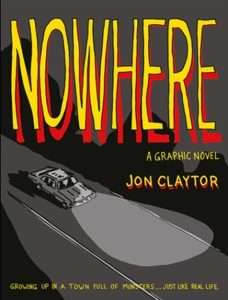 always seem to represent something beyond the natural fear a person would have against something with fangs and claws. Many times, these monsters are symbolic of a more universal fear involving a person’s space in society or in the universe at large (at least according to critics). Ghosts, for example, are often connected to humanity’s universal fear of death. Zombies are often symbols of death as well as disease. Author and illustrator Jon Claytor, however, presents an interesting idea in his book Nowhere, the world of zombies, vampires, and aliens represents the very modern fear of growing up.
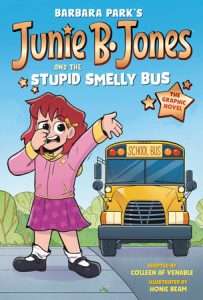 Charlie and the Chocolate Factory. And, of course, Junie B. Jones. Barbara Parks’ kindergarten heroine first entered the scene in 1992 and has graced 31 books, multiple stage plays, and a video game, even finding her way into Banned status in the early 2000s for not displaying good social values, poor grammar, and “mouthiness”. That by itself, in addition to being a straight up mood, could attract new readers to this legacy series. Now our kindergarten sass mouth is starring in her own graphic novel series from Penguin Random House, adapted by Colleen AF Venable and illustrated by Honie Beam. The first three books, Junie B. Jones and the Stupid Smelly Bus, Junie B. Jones and a Little Monkey Business, and Junie B. Jones and Her Big Fat Mouth, are already available and the fourth is expected September 2026.
 to tell her who she should be. This includes everyone from her overbearing and very traditional Chinese mother to her best friends and bandmates. It seems like everyone has an opinion on who Lindsey should be and where her attention should be focused, be it the band or her studies.
 readers, Big Words, Small Stories. She’s launched a new series with a new illustrator Sara Sarhangpour, which has the same lively sense of humor and fun cartoon illustrations.
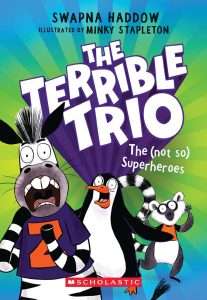 and is offering superpowers to every animal in the world! Marge, Barry, and Zeb are extremely excited—especially Zeb—and line up to receive their powers. Zeb, a somewhat neurotic zebra, stands on his hind feet and has wildly changing and dramatic expressions, heightened by his spiky, mohawk-style mane. Barry the lemur has a long, stripy tail and is used to Zeb’s dramatics. The two meet Marge (Margarine), a placid penguin with a plump, pillow-shaped body, when they line up and the three bond while waiting in line—behind the massive butt of a water buffalo.
 her to cozy up to her wealthier peers—and, ideally, marry one of them. But Jade is focused on her secret passion: serious weightlifting.
 low numbers of yetis, she’s convinced her parents to turn it into Camp Monster and welcome everyone, but things don’t go as expected.
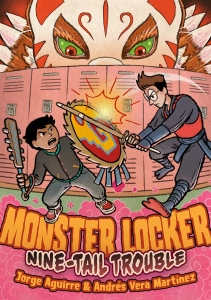 of the first Monster Locker in October 2024, Pablo and his friends Takashi and Maggie have been working to banish the demons and mythical creatures that use Pablo’s basement locker as a FastPass into the human world back into their own dimension. Most of our trio is burnt out with all of their monster fighting, but Pablo is feeling the rush of finally being seen in a good way again and is pushing his friends to keep the monster banishing and their social capital up. The problem with being seen, though, is sometimes the wrong things are looking.
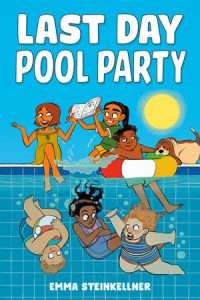 rising ninth graders, the summer is off to a rocky start. Rose is disappointed to realize that she went through junior high without making much of an impression—no one seems to even remember her name. Best friends Juhi and Liv just had a huge fight—maybe even a friend breakup. Paul just wants to game and be left alone, but his parents are making him attend a pool party thrown by classmate Dustin. Paul’s popular cousin Maya will be there, too—her mom is forcing her to go and apologize for semi-accidentally humiliating Dustin in a viral video.
