At the end of the summer, siblings Evan and Jessie will both start fourth grade. Evan is right on schedule, while his gifted little sister Jessie is skipping a grade. The problem is, their school only has one fourth-grade classroom. Evan and Jessie are close, but Evan fears that being in the same class will make it obvious that his little sister is, in some ways, smarter than he is. So while Jessie is looking forward to school starting, Evan is dreading it.
Jessie—brilliant with academics but not so much with social skills – can’t see why Evan would be upset, which just upsets him more. Now, Evan doesn’t want to hang out with Jessie for what’s left of the summer, so he ditches her to set up a lemonade stand with another neighborhood kid. Jessie is hurt, but thinks maybe if she starts her own lemonade stand, she can impress Evan and make him want to hang out with her again.
Instead, the lemonade stands become a fierce competition, which spirals until Evan and Jessie make a bet: whoever earns more money by the end of the summer gets both of their profits. It’s Jessie’s math and business smarts versus Evan’s doggedness and people skills. Who will win? And will Jessie and Evan ever work things out between them, or will their closeness be a casualty of the lemonade war?
This graphic novel adapts the 2007 book The Lemonade War, the first of a series, which garnered a list of awards and positive reviews. Like the original, this adaptation gets its tension and momentum from Evan and Jessie’s sibling rivalry, but also slips in some math and lots of basic economics concepts, all explained in an accessible way for young readers. Jessie calculates profit margins and tries out the value-added tactic of offering free pretzels at her stand; Evan runs afoul of local business regulations when he starts selling lemonade on public property downtown without a license. As they try to out-maneuver each other, Evan and Jessie use business strategies including underselling, advertising, and even franchising.
Jessie and Evan are very different, but both sympathetic and interesting. Thought bubbles provide lots of information on their interior lives, showing readers when there is a miscommunication, something Jessie doesn’t understand, or something Evan thinks but isn’t willing to say. Flashbacks help explain their motivations and illustrate how close the siblings normally are. While no diagnosis is ever mentioned, Jessie seems coded as perhaps being on the autism spectrum: she takes social interactions at face value and is often confused when people are not straightforward, and one page shows her looking at a chart of facial expressions labeled with different emotions.
The art is clear, with a slightly cartoonified realistic style. Panel sizes and layouts vary, adding visual interest. The backgrounds are fairly simple, keeping the focus on the characters and what they are doing – including, occasionally, working out lemonade-related math, which is laid out for readers to see. When a flashback begins, the panel outlines change from having black outlines and sharp corners to brown outlines and rounded corners, and all the colors take on a slightly muted look, like a subtle version of the sepia tone in old photos.
This book has sympathetic characters who feel like real kids. It packs in a lot of kid-friendly economics concepts, but its driving force remains the relationship between Evan and Jessie. Hand it to kids who like realism and good-hearted young characters trying to navigate family and friend conflicts – and to fans of stories about kid entrepreneurs, like the Baby-Sitters Club.
The Lemonade War By Jacqueline Davoes Art by Karen De la Vega Harper Collins Harper Alley, 2025 ISBN: 9780063310384
It is the Golden Age of Console Gaming and Dul is an avid gamer. Her games keep her company when her mom is at work, which seems to be most of the time now, given how tight money is. Dul appreciates everything her mother does for her, but there is one gift she wants more than any other for her birthday—Encounter Champions 2. The hottest fighting game of the year!
Fortunately, Dul’s mom knows how to take a hint, and saw all the gaming magazines she left around their apartment folded to a certain advertisement. Unfortunately, she looked at the wrong advertisement! This is how Dul wound up with a copy of Super Trash Clash, a game widely dismissed by game reviewers everywhere as being so poorly programmed that it hardly matters that the game itself is boring because you’ll barely be able to play it.
Despite this, Dul is ready to suffer in silence, until she’s given a chance to trade Super Trash Clash to her best friend’s cousin for a copy of Encounter Champions 2. (He’s already bored with it and wants a real challenge.) It seems like the bargain of a lifetime, until Dul’s mom (who is just savvy enough to tell one game from another) starts asking her about what happened to her new present. This begins an epic quest to recover the worst game ever made.
Super Trash Clash reminds me of many wonderful things. Mostly it reminds me of my childhood, which was spent pouring over Nintendo Power and GamePro magazines for news of upcoming games before making the weekly trek down to the local video store to see what new cartridges they might have ready to rent. It also reminds me of my mother, who endured far more rants about the virtues of Maniac Mansion on the NES compared to the PC version than anyone ever should have.
Mexican comic creator Edgar Camacho spins a fantastic story told in flashback, as an older Del stumbles across a copy of the so-called worst game ever and buys it, taking it home to play as she thinks about why the game means so much to her—even if it is terrible. The effect is something like A Christmas Story, but for those elder Millennials and Gen Xers who argued in the schoolyards regarding the virtues of NES vs. Sega.
Camacho’s artwork invites comparison to Bryan Lee O’Malley’s work on the Scott Pilgrim series. There is a streamlined simplicity to Camacho’s art that defies convention. Yet his backgrounds are as oddly complex and vividly detailed as his characters are simple. The colors are muted, adding to the nostalgic charm of the story.
Super Trash Clash is recommended for audiences 13 and up and I think that’s a fair rating. There’s nothing more objectionable than a curse word here and there and a child lying to a parent. For the record, Dul does spend most of the story suffering for that choice while trying to make things right. Younger kids might be able to process the story, but older audiences will have a better chance of appreciating the message that one person’s trash (clash) is another person’s treasured memory.
Super Trash Clash By Edgar Camacho Top Shelf, 2022 ISBN: 9781603095167
Publisher Age Rating: 13+
NFNT Age Recommendation: Adult (18+), Older Teen (16-18), Teen (13-16) Creator Representation: Mexican
Princess Shuri of Wakanda may be just a kid, but she has invented a weather-control device. Surely this will win her the kind of respect accorded to her older brother, T’Challa. And when the sacred Soul Washing Ceremony is threatened by rain, Shuri sees her chance. Fancy tech isn’t allowed at the ceremony, but surely this is worth making an exception! But when she tries to use her invention to clear up the weather, T’Challa steps in to stop her and things go terribly wrong.
Now a frightening illness is striking people who were at the ceremony—including Shuri’s mother. Is it a curse brought on by Shuri and T’Challa for angering their ancestors? Shuri has to fix this, and she might know a way. A cure is said to lie in the fabled Heartlands and while most people don’t believe the Heartlands are real, Shuri thinks she knows how to find them. Since no one will listen to her, she’s going after the cure alone. Or she would, if T’Challa didn’t insist on following her…
This action-packed story features much younger versions of Shuri and T’Challa than we see in most Black Panther stories, but with the seeds of their adult personalities: a serious T’Challa who desperately wants to live up to his title and responsibilities, and a brilliant Shuri who loves making fun of her brother. Readers are treated to the rich backdrop of Wakanda, including technology, traditions, clothing, and more. There is also a secondary setting, the Heartlands, where over a third of the story takes place: a fantastical jungle in which Shuri and T’Challa meet strange creatures and uncover secrets about themselves and Wakanda’s history.
Our two young heroes have some typical sibling arguments and resentments, but they come through for each other when it counts. The events of this story prompt them to talk about a tough issue: Shuri only exists because her mother married their father after T’Challa’s birth mother died, leading Shuri to wonder if T’Challa resents her. This question is handled with sensitivity and warmth. The siblings clearly love and support each other, though with a hearty dose of good-humored ribbing.
There is a small amount of comic-book violence, with no blood or serious injury to anyone. The “techno-organic virus” is visually creepy, and the illness adds high stakes to the story, threatening the lives of Shuri’s mom and others. The story does not shy away from serious and emotional issues like complicated family dynamics and the importance of doing the right thing even when it might have a heavy cost.
The art is vividly colorful, with many panels flooded with pink, purple, turquoise, and other lively colors that emphasize the vibrant setting. The characters are expressive, but at different levels, suiting their personalities: exuberant Shuri has her big emotions on display, while T’Challa can be more restrained. The outfits—from ceremonial finery to casual wear to uniforms—contribute to the immersive setting, as do the various backgrounds, ranging from jungle to laboratory to the palace library.
This fun and heartfelt stand-alone story presents a kid-friendly adventure with relatable versions of two popular Marvel characters. Hand it to young fans of Black Panther and other Marvel properties.
Shuri and T’Challa: Into the Heartlands By Roseanne Brown Art by Claudia Aguirre, Dika Araújo, Natacha Bustos, Ellen Willcox Scholastic GRAPHIX, 2022 ISBN: 9781338648058
Publisher Age Rating: 8-12
NFNT Age Recommendation: Middle Grade (7-11), Tween (10-13) Creator Representation: Brazilian, Ghanian-American, Mexican, Spanish, Lesbian Character Representation: Black
What would you do for a lifetime pass to your favorite theme park? Maybe come up with a seemingly foolproof plan to ensure you and your friends get such passes? Jackie Chavez concocts a brilliant scheme to do exactly that in Lifetime Passes, written by Terry Blas with art by Claudia Aguirre.
Jackie lives with her tía Gina, working alongside her at the Valley Care Living Retirement Home. Ever since Jackie’s parents were deported, her relationship with her aunt has been her constant. The retirement home isn’t glamorous, but luckily Jackie has an escape: Kingdom Adventure. She and her friends spend all their free time at the theme park, a world of fantasy and magic. It was where Jackie’s parents took her as a child and told her that she could be anything, be anyone.
But theme parks are expensive and Kingdom Adventure is no exception. Jackie’s aunt can no longer afford to renew her season pass, leaving her with no way to get in and no place to go once the summer is over. She’s devastated until she overhears some of the park employees one afternoon. If a member of your party dies while you’re in the park, everyone else in the party receives a free lifetime pass, a way for the company to avoid any legal troubles. How convenient that Jackie works at a place full of elderly people!
Jackie creates a new program to use the residents of the home for their advantage. Senior Time Outreach Program, or S.T.O.P., gives the group of friends a chance to take different members of the home to Kingdom Adventure for a day outing. It’s a hit! The seniors love getting out and Jackie finds herself bonding with Phyllis, who has a lifetime of stories from her years working in the entertainment industry and a special connection to the theme park itself.
As readers spend the summer with Jackie and her friends, both old and new, more about Jackie’s parents and her struggles to fit in come out as her relationship with Phyllis blossoms. Phyllis encourages Jackie to embrace her adversity, to become stronger, and to force herself to grow. A girlfriend won’t necessarily be what makes Jackie happy, it will be herself and all the relationships she values in her life.
The book also tackles the often uncomfortable subject of elder care, through the retirement home and Jackie’s relationships with its residents. For readers watching older folks in their life move onto the next stage of life, this book helps them deal and understand those very feelings.
Lifetime Passes features characters with a number of different backgrounds, so there are multiple characters readers might find themselves relating with. Aguirre’s art matches the tone of the story and its shifts throughout. The characters are expressive, the colors are vibrant, and the world of Kingdom Adventure jumps off the pages. There is a lot of heart in the story being told and readers will root against S.T.O.P.’s goal. Readers who like stories of those who don’t exactly fit in or how you can change after making a mistake will be drawn into Jackie’s world and Kingdom Adventure.
Lifetime Passes By Terry Blas Art by Claudia Aguirre Abrams ComicArts, 2021 ISBN: 9781419746666 Publisher Age Rating: 14+
NFNT Age Recommendation: Older Teen (16-18), Teen (13-16) Creator Representation: Mexican, Mexican-American, Queer Character Representation: Mexican-American, Queer
The sentient mansion of Graveneye is more introspective than haunted. It feels protective, fond, proud, and curious. But it tells us it does not feel remorse. The house tells the story of its beloved owner Isla. Even though Isla’s lifetime is only a quarter of its own, you get the impression that the house loves her best. No one understands Isla the way the house does. No one else hears her red voice and embraces her hunter nature. A new maid, Marie, is hired to care for the house and her timid presence pricks the interest of Isla and her home. We see her before we see Isla, a keyhole filled with bright red leads to the front door opening on its own. Marie’s entrance is marked by a bite from the house, the door’s strike plate cutting her hand open and spilling bright red drops across the greyscale panels. The relationship between Isla and Marie blooms slowly, keeping pace with Marie’s transformation from a woman curled inward by domestic abuse to one open to warmth and comfort. It’s impossible to resist being enchanted by the story, to feel the love of the house.
Even though the house is showing you Isla’s history. Even though you know Isla is foremost a hunter. Even though you know it’s a horror story, not a romance.
The writing is spellbinding. While the subject matter is very different from Leong’s award-winning YA sports story A Map to the Sun (to label it too broadly), there’s a similar sense of the story taking just as much time as it needs to be told. With a languorous pace and gothic flourishes, it meanders through the story, showing flashbacks of Isla’s life, her hunting trips in the surrounding woods, and even speculates at Marie’s terrible home life. The house uses imagery of trees and buildings in its narration: Isla has “skin that looked not unlike the lightning struck oak in the courtyard. She was as regal as a maple” and Marie is a “young spruce-white wisp of a girl”. It reads like a fairytale. Isla is a powerful, darkly flawed character. Leong doesn’t pull any punches, we see some of the most horrifying parts of Isla’s past early on, but she remains fascinating. Marie seems to believe she’s in a different kind of story. The contrast is jarring and almost as violent as the action.
Anna Bowles provides the art to Leong’s script. Unlike Leong’s kaleidoscope-hued A Map to the Sun, the grayscale pages of Graveneye are filled with the shades of a stormy sky. In flashes of blood and the copious gore, bright red pierces the gray. It also appears as an accent to intense emotional moments. The lines are sketchy and the backgrounds lush. The house’s finery and architecture looms large. At times the character faces can be indistinct and lacking the polish of other moments, though the various anatomical sections show a lot of skill. The art carries a heavy load, fleshing out the characters. Seeing the emotion flit across the faces of the women makes broad changes to the house’s words. Isla is first shown in a full page splash, standing bold and strong, her clothing lining every muscled curve and angle of her body, juxtaposed with Marie’s tense body broken up by jagged panels, in a messy sweater and sneakers. There are no dialog bubbles, the house rarely feels the need to tell us what the characters are saying. Its narration comes in neat boxes or floating freely on the page. Every visual element serves the mood and motion of the story, it joins the writing perfectly. For a story told entirely in voice over narration there is a delicately balanced ratio of text to page. This is an incredible graphic novel debut for Bowles and I can’t wait to see what she does next.
Any adult library collection where horror comics circulate well should pick this up immediately. Its closest graphic novel relative is Emily Carroll’s When I Arrived at the Castle, but horror classics like The Shining, The Haunting of Hill House, and We Have Always Lived in the Castle also share a lot of DNA with it. In case the blood red cover and the woman with blood coating her chin and neck didn’t tell you, there’s a lot of gore and violence in Graveneye. There’s a scientific context surrounding it in the book that makes it feel less gratuitous, but it should still be noted for content and to keep this in the adult category. There is also a lot of female nudity, but no sex.
Open the cover to Graveneye, step into its welcoming halls, but be warned that this is a story that will linger in your mind long after the last page.
Graveneye By Sloane Leong Art by Anna Bowles TKO Studios, 2021 ISBN: 9781952203176
Publisher Age Rating: 15 and up
NFNT Age Recommendation: Adult (18+) Creator Representation: Chinese, Mexican, Native Hawaiian Character Representation: Lesbian
Jessica Cruz has a lot to be anxious about. Her life with her Mexican parents in Coast City could be upended at any moment if their status as undocumented immigrants is revealed. She knows this because she sees Immigration and Customs Enforcement (ICE) agents take people away, never to be seen again. She has a Deferred Action for Childhood Arrivals (DACA) renewal application to complete, but she is losing hope for her future. The local mayoral race includes candidate Francesca Villamontes, whose platform includes harsh rhetoric against undocumented immigrants. “I’m tired of pretending everything is okay when it’s not. I’m tired of dealing with people who live with blinders on,” Jessica laments.
There are reasons to hold on, though. Jessica and her classmates begin a club at school about immigrant rights, including having an immigration lawyer visit to discuss student rights. Her aunt Melody is a calming, mature influence. Her school’s guidance counselor helps her talk through her feelings, too. Jessica has friends in her neighborhood with whom she can freely swap between English and Spanish. A student internship at the museum alongside cool classmate John Stewart provides purpose and perspective. Things take a turn for the supernatural when a couple of Aztec gods on display at the museum speak to her in visions, not unlike an angel and devil on her shoulder. Chalchiuhtlicue, Goddess of the Jade Skirt, offers encouragement, telling Jessica to reach out to her friends and share her truth so that she can find support. By contrast, Tezcatlipoca, God of the Smoking Mirror, explains that anger and outwardly wielding power are the only ways to make things right in the world.
Maybe this sounds like a whole lot of story, but writer Lilliam Rivera and artist Steph C. find a winning balance through most of the book. The color palette signals Jessica’s alternating states, with green representing moments of calm and confidence while yellow represents anxiety and fear, as well as red for outright anger. These patterns of color are especially effective during a scene in which Jessica’s father is detained by ICE—her house and father are initially bathed in green, but in his absence, yellow light takes over the house while Jessica finds fleeting comfort in her mother and neighbor. Likewise, Jessica’s attitude towards her friends influences the color scheme, as comfortable bonds can turn to suspicion and anger during a microaggression or display of privilege. Jessica’s surreal visions of the Aztec gods influence whether she confides her vulnerability to them or simply concludes that “they will never understand” her fear and anxiety.
Wait a minute! Aren’t Jessica Cruz and John Stewart Green Lanterns, the colorfully cosmic guardians of the cosmos? When do they get their rings, already? Alas, this is not Green Lantern: Legacy, and the willpower-based feats are more metaphorical and driven by personal effort instead of bestowed by an external source. Jessica does find her father’s green ring, though again, it’s more a source of personal strength in the context of the story. The closest this book gets to ordinary superheroics is how many characters are drawn with uncommonly broad shoulders, plus a scene of trapping and outfoxing a malevolent ICE agent. A rather hasty ending sees a brief attempt to lend depth to Villamontes and the ICE agent, though the core message of choosing how one responds to adversity shines through.
Hand this to fans of Rivera’s previous works such as Goldie Vance and prose novel The Education of Margot Sanchez, as well as Green Lantern: Legacy and Nubia: Real One. DC’s standalone graphic novels for younger readers have been averaging more hits than misses in my book. The tilt toward real-life issues in the YA books in particular has been a welcome hook when booktalking. Jessica Cruz is a great character within DC’s pantheon of heroes, and this is a great introduction to her for new readers and a fresh take for anyone familiar.
Unearthed: A Jessica Cruz Story Vol. By Lilliam Rivera Art by Steph C. DC, 2021 ISBN: 9781779500519
Publisher Age Rating: T
NFNT Age Recommendation: Teen (13-16) Creator Representation: Mexican, Puerto Rican-American Character Representation: Mexican, Mexican-American, Anxiety
“The onion serves to season and enhance the flavor of other foods. I guess sometimes people are like onions. We complement each other and bring out the flavors that make us who we are.”
Onion Skin opens with food flying across the page as a food truck flies through the page chased by motorcycles. Then we meet Rolando. After an “accident” at work, Rolando has lost direction. He soon meets Nera who lives in a non-working food truck in a junkyard. One thing leads to another, and despite their lack of knowledge or know-how, Rolando and Nera fix the truck and start cooking. Their food truck, the Dawgburger, quickly grows a large following as they travel through Mexico, thanks to seasoning from two plants left to Nera by her grandmother.
Onion Skin, by Edgar Camacho, was originally written in Spanish and published in Mexico in 2016, where it won the first National Young Graphic Novel Award. This book, which celebrates the cuisine of Mexico in muted colors, was a hit there, and I imagine will be a hit here as well.
Camacho’s distinctive loose sketch style is worthy of praise, and I was often drawn to the unique details of the page that I might have overlooked in a more traditional tight comic illustration. One image in particular toward the beginning of the book struck me. The panel illustration shows a plate of half-eaten chilaquiles. In front of the plate sits Rolando’s discarded glasses, and in the reflection we see his frustration and tears.
Camacho also twists the traditional use of panels with the occasional word or limb that escapes the border or the use of multiple panels to break up a single image. These moments were as much of a treat as the delicious illustrations of food.
However, I was most intrigued by his narrative style. Much like onion skin, this story is told in multiple layers. The narrative alternates between two transitional moments in their relationship – the events leading to their first run in the food truck, and the events that eventually lead to the dramatic chase from the beginning of the book. The alternating scenes end in alternating panels. Each layer is different but parallel.
As the story progresses and action builds, the alternating scenes build tension and feel fast-paced, sure to capture the reader’s attention. At the same time, by creating parallels in the narrative, we are also given the opportunity to explore the evolution of character and relationships.
Onion Skin is a recommended purchase for any public library or high school library collection, especially collections where narrative graphic novels are popular. There isn’t any content in the book that regulates it to adults, but the target audience is adults, and it would fit in the adult collection of a public library. However, this story about breaking free, exploring new ideas, and traveling the country will also appeal to teens who are ready to do the same.
Onion Skin By Edgar Camacho Top Shelf Productions, 2021 ISBN: 9781603094894
NFNT Age Recommendation: Adult (18+), Teen (13-16) Creator Representation: Mexican, Character Representation: Mexican,
The Hazards of Love began as a webcomic in 2015, with issue covers and occasional splash pages in color, the rest a thickly lined and crosshatched black and white. In 2018 author/artist Stan Stanley told Women Write Comics that she set out to create a creepy, queer YA story with a Latinx cast, the kind of story she’d love to have read as a teen. Book 1 collects the first 11 issues (plus an issue zero), fills every page with blazing color, and contains more teeth than you can imagine.
Amparo Uribe and Iolanthe’s meet cute is Amparo hiding from school authorities in the library after pulling the fire alarm. After a great evening with Iolanthe (that was not a date), Amparo’s abuela reminds them of the ways they’re letting their mom down by making mischief at school. So when a talking cat appears in their bedroom and offers Amparo a wish, they wish to become a better person. Unfortunately the cat was really just stealing Amparo’s name, body, and life. Now the cat is living Amparo’s life in Queens and Amparo is exiled to a lush, animalistic wonderland called Bright World, where everything loves to eat humans. Nameless and shoeless, they are helped by/fall prey to tavern owner Mimi, an anthropomorphized hairless dog. As a way out of Mimi’s doomed indentured servitude, they are helped by/fall prey to El Ciervo, who buys them from Mimi—but not before cutting their hands off. Given the name Fawn and new, morphing blue flame hands, they continue searching for an escape to the real world, aided by one of Mimi’s servants, Juliana.
Back in Queens, time is passing and Iolanthe is suspicious of the suddenly sweeter Amparo. But feline Amparo wins her over, and sets about bringing up their grades, holding down a job, and making their family proud. They go to prom and graduate from school and keep trying to build a future. But a cat’s life isn’t as long as a human, and this cat has been alive for a while already. When they disappear, Iolanthe begins a strange search involving an underground psychic.
My summary can’t do the writing justice. There are twists and turns and sickening reveals and the dangers of Bright World can’t be easily cataloged. Memories and things humans keep on the inside are currency in Bright World, combining identity and survival in a primal way. Amparo is established as using they/them pronouns early on, and is questioned occasionally throughout the book about their gender. They speak in terms of being “bad at being a girl” or not really feeling one way or the other, not choosing labels. What it means to be “you” is constantly challenged in both the Queens, NY and Bright World storylines. Many of the characters speak Spanish and all of the signs in Bright World are in Spanish. The characters are often sparse on details yet vibrant, like Juliana, who retains a fiery spirit in the midst of having lost most of her memories. We spend little time with Iolanthe, but feel her deep concern and care for Amparo.
I originally read this in a digital copy, on Hoopla. The bright colors glow and the characters jump off the screen. When I decided to review it I scored a hardcopy from my library and while I don’t usually worry over digital vs paper, the black of the pages made me fall in love with the art in a new way. The entire page and between the panels are a deep black, starting out with straight gutters in the beginning that start to wiggle and swirl as magic enters the story, then remaining wild twisted things, sometimes resembling thorns, for the rest of the story. These are shown in the digital copy as well but were brilliantly shown in the printed version. Bright World is colorful in the manner of poisonous plants and animals, standing against the black panes of the pages like stained glass or the images on prayer candles. Stanley has said she was inspired by her childhood in Mexico and the riot of color reflects this as much as the folk art animal shapes and characters. In violent contrast, El Ciervo is a flat black deer head above a crisp suit. He has blue eyes, white antlers, and occasionally his pointed teeth glint, but his face is mostly a void of darkness that quietly menaces Amparo. I want to read more, but love the colors so much I think I’ll wait for Book 2 instead of reading ahead from the webcomic.
There are few sections that are challenging in readability, including an issue that divides the pages horizontally with an undulating boundary showing Amparo’s Bright World troubles and Iolanthe dealing with the deceitful cat’s antics side-by-side. Sometimes following tightly stacked speech bubbles of conversations took a little more care. But the jumbled style and the extra attention it required from me felt appropriate somehow and well worth the trouble.
The Hazards of Love is best for older teens and has more than enough complexity for adults. From a content standpoint it’s fine in a teen or high school collection. Stanley has taken care of the language in the webcomic by simply scribbling out swear words, there’s no nudity or sex, and the violence is swift and cerebral, with only a little gore. Fans of gothic comics like The Last Halloween and twisted fairytales will find a lot to sink their teeth into.
The Hazards of Love, Book 1: Bright World By Stan Stanley Oni Press, 2021 ISBN: 9781620108574 Publisher Age Rating: Grade 9 and up
NFNT Age Recommendation: Older Teen (16-18) Creator Representation: Mexican, Queer Character Representation: Latinx, Queer, Nonbinary
Fence: Rivals returns to the tense environment of the students at Kings Row; with Nicholas starting to realize just how much work he has to catch up not only to Seiji, but to Jesse. This is the first time the Kings Row boys will compete in a team competition and their lack of teamwork is very apparent. Seiji may finally have to admit that fencing isn’t just a solo sport, and learn to trust his team.
Since Rivals is a continuation from the first three volumes, there’s a lot of backstory that will be missing if a reader picks this volume up first, especially because Fence doesn’t fall into the problem many mainstream comics do of re-explaining things at the start of each issue, which gets incredibly repetitive once the issues are collected into a volume. This does mean however it’s also hard to talk about the plot of Rivals without running into spoiler territory.
That being said, the story does still move pretty slowly. At least in Rivals, we don’t spend the entire graphic novel covering just one event, so compared to the previous volumes the story is starting to pick up. A primary issue is that often, the story stops to explain basic fencing concepts using Nicholas as the in-story reason to do so. This is understandable, to a certain degree, because fencing isn’t as common a sport in most groups as say soccer or football, so the creators can’t assume readers have a base understanding of the sport’s rules. It does make Nicholas look, now in the fourth volume of this series, like he never actually learned to fence and just was incredibly lucky to have stumbled into a fencing uniform, across the piste, and somehow won matches.
The art has always been very clean and simple, and this volume is no exception. It does seem like the manga influences are getting more apparent, with use of screentones and gestures common to manga as well as making characters small and cute (a state referred to as chibi, a Japanese word for short) in certain situations. Something I’ve found kind of amusing with Fence’s art style is how it tries to make fencing uniforms look cool. Unfortunately, fencing uniforms are just not cool, and often look a little silly. Johanna the Mad does her best though, I’ll give her that. The one problem I have with the art’s simplicity is how often there are no background details in panels, at best a wash of color and maybe some action lines or generic people shapes. It really solidifies that this is a story about the people, not the setting, which isn’t necessarily a bad thing but can be frustrating for a reader that likes background details.
As an American series, Fence is pretty unusual for covering fencing, but because of the themes of teamwork, rivalry, and hints of romance it’s the perfect comic for fans of manga like Haikyuu! and Kuroko’s Basketball, or novels like Foxhole Court. I know, I know this is a comic review but C.S. Pacat is better known for her Captive Prince trilogy and Foxhole Court feels like the novel version of Fence.
A final note, in case readers are confused: The series was changed from an ongoing one, released in numbered volumes, to original graphic novels, which means going forward each volume will have a subtitle, like this one. So there are volumes 1-3 of Fence, and now Fence: Rivals. There is also a novel coming out in the fall, written by Sarah Rees Brennan. No word yet on subsequent graphic novels.
Fence: Rivals By C.S. Pacat Art by Johanna the Mad ISBN: 9781684155385 Boom! Box, 2020 Publisher Age Rating: teen Series Reading Order: https://www.goodreads.com/series/213127-fence (Wikipedia or Goodreads)
Browse for more like this title NFNT Age Recommendation: Teen (13-16), Older Teen (16-18), Adult (18+) Character Traits: East Asian, White, , Gay
Mexican photographer Graciela Iturbide is famous for her haunting black and white photos. Isabel Quintero and Zeke Pena have created an enthralling graphic novel in which Iturbide’s story and photographs are brought to life for a generation who may be entirely unfamiliar with their groundbreaking work. Photographic: The Life of Graciela Iturbide is an important graphic novel for the current culture. Mexican stories need to be told. Graphic novels like this are a reminder that the history and culture of Mexican art and artists is vast and rich. This graphic novel may be a few years old but its review is crucial.
The story opens at an art gallery with photographs on display. A group of young people ask the photographer about their style and methods. That photographer is Graciela Iturbide. She explains her methods and motives to the young attendees while the story fades into the past. The story moves through time—back and forth—from the Sonoran Desert and Mexico City to India and Frida Kahlo’s bedroom. It covers her most famous photographs as well as her childhood and relationship with her father. Graciela appears to explain in her own words what was going on at the time, the inspirations for the photographs, and her own thought process.
Photographic: The Life of Graciela Iturbide is uniquely illustrated. The artist painstakingly recreates Graciela’s history and photographs through similar yet powerful black and white illustrations. The actual photographs accompany the illustrated versions. It’s refreshing to see artwork and photography depicted in this way, particularly in a graphic memoir. It is one thing to see an illustrated version of a piece of art, but to see it held up against the real thing is entirely different and adds great depth to the story. The attention to detail is astounding and the artist made the right decision to keep color out of the book. Graciela’s medium was black-and-white and her biography should be the same.
The writing itself feels a bit stilted and that may be entirely based on the translation. It’s hard to feel a rhythm while reading. The author includes an interesting use of a second person point of view. The author addresses the reader in short snippets of text before each chapter break. These breaks in the fourth wall are a way to introduce the reader to where the story will take place next. It’s helpful in a way, but also a bit distracting. Graciela’s descriptions are poetic and imaginative while these breaks feel unnecessary. Graciela is more than capable of telling her own story in her own way. Photographic: The Life of Graciela Iturbide is a fascinating look into the life of a prolific and iconic Mexican photographer. Their work resides in many museums around the world. This graphic novel cannot tell Graciela’s story in its entirety, but it does a great job of introducing readers of all ages to her life and her work.
Photographic: The Life of Graciela Iturbide is appropriate for readers 13+. It is enjoyable to readers of Tillie Walden’s On a Sunbeam, Pénélope Bagieu’s Brazen: Rebel Ladies Who Rocked the World, and Liana Finck’s Passing for Human.
Photographic: The Life of Graciela Iturbide By Isabel Quintero Art by Zeke Pena ISBN: 9781947440005 Getty Publications, 2018 Publisher Age Rating: T
Browse for more like this title) Character Traits: Latinx

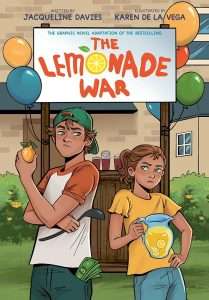 Jessie is skipping a grade. The problem is, their school only has one fourth-grade classroom. Evan and Jessie are close, but Evan fears that being in the same class will make it obvious that his little sister is, in some ways, smarter than he is. So while Jessie is looking forward to school starting, Evan is dreading it.
 It is the Golden Age of Console Gaming and Dul is an avid gamer. Her games keep her company when her mom is at work, which seems to be most of the time now, given how tight money is. Dul appreciates everything her mother does for her, but there is one gift she wants more than any other for her birthday—Encounter Champions 2. The hottest fighting game of the year!
 Princess Shuri of Wakanda may be just a kid, but she has invented a weather-control device. Surely this will win her the kind of respect accorded to her older brother, T’Challa. And when the sacred Soul Washing Ceremony is threatened by rain, Shuri sees her chance. Fancy tech isn’t allowed at the ceremony, but surely this is worth making an exception! But when she tries to use her invention to clear up the weather, T’Challa steps in to stop her and things go terribly wrong.
 What would you do for a lifetime pass to your favorite theme park? Maybe come up with a seemingly foolproof plan to ensure you and your friends get such passes? Jackie Chavez concocts a brilliant scheme to do exactly that in
 Jessica Cruz has a lot to be anxious about. Her life with her Mexican parents in Coast City could be upended at any moment if their status as undocumented immigrants is revealed. She knows this because she sees Immigration and Customs Enforcement (ICE) agents take people away, never to be seen again. She has a Deferred Action for Childhood Arrivals (DACA) renewal application to complete, but she is losing hope for her future. The local mayoral race includes candidate Francesca Villamontes, whose platform includes harsh rhetoric against undocumented immigrants. “I’m tired of pretending everything is okay when it’s not. I’m tired of dealing with people who live with blinders on,” Jessica laments.

 Mexican photographer Graciela Iturbide is famous for her haunting black and white photos. Isabel Quintero and Zeke Pena have created an enthralling graphic novel in which Iturbide’s story and photographs are brought to life for a generation who may be entirely unfamiliar with their groundbreaking work. Photographic: The Life of Graciela Iturbide is an important graphic novel for the current culture. Mexican stories need to be told. Graphic novels like this are a reminder that the history and culture of Mexican art and artists is vast and rich. This graphic novel may be a few years old but its review is crucial.
