
My Fairy Godfather
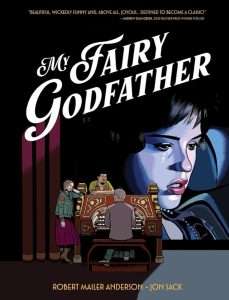 Against the backdrop of a small (and small-minded) town in Kansas that has laid claim to The Wizard of Oz, Anderson and Sack’s My Fairy Godfather uses the coming-of-age/fish-out-water framework to explore how prejudice impacts both teenagers and adults.
When high school junior Billie loses both of her parents in a car crash, she is sent (against the wishes of her conservative aunt and uncle) to live with her gay godfather, Adam, and his sassy partner, Steven. As Billie adjusts to her new life, Adam has to learn how to take care of a teenager while trying to keep his struggling independent movie theater afloat in a town that has not historically been kind to him. Along the way, Billie befriends a lesbian Dorothy Gale impersonator named Clara, and a potential love interest, Dylan, whose desire to be an ally is at odds with his friends and family.
Over the course of the comic, Anderson and Sack tell a pleasantly grounded story about the intricacies of LGBTQIA+ life showing that the challenges of growing up and parenting are not limited to so-called “traditional” families. The creators don’t shy away from big, direct statements about equality and allyship (the final scene, for example) but they’re at their best during the small, personal moments in My Fairy Godfather, when the reader is really brought into the characters’ struggles and is shown the toll that hate takes on human beings. The character of Adam, in particular, is usually portrayed as much more reserved than those around him, but he often exhibits subtle changes in facial expressions that hint at internal conflict and changing perspectives. The scenes in which he is figuring out how to enforce rules with Billie or discussing his insecurities with Steven really demonstrate this, and are among the most engaging and impactful of the entire comic.
Artist Jon Sack utilizes clear, definite linework set against flat colors, not dissimilar to the works of Daniel Clowes or Charles Burns. It’s a style that compliments the matter-of-fact approach to the everyday stressors of the characters, and leads to an accessible reading experience. The style visually aligns the book much more closely to the tradition of “real world” independent comics like Clowes’ Ghost World or Adrian Tomine’s Summer Blonde. The artist’s emphasis on clarity of storytelling over detail also helps with the book’s quick pacing, which is appreciated considering the often heavy and upsetting subject matter.
My Fairy Godfather is an excellent comic if you’re looking for books that humanize LGBTQIA+ characters and put their worries, insecurities, and mistakes on full display. On the surface, it looks like the familiar “teenager thrown into an uncomfortable new environment” type of narrative, and on some level it is, but the creators put in the legwork to make Adam’s story as important, if not more so, than Billie’s. By taking us through the ways Billie and Adam’s personal challenges intersect, Anderson and Sack remind us that families are not one-size-fits-all and that a desire to connect with others cuts across differences in sexual orientation, age, and gender. It’s clear that they’re deeply concerned with the idea of chosen family, and when characters connect with each other, it’s genuinely touching. As far as I can tell, the intended audience for My Fairy Godfather is adults, however, the exploration of family dynamics and teen relationships would make this book just as palatable for YA readers– especially if they’ve already read Flamer but aren’t quite ready to tackle Fun Home.
My Fairy Godfather
By Robert Mailer Anderson
Art by Jon Sack
Fantagraphics, 2024
ISBN: 9781683969808
NFNT Age Recommendation: Adult (18+), Older Teen (16-18)

