
Mister Magic
Everyone over the age of 30 remembers the TV show Mister Magic. They don’t always 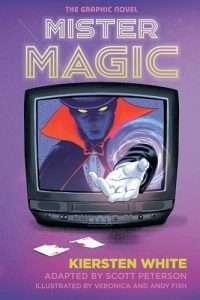 agree about what happened on the show—and there’s no way to settle disputes, since no footage from Mister Magic seems to exist anywhere. But they remember how passionately they loved it as children, how they felt like the kids in the show were their friends. And they remember—even if the details are blurry—that it ended thirty years ago in a terrible, violent tragedy.
When Val’s father dies, she feels lost. She’s been living on an isolated ranch since her father brought her here thirty years ago, when she was eight. He’s been paranoid, terrified that something would follow them here, but Val doesn’t know what or why. Then unexpected guests show up at his funeral. Val doesn’t remember anything from before she arrived at the ranch, but these people claim they were her childhood friends and costars on the show Mister Magic. They do seem deeply familiar, and Val is desperate to learn more about her past, so she agrees to leave with them. They’re headed to the remote desert town where the show was filmed, where they will be interviewed for a podcast.
Once they reach the desert town of Bliss, Utah, things just keep getting stranger and more threatening. The entire town is extremely invested in the show Mister Magic. They’re all angry at Val for something she can’t remember. And they want something from Val and her new/old friends—something they’ll do anything to get.
This is a graphic adaptation of Kiersten White’s horror novel Mister Magic. It’s smart and creepy, playing with themes of memory, nostalgia, and trauma, as well as the desire to protect children and how we try to do that. Interspersed through the book are memos, emails, and websites about Mister Magic—including fake pages from real sites like Wikipedia and Reddit—which add to the feeling of the story being real and contemporary. And indeed, some of the book’s horror is inspired by reality. Our protagonists find themselves returning to an isolated community bent on controlling and molding children to fit their narrow, patriarchal ideal. We see how this community shaped the lives of Val’s castmates, pushing heterosexuality, marriage, and parenthood on them regardless of how badly those concepts sometimes fit. The author has confirmed in interviews that this is a reference to conservative religions, particularly the Church of Latter-Day Saints, which White left as an adult because of the church’s increasingly homophobic views.
For most of the book, the visuals are straightforward and realistic. The art is dynamic and natural, and the flashback scenes feature some delightfully nineties-TV aesthetics. Those flashbacks also have a looser, more fanciful style that evokes both the fact that they are childhood memories and the possibility that real magic was involved. As the story progresses and the supernatural elements close in on the protagonists, the more magical style reappears more often.
As far as content, this book includes some swearing, icky sexism, creepiness, and children in danger, but nothing too dire, especially for a horror novel aimed at adults. There are a couple of kisses and a few comments on female characters’ bodies, but no other sexual content.
Mister Magic delivers an eerie and fascinating premise, flawed and sympathetic characters, and a pace that makes it easy to keep reading. Hand it to fans of inventively creepy vibes and to readers who like horror in which—spoilers—things mostly turn out okay.
Mister Magic the Graphic Novel
By Kiersten White, and Scott Peterson
Art by Veronica Fish, and Andy Fish
Ten Speed Press, 2026
ISBN: 9781984863355
NFNT Age Recommendation: Adult (18+)

