Some readers erroneously believe that adult graphic novels should have sophisticated art, particularly in a day and age where art can be easily generated through a computer. “Sophisticated” means, in this case, the artwork has aspects like realistic looking human faces, shading, and color gradation that makes the book look more like a collection of photographs than anything drawn by a human being. It’s important to remember that “graphic novel” is a medium rather than a genre, and a medium can convey a variety of different ideas. For example, Heaven, West Virginia, written and illustrated by Ravi Teixeira, doesn’t need chiseled jawlines or a computer-generated color palette to tell an emotionally wrought story about coming home to find oneself.
The book follows Lamont, a man who has come home to Heaven, West Virginia to stay with his aunt while dealing with the passing of his homophobic father, a religious man who liked to share his bigotry from the pulpit. Learning tea making from his aunt provides a measure of peace, along with his conversations with handsome cowboy Coyote. Threatening to shatter that peach is a monster lurking in the woods, a monster whose eyes glow red and whose teeth are perfect for rending flesh. Lamont sees this creature and knows that it wants to devour him. Unfortunately, Lamont cannot run from this beast. He must ultimately face this monster as well as his own identity.
Teixeira’s seemingly supernatural evil evokes the folk horror traditions of something evil lurking in the woods, but it gets much more mileage in the readers’ minds thanks to his use of symbolism. For Lamont, as for many LGBTQ + individuals from a less than welcoming family, coming home often reawakens some very real traumas as fearsome and brutal as anything with teeth made to tear flesh. However, Teixeira’s story is not all doom and gloom because his Appalachian home provides healing. They demonstrate this thanks to medicinal tea recipes, with ingredients provided by Appalachian soil, interspersed throughout the book’s various chapters. This use of recipes, along with the beast in the woods, also demonstrates Teixeira’s skill with symbolism.
And those symbols are beautifully rendered, even if you can’t see the individual hairs on the beast stalking the woods. Teixeira’s style utilized blocky lines, flat surfaces, and simple colors, but they do a great deal with them. The artwork is clear and vibrant while the characters are still expressive, despite not seeing every wrinkle. Teixeira’s art style ultimately serves the story, especially as it seems to evoke images of Appalachian folk art.
For those who actually inform you of their beliefs that simple art work cannot be considered “sophisticated,” you can give them examples like Art Speigelman’s Maus and this book. The book’s uncomplicated beauty and rustic charm make it perfect for librarians in rural areas like Appalachia, as well as for librarians looking for well-told LGBTQ+ stories.
Heaven, West Virginia By Ravi Teixeira Oni Press, 2025 ISBN: 9781637158746
NFNT Age Recommendation: Adult (18+) Creator Representation: Trans , Character Representation: African-American,
Wine Ghost interrupts the narrator introducing her and her pitiful afterlife existence for a very important delivery (it’s pizza). Except that’s not who she finds ringing the doorbell. Instead, it’s an old friend, Seb, who says he just died and “moved in” recently. Wine Ghost invites him to stay with her. Not just for pizza, but until he finds a place of his own. When they start looking at apartments the next day, it becomes painfully obvious that Seb is only out for himself and embodies the term “gaslighting”: calling Wine Ghost out on behavior that isn’t true but makes her think it might be; flirting with other ladies behind her back; and negging whenever possible. Luckily, Wine Ghost has another friend, Pepper, who teaches Wine Ghost that when someone else tells you what to think and it distorts your perception of yourself, to take a step away from that person and re-center yourself. That they don’t define you. You do.
This is an incredibly deep and thoughtful narrative that tackles some big adult themes in under 100 pages. Most of it centers around self-perception and self-degradation. Including how easy it is to be open-minded towards others’ choices and lifestyles while not giving yourself the same courtesy. Wine Ghost also presents as very self-aware until Seb comes along and muddles things up with his lies. It was nice to have the story include the emotional support of a friendship between ladies. It mimics real life situations unlike other media that only showcases women backstabbing each other, especially when a guy is involved. Honestly, it was refreshing.
Although I find the art style incredibly distracting and not to my liking, that is very much a personal preference as I can appreciate that the art reflects the characters and world built by the author. The one negative is that occasionally some of the panels appear out of order. Normally, this would be signified by overlapping panels or text bubbles connecting them in a way that draws the eye, which is the case here, but it is harder to follow. This could be because it is more subtle, or it could be the bright clashing colors. Because of the adult content (including a sex dungeon in use by a variety of hell’s occupants), this belongs in the adult graphic novel section of any public or academic library. Upper teens will likely find it as well, but may not understand the content without the life experience to back it up, so I don’t recommend it for high school libraries.
Wine Ghost Goes to Hell By Sage Coffey Iron Circus, 2024 ISBN: 9781638991052
NFNT Age Recommendation: Adult (18+) Creator Representation: Nonbinary, Trans Character Representation: Bisexual, Addiction
Love comes in all shapes and sizes, whether it’s between adventurous pirates, burgeoning demon hunters, smooth spies, or even your average couple trying to make it all work. Young Men in Love, edited by Joe Glass and Matt Miner, showcases all these relationships and more, containing twenty stories from queer creators devoted to exploring the romantic hurdles and queer joy of male/masculine couples. This graphic novel boasts a variety of genres: fantasy, sci-fi, paranormal romance, contemporary slice of life, etc., ensuring that each reader will be able to find at least a story or two to enjoy.
Typical of most anthologies, not every story is going to be as hard hitting as the next one. With an average length of four to eight pages, there are some that struggle to break beyond their concept, leaving the reader more with an idea rather than a fleshed out narrative. The majority of contributors, however, manage to pace their stories so that, though we may not spend much time with these characters, they still leave a great amount of impact. Despite the varying appeal of each story, there is an admirable amount of honesty, vulnerability, and love interwoven within them all. An immense sense of pride lives in these pages that comes from an unwavering self-acceptance and the ability to love openly without shame or fear. Moments of loneliness, depression, and doubt play roles in multiple stories, but they always come around to love in the end, whether it comes from a partner or within themselves.
Given the graphic novel’s notable range in terms of content and themes, there are several stories that display aspects of queerness that are rarely discussed in the community. Ned Barnett and Ian Bisbal’s “Another Name” deals with a trans man realizing his identity and coming out to his partner in what was once a heterosexual relationship, highlighting the fears and anxiety that may come with such a discovery. “Act of Grace,” written by Anthony Oliveira and illustrated by Nick Robles, follows a teen expressing religious guilt to his priest, afraid of how his feelings for a boy may conflict with his Catholic upbringing. Editor Joe Glass, along with Auguste Kanakis, throw in a moving inclusion in “Love Yourself,” which has a character experience the fetishization of plus sized men in the community and how validation and love for someone comes from appreciating and celebrating the whole of them rather than a singular aspect. These are all facets to the queer experience that I have seen firsthand, but seldom are they reflected in media tailored to those they are meant to represent. Seeing these conflicts approached and resolved with such depth and respect allows the reader a touch of hope and comfort, even if they may not entirely relate to it.
Intent on including as many voices and experiences as possible, Young Men in Love also gives a tremendous amount of diverse representation in terms of ethnicity and body type. It shies away from solely depicting the stereotypical skinny, white, gay man, as there are several stories with black, brown, and plus-sized protagonists. What’s so refreshing about these depictions is that, aside from “Another Name” and “Love Yourself,” none of the stories make the characters’ backgrounds the focal point of their conflict. They exist as people foremost, without their identities being a source of added trauma.
As there is a separate artist accompanying each installment, there is a vast variety in art styles, ranging from charmingly cartoonish to engagingly realistic. I will forever throw praise onto Nick Robles, who puts so much life into his textures and instills a healthy dose of emotion and drama into “Act of Grace” through his use of lighting and character expressions. There is something Leyendecker-esque about his style where he captures the male form exceptionally well, making it the perfect fit for this collection. I also really appreciated the yellow tinge given to the palette and borders of Paul Allor and Lane Lloyd’s “The Way Home,” producing a nostalgic effect reminiscent of those old comics that had probably been left in the basement for too long. Overall, there is a vibrant rainbow of color throughout the graphic novel, as the reader is treated to vibrant pastels to moody, atmospheric shadows. Each story, as a result, becomes visually distinct and memorable, even if its content may not have lived up to the one that preceded it. None of the art in this graphic novel disappoints, which brings a certain coherence to all the differing perspectives within.
For fans of uplifting romantic stories with happy endings or layered depictions of queer experiences, Young Men in Love will hit that emotional, sappy spot in spades. As a romance comic, the content is fairly clean, with nothing going further than the occasional cuddle or kiss. The featured protagonists range from being young teens to full adults, so it may appeal most to readers fourteen and up. Librarians and educators looking to obtain graphic novels with positive and varied queer representation from queer creators should consider purchasing this title.
Young Men in Love Vol. By Joe Glass, Matt Miner A Wave Blue World, 2022 ISBN: 9781949518207
Publisher Age Rating: 13+ NFNT Age Recommendation: Adult (18+), Older Teen (16-18), Teen (13-16) Creator Representation: Black, Brazilian, British, Canadian, Greek, Latinx, Malaysian, Mexican-American, Bisexual, Gay, Queer, Nonbinary, Trans Character Representation: Black, British, East Asian, Latinx, Gay, Queer, Nonbinary, Trans, Catholic
Lewis Hancox’s teen years were much like anyone else’s, filled with the typical high school drama, perpetual awkwardness, and desperation to fit in. For him, however, it seemed like there were extra hurdles to face, being a girl that had yet to discover that he was actually a boy. In Welcome to St. Hell, Hancox addresses his younger self to guide her through those messy years of hating her body, of being confused at who exactly she’s supposed to kiss, of constantly trying to pass as a “normal girl.” Being a typical teenager, the younger Hancox tries to ignore her older self at every turn but cannot deny that she feels like an alien in her own skin. What follows is a humorous, relatable, and down to Earth depiction of Hancox’s gender exploration and eventual acceptance, told in a way that educates just as much as it entertains.
Welcome to St. Hell’s story is refreshingly grounded, widening its appeal to every kind of audience. Though the author’s transness is the focal point, there are other elements and situations that distinguish Hancox’s experiences from coming solely from a trans standpoint. Anyone who has ever walked a high school hallway will relate to those feelings of just trying to survive that time while also making an identity that’s your own, or something close to it. We all face adversities when discovering who we are, and we all fumble along the way. Hancox utilizes these shared feelings within adolescence to illustrate his journey in a context that anyone can empathize with. This is also added by his inclusion of interviews he conducted with his family and friends, detailing their initial reactions to his coming out and how they came to support him. These interviews allow for a different perspective for both allies and trans youth, delivering moments of education in how to best conduct allyship and shedding light on the effects a coming out may have to both parties.
The one thing that may take some readers out of the comic is the heavy use of British slang, which can confuse those not familiar with it, though they may adapt once they find the comic’s rhythm.
Though it has its moments of heartache, Hancox’s story is ultimately one full of honesty, hope, and humor. Even the presence of Hancox’s older self brings the positivity of a future where trans youth survive and have fulfilling adult lives. While trauma and hardship are incredibly valid in one’s gender journey, a memoir that sets a more uplifting tone to a work of trans survival can bring about a great deal of affirmation in trans youths’ lives.
Matching the tone and feel of the comic perfectly, Hancox’s art style looks like it came right out of a teenager’s prized doodle book. At many points, it reminded me of a lot of different zines, though mainly due to its mostly four panel per page structure and black and white color. The art style lends itself to a lot of great, funny expressions, my favorite being Hancox’s big eyebrows that cover a range of emotions all on their own. It is not an overly ornate comic, sticking more to simple character designs and backgrounds, but will appeal to those who prefer more cartoon-like art and less busy panels.
As the memoir is split between Hancox’s high school and college years, there are some mature topics that come into play, such as alcohol use, gender dysphoria, and eating disorders, and includes some brief moments of cartoony nudity and one use of the T slur. Scholastic has given this graphic novel an age rating of 14-18, which is appropriate given the content listed above, though I’m sure college students may be able to relate to the second half as well. Welcome to St. Hell is best for those looking for representative trans comics, whether as a trans youth looking for validating experiences, especially from trans men, or an ally looking to educate themselves on trans matters. I highly recommend this title to librarians and educators aiming to include a good variety of trans works into their graphic novel collections in terms of tone and depictions.
Welcome to St. Hell: My Trans Teen Misadventure By Lewis Hancox Scholastic GRAPHIX, 2022 ISBN: 9781338824445
Publisher Age Rating: 14-18
NFNT Age Recommendation: Older Teen (16-18), Teen (13-16) Creator Representation: British, Trans , Eating Disorder
The Woman in the Woods and other North American Stories marks the fifth volume in the series of cautionary fables and fairy tales. The eight tales in this volume are from Indigenous nations, told and illustrated by Indigenous artists, and highlighting tales from Odawa, Chickasaw, Métis/Cree, Métis, Ojibwe, Tania, Navajo, and S’Kallam societies. The editors asked each of the authors to ask for permission from the Elders and/or nations to retell and rework the stories for inclusion in this anthology as they recognized and respected the protocol inherent in the gathering of the stories from the people. Unfortunately, there are no source notes included in the collection, making it of less value to educators, librarians, and storytellers than I had hoped. True, the intended audience is middle school readers, not scholars, but the authenticity of each of the tales should be paramount for them as well. I do appreciate the fact that each of the tribal affiliations has been identified for the tales.
While the tales are rendered in black and white with various hues of grey, the cover itself jumps with colour. Ironically, the story alluded to on the cover is not included in the collection. Editor and cover artist Alina Pete remarked that she had hoped to include the creation story of Sky Woman and Turtle Island, but she could not find anyone that had permission to tell this story. Sky Woman fell to the water-covered world and fell on the back of Turtle. One by one, the animals dive into the water to try and find land until Muskrat is successful in bringing back soil. Sky woman spreads the soil on Turtle’s back to create the world as we know it. She shows Sky Woman dancing for joy and two constellations on the back cover featuring two of the characters from the tales within the covers.
Most of the illustrations in the book itself have simple backgrounds, focusing on the characters of each tale. The different styles of illustrations make each of the stories individual in a collection continuous from tale to tale without any commentary. Most of the illustrations are rendered realistically, although one or two stories have manga-like characteristics and vary between historical and contemporary settings. They also vary in length.
The anthology begins with the Odawa creation story, “As it was told to Me,” retold and illustrated by Elijah Forbes, which demonstrates that the world needs the balance of good and bad to exist. It is followed by a trickster rabbit story about the cost of vanity from the Chickasaw people. “Chokfi” is written by Jordaan Arledge and illustrated by Mekala Nava. The next two stories are located closer to this reviewer. “White Horse Plains,” from the Métis settlement St. Francois Xavier, relates the tale of the dangers of greed and conflict. It is written and illustrated by Rhael McGregor. The second Métis tale is possibly the most familiar character in the collection for me. Written by Maija Ambrose Plamondon and illustrated by Milo Applejohn, “The Rougarou” tells the story of a werewolf like monster and a young boy who befriends the Rougarou. I must admit that while I am familiar with many Rougarou tales, this is the first time I have encountered this one. Alice RL’s Ojibwe tale of “Agonjin in the Water” relates a tale of another story of friendship between a human and a mythical creature: the mythical, Mishipeshu the Great Water Guardian of the lakes and rivers.
The Taino story that follows gave its title to the anthology. It is written and illustrated by Mercedes Acosta and also focuses on the relationship between a woman and a spirit of a young girl who sees the mysterious “Woman in the Woods.” The penultimate tale, “Into the Darkness,” is a Navaho shapeshifter tale about a character so frightful that no one dares to speak its name. It is written by Izzy Roberts and illustrated by Aubrie Warner. The final tale, written by Jeffrey Veregge and illustrated by Alina Pete, is a romantic tale from the S’Kallam people. The Moon in “By the Light of the Moon” falls in love with Octopus Woman, the Queen of the Salish Sea in Puget Sound. The bright light of the Moon makes it possible for the Moon to watch her dance and to send her kisses. The power of the kisses has a surprising repercussion.
The stories are followed by two pages of concise biographies of the creators including their tribal affiliations and, in most cases, their sexual orientations.
Recommended for middle school and public library collections. Because the book is part of the cautionary fables and fairy tales series, most of the stories have strong lessons imparted in the story line, but they are not dogmatic and do allow the power of the storytelling to shine through. I just wish there were adequate source notes—did I say that already?
Cautionary Fables & Fairy Tales, vol. 5: The Woman in the Woods and Other North American Stories Edited by Kate Ashwin, Kel McDonald, Alina Pete Iron Circus, 2022 ISBN: 9781945820977
Publisher Age Rating: 10-12 Series ISBNs and Order
NFNT Age Recommendation: Middle Grade (7-11) Creator Representation: Cree, Metis, Navajo, Bisexual, Queer, Genderqueer, Nonbinary, Trans, Two Spirit Character Representation: Cree, First Nations or Indigenous, Metis, Navajo
Better Angels: A Kate Warne Adventure dramatizes the remarkable true story of Kate Warne, the Pinkerton detective who foiled a plot to assassinate Abraham Lincoln on the eve of his inauguration. Blending madcap adventure with historical drama, this lively graphic novel delivers a timely story about heroism and resistance during a time of political disunion.
Kate Warne has already become one of Pinkerton’s most valuable operatives when she’s dispatched to 1861 Baltimore, where secessionists are rumored to be planning a presidential assassination. Taking on a pro-slavery persona in order to infiltrate the conspiracy, Warne soon meets her match in the form of real-life Confederate spy Rose Greenhow. Like Warne, Greenhow is a widow who defies the gender conventions of her day in service to political goals. But where Warne is committed to preserving the Union, Greenhow’s racist ideology has made her a committed defender of the slaveholding South.
This book hews fairly close to what little we know of Warne’s life, though there are certainly elements of historical license. As the Pinkerton Detective Agency’s first female detective, Warne uses gender roles to her advantage, slipping past her opponents by adopting unassuming personas such as fortune teller or society woman. Warne’s exploits, and those of her all-female team, have a Delilah Dirk zaniness, with familiar spy tropes (disguises! gadgets! explosions!) playing out against a historical backdrop. George Schall’s elegant artwork features a muted Victorian color palette and beautifully rendered period settings and costumes.
Author Jeff Jensen doesn’t shy from the painful history that animates Better Angels. Warne and the women around her—including an eminently likable Mary Todd Lincoln—are depicted as plucky heroes, but there are no simple victories here. Through the Pinkertons’ efforts, Lincoln’s assassination is merely deferred; Baltimore is dragged from the brink of secession but remains a city of enslavers. The book also poses questions about the meaning of Warne’s heroism against a backdrop of inequality—though I wish some of its analysis had gone a little deeper. Warne’s boss, Allan Pinkerton, is depicted as an opportunist motivated by greed and clout as much as patriotism, but this novel still read like good press for the Pinkertons, an agency that would later carry out decades of violence against organized labor. The sidelining of Black characters also feels like a missed opportunity; the sole Black Pinkerton, Kew, voices her discomfort with watching Warne effortlessly move through white supremacist circles, but Kew herself is an underdeveloped character, her name a throwaway James Bond joke.
Better Angels is an enjoyable adventure story that serves as an engaging introduction to Kate Warne and her legacy, and it’s an earnest, if flawed, attempt to wrest heroism from a disturbing period in American history. A winning cast of characters and strong production values make it worth considering for adult and young adult collections.
Better Angels: A Kate Warne Adventure By Jeff Jensen Art by George Schall BOOM! Archaia, 2021 ISBN: 9781684157365
NFNT Age Recommendation: Adult (18+), Older Teen (16-18), Teen (13-16) Creator Representation: Brazilian, Trans Character Representation: American
It’s been a few decades since I was a teen, but the memory of what it was like is still prescient. The pressure of getting good grades, figuring out who I was, and dealing with trauma like losing a parent are all universal themes and something we can all relate to in one way or another.
The kids of the midwestern town of Howlette (get it? Howl-lette) have a lot going on. Jae works for his parent’s jewelry store while twins Isabelle and Lorenzo, whose parents are never home, have unrequited crushes on Jae and Jaxon respectively. Alvern lost his parents and recently moved to Howlette from Philadelphia. Mara’s father, the alpha of the local werewolf pack, has gone missing and her mom has been gone from her life for years. There is a lot going on for the kids, plus the pressure of doing well in school, getting ready for college, fitting in, and just overall being kids. I may remember what it was like to go through some of those things, but being right in the moment of them is sharper still.
One day, the kids are attacked by a quartet of vicious dogs. Mara, the lone wolf (get it?) comes in to save them. She directs the kids on how to clean up their wounds and the kids are grateful for her kindness. The following day, the wounds have all nearly healed, but individually the kids don’t feel so hot. When Jae turns into an Airdale in the nurse’s office, you know things are going to change, and quickly.
With a slight horror twist, Werewoofs is also a mystery to find Mara’s dad, who has disappeared. Mara’s familial relationships also come into play in a big way when her cousin Zev takes over as alpha and attempts to turn the pack from peace loving and working with humans to wanting to destroy humans and take over Howlette.
There is a lot going on here as the kids work together and individually on their stuff, with Lorenzo becoming a dog to befriend his crush Jaxon and the kids working together to help protect Jae’s parents from a robbery, as well as solving the mystery of what happened to Mara’s dad.
Joelle Sellner is a versatile writer, having written everything from advertising campaigns for Lexus and Kleenex to movies on the Hallmark Channel and Lifetime. She also has a long resume of writing for animation projects such as Lego Friends, DC Super Hero Girls, and Avengers: Earth’s Mightiest Heroes. If that weren’t enough, she’s also written for Blizzard, DC, and Marvel. She’s got the chops and it shows. The script is tightly plotted and the characters are fully realized, so you get to experience the pain and joy of all the kids as well as the adults. She leaves no stone unturned and makes sure all the plot points are covered.
Val Wie is an illustrator who has worked on the graphic novel Cheer Up!: Love and Pom Poms as well as anthologies and other works for YA and adults. Wise’s work concentrates on the body, transness, and romance, which is evident here. The characters come in a wide range of sizes, genders, and sexual identities, as well as racial backgrounds. The art feels natural and akin to our daily lives where we come in contact with all sorts of people from a wide variety of backgrounds, and in Werewoofs this is very important. While the kids are fairly self-confident in who they are, there are some struggles such as Lorenzo grappling with his queerness and his single statement to his sister that she doesn’t get what it’s like to be him.
This graphic novel is styled as if it’s a volume one and I hope that is true. The kids of Howlette have earned a fan and seeing more stories, solving more mysteries, and learning about themselves and others would make for a great read.
The age range of the book is 12 – 17 but I heartily recommend it for all ages. It will be a great addition to collections that showcase diversity, equity, and inclusion as not only a great starting point to talk to kids about the changes they are about to go through, but also to have the representation of those changes.
Werewoofs By Joelle Sellner Art by Val Wise New Paradigm Studios, 2021 ISBN: 9781939516800
Publisher Age Rating: 12 – 17
NFNT Age Recommendation: Teen (13-16) Creator Representation: Queer, Trans
As more books with trans characters are published, the scope of what a trans life looks like in print is expanding. It’s not all about coming out or transitioning but exploring relationships and why one person is attracted to another. Cheer Up! Love and Pom Poms examines these issues while drawing distinct personalities for its two main characters. It’s also a light, fun, high school sports graphic novel about teens falling for each other and supporting one another when things are tough.
We are introduced to Annie as she and her mom are in the principal’s office at school. Annie is smart, but also aggressive, dismissive, sarcastic and does not get along with anyone else at the school. The principal and her mom want her to find a club or team to participate in. Annie’s mom used to do cheer and she challenges her daughter’s preconceptions about what being a cheerleader is all about. As Annie rushes out of the office in anger, she bumps into Beatrice, who is putting up cheer tryout posters. Annie immediately blames Beatrice for her troubles. Having Annie and Beatrice at odds sets up the central conflict early in the book.
We find out that Beatrice recently transitioned and is on her second year on the cheer squad. Annie reluctantly tries out while Beatrice is voted to be squad captain. Her first act as captain is to advocate that Annie join the squad even though others dislike Annie, because everyone deserves a second chance. Annie and Beatrice start training together and grow closer over the course of the book, rekindling their old friendship and examining their new feelings. It is not a typical romance as Beatrice isn’t sure which gender she is attracted to and questions why Annie likes her. Does she like that she was once a boy or does she like her for who she is now? Beatrice must also confront the fact that she is included in cheer and other activities because she is a token trans person, not necessarily because they like her. Annie and Beatrice confront these issues together and help the other cheer girls understand why their tokenism isn’t right. Of course the story ends at prom with some drama and a happy ending.
Crystal Frasier creates a light, fun sports comic that touches on some dark issues but resolves them neatly, so we get a positive, inclusive ending. Fans of Check, Please! and Heartstopper will likely enjoy the sweet, queer romance here. The art by Val Wise is clean and lively. Each character is easy to differentiate and a variety of body types and sizes lends the story some realism while keeping things light. The vibrant coloring also helps here. These stories tend to lean heavily on cis men as their villains and this book is not an exception. A more nuanced approach to what brings dramatic tension would be welcome.
Most public libraries will want to carry this book as I’m sure it will be popular with teens looking for a light romance with good art. High school libraries will likely want to add it as well, depending on your community and their comfort with trans and lesbian/queer romances.
Cheer Up! Love and Pom Poms By Crystal Frasier Art by Val Wise Oni Press, 2021 ISBN: 9781620109557 Publisher Age Rating: 13-16
NFNT Age Recommendation: Teen (13-16) Creator Representation: Trans Character Representation: Queer, Trans
It has been three years since Ash’s mother, Kristin, vanished without a trace. Now Ash lives in her childhood home, where old clothes and possessions still linger, but none more precious than her old studio, which houses the secrets of a special place: Koretis. Koretis, born from Kristin’s childhood imagination, is a female-only fantastical land, filled with magic, fanciful creatures, and anthropomorphic animals. One day, after a Pride Club meeting at school, Ash invites a few friends over to explore the studio, eventually coming across a spell to transport them to Koretis. Naturally, they attempt the spell in jest, but are amazed when they find themselves on a lush hillside, discovering that there may be more truth to the stories than they realized.
Yet, somehow, Ash, assigned male at birth, is there as well. What does this mean? Everyone has always referred to Ash as a boy. Shouldn’t the spell have kept Ash out? Or does Ash’s entry into Koretis reveal something a little deeper, a story that has yet to be told?
The world and presentation of Girl Haven is admittedly simple, yet surprisingly accessible. Though I was not met with sweeping, detailed landscapes or a striking color palette, the illustrations still hold an almost nostalgic charm through their expressive qualities and designs. To give a comparison, Meaghan Carter’s style appears as a satisfying mixture of Molly Ostertag’s The Witch Boy and Gale Galligan’s work on The Baby-Sitter’s Club. The individual looks of the characters never come off as overbearing, although there are some instances of wonky proportions in particular panels. Adding to the overall readability of the comic, the layout and size of the panels make the images easily digestible and convey action and emotion in a way that is eye-catching and gripping. However, some scenes could have used a few transitional panels, as characters tend to sporadically appear from one location to another almost instantly, without the use of magical spells this time, of course.
What ultimately sets Girl Haven apart from other portal fantasies is its focus on gender exploration and acceptance. To see a story marketed towards children that deals with transgender identities in such a supportive and genuine way is nothing short of heartwarming. While Ash’s journey in questioning their gender is somewhat surface level, it serves as a worthy introduction to these issues. The comic showcases self-doubt and uncertainty as valid parts of this experience, while also stressing, in the preface, that this story is only one version of it, as not all transgender people share the same experiences. Since Ash’s arc is the focal point along with the journey to Koretis, this does not leave much time in this 160-page comic to develop the other characters, mainly Ash’s friends Eleanor, Junebug, and Chloe, who have the potential to be as fully developed if given the chance. Still, each of them have enough of their own stand-out moments to ingratiate them to a variety of readers.
The publisher and other sites recommend this title for the 10 and up crowd, though I believe that, due to the accessibility of its art style and layout, its simple plot structure and characterizations, and lack of serious violence or any other potentially harmful material, it is also suitable for 9-year-olds and perhaps 8-year-olds at the youngest. Positive transgender representation in fantasy materials, especially for younger readers, is still somewhat scarce, and those curious or wanting to see themselves in such stories deserve to have them readily available should they be appropriate for them. Girl Haven can appeal to children facing similar experiences to Ash or to those wondering how to be supportive to those on their own gender journeys.
Giving further context to Ash’s story, the back matter of the comic includes definitions on gender, gender identities, gender expression, and sexuality as it pertains to gender. There is also a portion highlighting the significance of pronouns and how to respectfully use them. Librarians that are interested in strengthening and diversifying their youth LGBTQ+ comic collections and have a good circulation of character-centered fantasy stories should consider acquiring this title.
Girl Haven Vol. By Lilah Sturges Art by Meaghan Carter Oni Press, 2021 ISBN: 9781620108659
Publisher Age Rating: 10-99
NFNT Age Recommendation: Middle Grade (7-11), Tween (10-13) Creator Representation: Trans Character Representation: African-American, Lesbian, Queer, Nonbinary, Trans,
Stone Fruit, the debut graphic novel by comics artist Lee Lai, is a heartfelt story about two young women navigating the end of a relationship and the tension points between biological and chosen family. Lai does a marvelous job adapting the structure of young adult coming-of-age stories to the tumultuous years of our twenties, when many of us are still working out what kind of adults we hope to become.
This book centers on Ray, a young woman who’s part-time caretaker to her rambunctious young niece Nessie, and Bron, Ray’s fiercely imaginative, mentally ill girlfriend. Ray and Bron have decided to forge a life together, but their fresh start is complicated by existing family ties. For Ray, family means a strained relationship with her sister, Nessie’s mom, who is wary of Bron’s mental illness and perhaps her trans identity. Bron has her own complicated family of origin: religious conservative parents who have never fully accepted her as a trans woman, but also a younger sister who feels like Bron left her behind. When Bron decides to leave Ray and return home to her parents, both women find themselves reevaluating their familial relationships, unearthing trauma but also testing for the possibility of connection.
Stone Fruit feels like a novel that has the potential to be someone’s favorite book, appearing at the right moment for a reader facing any of the challenges that animate Ray and Bron’s lives: mental illness, a strained relationship with a sibling, an unexpected breakup, a first taste of aunthood. Though Stone Fruit is a breakup story, its melancholy is tempered by moments of joy and insight. Lai has a particular talent for capturing the mundane: life-altering conversations in nondescript restaurants; awkward breakups that end with running out into the street in your underwear; bad babysitting sessions powered by episodes of Peppa Pig. The understated storytelling meant that it took me a while to feel immersed in the story, but once I found my footing, I was deeply moved by this sharply observed snapshot of the human experience.
Lai’s art is terrific and will please fans of traditional media, with fluid brushwork and dreamy blue gouache. Simple four-panel pages put the emphasis on characters and text; the artwork is accomplished but never gets in the way of the narrative. Lai’s one bold artistic choice is her depiction of Ray, Bron, and Nessie during their babysitting romps—the three become monsters with reptilian skin and wicked teeth, a witchy image of female power that serves as a symbol for the kind of female-centered family that Ray and Bron want to create.
Stone Fruit is a strong choice for adult comics collections. I’d particularly recommend it to new adult readers looking for a narrative that speaks to their experiences; however, older adult readers will find just as much to enjoy here. Those purchasing for a young adult audience should be aware of the inclusion of nudity and a brief sex scene.
This title also delivers welcome representation of queer, trans, and Chinese diaspora experiences, adding breadth and inclusivity to graphic novel collections that have historically tended to exclude marginalized voices. Lai is a new voice to look out for, and her debut is well worth picking up.
Stone Fruit By Lee Lai Fantagraphics, 2021 ISBN: 9781683964261
NFNT Age Recommendation: Adult (18+) Creator Representation: Australian, Canadian, East Asian, Trans Character Representation: Chinese, Queer, Trans, Ambiguous Mental Illness

 be easily generated through a computer. “Sophisticated” means, in this case, the artwork has aspects like realistic looking human faces, shading, and color gradation that makes the book look more like a collection of photographs than anything drawn by a human being. It’s important to remember that “graphic novel” is a medium rather than a genre, and a medium can convey a variety of different ideas. For example, Heaven, West Virginia, written and illustrated by Ravi Teixeira, doesn’t need chiseled jawlines or a computer-generated color palette to tell an emotionally wrought story about coming home to find oneself.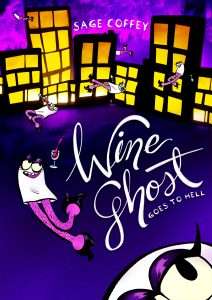
 Love comes in all shapes and sizes, whether it’s between adventurous pirates, burgeoning demon hunters, smooth spies, or even your average couple trying to make it all work. Young Men in Love, edited by Joe Glass and Matt Miner, showcases all these relationships and more, containing twenty stories from queer creators devoted to exploring the romantic hurdles and queer joy of male/masculine couples. This graphic novel boasts a variety of genres: fantasy, sci-fi, paranormal romance, contemporary slice of life, etc., ensuring that each reader will be able to find at least a story or two to enjoy.
 Lewis Hancox’s teen years were much like anyone else’s, filled with the typical high school drama, perpetual awkwardness, and desperation to fit in. For him, however, it seemed like there were extra hurdles to face, being a girl that had yet to discover that he was actually a boy. In Welcome to St. Hell, Hancox addresses his younger self to guide her through those messy years of hating her body, of being confused at who exactly she’s supposed to kiss, of constantly trying to pass as a “normal girl.” Being a typical teenager, the younger Hancox tries to ignore her older self at every turn but cannot deny that she feels like an alien in her own skin. What follows is a humorous, relatable, and down to Earth depiction of Hancox’s gender exploration and eventual acceptance, told in a way that educates just as much as it entertains.
 The Woman in the Woods and other North American Stories marks the fifth volume in the series of cautionary fables and fairy tales. The eight tales in this volume are from Indigenous nations, told and illustrated by Indigenous artists, and highlighting tales from Odawa, Chickasaw, Métis/Cree, Métis, Ojibwe, Tania, Navajo, and S’Kallam societies. The editors asked each of the authors to ask for permission from the Elders and/or nations to retell and rework the stories for inclusion in this anthology as they recognized and respected the protocol inherent in the gathering of the stories from the people. Unfortunately, there are no source notes included in the collection, making it of less value to educators, librarians, and storytellers than I had hoped. True, the intended audience is middle school readers, not scholars, but the authenticity of each of the tales should be paramount for them as well. I do appreciate the fact that each of the tribal affiliations has been identified for the tales.
 Better Angels: A Kate Warne Adventure
  It’s been a few decades since I was a teen, but the memory of what it was like is still prescient. The pressure of getting good grades, figuring out who I was, and dealing with trauma like losing a parent are all universal themes and something we can all relate to in one way or another.
 As more books with trans characters are published, the scope of what a trans life looks like in print is expanding. It’s not all about coming out or transitioning but exploring relationships and why one person is attracted to another. Cheer Up! Love and Pom Poms examines these issues while drawing distinct personalities for its two main characters. It’s also a light, fun, high school sports graphic novel about teens falling for each other and supporting one another when things are tough.
 Stone Fruit, the debut graphic novel by comics artist Lee Lai, is a heartfelt story about two young women navigating the end of a relationship and the tension points between biological and chosen family. Lai does a marvelous job adapting the structure of young adult coming-of-age stories to the tumultuous years of our twenties, when many of us are still working out what kind of adults we hope to become.
