This graphic novel adaptation of Ethel Carnie Holdsworth’s romance novel is about sisters, Hester and Rachel, who grew up in poverty and learned how to fight for justice. The original novel was released in 1925 and was based on Ethel’s own experiences in a mill, but was not well received at the time of release. Now Scarlett and Sophie Rickard have adapted the novel into a new format during a time when the world could use reminding that human rights and dignity are inherent, not earned.
The sisters work in a Lancashire textile factory where their mother and grandmother worked. Rachel is full of energy and willing to confront the men in her town telling her she’s worthless, but Hester has a fragility that doesn’t allow for that type of action. Instead, Hester chooses to take a marriage offer from a wealthy mill owner in order to try and better her situation in life while her sister becomes an activist.
Normally, I would not pick up a story like this one as my personal preference leans toward fantasy or escapism from reality. This historical account hits home on many levels of commentary that address the issues of the time but are relatable today to a modern audience. Although this is not a word-to-word adaptation, the creators made sure to include aspects of the original (e.g. accents and colloquialisms). Likewise, the illustrator took care to represent the time period through the clothing and architecture renditions. The color helps distinguish characters, mood, and poverty level by using darker, neutral tones to make everything dark and dirty and saving the brighter and lighter colors for the upper class and their frivolity.
This book is best suited for academic libraries with strong English literature programs or adult collections with patrons interested in historical (or romance) graphic novels. Although this book addresses prostitution, there is no on-page sex. Just a little kissing. Both a foreword and author’s note explain that the slavery indicated by the title is not referring to the horrific trans-Atlantic slavery that is most often acknowledged by history but instead refers to the powerlessness of women and laborers.
This Slavery By Ethel Carnie Holdsworth, Sophie Rickard Art by Scarlett Rickard SelfMadeHero, 2025 ISBN: 9781914224355
Tripping Over You, Volume 2, from Suzana Harcum and Owena White, picks up not long after the first graphic left off, showing unlikely couple Liam and Milo navigating their maturing relationship. This slice of life romantic comic was adapted from real life couple Harcum and White’s webtoon in February and promises more volumes to come. Fresh out of high school, the pair are growing into young adults and trying to allow their relationship to grow with them. Liam and Milo are in a very interesting phase, kind of semi-out to their families (who bring their own baggage into their relationship) and striving to make room for each other as their lives grow fuller. Liam doesn’t know what he wants out of his future and Milo seems plagued with self doubt, but they keep circling back to find comfort in each other. This volume catches our couple at a very real, very vulnerable time where a high school relationship can evolve into an adult one or where it can flounder under the weight of growing up.
This is a sweet story that young readers can easily connect with. The art is incredibly cute with Harcum and White using a style that hits me as a kind of Disneyified Manga: characters with big eyes and bold lines in a world of saturated color. It is very easy to read and honestly just pretty. Liam and Milo give classic black cat/golden retriever energy and seem hyper aware of the struggles that can come with relationships where people have different needs and communication styles. While this comic does show a growing young adult relationship and the intimacy that comes with it, there’s nothing explicit on page or even suggested and I would probably recommend it as young as 6th or 7th grade, depending on the reader. There are a couple of shirtless scenes and implied sex and Liam still hasn’t kicked his smoking habit from book one. But with that, their relationship maintains an innocence that will keep it accessible to a wide range of readers.
The plot beats were a bit of a hang up to me. The small domestic moments of our couple meeting new people, fighting to find time together, struggling with demanding families, and eventually moving in together feel almost like filler, like all of these moments are leading towards conflict in a future volume. The most striking of these involve Milo’s new friend Hebert, an American theater student. There isn’t immediate conflict but there is definitely unresolved tension and Hebert’s motives are questionable at best. Many of the plot points feel unresolved. Liam still does not have a clear career path and Milo still seems uncertain in aspects of their relationship. All of these things made this feel less like a step in their story and more like laying groundwork for the next book.
But honestly, I don’t know if I care. It was still a lovely read. The characters are ones you want to spend time with and their relationship is easy to invest in. It’s sweet and loving and a ready made next read for my Heartstopper fans. Parts of it do come off as wish fulfillment, particularly the moment where Liam comes out to his father. But queer kids deserve as much wish fulfillment as they can get. I can’t help but worry that these boys will have a tough time ahead of them, but my fingers are crossed for a happy ending.
Tripping Over You, Volume 2 By Suzana Harcum Macmillan First Second, 2026 ISBN: 9781250330734
Company Age Rating: 14-18
NFNT Age Recommendation: Middle Grade (7-11), Older Teen (16-18), Teen (13-16) Creator Representation: Lesbian, , Character Representation: Queer, Jewish ,
From studying under J.R.R. Tolkien in university to fighting the rise of fascism in the 20th century to serving as a powerful creative force behind the most famous works published by George Orwell—23rd Street Books dives into the life of Eileen O’Shaughnessy in Mrs. Orwell, written by journalist, author, and filmmaker Andrea Chalupa with art by Brahm Revel.
Mrs. Orwell opens with our introduction Eileen O’Shaughnessy (later Eileen Blair), studying at university under the esteemed Professor Tolkien, partying at night, and chafing against the strict social standards which hold women back in the name of propriety. At a party, she crosses paths with a writer named Eric Blair, who publishes under the name George Orwell.
With shared interests in art and politics, the two find a deeply passionate connection, somewhat to the dismay of Eileen’s brother with whom she lives. From marriage to traveling conflict zones in Europe in search of political movements and armed resistance to the rise of fascism and the brewing storm of what would become World War II, Eileen and her husband find themselves tested as they fight for both their ideals and their lives.
A talented writer on her own, Eileen throws herself fiercely behind supporting her husband’s work, serving as editor, typist, and muse for numerous of his publications, especially influencing his most famous titles, Animal Farm and 1984. With a world in violent chaos and a marriage fraught with turmoil and infidelity, this graphic novel shines a light on two incredibly influential writers—only one of whom remains widely known today.
As discussed in the note at the end of the book, Mrs. Orwell serves as a work of historical fiction that nevertheless draws heavily from recorded fact. It even includes a reading guide for anyone wanting to dive deeper into Eileen’s life. While never shying away from the complexities and failings of either Eileen or Eric, the main focus remains on recognizing and celebrating Eileen’s work and the vital role that art and resistance play in the face of violence. The characters are layered, revealing facets of themselves through engaging and entertaining dialogue, while Chalupa carries us through a great span of time including major historical events on the world stage. It’s a great deal of content to cover in a book of this sort, and if Mrs. Orwell has any flaw, it’s that there’s not quite enough time to unpack some of the history, particularly in the book’s later portion.
Nevertheless, in tackling themes of fascism, war, censorship, art, and media—there’s a wealth of material here that remains all too relevant today. But in addition to uncovering lesser known biography and vital discussions about the nature of creation and resistance, the book is also simply fun to read. Entertaining and often funny, it succeeds on a narrative level as much as a historical one. It’s a feat to balance all these elements, and Chalupa has written a striking story about two passionate, flawed, messy, creative, and highly influential people which brings them to vibrant life within these pages.
And speaking of vibrant pages, Revel’s shifting palate of art is a delight from start to finish. Colors and tones shift across the story, as do the layouts and structures of each page. With a careful eye for pacing and visual storytelling, Revel keeps the art grounded without being afraid to weave in flashes of stylization and dramatic representations of emotions alongside the more focused, powerful moments the book has to offer. Heightening both humor and heartache, Revel’s visuals are a vital aspect of the book’s appeal. The grit feels real, as does the threat of war and death. At the same time, we get soft romantic interludes, mixed realities where fiction intrudes on the present, and appropriate weight given to the heavier themes the book holds in store.
23rd Street Books lists this title for adult readers. There are smatterings of violence, sexuality, and language throughout, but the book never lingers on the more mature elements or presents them in graphic detail. At the same time, with a strong historical focus alongside a range of complex topics and themes, it’s likely the book will appeal most to older readers and those already familiar with Orwell’s work. It could also be a good companion read for older students studying Orwell’s life and writing. Overall, Mrs. Orwell is an excellent read in its own right, while also bringing to life a figure often lost in the obscurity of history. A woman who refused to accept the bounds society placed on her, a fighter who dreamed of a better world, a writer who left her mark for generations to come—more people should know the name Eileen O’Shaughnessy, and this graphic novel is an excellent step in ensuring that her life and accomplishments are not forgotten.
Mrs. Orwell By Andrea Chalupa Art by Brahm Revel 23rd Street Books, 2026 ISBN: 9781250877857
Company Age Rating: Adult
NFNT Age Recommendation: Adult (18+), Older Teen (16-18)
There are many tall tales about the highwayman Dick Turpin. The actual history, as is usually the case, is somewhat more muddled. Such is the way of legends.
Unlike the more internationally famous Robin Hood, we know for certain there was a Dick Turpin. He was born in 1706 and died by hanging in 1739. What he did in between and whom he associated with is somewhat more debatable. It is agreed, however, that he spent the last few years of his life as a horse thief and highwayman, after several years as a house-robber, poacher, and smuggler.
Dick Turpin and the Crimson Plague is more concerned with romantic fiction than solid fact. Nevertheless, this updated and expanded edition of the original 2011 graphic novel concludes with a decent overview of the real history. This is noteworthy, given how the stories contained within this volume are as unlikely as the account of Turpin riding 200 miles in a single night.
The main story, The Crimson Plague, finds Dick Turpin and his fellow thief, Tom King, enjoying their ill-gotten gains in London. After watching another unfortunate’s execution, the two decide to have some fun at the local brothel. However, it becomes apparent that there is a dark secret within the bawdy house’s basement. Soon, the two thieves become monster-slayers, fighting to save London from a vampire invasion!
The new edition of Dick Turpin and the Crimson Plague colorizes what was originally a black-and-white comic. The color art by Gavin Ross is decent enough. However, there are many pages I think might have hit harder in monochrome. Indeed, there are some pages where the colors seem to obscure the original inks of Graeme Howard’s artwork.
This new edition also contains an original short comic. Subtitled “The Crawling Terror,” this tale finds Dick Turpin and Ton King making camp in a cave. Unfortunately, the depths of the cave contain monsters that seem more appropriate to a Conan comic than a Dick Turpin story. Still, the artwork for this chapter by Roland Bird and Brett Burbridge is stronger than the main event.
All in all, I found Dick Turpin and the Crimson Plague to be an amusing read. I enjoy a good story of supernatural horror and stories about reluctant heroes. This is both. I also enjoyed the history provided at the end, which adds some context to what came before.
Time Bomb Comics does not offer a rating for Dick Turpin and the Crimson Plague. I would suggest that any librarian interested in this place it in the adult collection. First, because there is considerable bloodshed and Steven Tanner’s scripts do not skimp on adult language and sexual content. The only nudity in the book is a corset that slips to reveal one sex worker’s nipples at one point.
Another note for librarians: the only place I believe this new edition hardcover is available is the Time Bomb Comics website. The edition currently listed on Amazon and GoodReads under the provided ISBN is for the 2011 original.
Dick Turpin and the Crimson Plague By Steve Tanner Art by Roland Bird Time Bomb Comics, 2025 ISBN: 9780956182241
Cocktails. We know them. Many love them. But how many of us know the long and complicated journey through history that brought us the cocktail as we know it today?
From Ten Speed Graphic, renown cocktail historian David Wondrich delivers The Comic Book History of the Cocktail along with art from Dean Kotz, Brad Simpson, and Micah Myers. Opening with some pre-history, this nonfiction journey around the world introduces the earliest known precursors of mixology from civilizations such as Rome and India. From there, the story really begins in the 1600s with the expansion of global trade and the journeying of ingredients, practices, and liquors around the globe. While cocktails are rather a niche subject, their evolution was shaped by many aspects of a changing world. Race and gender dictated who could stand behind a bar. Politics and global warfare led to booms and lulls in alcohol consumption. And social standards drastically changed consumer expectations about what a cocktail could be and where the bars that served them fit within society. With deep historical knowledge and a clear affection for mixed drinks, Wondrich and the creative team offer a detailed and engaging history of drinking which simultaneously takes us across centuries of world history, charting the ebb and flow of society before turning an eye toward the infinite possibilities of the future.
Though deeply researched and factual, this graphic history is written with a clear and engaging style that makes the subject matter entertaining and accessible. The narrative voice that drives much of the book feels quite personal, interjecting commentary on world events and suspect cocktail techniques throughout. There are also frequent interludes from two bartender characters who offer further commentary on topics from the chapters while also sharing recipes and techniques for some of the drinks referenced throughout. Rather than a history text, the book feels like a casual lesson from a friendly group of people passionate about the subject matter. The book is full of information while never feeling bogged down in excessive detail. Even with all that it presents, there is clearly so much more a curious reader could go on to discover with further reading. Indeed, Wondrich closes the books with an extensive index and bibliography of further resources for those curious, highlighting the extensive body of scholarship underlying the information presented here. If the writing has any weakness, it’s the fact that a book of this sort simply doesn’t have the space and time to dive as deep as some of these historical figures and periods deserve. On a pickier note, the dialects and historical accents of some of the historical figures rendered into written text are occasionally distracting—but even these are drawn from historical sources as accurately as possible. As an introduction to the subject which manages to effectively cover a huge span of time and history, Wondrich remarkably makes the subject matter both accessible and fun to read all along the way.
Wonderich’s extensive knowledge is made all the more engaging with art from Dean Kotz. There isn’t a great deal of sequential visual story telling here. Rather, Kotz captures an enormous range of historical figures and time periods. Illustrating each era the book covers from those uncertain times of pre-history right up through the covid pandemic and into the modern day. With heavy line work and a mix of style and realism, Kotz details bustling bars, shattered battlefields, horrific plantations, and the men and women who walked through them all. It’s an undertaking to capture chemistry and brewing practices alongside shifting societies around the globe, but every page of this book is made better through Kotz’s illustrations. Particularly of note are the double-page spreads of bars at specific periods of time, showing their evolution from small, focused establishments to the influential social spaces that they are today.
With no recommended age range and no particularly explicit content, this book is relatively safe for any reader to flip through. However, given the explicit focus of the subject matter on drinking and alcohol, it’s a read best aimed at adults, especially given that it takes a rather positive slant on the history of cocktails without more nuanced discussion of the risks drinking also poses. Nearly every page features liquor being made or consumed, and there are also digressions into serious topics such as war and the international slave trade. As such, adults with interests in areas of history and drinking will be the audience best served by this one. Additionally, it does lean more text-heavy than some comics, expecting the reader to be settled in with an attention span to match. As a final note, not only does Wonderich offer a wealth of historical information not regularly covered by more mainstream sources, he also goes out of his way to recognize the contributions of often marginalized figures throughout history. There’s a clear, individual perspective to the history, but the book is always explicit about where there is authorial commentary alongside historical fact. Furthermore, the book is upfront about any place where the historical record is murky or nonexistent. The Comic Book History of the Cocktail would be an excellent addition for any comics collection that leans toward the adult and the historical. It is a strong read on its own, and might also ignite further curiosity in the covered range of topics and intriguing historical figures.
The Comic Book History of the Cocktail Five Centuries of Mixing Drinks and Carrying On By David Wondrich Art by Dean Kotz Ten Speed Press, 2025 ISBN: 9781984860330
What would you do if you had only six months to live?
This is the question facing everyone who contracts the G+ Virus. There is no cure. It is definitively lethal.
However, for some victims, it is also the best thing that ever happened to them. Because even as the G+ Virus overclocks the host body, it also allows people to briefly become more of what they are.
Creative people seem to become more creative, perhaps driven to make something that will outlive them. Even the baseline cases somehow become more physically capable.
A rare few, however, become something superhuman.
Death Sentence was an oddly prescient work. Originally published in 2014, it predates the many works of superhero fiction inspired by the COVID-19 pandemic. Of course, the idea of a disease bestowing superpowers is not entirely original. (George R. R. Martin’s Wild Cards is built around the same general premise.) What marks Death Sentence as unique is its distinctly British flavor and its tight characterization.
The first volume centers around a trio of newly infected G+ patients. Verity is an artist who accidentally kills the government agents sent to bring her in. Weasel is a rock star hoping for a comeback who becomes a fugitive after his powers accidentally kill a groupie. They become the unlikely heroes recruited to stop the third focus character, David “Monty” Montgomery – a comedian whose mind control powers allow him to turn all of London into a captive audience.
The second and third volumes explore the aftermath of the first, as the American and British governments attempt to exploit the most visible expression of superpowers in history. This leads to the introduction of new characters like Roots – a drug farmer who uses her powers to enhance her product and defend her neighborhood.
Writer Monty Nero does a fantastic job of building up the world and the characters. With subversive takes on politics and pop culture, Death Sentence invites comparison to the work of Alan Moore. This seems to be intentional, as Nero references Moore twice in the text. Once with the analogy “like Alan Moore on an acid trip,” and once more with the character of Creighton Baines, a comic writer whose creation is co-opted by masked protesters. (A clear reference to Anonymous and V for Vendetta.) However, while the influence is apparent, Nero still makes the story his own and goes beyond simply mimicking Moore.
The artwork is fantastic across the board, with each section of the story has a distinctive look. Mike Dowling draws the first volume with a gritty, dark aesthetic that evokes memories of classic Judge Dredd comics and the early years of Hellblazer. Martin Simmonds skews a bit more surreal in the second and third volume, as Verity begins to fully master her powers. And Nero takes over the art for the final three chapters of Volume 3, with more traditional comic art as the story skews into more traditional superhero fare.
Death Sentence: The Collected Edition is rated M for readers 18 and up and rightly so. This should be obvious given the back cover blurb screams “Sex, Superpowers, And Six Months To Live.” For those who need more detail, there is indeed explicit sexual content, outright nudity, and multiple acts of sexual violence. There is also physical violence in plenty, with considerable gore. There is also cursing, with liberal use of the F-dash-dash-dash-word. Needless to say, none of this is suitable for children. Adult audiences, however, looking for something in the same vein as The Boys but more dramatic, will be well served
Death Sentence: The Complete Collection By Monty Nero Art by Mike Dowling, Martin Simmonds, and Monty Nero Titan, 2025 ISBN: 9781787741461
Company Age Rating: M (18+)
NFNT Age Recommendation: Adult (18+) Creator Representation: Scottish, Character Representation: British, Bisexual,
I won’t lie, seeing this book (or any) pitched as a retelling of The Beauty and the Beast is what caught my eye. I am what the kids call “a sucker.” But we can unpack all that later.
Brielle and Bear might have the vague skeleton of the classic fairy tale it was based on, but it definitely has its own narrative—a fact that I think is a positive for the story.
That being said, this story is a little hard to get into. There is certainly a lot to like, but ultimately this book is the opposite of the whole being greater than the sum of its parts.
Brielle is our heroine, and she knows it. She exudes Main Character Confidence and narrates her life using a set of rules that she pulled from her familiarity with fairy tales. She meets Atohi “Bear” Yona while at work at Once Upon A Time University’s bookshop. It’s charmed at first sight, and the story expands on their relationship and the friends they surround themselves with.
Before I get into criticism, let’s look at what slaps:
The art is gorgeous. Brielle and Bear is full of color, whimsy, visual motifs, and beautiful homage to both western-style animation and manga. The atmosphere (and names of every location and character) is very dreamy and perfect for this fairy tale-esque story.
The cast is very diverse. The author specifically wrote that she wanted to create a cast that reflected her time at university, and there was care taken to make every identity unique and specific.
There is some very kind and sympathetic discussion of neurodiversity and physical disability. Brielle has vitiligo, it is seen as running in her family. Bear has dyslexia. One of the things I thought was really beautiful about the story was how much Bear enjoys writing poetry and reading—passions that I do no typically see paired with this particular condition.
Unfortunately, each of these items tend to fall apart under close scrutiny. The art for the settings and environments and locations is so beautiful, but it tends not get center stage with lots of rendering and color. The line drawings are beautiful, but the structures sit with a selected color pallet for the page and remain, well, in the background. It is a logical choice, but it does feel like leaving free points on the floor.
The cast is diverse, but then what? Apart from some phrases in Spanish, this is an aspect of the story that is not referenced or acknowledged. Again, perhaps I have misinterpreted this choice. It might be nice to just see this as a way things are, without it being worthy of commentary.
The vitiligo and dyslexia do pertain to the plot, but it is incredibly minimal. Each character has already overcome the trauma and difficulty that comes with having these conditions. I would say this is consistent through the story as a whole – the stakes are incredibly low. I was never worried about a resolution to an issue, and each issue was small; the biggest one being 2 arguments between Brielle and Bear that are resolved through straightforward communication.
I fear this comic is trying to push its fairy tale origins into its pages, but there really is no need for that. There doesn’t seem to be any magical elements to this world—there are no spells, curses, prophecies, and certainly no beasts. I would have liked to see this story develop on its own, flown far from its magical origins. It sounds like more volumes are coming out, and maybe those books will address some of my concerns, but for now, this story is a slice of cake that is mostly frosting.
Although I personally didn’t enjoy this narrative, I would encourage everyone to look at Doku’s website to look at the visual development journey that these illustrations went on—they are simply gorgeous.
NOTE: Author is black and from England; African-American was picked as creator representation as this was the closest option that is available through NFNT.
Brielle and Bear By Salomey Doku Harper Collins, 2024 ISBN: 9780008617561
Company Age Rating: 13+
NFNT Age Recommendation: Older Teen (16-18), Teen (13-16) Creator Representation: African-American, Character Representation: African-American, First Nations or Indigenous, Disability,
UK illustrator Tim Bird’s Adrift on a Painted Sea is a short reflection of the life and passing of his mother, Sue Bird, and the art she left behind. Using a combination of his own Illustrations, his mother’s paintings, and other artifacts from her life, he showcases her work in a touching tribute.
Bird sifts through recollections of his mother, inserting memories from his childhood in between more recent experiences of her aging, by using imagery with minimal dialogue that lets the reader soak in the emotional state of the author. He explores her artistic pursuits and her love of painting the ocean, but he also centers his own experience with her loss. The vignette style of this volume is engaging, but sometimes shifts suddenly, leaving the reader feeling adrift in the narrative. This could have been Bird’s intention all along, creating a story that ebbs and flows like the ocean itself. He uses simple lines and a muted color palette of bluish grays, beige, and salmon to share his memories of his mother and his struggles with her loss, which he often superimposes over his mother’s rich and colorful seaside landscapes. There’s a sharp contrast between the quiet, idealistic images of Sue Bird and the more bleak simplicity of her son’s storytelling.
I wondered if I would see myself reflected in the pages of this graphic novel. Both the author and I had artist mothers that created prodigiously over a lifetime and kept much of their work. We both lost our mothers to cancer in 2022 amid the height of the Covid-19 pandemic. There is a lot in Bird’s storytelling that I recognized, like the way you hold in your exhaustion and overwhelm until you’re completely alone, or the grief you feel over the questions that can no longer be asked after someone has passed. Bird doesn’t directly comment on his feelings about delving through his mother’s body of work after her death, but it’s evident it was impactful enough for him to want to showcase her work in this volume.
I expected the narrative to stir that deep part of myself where I hide my grief, but I didn’t find the story inherently sad. Obviously, there are depictions of loss and grief, which feel very real to me, but actual death and its aftermath are depicted somewhat abstractly and peacefully. The point of Adrift on a Painted Sea is to celebrate and appreciate the work of a woman that was loved and cherished by her son and to see how her son processes his grief through the shared medium of art. It’s not meant to pull you down into pain and despair, but to acknowledge the difficulty of losing a valued family member.
Adrift on a Painted Sea will be most impactful in an adult graphic novel collection. There is no material that would make it inappropriate for younger readers, but adults, particularly those with aging parents, are more likely to relate to this story.
Adrift on a Painted Sea By Tim Bird Avery Hill Publishing, 2024 ISBN: 9781910395820
There have been plenty of modern takes and graphic adaptations of classic tales, but this new conception of Stevenson’s story, Strange Case of Dr. Jekyll and Mr. Hyde, is an entirely new approach, mixing classic and historical metaphors, references, and settings with a modern sensibility, explosive colors, and sly humor.
The story begins one dark night in the slums of East London, as a young werewolf is chased by an angry mob and finally cornered by the police, all while a mysterious dark figure watches from the rooftops. Just when Jasper, the unfortunate victim of an interest in supernatural creatures and an ill-timed potion, is about to be lose everything, a shining coach appears and a glittering figure arrives to save the day – the young, handsome, urbane, charming Dr. Jekyll. He whisks Jasper away to his institution for rogue scientists where their research is valued and encouraged.
Naturally, all is not as wonderful as it seems on the surface. With the arrival of Frankenstein and her creature, who are being followed and attacked by Dr. Moreau, the cracks beneath the surface begin to show and the mysterious figure of Mr. Hyde starts to make his presence known. Dr. Jekyll is desperate to save his institution, his reputation, and his own life, but with angry creditors, hovering police, and the suspicions of those he thought were his friends, everything seems to be on a downward spiral. The story ends on a cliffhanger, with both Dr. Jekyll and his alter ego Mr. Hyde threatened by forces within and without.
Some readers may already be familiar with this work which was launched as a webcomic in 2015, but it’s been beautifully and smoothly reworked into a comprehensive whole for this new graphic novel. There is a little bit of a manga sensibility to the characters, with lots of sharp chins, big eyes, and exaggerated emotions. But the art style is also unique, blending Victorian style with fantasy creatures, showing wild-eyed alchemists with a variety of skin colors and Steampunk gear mixing gleaming potions, handling explosions with aplomb, and cheerfully zipping around the town dodging angry mobs, irate policemen, and the risky results of their own experiments.
The work doesn’t pretend to any historical accuracy, blending science fiction stories of the era with reality, including a more contemporary attitude towards those who discard gender norms, and giving Hyde especially a slangy, current style of speech. Jekyll is portrayed as a very proper young man with a large, hooked nose, sharp chin, and somewhat naive, innocent look. His “darker half” is a small man with a fluff of blonde hair, gleaming green eyes, and that same oddly naive, sensitive look, even when he’s cheerfully setting things on fire and out partying in the streets.
Cotugno follows up the story with a short story of Frankenstein’s Creature and some of the scientists visiting a coffeehouse and discussing the nature of prejudice and finding your place. This is followed by several thoughtful notes blending their creative and artistic process and their own approach to the story of Jekyll and Hyde as they feel it relates to their own journey exploring their identity as bisexual, queer, and biracial.
There’s nothing overtly inappropriate for middle grade readers in this first volume, but the concepts of good and evil, self-identity, and references to various classic works of literature as well as hints of darker adventures to come definitely move this into teen territory. Hand this to teens who are still into steampunk and fans of Nimona, Jeremy Whitley, and Neil Gaiman.
Glass Scientists Vol. 1 By S. H. Cotugno Penguin Random House Razorbill, 2023 ISBN: 9780593524442
NFNT Age Recommendation: Older Teen (16-18), Teen (13-16) Creator Representation: Japanese-American, Bisexual,
When she was a little girl, Alice visited Wonderland and had many wonderful adventures. She also made many friends. Unfortunately, as she grew older, Alice found it harder and harder to return to Wonderland. She also found more and more need to escape from the harsh reality of Victorian England, a distant father, and a family that only cares about her in regard to how she improves their social standing.
Alice’s need for something stronger than mushrooms to open the doorway to Wonderland leads to a life of crime and a growing addiction to strong drugs. This, in turn, leads Alice to commit herself to an insane asylum, not knowing her father was already considering such steps to cover up his own dark secrets. Unfortunately, the asylum holds new yet familiar dangers, leaving it uncertain that Alice will get the help she needs, or the permanent path to Wonderland she dreams of.
Alice Ever After is not the first graphic novel to offer a dark, twisted take on a classic Childrens’ story. It is not even the first graphic novel to offer a dark and twisted take on Alice in Wonderland. What it lacks in originality, however, it somewhat makes up in execution.
Best known for his work as an artist, Dan Panosian has been writing more in recent years. He provided some of the covers for Alice Ever After, and drew the intricate sequences set in Wonderland. For the most part, however, his duty here is to tell the tale and write the script.
There is a good deal of wit to the story, but Panosian does little to break the mold. One twist of note is that there are characters in the real world who correspond to Alice’s fantasy life in Wonderland, like her ever-smiling drug dealer becoming the Cheshire Cat. Curiously, there are also characters who are clear analogs of classic Wonderland characters, who are totally absent from Alice’s dreams. The corrupt head of the Asylum, for instance, is clearly meant to be the Queen of Hearts.
Unfortunately, little is done with this idea beyond suggesting that Alice’s adventures are the result of emotional neglect as a child and drug abuse as an adult. Panosian nails the execution, but the story is still sadly predictable, with no possibility that Alice really is traveling between worlds. Given that, I fear Wonderland enthusiasts are not likely to enjoy this story. The overall tone is more depressing than horrific. This is sadly true even in the later chapters, as the perils of the asylum are revealed, along with the dark secret that may have prompted Alice’s creation of Wonderland in the first place.
The artwork, at least, is well done. Giorgio Spalletta perfectly captures the mundane terrors of a Victorian asylum. And while I may quibble with Panosian’s story, I have no complaints about his art. Alas, that is not enough to save Alice Ever After. It is not a badly told tale, but it does nothing new with the Wonderland world and I question its ability to satisfy its target audience.
Boom! Studios has not given Alice Ever After an official age rating. I would suggest it is best read by Older Teens and Adults. While there’s little in terms of content to make it inappropriate for younger teens, I think the nuance of the horror elements are best appreciated by older audiences and readers who are wise beyond their years. Under no circumstances should this be read to children as a bedtime story!
Alice Ever After Vol. By Dan Panosian Art by Giorgio Spalletta BOOM! Studios, 2023 ISBN: 9781684158850
Related media: Classic to Comic
NFNT Age Recommendation: Adult (18+), Older Teen (16-18)
Character Representation: Addiction, Ambiguous Mental Illness

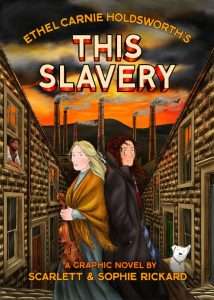 This graphic novel adaptation of Ethel Carnie Holdsworth’s romance novel is about sisters, Hester and Rachel, who grew up in poverty and learned how to fight for justice. The original novel was released in 1925 and was based on Ethel’s own experiences in a mill, but was not well received at the time of release. Now Scarlett and Sophie Rickard have adapted the novel into a new format during a time when the world could use reminding that human rights and dignity are inherent, not earned.
 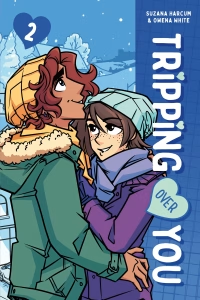 couple Liam and Milo navigating their maturing relationship. This slice of life romantic comic was adapted from real life couple Harcum and White’s webtoon in February and promises more volumes to come. Fresh out of high school, the pair are growing into young adults and trying to allow their relationship to grow with them. Liam and Milo are in a very interesting phase, kind of semi-out to their families (who bring their own baggage into their relationship) and striving to make room for each other as their lives grow fuller. Liam doesn’t know what he wants out of his future and Milo seems plagued with self doubt, but they keep circling back to find comfort in each other. This volume catches our couple at a very real, very vulnerable time where a high school relationship can evolve into an adult one or where it can flounder under the weight of growing up.
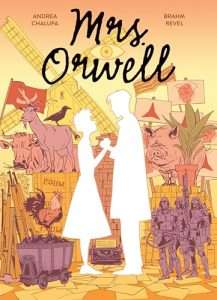 force behind the most famous works published by George Orwell—23rd Street Books dives into the life of Eileen O’Shaughnessy in Mrs. Orwell, written by journalist, author, and filmmaker Andrea Chalupa with art by Brahm Revel.
 Such is the way of legends.
 Cocktails. We know them. Many love them. But how many of us know the long and complicated journey through history that brought us the cocktail as we know it today?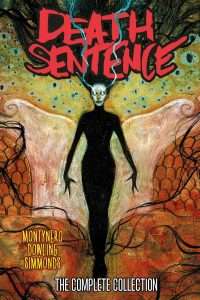
 sucker.” But we can unpack all that later.
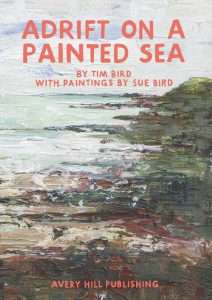 behind. Using a combination of his own Illustrations, his mother’s paintings, and other artifacts from her life, he showcases her work in a touching tribute.
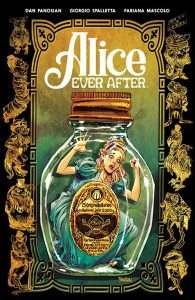 Unfortunately, as she grew older, Alice found it harder and harder to return to Wonderland. She also found more and more need to escape from the harsh reality of Victorian England, a distant father, and a family that only cares about her in regard to how she improves their social standing.
