In this sequel to Meems & Feefs: Ferrets from Planet Ferretonia, Meems & Feefs: The Council of Ferrets, Meems repairs the travel opal and opens a portal to return him and Feefs to Planet Ferretonia and brings Liza along for a visit. However, Meems and Feefs are in quite a bit of trouble due to creating and using banned technology and so must answer to the Council. Together, the three of them uncover more of the mysteries of the banned ancient technology of Ferretonia and Meems’ missing mentor…
Cooper’s world-building is incredibly detailed for a whimsical fantasy graphic novel series for children. The premise of a young girl meeting cute intelligent ferrets is a good one no matter what, but Cooper has developed a full society for her ferret characters as well as depthful lore that is revealed in parts throughout the story. Still, the premise is easy to follow as the human character Liza serves as the reader’s liaison to Meems and Feefs’ world.
Liza is more than just a projection of the reader though. The majority of the first Meems & Feefs book took place on Earth, and the reader was introduced to Liza’s life, and it seems like there is more to be revealed about Liza and her life back on Earth. Liza’s development takes a backseat to the ferrets and the revelations surrounding Ferretonia in this volume, so hopefully future volumes will explore her and some of the Earth characters a little bit more.
The art in Meems & Feefs is perfect for its charming and fantastical story. Cooper’s work is the epitome of a story made for the graphic novel format. Previously, Cooper worked as an Art Director for the animated web series Simon’s Cat, and that animation experience serves her well as a graphic novelist. Her dynamic panels pack a lot of movement into each page without being overwhelming. Her characters are expressive and unique – she is able to make each ferret individuals not only with physical design but with facial expressions as well. They are fully realized characters with their own emotions and motivations. There is one sequence in which Meems and the character Leeloo are trying to escape, and the reader can almost hear their banter instead of simply reading it due to the combination of Cooper’s panels and word bubble placements as well as the characters’ movements. Though the graphic novel format is perfect for the story, it almost feels like an animated series due to Cooper’s mastery of sequential art.
The publisher’s age rating for The Council of Ferrets is ages 10-12 and Grades 3-8. It definitely will appeal to that age range, but older teens and some adults who like a magical adventure with touches of whimsy and humor will enjoy Meems and Feefs’ adventures with Liza. The adventure is ongoing, so it is beneficial for readers to have read Ferrets from Planet Ferretonia before reading The Council of Ferrets, andhopefully their tale continues in future volumes. The Meems & Feefs books would make great additions to libraries with juvenile readers looking for a funny but intriguing fantasy series.
Meems and Feefs: The Council of Ferrets By Liz Cooper Andrews McMeel, 2025 ISBN: 9781524876715
Company Age Rating: Ages 10-12
NFNT Age Recommendation: Middle Grade (7-11), Teen (13-16), Tween (10-13)
One click and this new dimension opens. A panel is the threshold to a dimension of gutters and splash pages. A dimension made of ink and Kirby Krackles. A world where a madman writes of comics and graphic novels. You are about to enter No Flying No Tights.
News From The Fallout is a macabre delight. Any fans of the Twilight Zone or old school creature features looking for a fast paced adventure might find their fix with this mini-series. From the creators Chris Condon (Ultimate Wolverine) and Jeffrey Alan Love (The Thousand Demon Tree), News From The Fallout is a nonstop sprint of a story. This miniseries is set in 1960s Nevada and follows a private in the U.S. Army named Otis Fallows, after a nuclear bomb test goes horribly wrong.
Now, with no disrespect to Chris Condon and the script, this series is carried by Jeffrey Alan Love’s art work. It really is something to behold. It exists as some sort of combination of CRT TV static and shadowpuppetry mixed with pages of background lore. Love conveys just enough detail for your brain to fill in the rest of the horrific details. He’ll show the row of fangs in shadow and the reader can imagine what else it’s hiding. There’s a narrative focus on ash and he takes that opportunity to make every scene feel shrouded in ash as well as emulate the 50s and 60s television technology with a grayscale color palette. It really sets the mood for a Cold War era monster thriller, a haunted nuclear nightmare.
While Love’s artwork is probably the best selling point, Chris Condon’s script is no slouch. Given the limitations of a narrative in six issues, Condon makes every word count. He gives each of Love’s silhouetted characters a distinct voice, making up for the lack of clarity in Love’s chosen style. Along with tight and efficient characterization, Condon created a story propelled by its own moment. Each scene crashes into the next, usually with a great amount of violence. At the beginning and ending of every issue there is background information in the form of within-universe media like menus or redacted military orders. Condon uses these glimpses into the goings on in Atomic Alley to ground the story in some form of reality.
For any librarians looking to expand their adult graphic fiction or science fiction selection, this isn’t a terrible pick. This would be right at home in a read-alikes display with Ray Bradbury or Harlan Ellison. Image comics gives no listed age rating, but I would recommend this to mainly adults based on the horror and violent elements of the entire series.
News From the Fallout By Chris Condon Art by Jeffrey Alan Love Image Comics, 2026 ISBN: 9781534335745
Sara’s parents are traveling for work this summer, so she’ll be staying with her aunts while all her friends go to drama camp together. She’s disappointed, but trying to make the best of things. After all, Sara’s family is moving soon, and maybe being in a new place will help her get some practice at making new friends.
But as it turns out, Sara’s aunts live on an island, a boat ride away from the closest neighbors. And it’s not just any island: once you pass through the fog that surrounds it, things start to get magical. Here, trees and rocks and even the wind seem to have personalities. And animals can talk—including her aunts’ two friendly, chatty dogs, who can’t wait to spend the summer with Sara. So maybe she can still practice making new friends. They just won’t be humans.
That isn’t easy, at least at first. Sara is supposed to help with chores (like cleaning the chicken coop) and learn new skills (like paddling a rowboat to nearby islands), and she feels like she’s failing at everything. She doesn’t want to admit she’s struggling, which means she can’t ask for help. Finally, Sara realizes that you don’t make friends by pretending things are fine when they aren’t—you have to be honest, be yourself, and accept help. That’s when the magic really starts happening.
Small Magics is a charming story about a girl who goes from feeling lonely and adrift to connected and capable. The island setting is both whimsical and immersive, with lots of little magical twists for Sara to learn, and lots of settings visited and revisited enough for them to feel like real places. The dogs—who are the characters Sara spends the most time with – are kind and fun-loving, with a bouncy energy that feels very dog-like, but also each with their own hobbies, interests, and fears. They are especially excited to have another human around because, despite accommodations that Sara’s aunts have made, lots of things in their world are still easier to navigate with opposable thumbs. (For instance, dogs can’t row boats. Though one of them can, if absolutely necessary, use the outboard motor.) But of course, there is also plenty they can do that humans can’t, and we get glimpses of their particularly doggy senses and sensibilities.
The artwork is colorful and feels casual even while sometimes being quite detailed. The poses are active and expressive, making good use of postures and the dogs’ ears as well as regular human facial expressions. The outlines are often loose, sometimes barely there, but the colors keep everything clearly defined, and their brightness adds to the art’s playful energy. Much of the creator’s art experience is in background painting, so it’s not surprising that the book has some lush, beautiful settings and backdrops.
Small Magics is a sweet read with humor, heart, and an inventive fantasy setting. Hand it to fans of cozy fantasy or anyone who likes gentle Studio Ghibli vibes.
Small Magics By Emily Tetri Macmillan First Second, 2026 ISBN: 9781250855640
Company Age Rating: 8-12
NFNT Age Recommendation: Middle Grade (7-11), Tween (10-13)
Ross’s Murray’s Bedford Street is an often bleak, sometimes funny, but quietly compelling look at the lives, loves, and losses of a group of characters united by their proximity to a single street.
Opening with a short sequence aptly titled Roadkill, Bedford Street immediately sets its somewhat grim tone which is nevertheless run through with bursts of dark humor. From there, the book transitions to the first full story of the collection—that of an alcoholic father entrusted with taking care of his teenage son for the weekend. He sips drinks and searches for shared interests as his son unleashes rage issues on a battered grill in the yard. Much of this opening story is told in visuals, but Ross works a great deal of character and connection into the way father and son move through their shared space—each unsure exactly how to exist on their own or communicate with the other. It’s an effectively human story, full of relatable uncertainty and capped with bittersweet moments of love and connection.
Each story that follows shares similar threads of deeply flawed people trying their best, through moments of strength and often moments of failure. A nurse debating whether to intervene in a domestic disturbance, two brothers navigating life after an accident, a man trying to restart life after release from prison—the stories are quiet, but they are earnest and honest in capturing all the rough edges of their subjects as the lives of the Bedford Street residents continue to unfold.
Ross brings a deft hand to each vignette, crafting a compelling character arc, and blending natural dialogue with powerful visuals to capture the heart of each short story. Like any collection, some are likely to land with a reader more than others, but the range of characters feels united by the tone of the overall book. In each, it feels as though Ross is looking to understand the central characters and bringing the reader along on the experience. Some make terrible mistakes that upend their lives and the lives of those around them. Others are caught in difficulty through no fault of their own. Regardless, Ross’s delivery doesn’t feel as though it seeks to pass judgment on this collage of lives. They are simply complicated, and through the choices they make, they will be forced to face the consequences, whatever those may be.
Matching this writing, the art has a simple realism to it. There are plenty of details to take in, but Ross’s visual style strips away the noise to focus on scenes—on expressions and quiet moment as they occur. Different colors dominate the palate depending on the nature of the sequence, but the subdued shades interplay with light and shadow to build panels that feel worn and lived in, but which also hold the eye as these characters pass their days.
Fantagraphics rates Bedford Street for 16+. The stories are all thematically mature, but some are more acceptable for teenage readers than others. While certain of the mature elements occur infrequently, the book does include strong language, death, suicide, injury to humans and animals, substance use, strong sexual content, and graphic nudity among its content concerns. Between this and the overall subject matter, it will have strongest appeal with adults. Overall, for readers who like more literary works, Bedford Street is a generally quiet examination of complex characters and a range of themes. There isn’t a strong narrative tissue connecting the stories to each other, but a definite emotional arc runs across the collection and these characters who ultimately seem to (mostly) be doing the best they can with a myriad of imperfect situations. It’s a striking book that deserves a place on any shelf where it will be appreciated.
Bedford Street By Ross Murray Fantagraphics, 2026 ISBN: 9798875002625
The monsters in horror fiction, whether those monsters are ghosts, vampires, or zombies, always seem to represent something beyond the natural fear a person would have against something with fangs and claws. Many times, these monsters are symbolic of a more universal fear involving a person’s space in society or in the universe at large (at least according to critics). Ghosts, for example, are often connected to humanity’s universal fear of death. Zombies are often symbols of death as well as disease. Author and illustrator Jon Claytor, however, presents an interesting idea in his book Nowhere, the world of zombies, vampires, and aliens represents the very modern fear of growing up.
Nowhere takes place in Beauséjour. Beauséjour, a small town in Canada and it’s where teenage Joel ends up, along with his morose mother, his verbally abusive but generally useless stepfather, and various animals. When the family’s car breaks down in Beauséjour, they stay at a roadside motel and slowly become accustomed to what makes Beauséjour different from other towns. Those differences include vampires that talk to therapists, ghosts that look like sheets and who actively engage with the living, and a massive cube that sits on the edge of town. And don’t forget about the zombies that wander around at night.
People might look at Claytor’s story and think of shows that run on late 20th century nostalgia like Stranger Things, especially when Joel finds a group of his friends close to his own age to hang out with. However, these friends don’t battle the various monsters that show up in town; they simply accept them as part of living in Beauséjour. In fact, no one within this book expresses any emotions other than melancholy, even when more apocalyptic elements start happening. Many have likely read action/adventure stories with a coming-of-age element that has the protagonist learns more about who they are and who they’re going to be due to the events in the book, but if Joel comes of age within Nowhere’s pages, Joel grows to realize that banality is the norm, which is perhaps the most terrifying thing to realize.
Banality could be used to describe the book’s artwork, which, in any other book, would be a critique, but the banality fits into the book’s overall tone. Claytor uses a deceptively simplistic art style that nevertheless depicts realistic human faces that are struggling to emote within a muted black and white world. Colors are also used sparingly, such as the blood on the vampire’s teeth when he talks with his therapist, and only provide a speck of brightness in Claytor’s universe. Even the aliens, typical grays with bulbous eyes and small mouths, approach their job of manipulation with the enthusiasm of security guards who’d much rather watch the clock tick toward the end of their shift, which is not surprising considering the universe they inhabit.
While lacking the excitement of Stranger Things, this book does share some DNA with an intellectual property well-known for weirdness. “Welcome to Night Vale,” a novel and podcast created by Joseph Fink and Jeffrey Cranor, features a supernatural town where residents accept the supernatural to an absurd degree. Fans of that book/series will want to visit Beauséjour, as well as fans of shows like “X-Files” and “Supernatural,” particularly of their sillier episodes.
Nowhere By John Claytor Goose Lane Editions, 2026 ISBN: 9781773104584
Company Age Rating: 14 Years and Up
NFNT Age Recommendation: Adult (18+), Older Teen (16-18)
Memoirs often capture memories frozen in time, yet over the years, these memories can become reshaped, remixed, and even distorted. After all, facts become scattered but the truth behind the experiences endures. In her introspective memoir Until We Meet Again, Lily Kim Qian wrestles with deeply ingrained truths as she recounts her earliest memories leading to the estranged relationship between her parents, setting her on a path to discovery and inner healing.
The story begins in a jumbled dream-like state as Lily, a daughter of Chinese Canadian immigrant parents, sorts through a mixture of forgotten and remembered childhood memories—baby pictures, birthday parties, walks on a frozen lake, sizzling fried eggs made by her PoPo—which abruptly shifts to a darkened room where she watches her mother in a deep slumber. The scene later segues into a two-page spread where a tidal wave sweeps into a bedroom, signifying violent verbal battles between her parents that rage like a relentless tsunami. Narrated in vignettes, each story illustrates a moment in time, highlighting intimate details as she grapples with the gradual decline of her mother spiraling into the throes of mental illness. Segmented into chapters labeled after family members and locales spanning from Toronto to Shanghai, the plot runs the gamut of turbulent family dynamics converging through time and place as Lily constructs shattered fragments of her childhood to forge a new identity. From affectionate moments of her mother giving her a bath and dining over a meal of fried rice to outbursts of anger erupting between her warring parents, she navigates the ebbs and flows of fractured relationships in search of meaning and stability.
Bold and vivid line streaks infused with flecks of color paint the emotional landscape of each story. A variety of layouts—dynamic double-page spreads, a collage of photos, full-page scenes of places and characters—showcases a compelling assortment of visual compositions and storytelling prowess. Most striking is how the artwork translates metaphors into concrete images, which ranges from Lily somersaulting through recursive panels to illustrate her constant displacement from one home to another to a tangled ball of yarn symbolizing the mass confusion in the triangular relationship with her parents.
A memoir that reveals episodes of inherited trauma encompassed by the stigma of mental illness in Asian cultures, this story unearths poignant experiences dredged up from private memories. Much like how the brain functions when bombarded by a barrage of memories, Lily’s stories, or rather her recollection of them, unravels through a kaleidoscopic series of fractured moments that form a complex mosaic. Until We Meet Again adds a deeply intimate voice to young adult collections, exploring the complex emotional landscape of dysfunctional family dynamics in a beautifully rendered visual memoir from an Asian Canadian perspective.
Until We Meet Again By Lily Kim Qian Macmillan First Second, 2026 ISBN: 9781250884237
Company Age Rating: 14-18
NFNT Age Recommendation: Teen (13-16) Creator Representation: Canadian-American, Chinese, Depression Character Representation: Canadian-American, Chinese, Depression
This graphic novel adaptation of Ethel Carnie Holdsworth’s romance novel is about sisters, Hester and Rachel, who grew up in poverty and learned how to fight for justice. The original novel was released in 1925 and was based on Ethel’s own experiences in a mill, but was not well received at the time of release. Now Scarlett and Sophie Rickard have adapted the novel into a new format during a time when the world could use reminding that human rights and dignity are inherent, not earned.
The sisters work in a Lancashire textile factory where their mother and grandmother worked. Rachel is full of energy and willing to confront the men in her town telling her she’s worthless, but Hester has a fragility that doesn’t allow for that type of action. Instead, Hester chooses to take a marriage offer from a wealthy mill owner in order to try and better her situation in life while her sister becomes an activist.
Normally, I would not pick up a story like this one as my personal preference leans toward fantasy or escapism from reality. This historical account hits home on many levels of commentary that address the issues of the time but are relatable today to a modern audience. Although this is not a word-to-word adaptation, the creators made sure to include aspects of the original (e.g. accents and colloquialisms). Likewise, the illustrator took care to represent the time period through the clothing and architecture renditions. The color helps distinguish characters, mood, and poverty level by using darker, neutral tones to make everything dark and dirty and saving the brighter and lighter colors for the upper class and their frivolity.
This book is best suited for academic libraries with strong English literature programs or adult collections with patrons interested in historical (or romance) graphic novels. Although this book addresses prostitution, there is no on-page sex. Just a little kissing. Both a foreword and author’s note explain that the slavery indicated by the title is not referring to the horrific trans-Atlantic slavery that is most often acknowledged by history but instead refers to the powerlessness of women and laborers.
This Slavery By Ethel Carnie Holdsworth, Sophie Rickard Art by Scarlett Rickard SelfMadeHero, 2025 ISBN: 9781914224355
The story opens with David, a brown-skinned, lanky middle-schooler, imagining the “spark” of creativity and ideas as a cute little cartoon creature. He arrives home and meets up with his neighbor Marta, a lively homeschooled 2nd grader with red-rimmed glasses and the two investigate an explosion in David’s basement. It turns out his mom has successfully created a tool to shrink herself down so she can travel between dimensions into a “micro universe.” Unfortunately, she’s left the tool behind.
David and Marta go on a brief adventure to rescue David’s mom and, while in the microscopic dimension, encounter the blue spark of David’s imagination. It’s pictured as a blue ball with a purple cape, gloves, and boots on it’s stick-like arms and legs and a splash of blue “hair.” Together, with the help of David’s experiments, they rescue his mom from a crowd of purple creatures like Spark that seem to be sucking her creativity.
Inspired by Spark and their adventure, David tries again to start a Science Club and gets more interest this time. With the enthusiastic participation of Marta, he demonstrates how to make “space mud” at the club’s first meeting in his backyard and even gets the interest of a girl, Lisa. She’s shown wearing tights, a long skirt, and a loose jacket with curly black hair and a blue knit cap. David’s audience includes a kid with long blonde hair in a wheelchair.
However, the story is far from over – Spark isn’t the only creature that came through the portal from the microscopic universe and David’s mom is working on a new project in their basement that could mean disaster! David will have to bring out his trusty experiments and depend on Marta’s inexhaustible energy to save the day with science and keep the spark of inspiration alive.
There’s not a lot of variation in body types pictured, but that’s due more to Loux’s art style than a studied lack of diversity. Loux’s characters all have long, thin, flexible limbs and show exaggerated emotions with their wide mouths, heavily-drawn eyebrows, and the rapid changes in their eyes. The science experiments have a few illustrations, but these are mostly part of the story – the instructions are primarily in the text.
The other dimension is colored in orange-hued pinks, pale purples, and yellows with lots of ripples, creatures with multiple legs, and speech bubbles that look like tropically patterned easter eggs. This contrasts with the everyday suburb where David lives with blue skies and green trees and lawns.
The story includes 18 simple science experiments, from slime to a straw rocket and there is a QR code that has videos to accompany each experiment. The book is sponsored by a science organization called High Touch High Tech which creates fun science experiences.
There is some disconnect in the story – David is supposed to be a middle schooler, but the science experiments are more something an elementary student, like Marta, would enjoy doing. They do somewhat interrupt the flow of the story. As Marta points out, they’re running from monsters so why didn’t David just bring a compass instead of magnetizing a needle in the middle of a chase? However, the story is mostly a vehicle to carry the science experiments and a younger audience will enjoy the light story and be interested in trying the different projects. Manning is an experienced author who is used to creating nonfiction/fiction graphic novel scripts and the plot moves smoothly despite the sometimes jarring science elements. Older readers who like Matthew Loux’s art and are interested in the science-fiction genre are more likely to enjoy his own graphic novel series, The Time Museum.
The Spark Experiment By Matthew Manning Art by Matthew Loux Andrews McMeel, 2026 ISBN: 9798881601928
This short graphic novel opens with a stereotypical bullying scene – Lucas, our main character, duct-taped upside-down to his locker by the bullies and his “friend”, eco-warrior Julia hiding in her locker. Lucas, a skinny little kid with pale skin and huge glasses, is determined that nothing is going to ruin his thirteenth birthday, but soon finds himself stuck in detention with Julia. Julia, a tall, stocky girl dressed in all black with white hair dyed green that contrasts with her brown skin, is exasperated by Lucas, but goes along with his escape plan and helps him get home in time for his birthday dinner.
She’s startled by the tiny, run-down house where Lucas lives, but drops him off. Lucas enters and the house is revealed as a giant, maze-like mansion, complete with stuffy elderly butler. As Lucas searches for his parents, readers find out why he’s so excited about his birthday: Family tradition rules that he takes control of the magical Gloom Stone that grants wishes when he turns thirteen. He’s shocked and outraged when his parents, a wildly eccentric duo who are wrapped up in their own projects and his baby sister, decide he’s not mature enough to handle the stone.
Naturally, things get even more chaotic from this point with Lucas promptly proving his parents’ point, a talking stuffed cat named MewMew (sorry, majestic red panda), foolish wishes old and new, and even Julia getting mixed up in the story as she tries to get everyone to care as much as she does about climate change. Lucas optimistically thinks he can fix everything, until the true secret of the stone comes to light – even his optimism may not be enough to fix this disaster!
This graphic novel originates in France and the art and story have a slightly European flair. Lucas is a very young thirteen, especially compared to the graphic memoir-style comics like Raina Telgemeier. He wears a puffy-sleeved jacket, shorts, and has a mop of messy blue-black hair. His eyes always seem to be surprised and shocked by the consequences of his actions. Julia is a somewhat one-sided character; her aggressive “friendship” and gloomy demeanor are paired with her more mature appearance and it’s only near the end of the story that she shows concern for Lucas as a person outside her focus on climate change and teaching people, including Lucas, “a lesson.” The villain is a Victorian stereotype, complete with tall hat, mustache, and world-conquering plans.
This is a quick, fun read with plenty of humorous touches and a cliffhanger that leaves room for sequels. The comic panels are smaller and more detailed with a lighter palette than many kids are used to reading, but the book still pulls the reader along from each fresh wish and the disaster it brings. A light-hearted, humorous fantasy about the dangerous of wish-fulfillment that will attract readers who enjoy graphic novels and short, quick reads.
Atomic Lucas By Pirate Sourcil Art by Francesca Carita Andrews McMeel, 2026 ISBN: 9798881601720
Note: This is a review of the ARC, which is 200 pages long and not the complete manuscript.
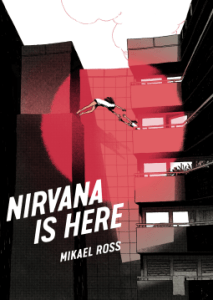
What should have been a normal trip to the local flea market for Tâm and her older brother Dennis becomes the start of a deadly mystery when Tâm helps a desperate girl, Hoa Bin, in a car. That chance encounter embroils Tâm and Dennis in a matter of life or death – as if navigating life as teenagers wasn’t difficult enough…
Nirvana is Here, drawn by Mikael Ross and translated from German by Nika Beauchamp,is a modern take on the classic thriller offset by a coming-of-age story. In a scene that echoes Stand by Me, Tâm and her schoolmate Alex follow clues that lead to the discovery of a severed finger and, ultimately, self-discovery. Though intriguing, the mystery and danger are the framework in which the character-driven story is realized. Nirvana is Here touches on universal themes such as family, young love, and growing up as well as immigration and LGTBQ issues, which not everyone experiences personally but can become more familiar through the nuance of stories like this.
Despite the social issues it addresses, Nirvana is Here is never preachy. The characters are the core of the story, and Ross never loses sight of that. If there is a critique of Nirvana is Here, it is that the reader may wish for some of the side characters to be more developed: some are shown to be more than the tropes they embody and are interesting enough that readers may want to learn more, while others are one-dimensional. In particular, there is a subplot between Alex and an old woman named Jutta that will hopefully be reconciled in the final edition.
Ross’ art is perfect for the tone of his story. Rendered in black and white, Ross uses loose, almost-cartoony lines and features for the characters, a style that can convey humor in one panel and then urgency and seriousness in the next. The fluid style of the characters is offset by the detailed and sometimes gritty backdrop of urban Berlin. Nirvana is Here is the ideal graphic novel in which the contrasting art techniques between characters and environments successfully works with the various themes of the narrative. Everything works.
The publisher’s age rating for Nirvana is Here is adult, but the story will resonate with older teens as well. There is violence, and the stakes are high for the siblings and Hoa Bin, and, due to the ARC only a portion of the story, how our characters ultimately fare is still up in the air. However, the story in the ARC rings of hope and a celebration of self and the people around you. Ultimately, it’s worth it for librarians and parents to check out Nirvana is Here to see if and how it will fit into their collections.

 In this sequel to Meems & Feefs: Ferrets from Planet Ferretonia, Meems & Feefs: The Council of Ferrets, Meems repairs the travel opal and opens a portal to return him and Feefs to Planet Ferretonia and brings Liza along for a visit. However, Meems and Feefs are in quite a bit of trouble due to creating and using banned technology and so must answer to the Council. Together, the three of them uncover more of the mysteries of the banned ancient technology of Ferretonia and Meems’ missing mentor…
 One click and this new dimension opens. A panel is the threshold to a dimension of gutters and splash pages. A dimension made of ink and Kirby Krackles. A world where a madman writes of comics and graphic novels. You are about to enter No Flying No Tights.
 her friends go to drama camp together. She’s disappointed, but trying to make the best of things. After all, Sara’s family is moving soon, and maybe being in a new place will help her get some practice at making new friends.
 look at the lives, loves, and losses of a group of characters united by their proximity to a single street.
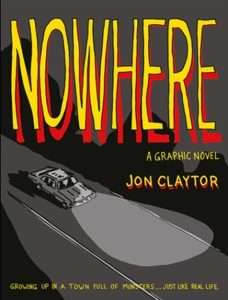 always seem to represent something beyond the natural fear a person would have against something with fangs and claws. Many times, these monsters are symbolic of a more universal fear involving a person’s space in society or in the universe at large (at least according to critics). Ghosts, for example, are often connected to humanity’s universal fear of death. Zombies are often symbols of death as well as disease. Author and illustrator Jon Claytor, however, presents an interesting idea in his book Nowhere, the world of zombies, vampires, and aliens represents the very modern fear of growing up.
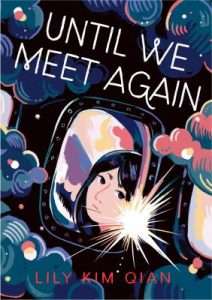 Memoirs often capture memories frozen in time, yet over the years, these memories can become reshaped, remixed, and even distorted. After all, facts become scattered but the truth behind the experiences endures. In her introspective memoir Until We Meet Again, Lily Kim Qian wrestles with deeply ingrained truths as she recounts her earliest memories leading to the estranged relationship between her parents, setting her on a path to discovery and inner healing.
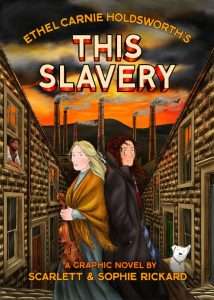 This graphic novel adaptation of Ethel Carnie Holdsworth’s romance novel is about sisters, Hester and Rachel, who grew up in poverty and learned how to fight for justice. The original novel was released in 1925 and was based on Ethel’s own experiences in a mill, but was not well received at the time of release. Now Scarlett and Sophie Rickard have adapted the novel into a new format during a time when the world could use reminding that human rights and dignity are inherent, not earned.
 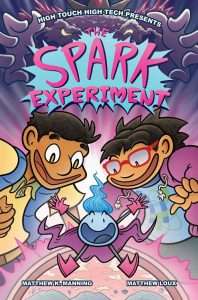 The story opens with David, a brown-skinned, lanky middle-schooler, imagining the “spark” of creativity and ideas as a cute little cartoon creature. He arrives home and meets up with his neighbor Marta, a lively homeschooled 2nd grader with red-rimmed glasses and the two investigate an explosion in David’s basement. It turns out his mom has successfully created a tool to shrink herself down so she can travel between dimensions into a “micro universe.” Unfortunately, she’s left the tool behind.
 This short graphic novel opens with a stereotypical bullying scene – Lucas, our main character, duct-taped upside-down to his locker by the bullies and his “friend”, eco-warrior Julia hiding in her locker. Lucas, a skinny little kid with pale skin and huge glasses, is determined that nothing is going to ruin his thirteenth birthday, but soon finds himself stuck in detention with Julia. Julia, a tall, stocky girl dressed in all black with white hair dyed green that contrasts with her brown skin, is exasperated by Lucas, but goes along with his escape plan and helps him get home in time for his birthday dinner.
 Note: This is a review of the ARC, which is 200 pages long and not the complete manuscript.
