When we are young the world can seem magical and full of untold possibilities. It’s when we get older and more perceptive, if not wiser, that the magic can fade and reality becomes more apparent. This transition from childhood to adulthood is a rite of passage for all of us and a time that can define who we become as people.
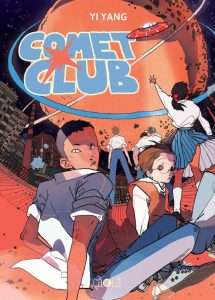
Comet Clubis set in present day China, and follows the lives of Li Yu and his friend Yang Kuaikuai as they find themselves on that same precipice between childhood and adolescence. As their time in middle school nears an end they are at a crossroads. Li Yu, the troublemaker of the two, is stuck in the pair’s small mountain town while Yang Kuaikuai, the more studious one, is trying to decide if he will stay in town with his father or move to the ‘big city’ with his mother, who left him and his father when he was very young. With their time potentially running out, Li Yu wants to make the most of what time they do have and drags the more skeptical Yang Kuaikuai to the Comet Club, a group of students that discuss UFO sightings and the possibility of extraterrestrial life visiting their mountain town. The club is led by the handsome, charming, and very intelligent Qi Ming, who beat out Yang Kuaikuai for first place in their school’s math competition. For this reason and out of morbid curiosity, he agrees to hear the club members out and join. Soon strange lights in the mountains bring the club members out of their comfortable homes in the town and up in the harsh winter wilderness above. And it is in that bleak landscape that the kids shed their childlike naivete and see things for what they truly are. Comet Club is a coming of age story very similar to such hallmarks of the genre as Stand by Me, showcasing the bonds of childhood friendship that hold a group of characters together and the cracks that form as time and circumstance begin to take their effects on who those kids are developing into. Through the characters’ parental figures the reader is given insight into what shaped the characters into who they are and insight into the choices the characters are making to distance themselves from their parents and their expectations or to seek out and meet those expectations. Li Yu’s drunken father set no expectations whatsoever leading him to take things less seriously and become a class clown. Yang Kuaikuai’s mother leaving when he was so young creates a need to prove that he is good enough to be worthy of her withheld love. Qi Ming’s father is working overseas in Japan and sends him letters and gifts such as a telescope, encouraging him to literally and figuratively reach for the stars, while at the same time hiding a dark secret of his own that also will play into his son’s future. Creator Li Yang imbues the story with a realistic sense of angst, uncertainty, and youthful idealism. Her artwork lies somewhere between realism and fantastical which really drives home the story’s place in the transitional period between the main characters’ childhood perspectives and the burgeoning reality slowly descending upon them. Regardless of their circumstances or in what country the reader was born, the plotline is universally relatable making it a great read for teenagers going through many of the same things.
Comet Club By Yi Yang Fantagraphics, 2026 ISBN: 9798875002564
Company Age Rating: Teen
NFNT Age Recommendation: Middle Grade (7-11) Creator Representation: Chinese, Character Representation: Chinese,
Easily my worst trait. So, keep that in mind as you read this.
I didn’t need any more convincing to check out Saint Seiya: Dark Wing, it’s already Saint Seiya, it’s going to be great.
As an aging anime nerd, I watched the original DIC dub of Saint Seiya when it came to the United States… about 20 years after the original production concluded. The aesthetic is immediately recognizable as an anime from the mid to late eighties. I found it fascinating to watch as a kid, and I was so surprised that this franchise is actually still going. Maybe not in a regulated production kind of way, but every few years, something new contributing to the universe shows up, like the awful movie adaptation from 2023.
I say this to give the series some context; it is very difficult to summarize this universe because it is so long-lived. The most concise way I can put it is this: the Saints are 5 chosen ones – boys who wear sacred armor that are based on constellations, sworn to defend the earth from being taken over by competing gods.
It’s… a lot. And if you’re also into Greek and Roman mythology… uh, you’ll recognize a lot of names, but this series is not based on any of those stories, it is not a re-telling of those legends; it’s more along the lines of appropriation than anything else. Personally, I enjoy the surrealism of it all.
Set in high school, students’ fates are revealed as chosen ones, sworn enemies, divine figures, and all in the service of the battle of the gods. Our protagonist, Soichiro, goes on a school trip to the Mediterranean, but the ship is attacked and sinks into the sea as he tries to save his crush. But Soichiro is revived as one of the dreaded Judges of the Underworld, under the command of Hades. He is pitted against his twin brother, Sojiro, who is reincarnated as the Gold Saint of Gemini.
Dark Wing consists of 4 volumes in total. It is not-quite-linear, relies on dream logic, and honestly, I appreciate its updated setting of the modern world. The linework is clean and detail-oriented when it is called for—these pages have some very elaborate backgrounds when the backgrounds actually show up. It is delightfully nostalgic to look at; fans of the old Gundam Wing manga will recognize these 90s pattern and texture overlays. And maybe the best part of it all is the re-working of popular 80s design elements into a more modern aesthetic (those feathered up-do’s, I mean…).
I do want to be clear: I loved this next installment of the series, but I am fairly certain that a newcomer to this franchise is not going to know what’s going on if this is the first Saint Seiya book they pick up. It’s a good read if you’re willing to just let the story happen, wash over you as the reader. The mythic themes of destiny and fate and rising to challenges never get old for me.
It pains me to say it, but I don’t think this spin-off makes for a great addition to your library collection. If you can link it to some of the more foundational works in the franchise, I think that would be best. But, on its own, even with all four volumes, I’m not sure this is the way to go.
Saint Seiya: Dark Wing Vol. 1 By Masami Kurumada and Kenji Saito Art by Shinshu Ueda Titan, 2025 ISBN: 9781787747180
NFNT Age Recommendation: Middle Grade (7-11), Teen (13-16) Creator Representation: Japanese, Character Representation: Japanese,
Victor is a necromancer, with magic in his blood that lets him cast spells. If anyone finds out, he would be put to death: necromancy is illegal and fanatically persecuted by the religious order that polices the city. And it’s not easy to hide, given that every transaction–from buying a snack to getting married – requires a blood signature, and necromancer blood visibly glows with magic. So Victor keeps to the shadows, solitary except for his cute one-eyed cat, just trying to survive.
Then wealthy young banking heir Enrique makes him an offer: use magic to resurrect his dead bride, and Enrique will use his vast resources to smuggle Victor out of the city to a place where necromancy isn’t illegal, where he can live a normal life. Victor reluctantly agrees, though he isn’t familiar with the spell Enrique instructs him to use. And neither of them expects the result: Enrique’s bride, Mercedes, is resurrected, but her life is bound to Victor’s. If they get too far apart, she’ll die. She has also come back a little… different. For one thing, she has no memories. For another, her beautiful body is now crisscrossed with stitches–and extremely strong. And then there’s the awkward fact that she’s extremely drawn to Victor. Is it just because of the spell, or something more?
Even if Mercedes doesn’t remember him, Enrique isn’t ready to give up on her. And if she can’t be separated from Victor, well, the three of them will just have to stay together. Which might just lead to more romance than any of them was expecting.
Love Me to Death started as a popular Webtoon, inspired by Frankenstein and influenced by Disney films like The Hunchback of Notre Dame. It also reflects the creators’ love for Mexican culture, especially in its lush visuals, which often call to mind Day of the Dead celebrations.
The story revels in cute, often silly romantic tropes. Oops, Mercedes saw Victor shirtless, and he’s hot! Oh no, they tripped and fell on top of each other! People keep mistaking them for a couple! Blushing abounds! There are serious elements to the plot – it’s dangerous to even associate with a necromancer, let alone be one, and also Mercedes is starting to wonder if she might have been murdered. Sometimes the romance, too, is more serious: Victor has major emotional scars, Mercedes is confused and scared by her new situation, and both have trouble believing that someone could want them when most people would consider them monsters. But there’s also lots of humor and sweet moments. There are a few hints in the direction of the three main characters ending up in a polyamorous relationship, but that’s as far as it goes in this volume, though the author’s note at the end confirms that that’s where things are going.
The artwork is colorful and expressive, full of pretty settings and even prettier people. Victor and Enrique are both cute while being very different types, and Mercedes looks like an attractive woman in a very effective “sexy Frankenstein” Halloween costume. (During a costume party, another character basically assumes that’s what she is.) There are a few manga-esque elements, like roses appearing around Enrique when he smiles and characters looking chibi sometimes in funny moments. We see elegant architecture, fun outfits, colorful festival décor, and lots of sparkly magic. This volume also contains a bonus short story about Victor’s past, which is mostly text with just a few illustrations.
Love Me to Death combines an interesting fantasy setting, sympathetic characters, and hefty doses of both angst and humor. Hand it to fans of shojo manga and fantasy romance.
Love Me to Death By Toonimated Little, Brown, 2026 ISBN: 9780316587198
Company Age Rating: 14+
NFNT Age Recommendation: Adult (18+), Older Teen (16-18), Teen (13-16)
After the death of her husband Paulo, Julia reluctantly adopts the garden plot he left behind. She’s distressed one day to find it wrecked, dirt everywhere, plants destroyed. She determines the culprit must be a mongoose because only an animal could have been so ruthless. To her great frustration, no one in her life believes it exists or takes her seriously. As she begins to see traces of it everywhere the mongoose becomes an obsessive focal point for Julia as she wafts through a new period of her life.
A few years ago I lost my mom and discovered that when someone close to you passes, there’s this distinct before and after that suddenly redefines the timeline of your life. You can never return to the before and the after is so incredibly weird that it’s hard to describe to someone who hasn’t been there. It’s this bizarre time and place where nothing feels right, where isolation creeps in even when you’re surrounded by well-meaning people, and where you feel out of step with the universe.
Julia is in this strange after place and she’s struggling in the free-fall of grief and mourning after losing Paulo. She sleeps a lot, eats very little, and can’t get back into her routine. But she’s coping just fine, if you ask her. Her family tries to be helpful, but they’re each dealing with their own issues and tend to get under each other’s skin.
Don’t go into this book expecting to see a well defined path through grief or mourning. This is an exploration of the experience of grief and specifically not dealing with it. There is a lot of symbolism and moments that are left up to interpretation, allowing for different understandings from different readers. It’s a deft way to represent the individual responses to loss that show up in our lives and a subtle but impactful investigation of a difficult set of emotions.
Author and illustrator Joana Mosi uses a minimalist, but effective black and white drawing style to convey her story. There are noticeable empty spaces between panels, which also occasionally appear out of order to convey the fragmenting and mixing of Julia’s memories and thoughts. As if the book itself were making physical space for her brain fog. There are memories we don’t see and photos in Julia’s physical space are represented as blank picture frames, further defining an undercurrent of before and after.
There really aren’t any content warnings other than the obvious devastating loss that occurs before the story begins. Some readers might come away from this feeling like they didn’t fully understand everything on every panel or how everything connects, but this is a story where confusion is an important part of the experience. The ending is left somewhat open-ended, mirroring the process of grieving.
This book is best suited for the adult collection but I could see older teens connecting with it as well. Mosi has said that she conceived the idea for this book after the loss of her father and she has such a good grasp on the range of feelings and numbness that Julia experiences that I wonder if there are some autobiographical elements quietly tucked in. I think if you have been in that strange “after” time brought on by a major death in your life, you’ll connect with Julia and her story, even if your grief took a different path. Readers who are less familiar with mourning will still understand Julia’s very human response to such a traumatic event in her life.
The Mongoose By Joana Mosi Pow Pow, 2025 ISBN: 9782925114475
NFNT Age Recommendation: Adult (18+), Older Teen (16-18) Creator Representation: Portuguese, Character Representation: Portuguese,
Everyone over the age of 30 remembers the TV show Mister Magic. They don’t always agree about what happened on the show—and there’s no way to settle disputes, since no footage from Mister Magic seems to exist anywhere. But they remember how passionately they loved it as children, how they felt like the kids in the show were their friends. And they remember—even if the details are blurry—that it ended thirty years ago in a terrible, violent tragedy.
When Val’s father dies, she feels lost. She’s been living on an isolated ranch since her father brought her here thirty years ago, when she was eight. He’s been paranoid, terrified that something would follow them here, but Val doesn’t know what or why. Then unexpected guests show up at his funeral. Val doesn’t remember anything from before she arrived at the ranch, but these people claim they were her childhood friends and costars on the show Mister Magic. They do seem deeply familiar, and Val is desperate to learn more about her past, so she agrees to leave with them. They’re headed to the remote desert town where the show was filmed, where they will be interviewed for a podcast.
Once they reach the desert town of Bliss, Utah, things just keep getting stranger and more threatening. The entire town is extremely invested in the show Mister Magic. They’re all angry at Val for something she can’t remember. And they want something from Val and her new/old friends—something they’ll do anything to get.
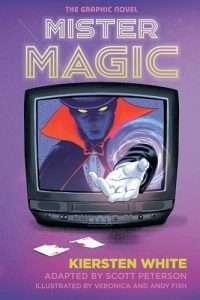
This is a graphic adaptation of Kiersten White’s horror novel Mister Magic. It’s smart and creepy, playing with themes of memory, nostalgia, and trauma, as well as the desire to protect children and how we try to do that. Interspersed through the book are memos, emails, and websites about Mister Magic—including fake pages from real sites like Wikipedia and Reddit—which add to the feeling of the story being real and contemporary. And indeed, some of the book’s horror is inspired by reality. Our protagonists find themselves returning to an isolated community bent on controlling and molding children to fit their narrow, patriarchal ideal. We see how this community shaped the lives of Val’s castmates, pushing heterosexuality, marriage, and parenthood on them regardless of how badly those concepts sometimes fit. The author has confirmed in interviews that this is a reference to conservative religions, particularly the Church of Latter-Day Saints, which White left as an adult because of the church’s increasingly homophobic views.
For most of the book, the visuals are straightforward and realistic. The art is dynamic and natural, and the flashback scenes feature some delightfully nineties-TV aesthetics. Those flashbacks also have a looser, more fanciful style that evokes both the fact that they are childhood memories and the possibility that real magic was involved. As the story progresses and the supernatural elements close in on the protagonists, the more magical style reappears more often.
As far as content, this book includes some swearing, icky sexism, creepiness, and children in danger, but nothing too dire, especially for a horror novel aimed at adults. There are a couple of kisses and a few comments on female characters’ bodies, but no other sexual content. Mister Magic delivers an eerie and fascinating premise, flawed and sympathetic characters, and a pace that makes it easy to keep reading. Hand it to fans of inventively creepy vibes and to readers who like horror in which—spoilers—things mostly turn out okay.
Mister Magic the Graphic Novel By Kiersten White, and Scott Peterson Art by Veronica Fish, and Andy Fish Ten Speed Press, 2026 ISBN: 9781984863355
Once upon a time in ye olde 2013, in the very blue state of Illinois, Chicago Public School (CPS) officials banned the use of Marjane Satrapi’s graphic novel Persepolis in the entire district. 13 years later this feels disgustingly common, a story we’ve learned to tune out, but at the time it shocked the local community and the response was immediate. High school students led a protest, teachers and librarians were up in arms, free speech advocates were taking notice, and it was picked up by news outlets. But information coming from the school district was confusing and inconsistent and Freedom of Information Act (FOIA) requests produced little information or clarity.
Roughly two years later, library graduate student Jarret Dapier, remembering his frustration with the ban and lack of answers, decided to dig deeper for a thesis paper. He interviewed former and current students, teachers, librarians, administrators, and journalists. With little hope of success he sent in his own FOIA request to CPS and was surprised with 42 pages of emails and all the answers he could ask for about the ban and who in the school district was responsible.
Wake Now in the Fire is Dapier’s debut graphic novel and a mingling of those true events with mostly fictional characters based on the students and teachers he interviewed. He follows several high school students (and a few teachers) as they discover the ban and take action. His diverse characters have varied and realistic lives, dealing with all the ups and downs of being a teenager. They struggle with homework, strict parents, and awkward crushes, but also grief, uncertainty, and mental health issues. I really loved that Dapier gave his student characters space to speak and share and develop their, sometimes messy, thoughts in and outside the classroom.
AJ Dungo illustrates Dapier’s narrative with a distinctive and fun graphical style. His clean lines and grayscale color palette are more than able to handle the relatively large cast of characters and complex situations. One detail that I really enjoyed was the use of red only when the book Persepolis is in view in a panel. It’s a nice pop of color that highlights the book’s presence in the lives of the characters.
It feels easy these days to get crushed emotionally by the routine threat of book bans, and I worried a graphic novel focused on it would really bring me down, but Wake Now in the Fire is largely positive. The students are fired up to stand up for their rights to read. The parents, teachers, and librarians are largely supportive. There is visible power in a community that rises against censorship. In his afterword, Dapier draws attention to how things have changed since 2013 with regards to the massive increases in book bans, growing control over marginalized bodies, and the escalating danger of armed government agents. Those comments snapped me back to reality after bathing in some good old fashioned hope during the narrative, but it’s important that our current reality is acknowledged.
The publisher rates this story for ages 14+, which are the ages of the main student characters. There aren’t too many things that would make this difficult for readers under 14, but some issues to be aware of are brief off-screen violence, depictions of mental health struggles in kids and adults, and alcoholism in one of the parents. That parent experiences an on-screen health emergency that his daughter has to respond to in an intense scene. The most stressful parts of the students’ lives are handled well and with grace. This book is a vital addition to a teen, or even an adult collection because it merges history and fiction to tell a compelling story with that crucial element of hope that is so desperately needed right now.
Wake Now in the Fire: A Story of Censorship, Action, Love, and Hope By Jarrett Dapier Art by AJ Dungo Ten Speed Press, 2026 ISBN: 9780593838044
Company Age Rating: 14+
NFNT Age Recommendation: Adult (18+), Older Teen (16-18), Teen (13-16)
Jade is a hot-tempered teenaged aristocrat in modern-day France. Her family has prestige but no money, so Jade’s mom keeps pushing her to cozy up to her wealthier peers—and, ideally, marry one of them. But Jade is focused on her secret passion: serious weightlifting.
In fact, Jade has already made so much progress with her lifting that it can be hard to hide her strength. Like when she gets mad at a boorish young rich boy at a party and sort of… launches him into the refreshments table. Society would never approve of her lifting weights, so Jade scrambles to explain her feat of strength before blurting out that she must have been overcome by… love!
Jade’s matchmaking mother is, of course, thrilled. She would be a lot less thrilled to know that the only boy Jade actually likes is a groom in a rich family’s stables—a groom with huge muscles, whose workout routine Jade is determined to discover. Not that Jade has time for romance anyway – she’s juggling friends and frenemies, high school and high society events, all while keeping her weightlifting a secret. But with multiple boys now pursuing her, romance may be in Jade’s future whether she’s ready for it or not.
Originally a successful French webcomic (Colossale), Colossal is a fun rom-com with a shojo manga vibe and an oddball premise that grabs your attention. Who would expect the feisty young socialite to be obsessed with weightlifting? But Jade’s passion for lifting isn’t just a weird quirk: the story weaves it into her backstory and the way she thinks. Jade can be impulsive and irritable, though she usually keeps her temper in check. Early in the book, she sometimes imagines using her huge strength to punch people she finds annoying, which feels a little extreme, but Jade stops doing it after the first few scenes. She often fumbles social situations, but she cares about her friends and doing the right thing.
The rest of the cast has plenty of personality, too. There’s thoughtful Alexander, the groom Jade likes, who is much more than an enviable set of muscles; his employer, a rich mean girl who is struggling to fit into high society; the handsome but unpleasant rich boy who becomes far more interested in Jade after she pitches him into a buffet; Jade’s new friend, a do-gooder who convinces Jade to help with a charity function; and a cute but ruthless boy who discovers Jade’s weightlifting secret and demands she train him. There are also various family members and Jade’s supportive and quirky weightlifting buddies.
The art style is grounded in realism but with touches of a more fanciful shojo manga style. It focuses on the characters, giving them expressive (sometimes comically exaggerated) faces and postures. Their outfits change frequently to fit the occasion as the plot romps through lively scenarios and settings: riding lessons from Alexander, a stag hunt, preparing and staging a costumed charity ball, working out at the gym, hosting a sleepover, and more. Backgrounds are mostly minimal, with just enough detail to establish the settings.
There is no nudity (though Alexander sometimes gets shirtless for non-sexual reasons), but there are a few references to sex and a few swear words. Mostly, though, the story is funny and silly, with some heartfelt moments and sweet emotional connections between characters. Hand it to fans of rom-coms and shojo manga who like the sound of the premise.
Colossal By Rutile Willcox Art by Diane Truc Abrams, 2026 ISBN: 9781419777813
Company Age Rating: 14-18
NFNT Age Recommendation: Older Teen (16-18), Teen (13-16) Creator Representation: French, Mauritian, Character Representation: French,
Amu Hinamora sometimes feels like an anxious mess, but seen from the outside, she’s popular and cool. It helps that she’s one of the Guardians: rare kids who have tiny magical companions called Guardian Characters, which grant special powers. In fact, where most Guardians have a single Guardian Character each, Amu has four. Perhaps it’s no surprise that she is chosen for a special mission: unraveling a mystery at a prestigious but strange middle school called Arcana Academy.
In the world of Shugo Chara!, every child has an egg in their heart that represents an ideal version of themselves that they want to be. Most children never discover their eggs, but some rare eggs hatch into tiny chibi people called Guardian Characters. Guardian Characters mostly hang around offering commentary, but they can also help their Guardians transform into powered-up versions of themselves.
Arcana Academy has a problem: students are losing confidence in themselves, which can turn their eggs into X Eggs. These hatch into not heroic and helpful Guardian Characters but mischievous and dangerous X Characters. As a Guardian, Amu specializes in restoring X Eggs. That’s her main mission at Arcana Academy, but she also has a secret assignment: to learn about the Academy’s powerful treasures, the Arcana Jewels.
This is a cute adventure with lots of humor. Amu is an entertaining protagonist: since readers can see her thought bubbles, we know when, beneath her Cool Girl exterior, she’s confused or panicking or paying less attention to her mission than to her crush’s cute school uniform. Her four Guardian Characters can also see her thoughts, and they have lots to say about them, which is often funny.
Guardian Characters are a fun element: each one represents an aspirational version of their Guardian, often in an over-the-top way. For instance, Amu’s crush has a princely, chivalrous personality; his Guardian Character is an actual king who gives him the ability to transform into a monarch in full regalia and use a defensive power called Holy Crown. Amu’s four Guardian Characters have personas ranging from artistic to athletic, and enable her to transform into four different superpowered versions of herself.
The supporting cast adds to the fun. There’s Amu’s crush, whose sweet personality contrasts humorously with his tyrannical Guardian Character. Another Arcana student, Niya, is a video streamer with a pair of cat ears (thanks to his Guardian Character being an anthropomorphic cat), lots of silly energy, and a crush on Amu. Amu’s new roommate is so shy and quiet that for awhile Amu doesn’t realize there is another person in her room at all.
The Guardians’ transformations and magical powers have major magical girl vibes, complete with elaborate outfits. The art throughout the manga is rich with detail, from the gothic architecture of Arcana Academy to the flowers, stars, bubbles, and sparkles sprinkled through the backgrounds. Playing card suits are a major theme: Arcana Academy’s four dorms are Heart Tower, Diamond Tower, Spade Tower, and Clover Tower, and are decorated with the corresponding symbols (“clover” being clubs). The four suits also appear on Amu’s four Guardian Characters and seem to be connected to the Arcana Jewels.
At the end of this volume is a collection of translation notes to clarify elements of the story that are otherwise hard to translate. For instance, the headmaster of Arcana Academy uses a Japanese counting word that implies that Guardian Characters are objects, while everyone else counts them using the word that is used for people. The notes offer a fascinating glimpse into the differences between Japanese and English and the ways translators try to bridge them.
There is a brief introduction to the main cast and the concept of Guardian Characters at the beginning of the book—a helpful reference, especially for readers new to Shugo Chara! With a new setting and largely new cast, this volume can stand alone or serve as an entry point to the series, though new readers may get a sense they are missing a little bit of context. Still, the story holds up well on its own as a light, fun magical-girl-style adventure.
Shugo Chara! Jewel Joker By Peach-Pit Kodansha, 2026 ISBN: 9798888777107
Orange Grove Junior High just held its graduation ceremony, and now it’s officially summer vacation. For some of the newly-minted rising ninth graders, the summer is off to a rocky start. Rose is disappointed to realize that she went through junior high without making much of an impression—no one seems to even remember her name. Best friends Juhi and Liv just had a huge fight—maybe even a friend breakup. Paul just wants to game and be left alone, but his parents are making him attend a pool party thrown by classmate Dustin. Paul’s popular cousin Maya will be there, too—her mom is forcing her to go and apologize for semi-accidentally humiliating Dustin in a viral video.
Dustin thought inviting the whole graduating class to a pool party might help him shake off his reputation as a loser. But it seemed like no one was interested, and then Maya’s video came out and made Dustin feel worse than ever. Now he just wants to hide. Then guests start arriving: Paul and Maya, plus a gaggle of Maya’s friends. Juhi and Liv, who are still fighting. Rose, who is determined to finally make an impression on her classmates. Emotions are high, and Orange Grove’s recent graduates are running wild. For some of them, what happens at this party will change everything.
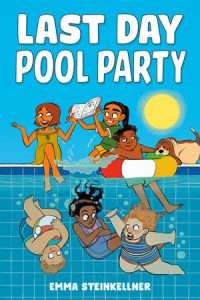
Last Day Pool Party reads like watching a summery tween movie. The characters have enough unusual details to keep them from being flat, but they are familiar: the social outcast looking to prove himself, the wallflower desperate to be noticed, the best friends rocked by a major fight, the popular girl wondering if she’s become someone she doesn’t want to be. The focus shifts between these characters, following them from the pool deck crowded with an audience of fellow students to the living room where Paul is determined to ignore everyone and play video games to Dustin’s bedroom for an impromptu makeover scene to a bathroom where two characters go to hide and end up having a heart-to-heart. The characters’ stories start out separate but eventually converge in a cinematically dramatic climax, then stay mingled together as they sort things out afterward.
The art is fun, vibrant, and colorful. The cast features a variety of races and body types as well as wildly different personalities, which are highlighted by their expressive faces and dynamic body language. The main setting—Dustin’s house, inside and out – is well established and feels solid and consistent, like the set of a play, with the same locations hosting different characters throughout the party. Bright colors add to the sunny, summery feel.
This is a funny and ultimately optimistic story exploring lots of topics of interest to young readers: making and keeping friendships, discovering and developing your own identity, apologizing and forgiving. It is also a bouncy, quick read with lots of slightly over-the-top but relatable characters. Hand it to middle schoolers who want a fun romp with drama, humor, and heart.
Last Day Pool Party By Emma Steinkellner Labyrinth Road, 2026 ISBN: 9798217031429
Company Age Rating: 8-12
NFNT Age Recommendation: Middle Grade (7-11), Tween (10-13)
Imagine my surprise when I heard that civilization collapsed some 3,000 years ago, as opposed to almost any other date (insert Daria theme song here. Look it up, kids.).
1177 B.C.: The Year Civilization Collapsed is a graphic novel by experts on the subject, Eric Cline, and Gynnis Fawkes. It is an adaptation of Cline’s book of the same name.
Cline has a daunting task ahead of him in this endeavor. The original non-fiction book is complicated and dense (and won several awards), as we would all expect, and to package all that information in a way that is digestible and accessible is a real challenge.
We come across a tried and true method for the storytelling here: the framing device is from the perspective of 2 characters – Pel, a member of of the marauding Sea Peoples, and Shesha, an Egyptian scribe – visit the locations discussed in the text to explore many, MANY theories, facts, speculations, and historical disasters that brought the the Minoans, Mycenaeans, Hittites, Canaanites, Assyrians, and Egyptians to the end of the Late Bronze Age.
There’s a lot of text to get through; when I describe the book as “dense,” I truly mean it. Each page is chock-full of historical explanation and detail. Small text. We’re approaching something more like an illustrated textbook. Your experience of the text-to-picture ratio this is going to vary, but I would not recommend this for younger readers for the sheer amount of words. Again, this is an adaptation of a nonfiction book that does some serious digging (hurrhurr archeology joke) into a very academic subject.
Fawkes’ illustrations are evocative of humanity’s early attempts artworks/image-making. Think like the cave paintings of Lascaux, Greek pottery, and Roman fresco. The lines are simple, and while characters and objects are shaded, hard swathes of colors are used instead of rendering. The stylization is pretty firmly in a cartoon-ish style (as opposed to photorealistic). I do want to draw attention to the environments and backgrounds – there is some really detailed, professional pencil-work at play here that very successfully communicates different materials, fabrics, surfaces, and natural phenomena.
1177 B.C. could be a good addition to a collection, but I feel that its place would have to be pretty unique in an array of collection development needs – we have an illustrated nonfiction graphic novel that is kid-friendly and about a very specific topic. Due to the high volume of explanation within the pages, I don’t think young children would like it very much. And the childish presentation might put some older kids off who are more interested in just the facts; the publisher put their recommended age range as 16-17. While I’m certain there are older teens who would enjoy this, I would think that they might just prefer to grab the original book this comic was based off of.
Use good judgment and consideration.
Reviewer’s note: the location given is an approximation of the regions explored; keep in mind that these civilizations no longer exist and borders and countries have changed over time.
1177 B.C.: A Graphic History of the Year Civilization Collapsed By Eric Cline Art by Glynnis Fawkes Princeton University Press, 2024 ISBN: 9780691213026

 When we are young the world can seem magical and full of untold possibilities. It’s when we get older and more perceptive, if not wiser, that the magic can fade and reality becomes more apparent. This transition from childhood to adulthood is a rite of passage for all of us and a time that can define who we become as people.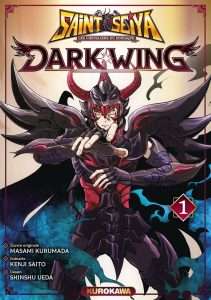
 Victor is a necromancer, with magic in his blood that lets him cast spells. If anyone finds out, he would be put to death: necromancy is illegal and fanatically persecuted by the religious order that polices the city. And it’s not easy to hide, given that every transaction–from buying a snack to getting married – requires a blood signature, and necromancer blood visibly glows with magic. So Victor keeps to the shadows, solitary except for his cute one-eyed cat, just trying to survive.
 agree about what happened on the show—and there’s no way to settle disputes, since no footage from Mister Magic seems to exist anywhere. But they remember how passionately they loved it as children, how they felt like the kids in the show were their friends. And they remember—even if the details are blurry—that it ended thirty years ago in a terrible, violent tragedy.
 Satrapi’s graphic novel Persepolis in the entire district. 13 years later this feels disgustingly common, a story we’ve learned to tune out, but at the time it shocked the local community and the response was immediate. High school students led a protest, teachers and librarians were up in arms, free speech advocates were taking notice, and it was picked up by news outlets. But information coming from the school district was confusing and inconsistent and Freedom of Information Act (FOIA) requests produced little information or clarity.
 her to cozy up to her wealthier peers—and, ideally, marry one of them. But Jade is focused on her secret passion: serious weightlifting.
 Guardians: rare kids who have tiny magical companions called Guardian Characters, which grant special powers. In fact, where most Guardians have a single Guardian Character each, Amu has four. Perhaps it’s no surprise that she is chosen for a special mission: unraveling a mystery at a prestigious but strange middle school called Arcana Academy.
 rising ninth graders, the summer is off to a rocky start. Rose is disappointed to realize that she went through junior high without making much of an impression—no one seems to even remember her name. Best friends Juhi and Liv just had a huge fight—maybe even a friend breakup. Paul just wants to game and be left alone, but his parents are making him attend a pool party thrown by classmate Dustin. Paul’s popular cousin Maya will be there, too—her mom is forcing her to go and apologize for semi-accidentally humiliating Dustin in a viral video.
 theme song here. Look it up, kids.).
