
The story begins with an introduction to the main characters; Chiri, an exuberant girl with pink hair and a yellow hoodie, who is 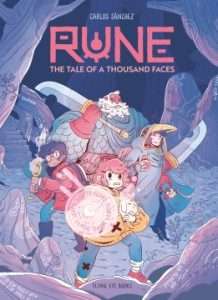 Deaf, and uses hearing aides, lip-reads, and speaks sign language. Her best friend Dai, is a shy boy with navy blue hair and brown skin, is a reluctant follower in her adventures (and enthusiastic eater of her cookies). Both live in the boring, gray Little Valley, in an orphanage, where nothing happens besides bullying. Trying to escape from an especially vicious group, the two go into the Haunted Forest and enter a cave in the midst of the Old Ruins.
In an Oz-like transformation, they enter a colorful land with plentiful food—and a plethora of missing posters. Chiri is enthusiastic about exploring, Dai is not so sure, especially after they meet some of the strange inhabitants of what turns out to be the land of Puddin’ and learn about the Shadow King who has been seen recently. While visiting Breakfast Town, in search of waffles of course, they run into a group of adventurers who discover that Chiri has powerful magic.
A wild series of strange adventures follow as the two friends try to decide their next steps—stay in the land of Puddin’ and face the dangerous Shadow King or try to return to Little Valley which is relatively safe. Will Chiri pursue her magic training and can Dai overcome his fears or will the two go their separate ways? Can the Shadow King be defeated or will he expand his rule of terror into the another realm?
Many of the comics produced by Flying Eye have a similar flavor and while Sanchez’ art is unique, there are certain details like small tufts of hair, spots and flushes of color across cheeks and noses, oddly large or small heads, and a limited range of clashing colors that will remind readers of other creators like Joe Todd-Stanton, Sam Bosma, Seaerra Miller, and Tim Fraser. The brief scenes in Little Valley are tinged in shades of gray and lavender, the few spots of color in Chiri and Dai’s jackets showing as dull red and orange.
Once the two have passed through the portal, their jackets sharpen into bright colors and the landscape blooms with contrasting pinks, oranges, and reds against shades of blue and purple. The people they meet have exaggerated features, lumpy noses, large bobble heads, scarlet skin, and deeply lined faces and the creatures vary from lumpy heaps of fur to amorphous, shape-shifting movements. Everywhere are stones, broken statues, and artifacts carved with the mysterious runes of the title.
A brief note at the beginning explains that the sign language shown is a mix of British Sign Language (BSL) and the author’s imagination, with the advice of consultants (credited at the end of the book). Both Chiri and Dai use sign language to communication, which is translated into colored boxes, and they also encounter people who use “wizard speech” which is similar to sign language.
Readers who like quirky fantasies, including Lightfall by Tim Probert (who blurbs the book) will enjoy exploring the mysterious world of Rune. Notable for its inclusion of a Deaf character in a fantasy world, this is a strong addition to most graphic novel collections. The book definitely ends on a cliffhanger however, so libraries with a limited budget will probably want to wait for sequels to be available before purchasing, otherwise readers are likely to lose interest before sequels are released.
Rune: The tale of a Thousand Faces
By Carlos Sanchez
Flying Eye Books, 2024
ISBN: 9781838741211
NFNT Age Recommendation: Middle Grade (7-11)
Creator Representation: Spanish,
Character Representation: Deafness,

