Anang is a two-spirit, nonbinary kid trying to find their place in their Indigenous community and at school. At the upcoming summer powwow, Anang asks their grandmother if they can make and wear a ribbon skirt; a traditional part of the regalia for Anishinaabe women. Anang’s grandmother thinks it is a great idea; however, seeing Anang’s doubts, she suggests that Anang ask the spirits for guidance. The spirits, in the form of turtles, crows, and the great lake nearby, help Anang feel more like themself as they gather the four necessary items to make the perfect ribbon skirt representation.
Along the way, Anang also gets help from their friends, Sherry and Miigwan. Miigwan accepts Anang as two spirit, but Sherry doesn’t understand and isn’t very good at communicating what she’s feeling. Eventually, the two friends come to a better understanding of their situations: Sherry feels pressure from classmates to avoid Anang and wants things to feel normal after her parents’ divorce; Anang doesn’t understand why other people can’t accept that they are nonbinary.
I love that this book exists. Reading is all about learning about things you haven’t experienced for yourself, and this book showcases nonbinary feelings and Indigenous culture written by someone who understands both. It’s clear that he wants to reach any reader who is interested in this story as there are notes about the language used by the characters with footnote translations (Southwestern Ojibwe or Minnesota Dialect of Ashishinaabemowin), a glossary of terms, and historical notes about ribbon skirts and powwows as well as an invitation to attend as a guest with suitable advice about dos and don’ts.
The color illustrations convey the character’s emotions through facial expressions. Color is important as a story element because it shows the diversity of skin tones represented and is a subtle way to show how each character relates to their gender.
I would highly recommend this for any classroom or middle grade focused collection. If you put it in a classroom library, please know that there is some discussion of gendered bathroom usage but no depictions of the usage nor is there any nudity.
The Ribbon Skirt By Cameron Mukwa Scholastic GRAPHIX, 2024 ISBN: 9781338843255
Publisher Age Rating: 8-12
NFNT Age Recommendation: Middle Grade (7-11), Teen (13-16) Creator Representation: Anisinaabe, Two Spirit , Character Representation: Anisinaabe, Nonbinary, Two Spirit,
To be stateless, drifting between two cultures, belonging to neither one nor the other completely, creates a confounding challenge for finding a place called home. Such is the plight of young Japanese American teenager Amy during the tumultuous times of World War II. In Pearl, Sherri L. Smith (Flygirl) and Christine Norrie (Cheat) chronicle her dilemma amidst the shadow of war in the United States and Japan.
The opening pages introduce Amy’s great grandmother, who as an ama, dives for pearls along the shores of Honshu in Japan. The narrative then shifts and traces her lineage to thirteen-year-old Amy on the island of O’ahu, Hawai’i in 1941. One day, news of her grandmother’s deteriorating health prompts Amy to travel to Japan while her parents stay home to take care of her newborn brother. She stays at her uncle’s farm on the outskirts of Hiroshima and is drafted into translating news from American radio broadcasts for the Japanese military.
When the Japanese bomb Pearl Harbor and Amy learns of the incarceration of Japanese Americans back home, she must navigate between her dual identity as Japanese and American: “To the Americans, I was a traitor. To the Japanese, I was an American. I had no country to call my own.” In this conflicted tale of grasping one’s identity amidst the looming specter of war spanning across the Atlantic, Pearl explores themes of emigrating to one’s ancestral land, becoming estranged as an outsider between two cultures, and grappling with despair, hope, and the will to survive in the aftermath of atomic destruction.
The story falls short in developing the family dynamics between Amy and her relation to her grandmother, leaving more to be desired. While she interacts with relatives in Japan, their relationship to her fail to fully crystalize. The graphic novel’s strength lies in its picturesque visuals of the sea in deep space compositional panels ensconced in pastel hues of blue and flashbacks tinted in light gray, establishing a muted tone of melancholy and wonder. Wordless panels and speech bubbles depicting nuanced emotions and symbolic imagery imbue selected scenes with dramatic impact, conveying the affective interactions between characters and their environment.
Fantastical elements blend into the narrative and expressive artwork, which include the haunting personification and specter of death as characters struggle past the ravages of war and emotional trauma. Although lacking in secondary character background development, this graphic historical novel presents a conflicted perspective of a Japanese American caught in the socio-political throes of World War II and will complement diverse middle grade graphic novel collections to highlight this crucial period of U.S. American history.
Pearl By Sherri L. Smith Art by Christine Norrie Scholastic GRAPHIX, 2024 ISBN: 9781338029437
Publisher Age Rating: 10-14
NFNT Age Recommendation: Tween (10-13) Creator Representation: Black, Character Representation: Japanese-American,
In her newest graphic novel, The Deep Dark, Molly Knox Ostertag (Girl From the Sea and The Witch Boy) once again shares a hauntingly beautiful story about family and friendship with veins of the fantastical intertwined throughout. The story follows Magdala (Mags), as she holds tight to a deep dark secret, which is draining her energy and life.
Mags is isolated and lonely in a small desert town. She works, goes to school, and cares for an ailing grandmother, all in a muted fog. Ostertag, introduces the story in shades of gray, mimicking Mags’ pale existence. In the first pages there are only small splashes of color, from a text message, the glow of a tv, blood flowing down a drain, etc. Even her relationships feel empty and hollow. Her parents don’t really seem to understand her, and both they and her grandmother carry many expectations, especially in regards to the veil of secrecy she must hide behind. Mags occasionally hooks up with another girl from school, another secret, hidden from the girl’s boyfriend.
We only see hints of her secret in the basement. A lock on the basement door, a cage, and a bandaged hand. But we do see the effect: exhaustion, and little else. That changes when a childhood friend, who has since transitioned to Nessa (she/her), reaches out on social media. The illustrated memories are vibrant, in color and emotion. They are the first pages in full color. Ostertag shows sharp contrast to the current reality, creating a before and after, connected in some way to Nessa. Something happened in their childhood. A secret was shared and a young child lost their life.
Nessa is visiting for Christmas from LA, where she is studying photography. Mags comes more to life in her presence, but is still stifled. The gray becomes darker, but the color still hides. They are both eager to connect, but each holds something back. Mags is still controlled by the secret in the basement. Nessa knows something but is unsure, and she has her own story. A controlling ex-boyfriend who refuses to let go. But as their relationship rekindles, secrets come out, and with them, there is growing understanding, acceptance, and color.
The story is beautiful, and the expanding relationship between Mags and Nessa will be loved by many readers. Ostertag’s books have been a popular mainstay in many collections, and this one will be loved just as much, if not more so, than those that came before.
Both of the main characters are LGBTQ. Mags is lesbian and Nessa a trans bi-sexual woman. Their identities are clear, and a part of their character, however, they are non-issues in the plot. Both are out in the open. In a book whose main focus is secrets, it’s refreshing that their identities are never hidden.
The Deep Dark is a must purchase for high school collections. My school library will have a few copies. I know many students who seek out stories such as this one, and I know many readers will love it as much as me. Ostertag is a talented writer and illustrator, and this might be my favorite of her books.
The Deep Dark By Molly Knox Ostertag Scholastic GRAPHIX, 2024 ISBN: 9781338840001
Publisher Age Rating: 14 and up
NFNT Age Recommendation: Older Teen (16-18), Teen (13-16) Creator Representation: Lesbian, Character Representation: Latinx, Lesbian, Trans,
The story of a kid trying to figure out a new life and school after their family moves far away is a classic story in children’s literature and Jonathan Todd’s Timid shows why young readers still need these kinds of stories.
Cecil’s family is moving from Florida to a Massachusetts town near Boston. There’s no palm trees in New England and his sister Leah will be away at college, but at least their new house has space for him to have his own art studio and his family already has a church to go to (with a cute girl who Cecil sees at services every week).
School is its own separate challenge. Cecil struggles with his shyness and finds it hard to come out of his shell. His fellow students start to notice his drawing skills and he slowly finds his place… or so he thinks. He loves sharing his artwork with his classmates but it sure seems like he’s being taken advantage of. When someone takes his work and uses part of it in a not very nice portrayal of the principal, Cecil finds his voice and learns there’s no perfect way to be anything, you just have to be yourself.
Cecil’s identity as a demure, artistic Black boy is the strongest aspect of Timid and one that guides the graphic novel’s story. He doesn’t feel like he fits in with the Black kids at his school. He doesn’t want to be seen as trying to be white by hanging out with just the white kids either. The book doesn’t shy away from the reality of being Black in a majority white school and the microaggressions Cecil deals with. When he starts at the new school, someone asks him if he’s there as part of the program that buses kids in from Boston proper and later in the book, a white student touches his hair while teasing him about it. There’s points where Cecil overanalyzes his every move in an attempt to not fall into unwanted stereotypes and how this being on guard affects him.
Cecil’s story in Timid is based on Todd’s own life and his storytelling is very earnest. While it’s not an actual memoir, you can feel that it’s been very influenced by personal experiences Todd himself faced. Younger readers will appreciate that the story is told in a very straightforward, relatable way. Almost all of the problems Cecil comes up against are solved fairly quickly and easily but without shorting the emotions surrounding them. They happen, there’s a resolution, and life keeps going, even if the problems are still lingering in the background at times.
Todd’s art style is very comic-inspired, with even a tinge of newspaper comics style to it. The bold lines throughout really make the panels jump off the page. It’s refreshing to see a middle grade graphic novel with a different art style than the ones that dominate the shelves. Readers interested in creating their own comics will likely appreciate Todd sharing his own childhood artwork that mirrors the comic that Cecil draws to enter the neighborhood comic shop’s content.
Timid will appeal to a variety of readers: those who enjoy the fish out of water story, those who can’t get enough of graphic novel memoirs, and those looking for stories to inspire their own confidence, as well as the teachers and librarians who recommend them. It would be best enjoyed by younger middle grade readers, especially those looking for stories about inspiring artists, the desire to fit in while still remaining yourself, and conquering their own shyness.
Timid By Jonathan Todd Scholastic GRAPHIX, 2024 ISBN: 9781338305708
Publisher Age Rating: 8-12
NFNT Age Recommendation: Middle Grade (7-11), Tween (10-13) Creator Representation: Black, Character Representation: Black, Protestant ,
Going viral can be a one way ticket to fame … or a gut punch about how the rest of the world sees you. In Maysoon Zayid and Shadia Amin’s Shiny Misfits, Bay Ann discovers that even when she’s showing off how talented she is, many people can’t see past her disability. Can she one up the sudden fame of her former crush turned archnemesis?
A few things about Bay Ann Musa: she won’t eat any food with a face, she has the best friends in the world, she walks her pet cat Lucy (who speaks to her privately in rhymes) in a stroller, and she loves to perform. For this year’s talent show, she’s created a zombified tap dance routine called “Broadway Zom-by” and, as expected, comes in first place. As she soaks in all the praise of the adoring audience, the swoon worthy Alyee Maq gives her a kiss, causing Bay Ann to start to fall, only for Alyee to catch her and save the day.
When the video of Alyee catching Bay Ann goes viral, Alyee is hailed as a hero for saving a “special girl” and making a “sick girl’s dream come true.” Yes, Bay Ann has cerebral palsy, but she’s certainly not dying! She won the talent show! But no one can focus on that and she starts to notice the world sees her only as her disability, not the tap dancing talent show winner that she is. She makes it her goal to prove she’s the best and deserves her own fame, without anyone saving her.
Shiny Misfits is an Own Voices story. Like Bay Ann, Maysoon Zayid is Arab-American, Muslim, and has cerebral palsy. Zayid’s voice is very strong in her writing, with her comedy skills shining through. When things go wrong for Bay Ann, they usually go comically wrong, so there is a lot of humor in this story. Young readers who want their own fifteen minutes of fame will be inspired by Bay Ann’s dedication. Her relationship with her parents, who are divorced and are two very different forces in her life, is a particular highlight of the storytelling.
Readers looking for a story heavily focused on cerebral palsy or disability in general may find themselves disappointed. Being disabled is just another thing about Bay Ann and not a large part of the narrative. Instead, her friendships, her interactions with the adults in her life, and her desire to be famous on her own terms show the type of girl Bay Ann is. She’s not a perfect protagonist but it’s clear that’s now the intention of Shiny Misfits. Readers looking for a fast paced graphic novel should also pass on it; the story takes time to build up. A positive of that is that the book leaves the reader feeling like Bay Ann, impatient as she waits to get her revenge and go viral.
Shadia Amin’s art is joyful and expressive. The emotions on Bay Ann and the other characters’ faces are obvious before you even read the text. Plus, Lucy the rhyming cat is super cute. The graphic novel’s coloring, by Elle Pierre, is vibrant and colorful, bringing this memorable story and cast of characters off the page.
Middle grade readers who like graphic novels with plucky protagonists, like the Sanity and Tallulah books, or ones where friendship helps drive the story, like the Paws series, will enjoy Shiny Misfits. Zayid’s voice is distinctive and fun—the graphic novel world needs more characters like Bay Ann and her friends.
Shiny Misfits By Maysoon Zayid Art by Shadia Amin Scholastic GRAPHIX, 2024 ISBN: 9781338752502
Publisher Age Rating: 8-12 NFNT Age Recommendation: Middle Grade (7-11), Tween (10-13)
Creator Representation: Palestinian-American, Muslim, Cerebral Palsy Character Representation: Cerebral Palsy, Muslim
There are kids in college now that weren’t alive when Bone first came out in 1991. In the decades since, many kids have read the adventures of the Bone cousins from Boneville.
In 2005, Bone joined the Scholastic group and the universe expanded beyond the original series of 55 comics; in hardbound, softbound, and tribute editions, plus a huge door-stop edition of the whole series The Complete Bone.
More Tall Tales was preceded by Tall Tales, which Scholastic published in 2010. One doesn’t have to have read that to enjoy this offering. The first Tall Tales was a compilation of mostly new stories about the founding of Boneville, plus stories about what happened to the Bone cousins on the way to the Undiscovered Valley, (so, kind of a prequel) and included the previously published Stupid Stupid Rat Tails. Tom Sniegoski returns in More Tall Tales as partner to Jeff Smith’s writing and illustrations.
More Tall Tales continues this “new-stories-plus-previously-published-stories” idea. I reviewed the print uncorrected proof. Unlike the first Bone comics from the early 90s, (which I still own) the first sixteen pages are full color. A note on the title page explains that the final published copy for purchase will be in 100% color, which makes Bone better than ever. The art, story pacing, timing, and writing is as excellent as I remember—sharp, witty, sweet and laugh-out-loud funny.
Phoney Bone is still irritable and truculent (“You can’t do anything to a rich person that he doesn’t want!”), Fone Bone is still calm and practical, and Smiley Bone is still imperturbable and well, smiley. The cousins are older now and Smiley and Fone have taken some Bone Scouts on a camping trip—they tell tales to the young Scouts around the campfire. Of course, Bartleby is there too, and he even has a story to tell. (Quiche figures in it.) Just like the original Bone series, the stories veer from slapstick comedy to sort-of-darker fantasy, but no real violence or blood is portrayed. Some rat creatures get a lot of broom whacking, though!
If the art in the story “Riblet”seems familiar, nerds will be pleased to see that Stan Sakai has done a guest illustration stint! Young ones won’t know who that is, but it doesn’t matter. The story holds up! The reason it seems familiar is it was originally published in the 3-issue 1998 Stupid Stupid Rat Tails. Nobody in the forest wants to play with Riblet, and the Rat Creatures soon find out why! It’s completely silly fun. Illustrator Katie Cook and colorist Tom Gaadt round out the duties in this 118-page collaboration. There are two new one-page illustrations and 6 pages of the original Bone #1 with its original cover in the back. Kids new to BONE will be wanting to read more of the story that came before.
My copy was the paperback uncorrected proof, but the final published copy is available in paperback on the Scholastic site, or hardback or paperback on Amazon.
It was good to see these characters again. This is a short enjoyable romp that pairs well with other Bone offerings or stands alone on its comedy. It’s listed by Scholastic for grades 3-7 or ages 8-12. If your library already owns other Bone titles, this optional title could complete your collection.
Bone: More Tall Tales By Jeff Smith, Tom Sniegoski, Art by Jeff Smith, Stan Sakai, Matt Smith, Katie Cook Scholastic GRAPHIX, 2023 ISBN: 9781338726381
The past two years sure haven’t been easy for Oscar! First, his beloved Papa was killed in a vicious winter blizzard near their farm in Minnesota and Oscar had to take over as the man in the family for his mama. It was just the two of them to run the farm, but Oscar promised his papa he’d take care of everything. Then his mama met Mr. Morrow, they got married and now they were on their way to Chicago! He might as well be going to the moon! Mr. Morrow seems like a kind man, but too much had been crammed into the last few weeks, and it was all he could do to keep from being sick. Such huge buildings! So many people! And what’s that smell? Mr. Morrow seems to know everyone, and everyone seems to know him. He says Oscar will love his new house, but he’s not sure. About anything.
They’ve no sooner arrived in Chicago than their bags are stolen, and Oscar tries to make it right by following the thieves! He doesn’t have much left from Papa, but it’s all in his suitcase, and those sharpies can’t have it! Little does Oscar know that one of the city’s biggest fires in history has just started. Will he find the thieves and their suitcases? Will he be able to find Mama and Mr. Morrow again, in a burning city that he doesn’t know? There’s plenty of suspense in this brightly illustrated story that teaches about the 1871 Great Chicago Fire. The pages are sharply and crisply drawn, and the frames are arranged in a straightforward predictable way. The pages aren’t text heavy either – the story flows right along, creating tension page after page. Kids will be able to put themselves into Oscar’s shoes and learn what it was like to be a young person in 1871, how a firefighter did his job then, and how transportation worked. (How Oscar doesn’t get run down by a horse in this book, I’ll never know.)
There is a small bit of violence on two pages when Oscar finally catches up to the gang and one tough shows a knife. Nothing explicit is shown in the rush of people to leave the burning areas of the city, but it’s implied. There are 8 pages of further information in the back of the book so kids can learn more about life in 1871 Chicago. The pages help put the events into historical context with sections like “How Chicago Grew”, “Fiery Dangers” and “What Caused the Fire?”. These pages are compassionately written, explaining difficult topics like prejudice and tragedy.
This is recommended for middle readers in grades 5-8 and should appeal to ages 7-12. One does not need to read other titles in the series to read this.
I Survived the Great Chicago Fire (I Survived Graphic Novel #7) By Lauren Tarshis Art by Cassie Anderson Scholastic GRAPHIX, 2023 ISBN: 9781338825152
For some immigrant families, the American dream may seem like a fairy tale where things somehow work out neatly in the end, their arrival to the United States marking the culmination of a long awaited destination. For others, the struggle persists as immigrants strive to make sense of their identity in a strange world, trapped between the old and the new. The Lin family, undocumented immigrants from Taiwan, falls into the latter category in their goal to negotiate the multiple roles they play in American culture in Betty C. Tang’s Parachute Kids.
The year is 1981, the Lins have just arrived to the US after an overseas flight from Taiwan, and they meet up with some relatives shortly upon landing in Los Angeles. The heart of the story centers on a trio of children that includes Feng-Li (her American name is Ann), her older brother Ke-Gng (Jason), and older sister Jia-Xi (Jessie). No sooner than they start adjusting to their newfound lives than their parents announce they must return to Taiwan.
Their father must maintain his overseas business while their mother’s visa has expired, thereby leaving the kids to fend for themselves. Feng-Li wrestles with learning the English language, Ke-Gng is pressured into fitting in with a clique of Hong Kong boys at school, and Jia-Xi crams for SAT exams for college and must find a job to make ends meet. The lives of each character crystalize into focus as they tackle intense situations that drag them into the throes of smoking, shoplifting, and even being swindled into a deportation scam.
Tang navigates themes of assimilation, racism, bullying, sacrifice, family secrets, and identity searching on the path towards achieving the American dream. Intense dilemmas are punctuated by hilarious moments of comic relief, reflecting the gamut of emotions ranging from arduous struggles to triumphant resilience. Vibrant colors accentuate the scenes in each panel, capturing the nuanced personas of each character as they juggle the ups and downs of daily life.
An enriching addition to graphic novel collections for juvenile and middle grade readers alike, Parachute Kids depicts the harsh realities of an Asian American experience balanced with warmth, humor, and dramatic flair. Most importantly, the Lin’s story debunks model minority stereotypes that continually perpetuate clichés, focusing instead on developing three-dimensional characters that portray a more holistic experience of growing up and adapting to American society.
Parachute Kids By Betty C. Tang Scholastic GRAPHIX, 2023 ISBN: 9781338832686
Publisher Age Rating: 9-12
NFNT Age Recommendation: Middle Grade (7-11), Tween (10-13) Creator Representation: Taiwanese-American, Character Representation: Taiwanese-American,
Jarrett J. Krosoczka might be well known for his Lunch Lady series, where a dynamic lunch lady serves lunch to her students and justice to cyborgs and evil librarians. But Krosoczka is also not afraid to tackle more serious subjects, like his own tumultuous upbringing in National Book Award finalist Hey, Kiddo: A Graphic Novel. He once again tackles the foreboding subject of mortality in Sunshine: A Graphic Novel, but rather than being a bleak trip through the emotional wringer, Sunshine is actually a celebration of life.
This book details a very specific time in Krosoczka’s life: while in high school he worked as a counselor at Camp Sunshine, a summer camp for seriously ill children and their families. Along with getting to know more about his classmates that he passed in the halls, Krosoczka also gets to know kids like Eric, a Power Rangers fanatic who is a ball of energy, and Diego, a withdrawn young man who spends a lot of time in a wheelchair. Throughout the summer, he learns more about the kids attending the camp and their parents, as well as gains a new appreciation of life.
Even the title of the book is there to help people avoid misconceptions about the subject matter; the book is named Sunshine and not Shadows, or Final Curtain. It is about kids who may not have a lot of years left, but the book isn’t some maudlin slog. Rather, there are many moments in this book that demonstrate Krosoczka’s ability to focus on the small moments of joy that occur, from Diego’s ride in a paddle boat to Krosoczka’s small taste of celebrity as the camp’s favorite artist. Rather than blithely glossing over these kids’ illnesses and experiences with saccharine sweetness, Krosoczka’s story shows these kids being like any other kids, kids who were allowed to be kids and escape the burden of hospitals and chemotherapy.
Those familiar with the artwork in Lunch Lady should recognize the art style, even if there’s a distinct lack of lunch ladies and cyborgs. He constantly proves how one doesn’t need realistic drawing to tell a more mature, complex story. The picture book-style renderings of characters are such that each character is unique from one another; adults don’t look like teenagers and teenagers don’t look like kids. Those who’ve read Hey Kiddo might also recognize the chain-smoking grandparents who serve as Krosoczka’s emotional sounding board. Krosoczka’s breezy art style, his periodic insertions of photos, and artwork that looks like something created during craft time at camp all provide a bit of tonal levity even as the book explores death and loss.
Sunshine: A Graphic Novel is not just an excellent example of using pictures and comic art to tell a story, it’s an excellent example of a graphic memoir. Krosoczka is not afraid to delve into some potentially emotional subjects, but his ability to discuss serious topics like death in a way that never veers into melodrama means it’s a good book for teens grappling with the idea of death. Sunshine’s greatest strength is how it focuses not on how a person died but how they lived.
Sunshine: A Graphic Novel By Jarrett Krosoczka Scholastic GRAPHIX, 2023 ISBN: 9781338356311
Publisher Age Rating: 12 years and up NFNT Age Recommendation: Older Teen (16-18), Teen (13-16)

 Anang is a two-spirit, nonbinary kid trying to find their place in their Indigenous community and at school. At the upcoming summer powwow, Anang asks their grandmother if they can make and wear a ribbon skirt; a traditional part of the regalia for Anishinaabe women. Anang’s grandmother thinks it is a great idea; however, seeing Anang’s doubts, she suggests that Anang ask the spirits for guidance. The spirits, in the form of turtles, crows, and the great lake nearby, help Anang feel more like themself as they gather the four necessary items to make the perfect ribbon skirt representation.
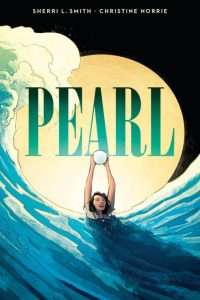 challenge for finding a place called home. Such is the plight of young Japanese American teenager Amy during the tumultuous times of World War II. In Pearl, Sherri L. Smith (Flygirl) and Christine Norrie (Cheat) chronicle her dilemma amidst the shadow of war in the United States and Japan.
 In her newest graphic novel, The Deep Dark, Molly Knox Ostertag (Girl From the Sea and The Witch Boy) once again shares a hauntingly beautiful story about family and friendship with veins of the fantastical intertwined throughout. The story follows Magdala (Mags), as she holds tight to a deep dark secret, which is draining her energy and life.
 literature and Jonathan Todd’s Timid shows why young readers still need these kinds of stories.
 Going viral can be a one way ticket to fame … or a gut punch about how the rest of the world sees you. In Maysoon Zayid and Shadia Amin’s Shiny Misfits, Bay Ann discovers that even when she’s showing off how talented she is, many people can’t see past her disability. Can she one up the sudden fame of her former crush turned archnemesis?
 have read the adventures of the Bone cousins from Boneville.
 The past two years sure haven’t been easy for Oscar! First, his beloved Papa was killed in a vicious winter blizzard near their farm in Minnesota and Oscar had to take over as the man in the family for his mama. It was just the two of them to run the farm, but Oscar promised his papa he’d take care of everything. Then his mama met Mr. Morrow, they got married and now they were on their way to Chicago! He might as well be going to the moon! Mr. Morrow seems like a kind man, but too much had been crammed into the last few weeks, and it was all he could do to keep from being sick. Such huge buildings! So many people! And what’s that smell? Mr. Morrow seems to know everyone, and everyone seems to know him. He says Oscar will love his new house, but he’s not sure. About anything.
 For some immigrant families, the American dream may seem like a fairy tale where things somehow work out neatly in the end, their arrival to the United States marking the culmination of a long awaited destination. For others, the struggle persists as immigrants strive to make sense of their identity in a strange world, trapped between the old and the new. The Lin family, undocumented immigrants from Taiwan, falls into the latter category in their goal to negotiate the multiple roles they play in American culture in Betty C. Tang’s Parachute Kids.
 Jarrett J. Krosoczka might be well known for his Lunch Lady series, where a dynamic lunch lady serves lunch to her students and justice to cyborgs and evil librarians. But Krosoczka is also not afraid to tackle more serious subjects, like his own tumultuous upbringing in National Book Award finalist Hey, Kiddo: A Graphic Novel. He once again tackles the foreboding subject of mortality in Sunshine: A Graphic Novel, but rather than being a bleak trip through the emotional wringer, Sunshine is actually a celebration of life.
