Hirohiko Araki is a famous manga creator, whose Jojo’s Bizarre Adventure franchise has attracted fans for over thirty years. How does he do it? What has he noticed about the manga industry? What tips and wisdom can he pass down to budding writers and artists pursuing their own comics dreams? Araki’s Manga in Theory and Practice: The Craft of Creating Manga, translated by Nathan A. Collins and published in hardcover dress similar to Viz’s Jojo’s releases, has a lot of answers.
Araki offers a few different frameworks for the ideas he promotes. His overall method is labeled “the royal road” and prescribed for creators of shonen manga, though he suggests creative types of all stripes will find something valuable along the way. On the topic of story introductions, he breaks down a conventional “Who, What, Where, When, Why, How” explanation, complete with examples from his own work, including pre-Jojo’s stories. His method for dividing a story into structured acts, “ki-sho-ten-ketsu,” or “introduction, development, twist, resolution” sets the stage for a lot of the additional lessons in the book.
Pop culture references are sprinkled throughout each chapter. Dozens of manga series are referenced, along with movies, novels, sculptures, and dances. Their combined effect reinforces one of Araki’s major pieces of advice regarding the study of life and art in pursuit of an original approach. Simply studying other successful manga creators isn’t enough, he says. Artists must get out of their bubble and explore the world and analyze the media they consume to better understand what they like or dislike. Readers will be hard-pressed to find another art advice book that references Clint Eastwood, Star Wars, Kick-Ass 2, Jules Verne, Rome’s Galleria Borghese, Linda Hamilton’s role in Terminator 2, John Steinbeck, and Michael Jackson, complete with an excerpt from Ernest Hemingway’s short story “The Killers.”
These examples are not referenced for pop-culture gluttony: Araki uses himself as an example of the kind of practice and hard work required to stand out to editors and audiences. He recalls that even when he got his foot in the door with his first published work, editors still picked apart his art for errors. He acknowledges the lonely nature of making art as a career and encourages listening to constructive critics to avoid becoming too self-satisfied. Constant improvement is the name of the game, and Araki still pursues new illustration techniques and storytelling methods to stay fresh. He compares working under a constant deadline and on paper to the improvisational excitement of jazz music and Italian fresco painting.
A lot of heart goes into the book’s messages, too. Araki sometimes prescribes certain approaches as being more audience-friendly, but at the same time pushes artists to create something they will love to make, too. He warns against intellectual burnout—creating a hit will feel good, but then there’s pressure to keep that hit high quality, and artists may as well put that much effort into something they like as well as the audience. Drawing character deaths drives him to tears. In the included manga excerpts, commentary boxes point out the purpose of including different images and why Araki drew them a certain way, including the process that leads from ideas on note cards to finished pages. These personal touches elevate the book’s advice from textbook best practices to friendly wisdom.
The tone throughout the book is that of a conversation between Araki and an eager student. He does not talk down to the reader, but does clarify opinions every so often to avoid being seen as writing off certain methods or mindsets. For example, on the topic of digital versus analog art, Araki sides with creating on paper, but makes sure to emphasize that each artist’s preference is unique and personal. One of Araki’s pages includes a nude woman, and his anecdotes and sample pages sometimes include swearing. Having said that, this book should be fine for mature teen and adult readers who are ready to take their approach to art to the next level, shonen or otherwise. Jojo’s Bizarre Adventure fans will enjoy just picking Araki’s brain.
Manga in Theory and Practice: The Craft of Creating Manga ISBN: 9781421594071 Viz, 2017
I remember there was a series of “learn how to draw animals” books when I was growing up that were aimed at young kids. They all had the same formula of five to eight steps and then you got a great looking animal, but they all had the same problem. Steps one through four tended to be basic shapes that you would build on top of and then the last steps showed you how to add details. Except they tended to forget they were aiming at kids, so the horse that started off as basic shapes that they could draw, suddenly ended up being looking like something that was trying to be by da Vinci. Let me tell you, it’s a pretty crappy feeling to look at your horrible drawing of a horse compared to the one in the book. And it was hard to get better at it, because they weren’t explaining how to go from simple to complex. It was just suddenly *boom* complex. Unfortunately this is a problem that Manga Art for Beginners experiences, and its not the only one.
The first problem it has is that it isn’t sure about the audience it’s catering to and this is something that is evident from the beginning. It starts with a “How to get started” section that tells you that you can use a pencil and paper to draw with, ink over it, and then scan it in to finish later. Or you can use a computer for the whole process. And that’s it. See the problem? If this is a book for a beginner are they going to know what type of paper to pick? Or what the author means by inking? Or why they should scan their art at the end? And I get it, they don’t want to go in a lot of detail about how to do these things because that’s a whole book in itself, but if this is truly a book “for beginners” they should have included some of this information, or offered a glossary to explain what the terms mean.
The second major issue I have with the book is that it glosses over a lot of steps necessary to create the characters it’s showing us how to draw, especially when it comes to drawing the body itself. It shows how a more seasoned artist draws a body, with circles and boxes breaking down the various parts of the body as it’s first example, but never explains how this works. Then we get a very brief explanation that bodies are seven heads high, which isn’t the best standard to measure by anyway, and then it never mentions or shows the heads again. I’m not asking the artist and writer to give a full detailed explanation, but something would be nice, right? I mean they do break down how to draw a human head and hand, so why not the body, which is horribly complex to draw for a beginning artist?
Next, the book takes a turn for the weird, at least for me. It gives directions like, “this is a teen girl, so she’ll be less curvy than an adult woman.” But there’s no indication of where the curves are less. Maybe they think we can figure this out or we’ll see it in the drawing. But if that’s the case, why write it in? And then it goes a step beyond where they seemingly draw a young nude woman with….let me just say you’d get a better idea of how the human figure looks by looking at Ken and Barbie dolls than these drawings. There’s no explanation of why they’re drawn naked only to then cover them up with clothes. I get it, its manga and their proportions can be a bit off, but they at least still frequently play to reality as far as the general structure goes. This just doesn’t at all.
Basically this book skims over a lot of steps and explanations on how to get started. I know introductory books are supposed to be brief and not include all of the steps, but they should at least give people something to start with, and this one doesn’t. The whole book just leaves me scratching my head wondering if I missed pages or if this is a book in a series. It’s hard to recommend something that doesn’t have a coherent teaching method. Maybe if a reader has gotten the gist of drawing from someone else, this can then be used to get an idea of different ways expressions can be drawn, but that’s kind of stretching a bit. Basically this isn’t a book I would recommend for a collection or someone trying to learn how to draw manga, as it skips too much.
Manga Art for Beginners: How to Create Your Own Manga Drawings by Danica Davidson Art by Melanie Westin ISBN: 9781510700048 Skyhorse Publishing, 2016
Cosplay Basics is a nonfiction guide written for absolute beginners. With a manga comic at the beginning of each chapter, it covers everything, including which character to portray, where to buy supplies, and where various conventions are held.
The story begins when timid Kaso Reia is introduced to the world of cosplay as she admires a woman dressed in costume. She is surprised to discover that the cosplayer is actually her co-worker, Riko Nariki. Riko convinces Kaso to try cosplay and guides her through the necessary steps to get her costume together and go to the con. Together, they dress as Luncasis and Lunsoda from the fictionalized “Together, Lune Lovely.”
Each chapter’s introductory comic depicts the two girls as they discuss what to do next. The text that follows elaborates on the topic, showing readers how to design a costume, choose a wig, or practice posing as a character. The writing is simple and clear, although the manga story is a little stilted; since it’s merely a device to convey information it doesn’t reflect how people would really talk, but it serves its purpose. The fact that the story is drawn as a manga also helps to reinforce the point that many cosplayers choose to dress up as manga and anime characters.
This book is exactly as it is billed: an easy introduction to cosplaying for novices that breaks down the steps of choosing and putting together a costume. Though it does briefly mention photography etiquette and consent, it makes the hobby look fun and safe with a touch of girl power, enough to inspire someone to attend their first con. I was particularly impressed that in the translation from the Japanese edition, the publishers took the time to research and include American websites as resources. As the guide follows Kaso’s journey from novice to cosplayer, the characters’ enthusiasm is infectious and readers will be drawn in. Even if the storyline is a little forced, it makes a potentially dry book more engaging. I would recommend this for readers ages 12 and up.
Cosplay Basics: A Beginners Guide to the Art of Costume Play by Yuki Takasou, Rumine, Ashiko Kurobuchi ISBN: 9781935548812 One Peace Books, 2015
This highly illustrated instructional guidebook, a well organized and supportive sequel to Drawing Words, includes exercises, lesson plans, descriptions, digressions, and nods to their stated multiple audiences of artists, teachers, and students. In the preface, authors Jessica Abel and Matt Madden state that the guidebook is intended for readers “who are serious enough to care about how artistic decisions influence the narrative itself (xi).” They indicate that the elements of “artistic choices about perspective, color, composition, and even inking tools can inform the reading experience (xi).” I found their discussions on these elements of great value and was equally impressed with the helpful background material on web comics and mini-comics. Most importantly, however, while I am a comic book reader and not a creator, I never felt lost or overloaded with the vast amount of information offered in this volume. Other valuable elements are helpful hints on self-publishing for new artists and authors in the field and examples from a wide variety of published works, as well as their own material, that effectively illustrate the lessons and activities being discussed. There was always a consistent feeling that the reader was in the hands of reliable, relatable, and resourceful mentors.
Special features, familiar to readers of the first volume, include resources for further reading, tip boxes, and a treasure trove of appendices, bibliographies, and a glossary of terms that could be found in both in this volume and on the companion website: dw-wo.com. The dynamic index, also included in the book, covers both volumes of the book.
The authors focus on readers who essentially have a firm background in creating comic books and are interested in proceeding further in their endeavours. This reviewer, while neither skilled in writing or drawing comic books, still found this volume to be of great value. It is a book that I could easily dip in piece-meal to the sections I wished to explore or re-read and it offered all sorts of a-hah moments for me to contemplate.
Throughout my reading, I highlighted numerous comments and reminders for me as a teacher and reviewer of comic books. I’ll be able to use these insights in presentations to those who are still skeptical about the validity of the format. “This visual understanding crosses cultural and historical boundaries as well. A child will recognize an image of a bird whether it’s in a twelfth-century tapestry or a crayon drawing by another child from the others side of the planet (4).” I appreciated the authors’ reminder that people do need to know how to write and be confident about spelling, grammar, and syntax to be a successful and effective comic book creator. This volume does not focus on these writing skills, but offers resources to those who wish to pursue them further.
Their discussions on the uses of color for realism, symbolism, and readability that prefaced their information about basic color theory, computer colouring, and preparing the colors for the print and the web are effective and welcome to me as a reader of comics as well. The guidebook also provides lessons on hand coloring, painted comics, and comic book covers. All in all, this book is a treasure trove of information about visualizing and making and reading comics in all shapes and sizes.
Mastering Comics: Drawing Words and Writing Pictures Continued by Jessica Abel, Matt Madden ISBN: 9781596436176 First Second, 2012
In Too Short for the Court, Morgan loves basketball, but she’s short. She practices day and night, is always thinking about basketball, and loves being on her team. When it comes time to play in the games, Morgan is always disappointed in her play; she is constantly blocked and the ball is always stolen. Even when the team wins, she’s bummed out. With the help of a teammate, Morgan learns some tips and tricks to work around her height which leads to a much more successful game.
Too Short for the Court is a basic story that manages to present a common issue in an easy and comprehensive way. Morgan is a likeable and genuine character and they handle the idea of never giving up subtly but effective.
In The Quick Quarterback, Andre loves football. When a coach notices him and asks him to be quarterback for the Tigers, he is so excited. Very soon after, he falls off his bike, breaks his arm, and can’t play for six weeks. Once he gets his cast off, Andre is ready to get back into the swing of things, but his arm is stiff and he’s very nervous about throwing the football again. Soon he is back on the football field throwing flubs and losing the ball. He remembers all the running he did with his dog Zip when he was rehabbing and uses those skills to have a successful game. Overall, the moral of the story is very similar to Too Short: don’t give up. But this one also focuses on exploring alternatives. Andres’ arm wasn’t as strong as it used to be, but he was able to use another skill to be successful. It was unrealistic that they would let him play if he couldn’t throw the football yet, but the rest of the story was believable.
The My 1st Graphic Novel series is a staple in beginning reader collections. With over 20 titles in the series, it’s an established, tried, and true way of introducing children to graphic novels. The format is great, with a “how to read” section, glossary, discussion questions, and writing prompts. The illustrations are simple and bright; they convey what is happening very well. There isn’t much dialog and it feels more like a story being told with pictures being added, which is appropriate for an introduction to graphic novels. Overall, any book in this series is a great addition to a beginning reader collection.
My 1st Graphic Novel: Too Short for the Court by Amy J. Lemke Art by Steve Harpster ISBN: 978143423282 My 1st Graphic Novel: The Quick Quarterback by Michelle Lord Art by Steve Harpster ISBN: 9781434232816 Stone Arch Books, a Capstone Imprint, 2012
Manga is an art and like any art form it requires practice and guidance. Although I am not someone who draws, I enjoy reading books about how to acquire the needed skills to become a comic artist. It’s always a topic that was in demand among the manga fans at my library, many of whom dreamed of becoming manga artists themselves.
Those who have worked their way through basic “how to draw” books and easier guides to creating comics are probably looking for a more in-depth instructional manual. Digital Manga’s How to Pen & Ink is certainly in-depth, though it narrows its focus almost exclusively onto the skills of inking a comic, so readers are expected to have a foundation of drawing skills, knowledge of basic art terms (perspective, etc.), and an understanding of how manga works. Readers that have that will find How to Pen & Ink a useful tool.
The book starts with a close up examination of how manga artists Oh!Great (Tenjo Tenge), Satoshi Shiki (Kami-Kaze), and Yasuhiro Nightow (Trigun) build a scene. In addition to photographic guides, the manual also interviews all three about the tools they use, their drawing process, how they get ideas, etc. Following that are three especially useful sections. The first talks about the process of moving from drawing doodles to creating characters to building scenes for those characters….
The editorial staff of four Japanese manga magazines have compiled a guide for aspiring shojo (girls’) manga creators. They cover the basics of plot, art, supplies, layout, and submission, while using examples from popular shojo manga creators.
The biggest problem with this nonfiction, non-comic format guide is the title. It is not actually a “how to draw” book, so the title is extremely misleading. Rather the work focuses on how to assemble a manga story with the aim of submitting it to a Japanese manga publisher. The editors assume familiarity with shojo manga stories and art styles, art supplies used in the creation of manga, Japanese manga magazines, and, mostly importantly, how to draw. In other words, this is not a beginner guide.
However, that said, this is still a useful educational work. There are plenty of young artists who have the basics of drawing down, but who need help with plot and page layout and the other elements of comic creation. And for rabid fans who are particularly interested in creating manga in Japan, this can be a wonderful resource. The details on submitting to several different Japanese shojo manga magazines are included and there are notes for English-speaking audiences reminding them that being fluent in Japan might be required to be published in such magazines or even to speak to editors. (There is a note about how to speak to United States publishers at conventions and the like.) As it was originally printed in Japan in 2006, the U.S. editors strongly encourage readers to double check that submission guidelines haven’t changed, though unfortunately the Japanese websites for the magazines are not included, which would have been helpful.
How to Draw Shojo Manga by collaborative editing of Hana to Yume, Bessatsu Hana to Yume, LaLa, and Melody editorials ISBN 978-1-4278-1665-8 TokyoPop, November 2010

 Hirohiko Araki is a famous manga creator, whose Jojo’s Bizarre Adventure franchise has attracted fans for over thirty years. How does he do it? What has he noticed about the manga industry? What tips and wisdom can he pass down to budding writers and artists pursuing their own comics dreams? Araki’s Manga in Theory and Practice: The Craft of Creating Manga, translated by Nathan A. Collins and published in hardcover dress similar to Viz’s Jojo’s releases, has a lot of answers.
 I remember there was a series of “learn how to draw animals” books when I was growing up that were aimed at young kids. They all had the same formula of five to eight steps and then you got a great looking animal, but they all had the same problem. Steps one through four tended to be basic shapes that you would build on top of and then the last steps showed you how to add details. Except they tended to forget they were aiming at kids, so the horse that started off as basic shapes that they could draw, suddenly ended up being looking like something that was trying to be by da Vinci. Let me tell you, it’s a pretty crappy feeling to look at your horrible drawing of a horse compared to the one in the book. And it was hard to get better at it, because they weren’t explaining how to go from simple to complex. It was just suddenly *boom* complex. Unfortunately this is a problem that Manga Art for Beginners experiences, and its not the only one.
 Cosplay Basics is a nonfiction guide written for absolute beginners. With a manga comic at the beginning of each chapter, it covers everything, including which character to portray, where to buy supplies, and where various conventions are held.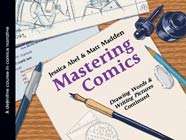
 In Too Short for the Court, Morgan loves basketball, but she’s short. She practices day and night, is always thinking about basketball, and loves being on her team. When it comes time to play in the games, Morgan is always disappointed in her play; she is constantly blocked and the ball is always stolen. Even when the team wins, she’s bummed out. With the help of a teammate, Morgan learns some tips and tricks to work around her height which leads to a much more successful game.


