Red Light Properties: Unfinished Business is a series that takes a look into the work of husband-and-wife team Jude Tobin, the psychic, and Cecilia Matos-Tobin, the real estate agent. They exorcise stagnant, haunted homes and sell them at a reduced price to folks who would otherwise be renting forever (we all know the true villain of the story is late stage capitalism).
But business is rough these days. The Matos-Tobin family are behind on their mortgages, the bank is closing in, their marriage is falling apart, the calls are less frequent, and they still need to take care of their son.
Can they do it? What’s been eating at Jude? Why is Cecilia so upset?
This tropical horror is set, it seems to me, very affectionately in Miami and the setting plays a big part in the overall feel of the book.
The art…baffles me. There are a number of spreads that are gorgeous – psychedelic, clashing colors with hypnotic patterns and interesting textures superimposed over fully rendered figures or transparent, outline-only ghosts. Eye-catching and beautiful. I also really appreciate the touches of realism – photographs of letters from the bank, notes written on legal pads, and the dossier of each property labeled and notated in manilla folders. Most of the panels, however, have been a source of confusion for me. The characters are all done wonderfully, I think the drawings are very expressive and skillfully done, but a number of other visual decisions are tough for me to get past.
The confusing panels have layers. First is the background – most (not all) of the backgrounds seem to be real photographs of actual locations that have been blurred in some way; not that the camera was out of focus, but that the image was manipulated and certain areas of the photo were distorted later. The second layer consists of other objects that might be in the panel – furniture, cars, fences, wallpaper, stairs, etc. that seem to have been rendered from a program of some kind. Not ai-generated, but a kind of low polygon software, perhaps. They remind me of PlayStation 1 games. These items are very flat, although the shadows suggest three dimensions, and seem to be simply placed over the background photograph with no regard for a consistent light source or any kind of visual integration. The layer over this one are the character drawings – excellent, although there are a number of panels where some characters cast shadows and some do not (again, the light sources are unidentifiable, but they do seem to exist) and the height/size of characters seems to be inconsistent at best and distorted at worst. I can’t tell what sort of conclusion I’m supposed to draw from these decisions, but the mixed and varied aesthetics do not match and the imagery, as a whole, does not come together for me. It makes for a jarring reading experience.
That being said, the narrative that Goldman spins is very engaging and interesting. Normal adult readers, I think, will find some aspects of the horror (supernatural and otherwise) really relatable and probably won’t fuss over the art nearly as much as I did.
Again, this is for the grown-ups: subjects like suicide, death, and sex all make appearances.
Red Light Properties: Unfinished Business ol. 01 By Dan Goldman Kinjin, 2025 ISBN: 9798991328708
Four criminals plan a heist against a powerful corporation on a planet that is most definitely uninhabited–what could go wrong?
Jared Throne’s Bridge Planet Nine from Top Shelf Productions brings us the story of four people thrown together by need, planning a heist of valuable minerals from a desolate bridge planet–an uninhabited, autonomous waystation meant to facilitate deep space travel. Far from civilization on a planet once decimated by conflict, it should be an easy payday. Instead, the crew finds a band of cultish strangers living in the ruins and corporate secrets dark enough to kill. Plans for revenge and fresh starts give way to a fight for survival as the crew has to uncover the truth they’ve stumbled into and find a way home with their lives–and maybe a payout as well.
Lots of people (including me) love a good heist story. Bridge Planet Nine has all the right pieces at play–a ragtag crew, greedy corporations, unexpected complications, and one last score on the way to freedom. Though it doesn’t do anything particularly fresh with the premise, the overarching concepts of this comic set the stage really well. Unfortunately, the scene-to-scene writing struggles to fulfill this potential. Characters start dumping backstory into dialogue almost immediately. The themes are explicitly stated and restated throughout. The villains and betrayals are over the top and so familiar in execution that it strips away most of the tension they would otherwise provide if they had been allowed to operate with a bit more subtlety.
The central character is Pearl, a pilot recruited into the scheme by her brother, enticed by the payday as a way to repair her life and get back to her son who she’s lost custody of. These family dynamics provide an effective emotional core, but even Pearl’s character struggles to be more than one dimensional–lacking the complexity that would make these figures truly interesting. When even the highest emotional moments come with dialogue that feels intended to accompany dramatic music, the result is a story that consistently breaks immersion and reminds the reader of what the book is attempting to be, rather than being able to enjoy what it actually is.
Whatever the flaws of the writing however, Throne’s art is one of the book’s key strengths and certainly elevates the experience. Delivered entirely in black and white, the heavy inks, minimal gradients, and dramatic contrasts are striking from the very start. With effective visual pacing and paneling, Bridge Planet Nine builds a tangible scifi universe before shuttling the reader off to a desolate planet full of decaying ruins half buried in the sands of troubled history. Each character is distinct and emotive, with some key details worked into an accessible but dynamic visual style. The world has depth, and the heavy use of inks delivers some cinematic moments well suited to the genre mashups of science fiction and heist (mis)adventure.
Top Shelf doesn’t assign an age rating to the book. There’s some language and substance use, along with dead bodies and plenty of violence–though the visuals never get so graphic as to push the content into mature territory. Some of the themes and character motivations are also geared a bit more adult, but there’s nothing here that would be objectionable to many teen readers either. Overall, I wanted to like Bridge Planet Nine, but the book’s vision never manages to overcome its weaknesses. It’s worth flipping through the pages to appreciate Throne’s visual style, and I’d happily take a look at future work from this creator. However, if you’re debating a purchase for your own collection, there are other titles working in these genres that will give you better value for your time and money. Which is a pity–becasue there’s always room for more stories about motley groups committing heists against evil corporations.
Bridge Planet Nine Vol. By Jared Throne Top Shelf, 2025 ISBN: 9781603095631
NFNT Age Recommendation: Adult (18+), Older Teen (16-18)
A murderous cowboy, monstrous bugs, characters and places that may or may not exist—all this and more waits within the pages of this strange and unsettling anthology collection.
Created by Dustin Weaver and with the additional talents of Jeremy Barlow and D.J. Bryant, The Juniper Lodge collects 5 stories from Weaver’s anthology series PAKLIS, also released by Image Comics. Though tonally similar, each episode stands entirely on its own, making this a perfectly viable entry point for any reader not familiar with Weaver’s work.
Though “the Juniper Lodge” story sits at the heart of the collection, the first entry brings readers back to the wild west, where a gun demands sacrifice and a man facing execution finds that his hopes of salvation may come drenched in blood. Each new narrative delivers a surreal mix of body horror and monsters alongside mystery, fractured realities, and unraveling psychological uncertainty among characters struggling to separate the real from the fantastic. The stories embrace their own ambiguity, leaving a great deal unresolved by each finale and stranding the reader amidst the grotesqueries of each new world. With all three writers taking the lead at various points, some stories offer shades of Kafka while others play out with more noir tones. There are flashes of superhero lore, and visual elements of scifi and cyberpunk woven throughout. But even with all the strangeness unfolding across each page, the core themes remain close to characters in crisis, each reckoning with a world that is not what they once believed it to be.
While the writing rotates hands, Weaver creates the visuals across each new chapter. The realism of the art shifts between stories, with some more polished and others feeling more textured on the page. Further capturing the tone of the volume, Weaver plays with color palates and perspectives to sometimes change and sometimes distort the reader’s experience. One scene may appear normal; a few panels later, we’re confronted with bulging eyes, twisting hallways, a floating grin that lingers where a stranger once crouched. Weaver’s art establishes the familiar and then breaks it, luring the reader into the horrors. The volume also ends with some bonus content, exploring the comics industry and what it takes to make the leap from big superhero titles to a book like this, providing insights into Weaver’s artistic journey.
Image gives The Juniper Lodge a Mature rating. There’s violence and death, graphic nudity, sexual content, and horror imagery aplenty over the course of the five stories, so this one is more suited for adults. This collection offers a fascinating trip through a series of vivid worlds and distinct characters. As is sometimes the case with anthology comics, the pieces of Juniper Lodge may feel undeveloped, leaving readers searching for a coherent whole. The stories do not resolve neatly, and some feel cluttered with too many moving pieces and big ideas to follow as effectively as I would have liked for myself. But for any reader who wants the blend of science fiction, mystery, and horror wrapped up in nightmare landscapes where nothing is certain, The Juniper Lodge will provide a memorable ride. It will likely have the most appeal to readers who have enjoyed Prince’s Ice Cream Man or Walsh’s The Silver Coin—and possibly some of Junji Ito’s shorter works alongside.
In the end, The Juniper Lodge was a bit too abstract for my tastes, but no one can accuse the volume of being boring. For the right reader, I expect these five stories could be exactly the sort of portal they’re looking for.
The Juniper Lodge By Dustin Weaver, Jeremy Barlow, and D.J. Bryant Art by Dustin Weaver Image, 2026 ISBN: 9781534331020
In this sequel to Meems & Feefs: Ferrets from Planet Ferretonia, Meems & Feefs: The Council of Ferrets, Meems repairs the travel opal and opens a portal to return him and Feefs to Planet Ferretonia and brings Liza along for a visit. However, Meems and Feefs are in quite a bit of trouble due to creating and using banned technology and so must answer to the Council. Together, the three of them uncover more of the mysteries of the banned ancient technology of Ferretonia and Meems’ missing mentor…
Cooper’s world-building is incredibly detailed for a whimsical fantasy graphic novel series for children. The premise of a young girl meeting cute intelligent ferrets is a good one no matter what, but Cooper has developed a full society for her ferret characters as well as depthful lore that is revealed in parts throughout the story. Still, the premise is easy to follow as the human character Liza serves as the reader’s liaison to Meems and Feefs’ world.
Liza is more than just a projection of the reader though. The majority of the first Meems & Feefs book took place on Earth, and the reader was introduced to Liza’s life, and it seems like there is more to be revealed about Liza and her life back on Earth. Liza’s development takes a backseat to the ferrets and the revelations surrounding Ferretonia in this volume, so hopefully future volumes will explore her and some of the Earth characters a little bit more.
The art in Meems & Feefs is perfect for its charming and fantastical story. Cooper’s work is the epitome of a story made for the graphic novel format. Previously, Cooper worked as an Art Director for the animated web series Simon’s Cat, and that animation experience serves her well as a graphic novelist. Her dynamic panels pack a lot of movement into each page without being overwhelming. Her characters are expressive and unique – she is able to make each ferret individuals not only with physical design but with facial expressions as well. They are fully realized characters with their own emotions and motivations. There is one sequence in which Meems and the character Leeloo are trying to escape, and the reader can almost hear their banter instead of simply reading it due to the combination of Cooper’s panels and word bubble placements as well as the characters’ movements. Though the graphic novel format is perfect for the story, it almost feels like an animated series due to Cooper’s mastery of sequential art.
The publisher’s age rating for The Council of Ferrets is ages 10-12 and Grades 3-8. It definitely will appeal to that age range, but older teens and some adults who like a magical adventure with touches of whimsy and humor will enjoy Meems and Feefs’ adventures with Liza. The adventure is ongoing, so it is beneficial for readers to have read Ferrets from Planet Ferretonia before reading The Council of Ferrets, andhopefully their tale continues in future volumes. The Meems & Feefs books would make great additions to libraries with juvenile readers looking for a funny but intriguing fantasy series.
Meems and Feefs: The Council of Ferrets By Liz Cooper Andrews McMeel, 2025 ISBN: 9781524876715
Company Age Rating: Ages 10-12
NFNT Age Recommendation: Middle Grade (7-11), Teen (13-16), Tween (10-13)
Ross’s Murray’s Bedford Street is an often bleak, sometimes funny, but quietly compelling look at the lives, loves, and losses of a group of characters united by their proximity to a single street.
Opening with a short sequence aptly titled Roadkill, Bedford Street immediately sets its somewhat grim tone which is nevertheless run through with bursts of dark humor. From there, the book transitions to the first full story of the collection—that of an alcoholic father entrusted with taking care of his teenage son for the weekend. He sips drinks and searches for shared interests as his son unleashes rage issues on a battered grill in the yard. Much of this opening story is told in visuals, but Ross works a great deal of character and connection into the way father and son move through their shared space—each unsure exactly how to exist on their own or communicate with the other. It’s an effectively human story, full of relatable uncertainty and capped with bittersweet moments of love and connection.
Each story that follows shares similar threads of deeply flawed people trying their best, through moments of strength and often moments of failure. A nurse debating whether to intervene in a domestic disturbance, two brothers navigating life after an accident, a man trying to restart life after release from prison—the stories are quiet, but they are earnest and honest in capturing all the rough edges of their subjects as the lives of the Bedford Street residents continue to unfold.
Ross brings a deft hand to each vignette, crafting a compelling character arc, and blending natural dialogue with powerful visuals to capture the heart of each short story. Like any collection, some are likely to land with a reader more than others, but the range of characters feels united by the tone of the overall book. In each, it feels as though Ross is looking to understand the central characters and bringing the reader along on the experience. Some make terrible mistakes that upend their lives and the lives of those around them. Others are caught in difficulty through no fault of their own. Regardless, Ross’s delivery doesn’t feel as though it seeks to pass judgment on this collage of lives. They are simply complicated, and through the choices they make, they will be forced to face the consequences, whatever those may be.
Matching this writing, the art has a simple realism to it. There are plenty of details to take in, but Ross’s visual style strips away the noise to focus on scenes—on expressions and quiet moment as they occur. Different colors dominate the palate depending on the nature of the sequence, but the subdued shades interplay with light and shadow to build panels that feel worn and lived in, but which also hold the eye as these characters pass their days.
Fantagraphics rates Bedford Street for 16+. The stories are all thematically mature, but some are more acceptable for teenage readers than others. While certain of the mature elements occur infrequently, the book does include strong language, death, suicide, injury to humans and animals, substance use, strong sexual content, and graphic nudity among its content concerns. Between this and the overall subject matter, it will have strongest appeal with adults. Overall, for readers who like more literary works, Bedford Street is a generally quiet examination of complex characters and a range of themes. There isn’t a strong narrative tissue connecting the stories to each other, but a definite emotional arc runs across the collection and these characters who ultimately seem to (mostly) be doing the best they can with a myriad of imperfect situations. It’s a striking book that deserves a place on any shelf where it will be appreciated.
Bedford Street By Ross Murray Fantagraphics, 2026 ISBN: 9798875002625
Before Superman and superheroes came to dominate American comics, there was an age undreamed of. Pulp fiction was gaining in popularity, and it occurred to advertising agent Joseph H. Neebe that there might be a market for comic strips based on action and adventure rather than comedy. He approached Edgar Rice Burroughs (who had just set up shop in what would become Tarzana, California) about licensing his Tarzan character as a comic strip. Burroughs, who was already aiming to make movies based on the Lord of the Jungle agreed, but this still left the question of who would draw the comic.
Enter Harold “Hal” Foster—a Canadian illustrator who had little interest in drawing comics. However, with times being tough (and about to become tougher when The Great Depression hit), Smith got the comic off the ground by drawing the daily strip in 1929. He would later return, reluctantly, to draw a full-color Sunday strip in 1931. And yet, over the next few years, Smith began to believe he could take the comics he crafted and turn them into the high art he’d wanted to create.
However, Foster grew increasingly dissatisfied with the quality of the scripts he was given. He was also unhappy with the increasingly inadequate flat fee he was paid when the writers were given a percentage of the profits. He eventually left Tarzan for a more lucrative deal with King Features, where he was given more money, creative control, and the ability to write and draw his own adventure comic, the equally revolutionary Prince Valiant.
This history is detailed in the introduction to Hal Foster’s Tarzan. The Complete Sunday Comics 1931-1937. However, it understates just how important these comics were to the medium. Legends like Frank Frazetta, Wally Wood, Bernie Wrightson and Jack Kirby all cited Hal Foster as a major influence on their own comics. And without the success of the first Tarzan newspaper comics fueled by Foster’s work, it is possible that the action/adventure comics and the later comic books might never have come about. For that reason alone, this volume is well worth studying on a scholarly level.
Another reason is Foster’s command of anatomy, which was impressive and unlike anything appearing in the funny pages at the time. Foster took his research seriously and lamented that some of the writers he worked with failed to consider things like what kind of trees were likely to line an African river. Alas, his dedication was not appreciated by his employers and one of the chief reasons Burroughs considered Foster the best artist to handle Tarzan was that he was very good at drawing attractive women. (This skill, it might be noted, was honed by Foster’s work as a commercial artist, drawing women in lingerie in catalogs in the days before photography became inexpensive.)
On that note, there is no publisher rating for this collection. The amount of sex and violence within it was shocking for its time, but there’s nothing that would be inappropriate for a teenage audience today. There are a few bare male backsides and one naked boy who comes to Tarzan’s aid in one story, but nothing more overtly sexual than various queens of lost cities informing Tarzan that he is now theirs.
It should also be noted there is some material in these comics that has not aged well. There are multiple instances of the white goddess trope, with superstitious African natives taking in a white woman as their leader. Thankfully, Smith does not present these characters as the offensive caricatures that were commonplace in other comics of the time, but the four-color recreations for this book do feature some Asian characters with dimly yellowed skin.
One final warning. At $200 this volume may be a bit expensive for a library collection. Serious collectors of Tarzan lore and comics history should consider this a must-have. However, unless one’s library has a special collection devoted to Platinum Age comics or something similar, this one may be a bit of a budget breaker.
Hal Foster’s Tarzan: The Complete Sunday Comics 1931-1937 By Dian Hanson Art by Hal Foster TASCHEN, 2026 ISBN: 9783754402641
Related media: Book to Comic
NFNT Age Recommendation: Adult (18+) Creator Representation: Canadian,
Lindsey Cheng is like most college freshmen, trying to find herself even as everyone is trying to tell her who she should be. This includes everyone from her overbearing and very traditional Chinese mother to her best friends and bandmates. It seems like everyone has an opinion on who Lindsey should be and where her attention should be focused, be it the band or her studies.
The sole exception to this is Jason—the super-chill lead-singer of a different band, who stuns Lindsey by calling her his girlfriend as he tries to give her a gift while shopping for old records. This stuns Lindsey, who barely started dating Jason and never had a boyfriend before. This makes her anxious to be everything a good girlfriend should be. More, she wants to be cool enough to be the girlfriend of a cool guy like Jason. But is Jason really the best thing to ever happen to her? Or is she just stunned at the idea of any boy being interested in her after a sheltered childhood?
The early press for Lindsey Cheng Dates a White Boy described it as “perfect for fans of Bryan Lee O’Malley and Mariko Tamaki.” I can see why it might draw comparison to the Scott Pilgrim series. It is based around young adults and indie band culture in the early 21st century and Asia Miller’s art shares a certain aesthetic. The general plot even emulates the lessons of that comic, albeit through the female lens. However, it dramatically oversimplifies the story to write Lindsey Cheng off as an older Knives Chau, who has the good sense to realize that Jason is scum before it is too late.
What really sets this comic apart—and indeed inspires the need for a sequel—is the final chapter. This is told from the perspective of Lindsey’s friend and bandmate Mel; a fierce romantic who loves love. It is she who first gets an inkling of who Jason really is but puts on a false face because she wants to support her friend. At the same time, Mel copes with her growing attraction to their third bandmate, V, and the hint that V (who loves video games and hates boys) might return her feelings.
The opening of the book focused on Lindsey does deliver an important message upon the dangers of repressing yourself for the sake of a relationship. And yet, the chapter with Mel is the strongest and feels the most genuine. Personally, I’d love to read a comic about the awkward romance between tomboy V and girly girl Mel as a follow-up to Lindsey’s hard lessons regarding her first love.
There’s no official publisher rating for Lindsey Cheng Dates a White Boy!!! I would personally consider it appropriate for most teen audiences and indeed perfectly suited for that audience given the ultimate moral of the story. There is no sex or even so much of a mention of it. The closest we get is Lindsey taking off her T-shirt to reveal her bra while hanging out with Jason while lounging on his bed. There’s no violence or nudity and no language worse than what might be heard on broadcast cable.
Lindsey Cheng Dates a White Boy!!! By Asia Miller Andrews McMeel, 2026 ISBN: 9798881605827
NFNT Age Recommendation: Adult (18+), Older Teen (16-18), Teen (13-16) Creator Representation: Chinese-American, Queer, Character Representation: Chinese-American, Bisexual,
Tripping Over You, Volume 2, from Suzana Harcum and Owena White, picks up not long after the first graphic left off, showing unlikely couple Liam and Milo navigating their maturing relationship. This slice of life romantic comic was adapted from real life couple Harcum and White’s webtoon in February and promises more volumes to come. Fresh out of high school, the pair are growing into young adults and trying to allow their relationship to grow with them. Liam and Milo are in a very interesting phase, kind of semi-out to their families (who bring their own baggage into their relationship) and striving to make room for each other as their lives grow fuller. Liam doesn’t know what he wants out of his future and Milo seems plagued with self doubt, but they keep circling back to find comfort in each other. This volume catches our couple at a very real, very vulnerable time where a high school relationship can evolve into an adult one or where it can flounder under the weight of growing up.
This is a sweet story that young readers can easily connect with. The art is incredibly cute with Harcum and White using a style that hits me as a kind of Disneyified Manga: characters with big eyes and bold lines in a world of saturated color. It is very easy to read and honestly just pretty. Liam and Milo give classic black cat/golden retriever energy and seem hyper aware of the struggles that can come with relationships where people have different needs and communication styles. While this comic does show a growing young adult relationship and the intimacy that comes with it, there’s nothing explicit on page or even suggested and I would probably recommend it as young as 6th or 7th grade, depending on the reader. There are a couple of shirtless scenes and implied sex and Liam still hasn’t kicked his smoking habit from book one. But with that, their relationship maintains an innocence that will keep it accessible to a wide range of readers.
The plot beats were a bit of a hang up to me. The small domestic moments of our couple meeting new people, fighting to find time together, struggling with demanding families, and eventually moving in together feel almost like filler, like all of these moments are leading towards conflict in a future volume. The most striking of these involve Milo’s new friend Hebert, an American theater student. There isn’t immediate conflict but there is definitely unresolved tension and Hebert’s motives are questionable at best. Many of the plot points feel unresolved. Liam still does not have a clear career path and Milo still seems uncertain in aspects of their relationship. All of these things made this feel less like a step in their story and more like laying groundwork for the next book.
But honestly, I don’t know if I care. It was still a lovely read. The characters are ones you want to spend time with and their relationship is easy to invest in. It’s sweet and loving and a ready made next read for my Heartstopper fans. Parts of it do come off as wish fulfillment, particularly the moment where Liam comes out to his father. But queer kids deserve as much wish fulfillment as they can get. I can’t help but worry that these boys will have a tough time ahead of them, but my fingers are crossed for a happy ending.
Tripping Over You, Volume 2 By Suzana Harcum Macmillan First Second, 2026 ISBN: 9781250330734
Company Age Rating: 14-18
NFNT Age Recommendation: Middle Grade (7-11), Older Teen (16-18), Teen (13-16) Creator Representation: Lesbian, , Character Representation: Queer, Jewish ,
It is All Hallows’ Eve. It is a night of foreboding, even without a storm brewing. Some believe it is a night when the boundaries between life and death are thinner, and evil things walk abroad.
The date means little to highwayman Dick Turpin, and his partner in crime, Tom King. They already live a life where the boundaries between life and death are thin. And they think there’s no evil things about but them.
They may be wrong.
When an accident overturns the carriage that was their quarry, Tom is quick to enact a new scheme. He poses as a nobleman, with Dick as his manservant “Richard,” hoping to secure the nobles’ luggage and ride off with it untroubled.
However, the scheme goes overlong, as the two parties join to seek shelter and soon find a seemingly abandoned monastery. Alas, whether it is due to the night in question or whether their presence awoke it, some ghostly presence takes exception to the intruders. Soon the scoundrels are facing closing walls, stinking clouds and swarms of rats. To say nothing of the deadly touch of the specter clad in plague doctor’s garb…
Dick Turpin and the Vengeful Shade is an interesting blend of historic fiction and horror. Of course, there is no record of the infamous British thief ever fighting a ghost. Yet writer Steve Tanner pays as much attention to historical accuracy as he does craft in spinning a ripping yarn.
The story draws upon two main conflicts. The first is that between the Church of England and the Catholic Church. The second is Plague of 1563. History buffs will appreciate this attention to detail and how it plays into the ghost story to make it a little more grounded. Not that this matters much to Dick Turpin himself, who spends most of the story wishing he could shoot something. He’s also none too choosy about it being the ghost, Tom King (who takes a bit too much pleasure in playing the noble and bossing him around) or the various nobles and servants annoying him. This adds humor, which offsets the horror, along with a noble lady who speaks of the stories of Dick Turpin ravaging the women he encounters and then being a bit slow in agreeing with her husband in finding the prospect dreadful.
The artwork is of similar craft and quality. Roland Bird, best known for his work on Legion of Super-Heroes, is in fine form here. He proves equally adept at drawing animals, period costumes and supernatural strangeness. He is well-backed by the color art of Brett Burbridge, which adds an evocative and somber aura to the finished artwork.
As with their recent reprint of Dick Turpin and the Crimson Plague, Time Bomb Comics does not offer a rating for Dick Turpin and the Vengeful Shade. However, despite a lack of nudity or any sexual content beyond references to ravaging, I’d still suggest this one be kept in the adult collection. While the horror elements and bloodshed might be acceptable for most teenagers, I feel the historical elements and slow-boiling story will appeal more to adult audiences.
Dick Turpin and the Vengeful Shade By Steve Tanner Art by Roland Bird Time Bomb, 2020 ISBN: 9781916465343
There is a city, divided by civil war. The name of the city is unimportant, as is the name of the country. It could be any city or nation, at any time. It may be the past. It may be the future. It could be right now.
Regardless, in this city, there is a quiet drama student named Nadia. Her mother was a great stage actress. Her father was a playwright and director, whose book on how to capture the essence of a character and become someone else is still used by theatre teachers all over the world. They were both active in politics, until an attack by the Opposition killed her father and horribly burned her mother.
Nadia has not thought much about this, beyond navigating the checkpoints and random violence in her hometown. Instead, she has focused on her studies and her crush on a fellow actor. However, after her performance in Ibsen’s A Doll’s House, she is approached by man with The Party. A man who knew her father, who has an opportunity for her to serve the cause with her unique talents.
It seems that Nadia looks a lot like a waitress named Miriam, who lives in the part of the city controlled by the Opposition. Miriam is something of a recluse, with no friends or family. She is only of interest to the Party because an Opposition leader named O’Brien spends several hours a day at her café. The Party will take care of making Mariam disappear and, for seven days, Nadia will take her place. She will place a bug that will record O’Brien’s conversations. She will then hide it in a trash can on the way to work the next morning.
Nadia is assured it will be an easy mission. She is assured that there is no real risk to her. She agrees it will be the ultimate test of her talents. However, things suddenly change, requiring an alteration to the plan. And suddenly the only thing Nadia is certain of is that this mission will be far from easy…
The Shadower is unlike any espionage thriller I’ve ever read. Indeed, I’m not sure it can properly be called an espionage thriller, despite that being the main thrust of the story. The actual plot, however, is a Kafkaesque psychodrama built around issues of identity. The ambiguity of the setting reflects this, as it is uncertain precisely when or where the story takes place. It is reminiscent of 1984 in that respect. (Indeed, the villain using the alias O’Brien is an in-universe shout out to the story, as he ironically chose his alias in reference to Orwell.)
The artwork by Marie and Peter Hoey flows along with the script. The overall style reminds me of various Daniel Clowes works. The general vibe is more surreal, with a bit of body horror as Nadia gets more and more in tune with her role. The colors are muted, adding to the dull and drab feeling of the mundane world. Even the moments of excitement are rendered with a certain sense of ennui that suits the story.
Top Shelf Productions voluntarily rated The Shadower as a book for Mature Readers. I think that’s a fair assessment, though there is little in the way of offensive content. There is no sex, as such, and only a brief bit of bared buttock as Nadia gets dressed in the morning. There is a threat of violence, but little of it takes place on the page. The consequences are shown, but the actual scenes of violence are left up to the imagination. However, there is one tense scene involving a traitor who is executed by the Opposition in the street and their body is left to rot on the sidewalk. I think the Mature Readers rating is appropriate, however, given that younger audiences may not be able to appreciate the historical significance of the story or the existential horror that is the core of the book.
The Shadower By Maria Hoey, Peter Hoey Top Shelf, 2026 ISBN: 9781603095853

 Homeownership? In this economy?
 Four criminals plan a heist against a powerful corporation on a planet that is most definitely uninhabited–what could go wrong?
 A murderous cowboy, monstrous bugs, characters and places that may or may not exist—all this and more waits within the pages of this strange and unsettling anthology collection.
 In this sequel to
 look at the lives, loves, and losses of a group of characters united by their proximity to a single street.
 to tell her who she should be. This includes everyone from her overbearing and very traditional Chinese mother to her best friends and bandmates. It seems like everyone has an opinion on who Lindsey should be and where her attention should be focused, be it the band or her studies.
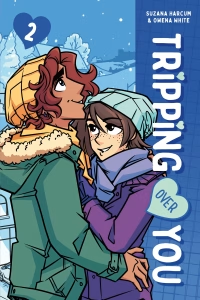 couple Liam and Milo navigating their maturing relationship. This slice of life romantic comic was adapted from real life couple Harcum and White’s webtoon in February and promises more volumes to come. Fresh out of high school, the pair are growing into young adults and trying to allow their relationship to grow with them. Liam and Milo are in a very interesting phase, kind of semi-out to their families (who bring their own baggage into their relationship) and striving to make room for each other as their lives grow fuller. Liam doesn’t know what he wants out of his future and Milo seems plagued with self doubt, but they keep circling back to find comfort in each other. This volume catches our couple at a very real, very vulnerable time where a high school relationship can evolve into an adult one or where it can flounder under the weight of growing up.
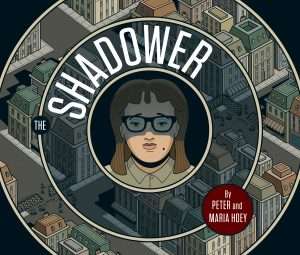 any time. It may be the past. It may be the future. It could be right now.

