Comic Therapy is a series of four panel comics that convey a thought or meditation for reflection. Sometimes the character is the author and sometimes it is a bee and his fly friend. Occasionally, there’s no characters at all. This is a quick read that will leave you thinking for days after you set it down.
The messages included in this book are very simplistic but aimed at adults who have lived through a variety of circumstances. However, there are times when I just wanted to have a conversation about how hard it is to stay that simple. Or that I couldn’t see something as black or white when it’s really some shade of gray. There were plenty of options for meditation though, so all I had to do to leave my frustration behind was to turn the page and keep reading. I did enjoy reading the short comics that resonated with me multiple times and could see this helping someone journal about their feelings or take a moment to find peace between the pages.
The art style is a great choice for the subject as the bright, saturated colors draw your eyes to the next panel repeatedly. The lines are soft, curvy, and colored instead of stark black in most cases. I also enjoyed the level of detail for such short comics. The author included plenty of details to complement the simple sayings, and that gives the reader something to discover while digesting what they’ve read.
A moving introduction from the author explains why he made the comics and chose to pursue publication.
Overall, I would recommend this book to any public library in either the adult or young adult area. Although this is aimed at adults, there are many young adults that could benefit from the meditations. It is not a substitute for professional help, but it might be the push the reader needs to seek help in healing.
Comic Therapy: Meditations for Reflection By Kay Medaglia SelfMadeHero, 2026 ISBN: 9781914224393
NFNT Age Recommendation: Adult (18+), Older Teen (16-18)
I’ve been a fan of Fred Van Lente since the first black-and-white Action Philosopher comics. Produced with artist Ryan Dunlavey, the series examined the thoughts and lives of history’s greatest thinkers with a humorist twist. Since then, the two have gone on to produce other educational and hilarious comics about American presidents, the history of animation, and a comic book on the history of comic books among others.
Gamemasters: The Comic Book History of Roleplaying Games is the latest entry into that curriculum. However, this time Van Lente is teamed with Canadian cartoonist Tom Fowler and colorist Bill Crabtree. It is worth noting that all three creators are avid gamers and have worked in the RPG industry. Van Lente’s first published work was a Call of Cthulhu supplement, Fowler started out doing art for RPG books, and Crabtree is the artist behind the RPG webcomic Table Titans.
Eight chapters unfold the history in rough chronological order. However, there are divergences as appropriate within certain areas of focus. For instance, the fifth chapter is devoted entirely to the Satanic Panic phenomena of the 1980s and goes into the 21st century in discussing the final fates of the various players behind the drive against Dungeons and Dragons. The following chapter, “Taking Sides,” jumps back to the early 1980s and Gary Gygax’s efforts to sell D&D in Hollywood.
Van Lente is as scrupulous an archivist as ever and there is an extensive works cited section in the back for those who want to “read more about it.” He does not hold back in attacking the sacred cows of the industry or in elevating the unsung heroes. Suffice it to say there are some who will take offense at the image of Dave Arneson chained to writing desk as Gary Gygax brandishes a whip and commands him to write faster.
However, Van Lente also honors Gygax’s work ethic, with facts like how he supported his family doing in-home shoe repair during the lean years. Moreover, while roughly half the book is devoted to the influence of D&D, it also offers an exhaustive look at the other major RPGs that influenced different subgenres. Van Lente also does not hesitate to acknowledge that while the war game Gettysburg played a major role in paving the way for the first RPGs, there’s still a disturbing number of people obsessed with “What if the South had won the Civil War?” simulations.
The artwork is equally irreverent but never unfair. There are several Easter eggs for old school gamers, such as one of a group of live-action role-players being dressed as Diana the Acrobat from the Dungeons and Dragons cartoon. There is also an image of a young Tom Hanks, dressed as his LARPer character from the Satanic Panic scare movie Mazes and Monsters, asking Wilson the volleyball which tunnel he should go down.
Clover Press does not offer an age rating for Gamemasters: The Comic Book History of Roleplaying Games. I would suggest it is appropriate for teen audiences and up. There is no overt nudity, but a few figures, male and female, in skimpy fantasy armor. There are also a few Playboy bunnies, as the narrative notes a Playboy Club opened in Lake Geneva around the time of the first GenCon.
Violence is a little more intense, but largely cartoonish, with animated chess pieces stabbing each other and a smiling severed head in a pool of blood declaring he regrets nothing. The notable exception to this is the final panel of Chapter Five, which notes the tragic suicide of James Dallas Egbert III; the young man whose disappearance kicked off the whole Satanic Panic movement. This scene is not played for laughs and the text notes the cruel irony that Egbert never got the psychological treatment he needed because people were more concerned with fantasy problems than facing reality.
Gamemasters: The Comic Book History of Roleplaying Games By Fred Van Lente Art by Tom Fowler, Bill Crabtree Clover Press, 2025 ISBN: 9781951757267
NFNT Age Recommendation: Adult (18+), Older Teen (16-18), Teen (13-16) Creator Representation: Canadian
Operation Pedro Pan was an unusual mission, even by the standards of the early days of the Cold War. Facilitated by a partnership between the US government and the Catholic Welfare Bureau, Operation Pedro Pan helped sneak 14,000 minors out of Cuba following the failed Bay of Pigs invasion. This largely consisted of the children of upper-class Cubans who, while not affiliated with the Batista government, were fearful of what the Castro regime might do as it slowly took over the school system.
We Are Pan examines this moment in time through the eyes of several Cuban teens from different walks of life. Their lives are detailed both before and after Fidel Castro’s rise to power. There is Antonia, a judge’s daughter who dreams of becoming a movie star like Elizabeth Taylor. There is Wilfredo, who cares for his alcoholic musician father, hoping someday he will finally remember to give him the guitar lessons he promised. There is Rosa, who works as a waitress while waiting on a future with Cesar, the son of her boss. And there is Eugenio, who dreams of attending art college in Prague with the boy friend he hopes might become a boyfriend.
Writer Andre R. Frattino keeps the focus of the novel firmly upon the teens. Apart from one interlude showing how the real-world figures behind Operation Pedro Pan came together, the story is more concerned with the fictionalized accounts of these composite characters. Comparison to Marjane Satrapi’s Persepolis: The Story of a Childhood and Kim Hyun Sook and Ryan Estrada’s Banned Book Club is appropriate and, perhaps, inevitable. However, Frattino simultaneously goes further than those works in acknowledging the problems leading to totalitarianism, even as he glosses over the flaws of Operation Pedro Pan.
For instance, it cannot be denied that Castro closed the religious schools in Cuba and attempted to turn the government schools into indoctrination centers. However, the excesses of the Batista regime and the role the United States played in them are largely ignored. Indeed, the only acknowledgement of this comes from Ernest Hemmingway (who is a fan of Wilfredo’s father) speculating that the rise of someone like Castro was inevitable after Americans “turned this place into our own little playground… at the expense of the people who actually live here.”
We Are Pan also glosses over the problems many of the refugee children experienced in the United States. Chief among these is systematic racism, which saw children determined to be “black” being separated from their lighter-skinned siblings. Racism is briefly acknowledged, as an airport security guard questions why the dark-skinned Wilfredo is in the company of the lighter-skinned Rosa, whom he befriended on the flight out of Cuba. However, these omissions are minor notes in an otherwise excellent narrative that drives home one key fact: whenever there is a war, of combat or ideology, it is always the children who suffer the most. And enough of the issues are still made clear to facilitate discussion in a classroom setting.
The artwork by Yasmin Flores Montanez is simple and serviceable. The character designs are distinct, with a variety of body types, shapes, and sizes. This prevents confusion in keeping the large ensemble of characters straight. The colors by Fabi Marques are similarly streamlined, with little in the way of excess shading or tinting.
Top Shelf Comics rates We Are Pan as being for readers ages 12 and up. I consider that to be a fair assessment. There is violence, with protestors of Castro’s revolution being shot in the street and one self-ending gunshot that takes place off camera. There is one scene of Eugenio painting a nude model, but this is limited to a single page, and nothing is shown, with her hands concealing that which must be concealed.
There is no on-panel sexual content and Eugenio’s romance is limited to holding hands with his beloved once. Even Rosa and Cesar are limited to chaste kisses and longing glances. There is, however, a frank discussion of upper-class teenage girls being conscripted to teach illiterate farmers how to read and write and being sent home after “mysteriously” being impregnated. Apart from one sinister looking man placing his hands on the shoulders of a young girl, the molestation is only spoken of in the text. However, this scene is uncomfortable enough it may be triggering for some readers.
We Are Pan By Andre Frattino Art by Yasmin Flores Montanez, Fabi Marques Top Shelf, 2026 ISBN: 9781649363947
Company Age Rating: 12+
NFNT Age Recommendation: Adult (18+), Older Teen (16-18), Teen (13-16) Creator Representation: Brazilian, Character Representation: Cuban, Gay,
Four criminals plan a heist against a powerful corporation on a planet that is most definitely uninhabited–what could go wrong?
Jared Throne’s Bridge Planet Nine from Top Shelf Productions brings us the story of four people thrown together by need, planning a heist of valuable minerals from a desolate bridge planet–an uninhabited, autonomous waystation meant to facilitate deep space travel. Far from civilization on a planet once decimated by conflict, it should be an easy payday. Instead, the crew finds a band of cultish strangers living in the ruins and corporate secrets dark enough to kill. Plans for revenge and fresh starts give way to a fight for survival as the crew has to uncover the truth they’ve stumbled into and find a way home with their lives–and maybe a payout as well.
Lots of people (including me) love a good heist story. Bridge Planet Nine has all the right pieces at play–a ragtag crew, greedy corporations, unexpected complications, and one last score on the way to freedom. Though it doesn’t do anything particularly fresh with the premise, the overarching concepts of this comic set the stage really well. Unfortunately, the scene-to-scene writing struggles to fulfill this potential. Characters start dumping backstory into dialogue almost immediately. The themes are explicitly stated and restated throughout. The villains and betrayals are over the top and so familiar in execution that it strips away most of the tension they would otherwise provide if they had been allowed to operate with a bit more subtlety.
The central character is Pearl, a pilot recruited into the scheme by her brother, enticed by the payday as a way to repair her life and get back to her son who she’s lost custody of. These family dynamics provide an effective emotional core, but even Pearl’s character struggles to be more than one dimensional–lacking the complexity that would make these figures truly interesting. When even the highest emotional moments come with dialogue that feels intended to accompany dramatic music, the result is a story that consistently breaks immersion and reminds the reader of what the book is attempting to be, rather than being able to enjoy what it actually is.
Whatever the flaws of the writing however, Throne’s art is one of the book’s key strengths and certainly elevates the experience. Delivered entirely in black and white, the heavy inks, minimal gradients, and dramatic contrasts are striking from the very start. With effective visual pacing and paneling, Bridge Planet Nine builds a tangible scifi universe before shuttling the reader off to a desolate planet full of decaying ruins half buried in the sands of troubled history. Each character is distinct and emotive, with some key details worked into an accessible but dynamic visual style. The world has depth, and the heavy use of inks delivers some cinematic moments well suited to the genre mashups of science fiction and heist (mis)adventure.
Top Shelf doesn’t assign an age rating to the book. There’s some language and substance use, along with dead bodies and plenty of violence–though the visuals never get so graphic as to push the content into mature territory. Some of the themes and character motivations are also geared a bit more adult, but there’s nothing here that would be objectionable to many teen readers either. Overall, I wanted to like Bridge Planet Nine, but the book’s vision never manages to overcome its weaknesses. It’s worth flipping through the pages to appreciate Throne’s visual style, and I’d happily take a look at future work from this creator. However, if you’re debating a purchase for your own collection, there are other titles working in these genres that will give you better value for your time and money. Which is a pity–becasue there’s always room for more stories about motley groups committing heists against evil corporations.
Bridge Planet Nine Vol. By Jared Throne Top Shelf, 2025 ISBN: 9781603095631
NFNT Age Recommendation: Adult (18+), Older Teen (16-18)
Originally released in Japan as Mach GoGoGo in 1967, Speed Racer was one of the first anime to be adapted for American audiences. Despite being relatively short-lived (with only 52 episodes produced) it still developed a devout following. It was strong enough, at least, that there have been multiple attempts to update it on both sides of the Pacific, with the 2008 live-action movie by The Wachowskis being the most famous. And yet, for my money, none of them have truly managed to update the premise while remaining true to the spirit better than the new Mad Cave Speed Racer series.
The series is set in Palm City; a coastal town with a tradition of Formula X racing. This extreme sport differs from classic formula/open-wheel racing in two important respects. First, the pit teams are allowed to modify their cars with whatever experimental gimmicks they want. (Indeed, the X in Formula X stands for eXperimental.) The second is that there is an underground Formula X league that competes in the city streets rather than the official tracks. This last point is of particular concern to the Palm City Police Department, who are fighting a losing battle trying to keep up with the fast and furious unsanctioned matches.
Speed Racer is the latest scion of a legendary Palm City legacy, who has abandoned university studies for underground racing. However, while he feels most at home in the driver’s seat, he does not race for glory. He went into the underground to help his father pay the bills, since his dad won’t let him drive in the official Formula X league. However, Speed gets his chance after a gang attack sends his father to the hospital and fate gives him a chance at a sponsorship that could solve their problems. All he has to do is prove he’s as good as he thinks he is.
Writer David Pepose doesn’t change the formula from the classic cartoons so much as he builds on it, with a few modern touches. Speed’s younger brother Spritle, for instance, is still the same fanboy with a tendency to get into trouble. However, he has been aged up a bit and now operates as Speed’s social media manager, hyping his brother to the masses with videos of his latest runs. Similarly, Speed’s girlfriend Trixie is still the same spitfire who defied the damsel-in-distress tropes popular to animation at the time. The only major change is that now she’s the daughter of a car manufacturer rather than an aviation firm. This has her acting as Speed’s sponsor, giving her a reason to be in the pit beyond offering emotional support. Beyond that, the core of the cartoon is the same, with thrilling action facing sinister villains.
That thrilling action is amazingly illustrated by a crack team that works like a Formula X pit crew. Davide Tinto’s anime-infused design captures the spirit of the cartoon, but with a detail-driven yet streamlined edge. Rex Lokus provides a paint-job with his colors that leaves every panel popping on the page. And Buddy Beaudoin throws in a few neat tricks with the word balloons for the finish.
Mad Cave has rated Speed Racer Vol. 1 as appropriate for teen audiences. I consider that to be a fair assessment. There is some intense action, as one would expect with a racing manga where the villains are gangsters, but nothing inappropriate to a 13+ audience. There is no nudity and the sexual content is limited to kissing. There is one scene of Speed and Trixie driving to a romantic overlook, but they spend the time talking about cars and their dreams while sitting on the hood rather than in the back seat.
Speed Racer Vol. 1 By David Pepose Art by Davide Tinto Mad Cave Studios, 2026 ISBN: 9781545823422
Company Age Rating: 13+ Related media: TV to Comic
NFNT Age Recommendation: Older Teen (16-18), Teen (13-16)
DC Comics’ new Absolute Universe follows Marvel’s Ultimate Universe formula of the early 2000s in creating an ongoing parallel universe with drastically different interpretations of their characters. Unlike the pinnacle of gritty realism that was the original Ultimate Universe, this new Absolute Universe makes no attempt to emulate the real world. This new world asks the question, “What would the heroes of the DC Universe become in a world where the villains have already won?” Each title makes foundational changes to each and every character. Batman’s not rich; Wonder Woman is a witch and Superman didn’t arrive on Earth until his teens. This might be the biggest departure from the original characters since this new universe was created. Traditionally, J’onn J’onzz is a Green Martian from the planet Mars. He is a shapeshifter, telepath, and enjoyer of Chocos cookies. His civilian identity is a private investigator named John Jones. None of that is the case in this new title.
Written by Deniz Camp with art by Javier Rodriguez and lettering by Hassan Otsmane-Elhaou, Absolute Martian Manhunter follows F.B.I. agent John Jones as he goes back to work following being injured by an explosion while on duty. His body has healed but something has hitched a ride in his brain. An alien consciousness going by “the Martian” despite explicitly not being from Mars, has integrated its alien perception of reality with Jones’. John must now reconcile his everyday concerns and anxieties of being a husband and father with the human and alien threats exposed to him with help from “the Martian”.
This series swept at the 2026 Eisner Awards. It was nominated for eight awards and won four. The writer Deniz Camp won an Eisner for this title as well as his own comic creation published through Image Comics, Assorted Crisis Events. Deniz Camp has quickly risen to a household name among comics fans. Along with his success with Absolute Martian Manhunter and Assorted Crisis Events, Camp just wrapped up three celebrated volumes of The Ultimates for Marvel Comics and another original creation partnered with Image in the form of 20th Century Men.
All of this success is warranted. His writing range is never more apparent than in titles like Martian Manhunter. His writing combines a detective story with not-entirely-comprehensible extra-dimensional forces like a technicolor True Detective. The voice Camp and Otsmane-Elhaou give “the Martian” really highlights its other-worldly intelligence. The combination of the script and Otsman-Elhaou’s manipulation of the text give its voice a clear alien presence when presented with other characters’ speech bubbles or text boxes on the page next to it.
Javier Rodriguez’s art is a delight. He takes the opportunity of an alien perception of reality to explore the boundaries of visual storytelling on the page. He uses retro styling combined with more abstract designs. “The Martian” itself was actually designed as a model out of clay when Rodriguez was making concept art. This detail really separates “the Martian” ‘s character design from the Earthlings of this world.
Absolute Martian Manhunter Vol. 1 Martian Vision collects issues 1-6 of the limited series with Vol. 2 The Agency collecting the remaining six issues. For librarians looking to add something like this to their collection, my only reservation would be that now since the series is over, DC may publish the entire series in one binding rather than two. It may be helpful to wait if that is preferable for you or your audience. For prospective readers and catalogers, this title has the traditional content warnings for a superhero title: violence, blood, death, limited gore as well as domestic abuse, substance abuse and a mass shooting event. DC’s age rating is 15+ which seems appropriate.
Absolute Martian Manhunter Vol.1 Martian Vision Writer: Deniz Camp Artist: Javier Rodriguez Letterer: Hassan Otsmane-Elhaou DC Comics, 2025 ISBN: 9781799505211
Absolute Martian Manhunter Vol. 1 Martian Vision By Deniz Camp Art by Javier Rodriguez DC, 2025 ISBN: 9781799505211
Company Age Rating: 15+
NFNT Age Recommendation: Adult (18+), Older Teen (16-18) Creator Representation: Filipino-American, Spanish,
In The Last Time We Spoke, the author opens with an encounter. A woman on the train resembles his mother so much that he starts to believe it is her – except that his mother cannot be there. She died when he was 14, and when she was just 49. This is the power of grief – the way memories of a lost loved one can strike at any time and be strong enough to envision them there.
Mechanic describes the time before his mother’s death as a time filled with doctors and experimental treatments – something he says was like “flailing while standing still, screaming on mute.” But there are times of joy amid the hardest times, too. The author chases geckos with his sister while in the Bahamas- looking for all the world like a family on vacation when really they are there for another special treatment. Soon the moment is shattered, though, as his father breaks the news that there are no treatments left to do and the family has to come to terms with impending loss. As the book moves back and forth in time, it touches on the anticipatory grief of watching cancer consume his mother before returning to a present day marked by her absence. In between, in the aftermath of his mother’s death, the author also receives a diagnosis of ADHD and OCD.
Structured unlike a typical graphic novel, the words and images blend here. Sometimes, the font is large, and images make their way inside of it. Other times, the images stand up next to a block of text to complement it.
While the ground covered isn’t necessarily new ground in the discussion of grief or mental illness, Mechanic’s experience is both his own and relatable. Readers who have experienced the death of a parent or loved one will recognize themselves in his journey, and in statements like “it doesn’t take long to realize all you took for granted.” This book may be for you if you gravitate to adult graphic novel memoirs like Tyler Feder’s Dancing At The Pity Party or It’s Lonely at the Centre of the Earth by Zoe Thorogood.
The Last Time We Spoke Vol. By Jesse Mechanic Street Noise Books, 2025 ISBN: 9781951491420
NFNT Age Recommendation: Adult (18+), Older Teen (16-18)
Most of us have eaten some kind of instant noodle, whether that’s ramen, microwaveable mac and cheese, or something else. Some of us have modified instant noodles with other ingredients: adding veggies or an egg, for instance. Robin Ha’s book is here for people who want to get fancier and more adventurous, all with the starting point of a humble noodle package.
Instant Noodles and Beyond begins with a comic book guide to ramyeon (the Korean word for ramen). It briefly covers the history of instant ramyeon, how it’s made, and its nutritional profile before shifting into cookbook mode: after a few pages of recommendations for staple ingredients to have on hand, the book dives into its many clearly and cheerfully illustrated recipes. There is a section for ramyeon soups, one for brothless ramyeon (like stir-fried noodle dishes), and one for cold ramyeon recipes. Then there’s Think Outside the Bowl, with instructions for using instant ramyeon in dishes ranging from popcorn to puffed rice treats to scallion pancakes. This section also includes some recipes using boxed macaroni and cheese.
The recipes – most of which make one or two servings as written – are inspired by cuisines from all over the world, with everything from Shrimp Alfredo Ramyeon to Pad Thai Ramyeon to Elote Mac and Cheese. Occasionally, there will be a short comic about the historical or cultural background for a specific recipe. Scattered through the book are a few longer comics (usually still just a page or two) that tell fun personal stories, like one about the author’s friend who hosts ramyeon parties.
The comics that illustrate the recipes are drawn in a realistic style, which makes them useful and informative: they include pictures of the packages of recommended brands of ramyeon for each recipe, and they clearly show how to prepare the meat, veggies, and other ingredients. The comics at the beginning of the book get a little more whimsical, with talking ramyeon packs, a cartoon cat cooking, and more.
As a cookbook, this has a fun and novel premise: make your instant noodles fancy! Of course, two major appeal factors of instant noodles are that they are fast and easy to make, and that situation changes somewhat once you have a recipe that requires adding a bunch of other ingredients, which often have to be diced or otherwise prepared. But many of the recipes are still fairly simple, with peppy and straightforward instructions that make them feel accessible, and those other ingredients can add significant nutritional value as well as flavor and texture. Hand this cookbook to inexperienced cooks looking to expand their recipe rotation, or to anyone who likes noodles and wants to try something new.
Instant Noodles and Beyond A Comic Book with Recipes for Souped-Up Ramen, Mac & Cheese, and More By Robin Ha William Morrow / Harvest, 2026 ISBN: 9780063437142
NFNT Age Recommendation: Adult (18+), Older Teen (16-18), Teen (13-16), Tween (10-13) Creator Representation: Korean,
It’s a common enough joke that we’ve heard it in a bunch of movies and series (television or streaming), but this was a new way for me to get hooked. Apparently, an FBI agent is barred from resignation or retirement if there is a threat to national security.
So begins the mystery of No Man’s Land.
Set in 1963, FBI Agent Collins – on the day he decided to deliver his resignation letter – is called by the director to assist in solving a strange case. The body of a woman is found in the middle of an ice bridge that connects the USA and Russia (the Diomede Islands); no clear jurisdiction has been established. The bridge lasts for about three months of the year, and Agent Collins is suddenly forced to solve a murder mystery. Can he and KGB agent Fiodrow work together to tie up loose ends? The clock is ticking. Not just because the ice bridge will soon melt, but also from the tense and fragile relationship between two nuclear superpowers.
This is an excellent, almost noir-y kind of book and it’s just the first one! The illustrations are lifelike and gritty with minimal color and a smart use of inkblots, perhaps to evoke bureaucratic paperwork or blood stains (or both). The writing lives in the dramatic close ups of the eyes and faces of the characters, evocative and emotional. The images as a whole are very painterly with many opportunities for dramatic lighting and sunbursts. The author/illustrator even put in some cover variations that pay homage to many famous movie posters, so that was a fun bonus at the end of the read.
Like a lot of thrillers, the story is dense, but I feel that’s warranted by the narrative. The reader can do their best to follow along and sort out the facts in a way that makes sense, or just keep reading forward with anticipation to see what comes next.
I thoroughly enjoyed this and I hear there’s a movie deal in the works. This is not a book for young children, certainly. Though there is nothing particularly graphic depicted in this installment of the series, there are a few corpses and war and violence continue in the background.
Folks who enjoy True Detective, the Fargo series, and The Terror will likely enjoy this as well.
No Man’s Land By Szymon Kudranski Image, 2025 ISBN: 9781534333604
NFNT Age Recommendation: Adult (18+), Older Teen (16-18), Teen (13-16) Creator Representation: Polish, Character Representation: Russian,
The monsters in horror fiction, whether those monsters are ghosts, vampires, or zombies, always seem to represent something beyond the natural fear a person would have against something with fangs and claws. Many times, these monsters are symbolic of a more universal fear involving a person’s space in society or in the universe at large (at least according to critics). Ghosts, for example, are often connected to humanity’s universal fear of death. Zombies are often symbols of death as well as disease. Author and illustrator Jon Claytor, however, presents an interesting idea in his book Nowhere, the world of zombies, vampires, and aliens represents the very modern fear of growing up.
Nowhere takes place in Beauséjour. Beauséjour, a small town in Canada and it’s where teenage Joel ends up, along with his morose mother, his verbally abusive but generally useless stepfather, and various animals. When the family’s car breaks down in Beauséjour, they stay at a roadside motel and slowly become accustomed to what makes Beauséjour different from other towns. Those differences include vampires that talk to therapists, ghosts that look like sheets and who actively engage with the living, and a massive cube that sits on the edge of town. And don’t forget about the zombies that wander around at night.
People might look at Claytor’s story and think of shows that run on late 20th century nostalgia like Stranger Things, especially when Joel finds a group of his friends close to his own age to hang out with. However, these friends don’t battle the various monsters that show up in town; they simply accept them as part of living in Beauséjour. In fact, no one within this book expresses any emotions other than melancholy, even when more apocalyptic elements start happening. Many have likely read action/adventure stories with a coming-of-age element that has the protagonist learns more about who they are and who they’re going to be due to the events in the book, but if Joel comes of age within Nowhere’s pages, Joel grows to realize that banality is the norm, which is perhaps the most terrifying thing to realize.
Banality could be used to describe the book’s artwork, which, in any other book, would be a critique, but the banality fits into the book’s overall tone. Claytor uses a deceptively simplistic art style that nevertheless depicts realistic human faces that are struggling to emote within a muted black and white world. Colors are also used sparingly, such as the blood on the vampire’s teeth when he talks with his therapist, and only provide a speck of brightness in Claytor’s universe. Even the aliens, typical grays with bulbous eyes and small mouths, approach their job of manipulation with the enthusiasm of security guards who’d much rather watch the clock tick toward the end of their shift, which is not surprising considering the universe they inhabit.
While lacking the excitement of Stranger Things, this book does share some DNA with an intellectual property well-known for weirdness. “Welcome to Night Vale,” a novel and podcast created by Joseph Fink and Jeffrey Cranor, features a supernatural town where residents accept the supernatural to an absurd degree. Fans of that book/series will want to visit Beauséjour, as well as fans of shows like “X-Files” and “Supernatural,” particularly of their sillier episodes.
Nowhere By John Claytor Goose Lane Editions, 2026 ISBN: 9781773104584
Company Age Rating: 14 Years and Up
NFNT Age Recommendation: Adult (18+), Older Teen (16-18)

 Comic Therapy is a series of four panel comics that convey a thought or meditation for reflection. Sometimes the character is the author and sometimes it is a bee and his fly friend. Occasionally, there’s no characters at all. This is a quick read that will leave you thinking for days after you set it down.
 I’ve been a fan of Fred Van Lente since the first black-and-white Action Philosopher comics. Produced with artist Ryan Dunlavey, the series examined the thoughts and lives of history’s greatest thinkers with a humorist twist. Since then, the two have gone on to produce other educational and hilarious comics about American presidents, the history of animation, and a comic book on the history of comic books among others.
 Operation Pedro Pan was an unusual mission, even by the standards of the early days of the Cold War. Facilitated by a partnership between the US government and the Catholic Welfare Bureau, Operation Pedro Pan helped sneak 14,000 minors out of Cuba following the failed Bay of Pigs invasion. This largely consisted of the children of upper-class Cubans who, while not affiliated with the Batista government, were fearful of what the Castro regime might do as it slowly took over the school system.
 Four criminals plan a heist against a powerful corporation on a planet that is most definitely uninhabited–what could go wrong?
 Originally released in Japan as Mach GoGoGo in 1967, Speed Racer was one of the first anime to be adapted for American audiences. Despite being relatively short-lived (with only 52 episodes produced) it still developed a devout following. It was strong enough, at least, that there have been multiple attempts to update it on both sides of the Pacific, with the 2008 live-action movie by The Wachowskis being the most famous. And yet, for my money, none of them have truly managed to update the premise while remaining true to the spirit better than the new Mad Cave Speed Racer series.
 Not a Martian, Not a man. Absolutely insane.
 In


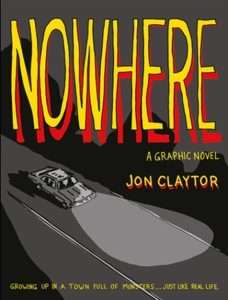 always seem to represent something beyond the natural fear a person would have against something with fangs and claws. Many times, these monsters are symbolic of a more universal fear involving a person’s space in society or in the universe at large (at least according to critics). Ghosts, for example, are often connected to humanity’s universal fear of death. Zombies are often symbols of death as well as disease. Author and illustrator Jon Claytor, however, presents an interesting idea in his book Nowhere, the world of zombies, vampires, and aliens represents the very modern fear of growing up.

