
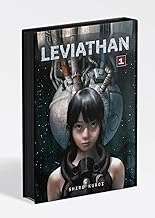
 Many graphic novel fans in the Western world know about Japanese manga, just as there are many people, including those same Western graphic novel fans, who have very rigid preconceived notions about manga, believing it to be about stories featuring magical girls or martial arts battles. Manga, like other formats of graphic storytelling, can tell a wide variety of stories that feature everything from hyperkinetic action sequences to quiet moments of psychological tension. The latter is demonstrated in Shiro Kuroi’s Leviathan Vol. 1.
The story begins in space with a group of looters in spacesuits discovering the derelict cruise ship Leviathan, a ship that disappeared decades ago. Realizing they’ve discovered a legendary ghost ship, the crew are initially excited about their discovery. One looter even discovers a diary from a middle schooler who, along with his class, was part of the ship’s final, fatal voyage. The looters soon discover that not everyone who was aboard the Leviathan died and something on the ship seems intent on making sure they can never leave.
An elevator pitch for this story could be “William Golding’s Lord of the Flies in space,” but Kuroi’s narrative choices help it stand apart from Golding’s tale. With the story opening decades after the events that killed everyone aboard the Leviathan, Kuroi thrusts readers into the middle of the story. The inclusion of the diary being read by a looter limits the information the reader has while also tantalizing the reader with the slow but inevitable discovery of what truly happened to those who died. While the narrative moves back and forth between past and present, most of the narrative, at least in Volume 1, is told through schoolboy Kazuma’s point of view as his diary is read in the present. As a somewhat withdrawn student, Kazuma serves as a mostly reliable observer of his classmates’ and teachers’ duplicity and eventual savagery.
Though there are bloody moments within the narrative, most of the conflict comes from a more introspective horror, which blooms like mold in the scenes rendered by Kuroi. The book’s black and white color scheme means that blackness of space is truly black, while the cold, geometric interiors of the Leviathan makes the environment the characters navigate all the more oppressive. As these characters come to grips with their predicament, including seeing the corpses of people they know, their faces remain understated, seeming to actively deny expressing their emotions, leaving the reader to deconstruct them through their words and actions.
While this book features many middle school-aged characters, its violence and psychological complexities frames it for older audiences. For librarians looking to add to some manga to their adult collections, and for patrons who are fans of science fiction, horror, or when the two genres combine, now is the time to board the Leviathan.
Leviathan
By Shiro Kuroi
Abrams ComicArts, 2024
ISBN: 9781419777677
Publisher Age Rating: 16 and up
NFNT Age Recommendation: Adult (18+), Older Teen (16-18)
Creator Representation: Japanese,

