Shy Cat and the Stuff-the-Bus Challenge by Dian Day and Amanda White teaches young readers about food insecurity through the story of Mila and her best friend Kit. Mila, a budding cartoonist, splits her time between her moms’ houses. Kit lives with his mom in an apartment. After bonding over being new kids at school, they are inseparable. Mila even gets to school early to join Kit for the school breakfast program since he doesn’t like to go alone. Between school, petting neighborhood cats, and DIY movie making, things are great between the two! Until Kit has a meltdown at school, setting the main story in motion.
The Stuff-the-Bus Challenge asks the students to bring goods to be donated to a local food bank. The challenge is simple – stuff the bus with food! The winning class gets their own pizza party. Students are excited to meet the challenge, when Kit discovers a dented can amongst the donated items. Who would donate something imperfect? Why do his classmates think it’s okay to give their dented cans to people who need food? This tipping point spurs Mila to better understand food insecurity and how close to home it can be.
Throughout the story, Kit’s hunger and how it affects him personally day to day is hinted at: headaches, crankiness, being secretive. Mila recounts a time she thought Kit was being rude upon quickly eating three bananas at her house. Her mom explains that “sometimes rude was just hungry” and it shouldn’t take away from Mila’s time spent with Kit. The story makes it clear that, even though she cares about Kit dearly, Mila struggles with her own emotions and how to be a good friend, even when your friend is being off-putting, because you don’t always know what they’re going through. In learning more about Kit’s situation, she’s forced to deal with and control her own emotions.
Shy Cat and the Stuff-the-Bus Challenge covers a lot within its pages. As Mila speaks with the adults in her life, there’s several pages that are fairly text heavy. These honest conversations are worthwhile. The graphic novel introduces different ways to fight food insecurity, including a great introduction to community gardening. Mila realizes the importance of speaking your mind and standing up for what’s right, something readers may find especially inspiring. The book includes some backmatter on the Hungry Stories project, which both author and artist are members of, for anyone looking to learn more about the topic at hand.
White’s art in Shy Cat and the Stuff-the-Bus Challenge is colorful, realistic, and cozy when it needs to be. Individuals of different races, abilities, and bodies are shown around Kit and Mila’s community. Lots of cats too! Mila’s Shy Cat comics are interspersed throughout the story, they become a way for her to express her emotions, almost like a graphic diary, and these work quite well in doing that.
Shy Cat and the Stuff-the-Bus Challenge would be a great choice for a middle grade book club or classroom read along. The Good Question Bus in the story, where students can ask questions anonymously, can even be adopted for individual classrooms. This graphic novel deals with topics that must be spoken about openly and honestly in a way that its intended audience can relate to.
Shy Cat and the Stuff-the-Bus Challenge By Dian Day Art by Amanda White Not in listSecond Story Press, 2026 ISBN: 9781772604450
Company Age Rating: 9-12
NFNT Age Recommendation: Middle Grade (7-11), Tween (10-13)
Introduction Tim Smyth is a superhero of comics in education, ranging from curricula and teacher guides to presentations at comic cons, school in-services, & teacher workshops. He is also the author of Teaching With Comics and Graphic Novels: Fun and Engaging...
There are certain stories that need to be shared, stories that are so commonly experienced, yet rarely discussed. Infertility is one of these stories. In Catalogue Baby: A Memoir of (In)fertility, Myriam Steinberg shares her long, arduous, and deeply personal journey toward pregnancy. Organized by the years of Steinberg’s fertility journey, Catalogue Baby provides detailed insight into the process of becoming pregnant and carrying to term. This book is essential reading for anyone seeking to learn more about fertility, pregnancy, and the stigma that perpetually surrounds these topics.
Steinberg ventures where many writers would not. Readers gather a deep sense of Steinberg as a prospective mother and as a woman living under the scrutiny experienced by all women that struggle with fertility. Steinberg does not shy away from any topic related to her fertility journey, even topics that are likely to derive scorn from readers. In one particularly intimate passage, Steinberg shares with the reader the story of a pregnancy that she was not able to carry to term. After a prenatal screening, it was determined that Steinberg’s child would be born with Down Syndrome. Steinberg made the difficult decision to abort. Her articulation of this experience is stunning in its authenticity. Steinberg is not a hollow narrator, but rather a friend sharing her most personal experiences with us.
The artwork by Christache is equally impressive. While remaining intimate and honest to Steinberg’s narrative, none of the imagery feels exploitative or revels in the more dramatic elements of the story. The symbolism in the imagery, such as that of the literal (and very exasperated) biological clock that guides readers through the story, is truly poignant. The color palette is a visually pleasing blend of various pink hues, reminiscent of our cultural understanding of traditional gender roles. Working in conjunction with Steinberg’s writing, Catalogue Baby is an insightful piece of art.
Given the presentation of Steinberg’s experience and the relevance of the subject matter, Catalogue Baby is a work that librarians should heavily consider adding to their collections. Though this work is a piece made for adults, I do believe that mature teens interested in themes of parenthood and grief have something to gain from the book. Do not hesitate to recommend Catalogue Baby to non-comics readers. Steinberg’s writing and Christache’s artwork are widely accessible for even readers who may usually be hesitant to pick up a graphic novel. Catalogue Baby is not just a memoir. It is a learning tool, a resource for those going through similar trauma, and a rumination on the deeply interwoven relationship between cisgender womanhood and motherhood.
Catalogue Baby: A Memoir of (In)fertility By Myriam Steinberg Art by Christache Page Two, 2021 ISBN: 9781989603642
Cursed by a Kuda spirit at a young age, Neneko Iizuna has grown into a shy fifteen-year-old shut-in. The curse gave her the ears of a cat, something that inspired other children to make fun of her. Neneko is also one of the rare people who has a bond with a familiar and the potential to exorcise wicked spirits. Unfortunately, her familiar—a young man named Shichikage—has an annoying tendency to try and comfort her social anxiety by stroking her ears and putting her on a leash!
Salvation arrives in the form of a letter offering Neneko a job as a priestess at a local clinic. It’s an opportunity for Neneko to hone her powers, help other people, and maybe even make some friends. It just might help her to find a cure for her curse, too, if only she can rise to meet the challenge of her new station.
I’m unsure exactly who the target audience of Spirits & Cat Ears is meant to be. At first glance, it seems to be a fairly standard shojo manga with a cute teen magical girl protagonist and a semi-antagonistic relationship with a cute, androgynous boy. Yet the staging of the artwork suggests a male-gaze aesthetic, featuring multiple up-skirt shots and a lot of fanservice—particularly if one is a bondage enthusiast.
The book gets even more confusing once you start getting into the story and understanding how the rules of magic in this universe work. On her first day as a priestess, Neneko is told that she has to get to know her familiar better and find the “magic words” to activate his powers fully. Halfway through the book, Neneko discovers that Shichikage’s magic words require her to give verbal consent to being dressed up and chained down later. This sets up a repeating cycle of Neneko being given a task, giving Shichikage permission to restrain her, and everything ending happily until he makes her a new skimpy outfit and she freaks out about it.
Creepy? That’s putting it mildly. It doesn’t help that (with the exception of the director) all of the priestesses at the clinic are said to be teenage girls, but Miyuki Nakayama’s art style makes them look much younger than that. It REALLY doesn’t help that the director herself pervs on Neneko and gropes her chest, or that the only clearly-adult male in the series is a familiar spirit who is described as a pervy old man. Naturally, he only objects to the “old” part.
To give Spirits & Cat Ears credit, the relationship between Neneko and Shichikage is a more realistic depiction of BDSM culture—wherein all the power lies with submissives—than Fifty Shades of Grey, but that’s damning with faint praise. If Neneko were older or the artwork seemed more concerned with telling a story than catering to those who want to see a 15-year-old swimsuit model with cat ears wearing a collar and chain leash, this might be a tolerable book. As it stands, I can’t recommend this book for anyone regardless of their age or interests.
For what it’s worth, Yen Press’ OT for 16+ rating does seem appropriate. There’s no outright nudity and no gory violence but the adult situations and age of the characters involved make this an uncomfortable read any way you slice it.
Spirits & Cat Ears, vol. 1 by Miyuki Nakayama ISBN: 9780316553384 Yen Press, 2017 Publisher Age Rating: OT (16+)
What could possibly be better than an all ages graphic novel about a team of crime fighting fluffy cats? Very, very few things. But that’s just my admittedly biased opinion on Hero Cats of Stellar City, a graphic novel featuring, you guessed it, a team of heroic felines who protect a city called Stellar.
Fun, colorful, and lively, this comic has much to offer those fans of both cats and superheroes. In this second volume of the series, the titular cats investigate a fishy situation beneath Stellar City that leads them into adventure with otherworldly beings. While this is the main storyline, there are a few others peppered throughout the pages, including how each kitty joined the ensemble.
Each cat is graced with a superpower to offer the group. Cassiopeia can read human writing. Belle can also read, but her talent lies less in literature, and more in reading minds. Rocco is the muscle. Rocket has super speed. Also, he believes that he is an alien. Bandit is an expert in covert operations. Midnight is a fighter. Ace is the leader.
Cassiopeia is of particular interest, because her owners are actually the human superheroes, Galaxy Man and Cosmic Girl. The human father and daughter (Stanley and Suzy Quest) work as a team in their heroic alter egos, but each is unaware of the other’s plain clothes identity. Neither Stanley nor Suzy know that Cassiopeia is a Hero Cat. While Galaxy Man and Cosmic Girl were created first, it is definitely the cats that star in this series.
The artwork is absolutely adorable, and each cat has a distinct look, be it their breed—Belle is a Himalayan cat—or just the mischief in their eyes, like Rocket, for instance. Not to mention that they are also oh so fluffy looking; any cat lover would be hard pressed not to want them to pounce off the page and into their lap for a pet.
But I digress! The Hero Cats have little time for laps, as their hijinx spill out of the panels inviting the readers to join in. Won’t you consider giving this series a forever home on your shelves?
Hero Cats of Stellar City, volume 2 by Kyle Puttkamer Art by Marcus Williams, Ryan Sellars, Matt Herms, Briana Higgins, Keek Stewart ISBN: 9781632291097 Action Lab, 2015 Publisher Age Rating: All Ages
Over the last year I’ve stepped out of my comfort zone with anime, eschewing paranormal thrillers and futuristic cop dramas in order to see what other genres have to offer. One of the long standing types of anime is the harem comedy, in which a male lead is surrounded by a growing circle of women. I’ve discovered that while the settings and stories might be different, a number of familiar threads tend to make an appearance. For example:
The lead is a white knight — kind, gentle and cares deeply for his new friends
The lead is always accidentally stumbling across women in varying stages of undress
He is often savagely beaten over perceived sexual transgressions
The series introduces a tsundere character who despises the lead at first, but grows to love him in the end
The show will waste no opportunity to show off the girls in some sexually suggestive way (fan service)
Cat Planet Cuties shares many similarities with other titles in the genre, but it stands out from the rest because it is incredibly entertaining. My enjoyment of the show can largely be attributed to its penchant for humor and absurd situations. The lead in this feline-themed tale is a young teen named Kio. A kind and sophisticated soul, his life is turned upside down when he crosses paths with an alien from the planet Catia named Eris who has the body of a woman, but the ears and tail of a cat. Bringing her home, Eris is introduced to Kio’s teacher and two friends, all of whom are incredibly shocked by the sight of this large breasted cat girl.
It is here that things get a little complicated.
Kio’s childhood friend, Manami Kinjou, is an up and coming CIA agent who sees the capture of Eris as an opportunity to get into the agency. Aoi Futuba, Kio’s friend from school, really works for Japan’s Immigration Bureau and is under orders to capture Eris. And finally, Kio’s teacher Maki Itokazu works for Beautiful Contact, a paramilitary organization that doesn’t want a sexy cat girl to be Earth’s First Contact. After a change of heart (and the reveal of the true enemy), Kio’s friends go against orders and protect Eris, who summons her shipmates and initiates diplomatic ties with Japan. To keep Eris safe, the Catians establish Kio’s house as their embassy and employ Aoi and Manami as peace keepers.
Cat Planet Cuties has a lot going for it. It’s funny, it’s charming, and sweet. Although Aoi initially presents herself as a stone cold killer, her demeanor quickly shifts to a shy, lovelorn girl who pines for Kio but expresses difficulty in doing so. Manami is the requisite tomboy who browbeats Kio for various infractions, but harbors feelings for the boy. Eris rounds out the cast and provides much of the show’s comic relief, as her fact finding missions sends her scouring the country looking for fun and exciting things. In later episodes, Eris has to contend with the Pon Farr-like feelings related to her species’ mating season and results in lots of misunderstood groping and fondling. Apart from the trials and tribulations associated with introducing an alien to the sights and sounds of Earth are the various organizations that actively try to capture Eris, such as a quasi-religious groups of cat lovers that want to worship Eris as a goddess and the Dogisians, a (you guessed it) dog-like race of aliens who are the Catians’ mortal enemies. I have to give this show credit. I’ve seen my fair share of cat girls, but I’ve never seen a dog girl before!
There are a handful of other elements that make the series really fun to watch. At the start of each episode, the characters will deliver a monologue that are direct homages to shows like Star Trek and Charlie’s Angels. Eris’ Assistaroids (diminutive robot servants) are always a pleasure to see and by the end of the service, each member of the cast has his or her own cat-like robot that reflects its master’s personality. Manami’s Assistaroid in particular is a Chow Yun Fat lookalike that projects doves into the air before engaging in firefights with guns akimbo.
The animation is better than it has a right to be. Right from the get go, you’ll be pleasantly surprised with how well produced the show is. Many of the scenes, whether they are set on beaches, Kio’s house, or the open ocean are rendered in vivid detail. Action sequences are particularly exciting to watch, as conflicts quickly escalate into ridiculous gun fights. As this is a harem comedy, you have to come into this show expecting nudity. It occurs often, usually when the girls are bathing or getting dressed and while it is designed to titillate, it never really feels tasteless or over the top. Compare with Sekirei or Master of the Martial Hearts and you’ll find that Cat Girl Cuties is quite tame.
I’ve become quite fond of Cat Girl Cuties. Although I didn’t think much of the show at first, it quickly found ways to get me hooked. An entertaining story, fun characters, and great shout-outs to pop culture are pluses in my book and the show does a great job with each. The only downside is that the series is quite short, only twelve episodes and an OVA, and I don’t think I’m quite ready to say goodbye to these characters just yet.
Cat Planet Cuties FUNimation, 2012 directed by Youichi Ueda 325 minutes, Number of Discs: 4, Season set Company Age Rating: 17 Related to: Cat Planet Cuties by Okina Kamino
Nathan Hale’s Hazardous Tales is a wildly successful series of historical stories told in graphic format. He’s also written short stories with the same style for various anthologies. In his 13th book in the series, he goes full tilt into the short story format with a series of creepy, gross, terrifying, and weird stories, most, but not all, centered around the United States.
The story is framed by his original narrators and characters from history—Nathan Hale, the hangman, the British provost, and, added in Major Impossible, Bill Richmond. Hale starts the story with his narrators peering at a sketch of the front cover, with the historical Nathan Hale explaining that “this book was created by hand by a real human artist.” There’s a humorous warning at the beginning about the scary content, then the framing plot opens.
The four narrators are sheltering from the rain under the gallows and decide to tell scary stories, starting with Captain Hale. Since it’s his thirteenth tale, he tells a scary story about a thirteen baby—the Jersey Devil. Black and white art, picked out with spots of green, illustrates the gruesome creature and its victims, ending with a short discussion on folklore and history. The provost demands a true story, so Hale begins “A Sip of Radiation” and the backgrounds glow a ghostly green as he tells the true story of Radithor, radium-infused water. The story jumps between Curie’s discovery of radium and the effects of Radithor on a welathy young man, Eben Byers, who died a gruesome death due to the “miracle cure” and ends with the radium girls and a creepy correlation between overuse of radium and the possible effects of unlimited internet use. The stories continue with the ghostly “The Demon Cat,” a grotesque tale from Edgar Allan Poe, “Hop-Frog,” and more. They include snapshots of US history, like a dream of Abraham Lincoln, a ghost story from the Civil War, and, of course, reappearances of the Jersey Devil.
Bill Richmond’s contribution, “The Boo Hag” is framed in a slightly darker green and features a cast of Black characters with creepy fleshless monsters, and placid, swirling waters in the South Carolina Sea Islands that hide dark secrets. Hale switches to a sharper contrast in “The Head in the Jar” which features the folk legend of Joaquin Murrieta. Stark white backgrounds on the small panels show the bare desert of the stockades and Gold Rush towns then switch to a mass of grays as Murrieta suffers and reenacts his vengeance in the dark of night.
The story ends with a transition that takes the readers to Denmark and introduces the berserkers of the title. Hale’s characters in this tale show sharply defined faces with pointed, craggy noses and long-haired, narrow faces contrasting with bulky, bearded warriors and fleshy tyrants. The story comes to a gory and dark end, featuring monstrous beasts and dense, packed panels showing heroes battling creatures in the dark. The stories return to the US and the true crime story of “The Butler Goes Berserk” featuring the mysterious crimes at Frank Lloyd Wright’s estate, Taliesin, committed by his butler, Julian Carlton. The collection is finished with a goofy story from the hangman, framed in glowing green and a final appearance of the Jersey Devil.
Hale ends the book with his usual meticulous research; in this case he adds additional information to the sources explaining which parts of each story are factual and which are folklore or legends. He also includes an encouragement for readers to explore short stories and some recommendations and sources.
This is a fitting transition to twelve wonderful historical graphic novels and hopefully marks the beginning of a new set of these histories. It’s also a fun way to get readers to try something new as well as stop to think a little more deeply about the media and stories they consume, since Hale includes lots of discussion points throughout the story as well as plenty of gore, monsters, and creepy happenings. A sure bet for middle school readers and anyone who enjoys creepy stories and interesting historical tidbits, this will delight both old fans of Hale and those new to his work.
Nathan Hale’s Hazardous Tales: Bones and Berserkers By Nathan Hale Abrams, 2025 ISBN: 9781419773204
NFNT Age Recommendation: Middle Grade (7-11), Teen (13-16), Tween (10-13)
From studying under J.R.R. Tolkien in university to fighting the rise of fascism in the 20th century to serving as a powerful creative force behind the most famous works published by George Orwell—23rd Street Books dives into the life of Eileen O’Shaughnessy in Mrs. Orwell, written by journalist, author, and filmmaker Andrea Chalupa with art by Brahm Revel.
Mrs. Orwell opens with our introduction Eileen O’Shaughnessy (later Eileen Blair), studying at university under the esteemed Professor Tolkien, partying at night, and chafing against the strict social standards which hold women back in the name of propriety. At a party, she crosses paths with a writer named Eric Blair, who publishes under the name George Orwell.
With shared interests in art and politics, the two find a deeply passionate connection, somewhat to the dismay of Eileen’s brother with whom she lives. From marriage to traveling conflict zones in Europe in search of political movements and armed resistance to the rise of fascism and the brewing storm of what would become World War II, Eileen and her husband find themselves tested as they fight for both their ideals and their lives.
A talented writer on her own, Eileen throws herself fiercely behind supporting her husband’s work, serving as editor, typist, and muse for numerous of his publications, especially influencing his most famous titles, Animal Farm and 1984. With a world in violent chaos and a marriage fraught with turmoil and infidelity, this graphic novel shines a light on two incredibly influential writers—only one of whom remains widely known today.
As discussed in the note at the end of the book, Mrs. Orwell serves as a work of historical fiction that nevertheless draws heavily from recorded fact. It even includes a reading guide for anyone wanting to dive deeper into Eileen’s life. While never shying away from the complexities and failings of either Eileen or Eric, the main focus remains on recognizing and celebrating Eileen’s work and the vital role that art and resistance play in the face of violence. The characters are layered, revealing facets of themselves through engaging and entertaining dialogue, while Chalupa carries us through a great span of time including major historical events on the world stage. It’s a great deal of content to cover in a book of this sort, and if Mrs. Orwell has any flaw, it’s that there’s not quite enough time to unpack some of the history, particularly in the book’s later portion.
Nevertheless, in tackling themes of fascism, war, censorship, art, and media—there’s a wealth of material here that remains all too relevant today. But in addition to uncovering lesser known biography and vital discussions about the nature of creation and resistance, the book is also simply fun to read. Entertaining and often funny, it succeeds on a narrative level as much as a historical one. It’s a feat to balance all these elements, and Chalupa has written a striking story about two passionate, flawed, messy, creative, and highly influential people which brings them to vibrant life within these pages.
And speaking of vibrant pages, Revel’s shifting palate of art is a delight from start to finish. Colors and tones shift across the story, as do the layouts and structures of each page. With a careful eye for pacing and visual storytelling, Revel keeps the art grounded without being afraid to weave in flashes of stylization and dramatic representations of emotions alongside the more focused, powerful moments the book has to offer. Heightening both humor and heartache, Revel’s visuals are a vital aspect of the book’s appeal. The grit feels real, as does the threat of war and death. At the same time, we get soft romantic interludes, mixed realities where fiction intrudes on the present, and appropriate weight given to the heavier themes the book holds in store.
23rd Street Books lists this title for adult readers. There are smatterings of violence, sexuality, and language throughout, but the book never lingers on the more mature elements or presents them in graphic detail. At the same time, with a strong historical focus alongside a range of complex topics and themes, it’s likely the book will appeal most to older readers and those already familiar with Orwell’s work. It could also be a good companion read for older students studying Orwell’s life and writing. Overall, Mrs. Orwell is an excellent read in its own right, while also bringing to life a figure often lost in the obscurity of history. A woman who refused to accept the bounds society placed on her, a fighter who dreamed of a better world, a writer who left her mark for generations to come—more people should know the name Eileen O’Shaughnessy, and this graphic novel is an excellent step in ensuring that her life and accomplishments are not forgotten.
Mrs. Orwell By Andrea Chalupa Art by Brahm Revel 23rd Street Books, 2026 ISBN: 9781250877857
Company Age Rating: Adult
NFNT Age Recommendation: Adult (18+), Older Teen (16-18)
Amu Hinamora sometimes feels like an anxious mess, but seen from the outside, she’s popular and cool. It helps that she’s one of the Guardians: rare kids who have tiny magical companions called Guardian Characters, which grant special powers. In fact, where most Guardians have a single Guardian Character each, Amu has four. Perhaps it’s no surprise that she is chosen for a special mission: unraveling a mystery at a prestigious but strange middle school called Arcana Academy.
In the world of Shugo Chara!, every child has an egg in their heart that represents an ideal version of themselves that they want to be. Most children never discover their eggs, but some rare eggs hatch into tiny chibi people called Guardian Characters. Guardian Characters mostly hang around offering commentary, but they can also help their Guardians transform into powered-up versions of themselves.
Arcana Academy has a problem: students are losing confidence in themselves, which can turn their eggs into X Eggs. These hatch into not heroic and helpful Guardian Characters but mischievous and dangerous X Characters. As a Guardian, Amu specializes in restoring X Eggs. That’s her main mission at Arcana Academy, but she also has a secret assignment: to learn about the Academy’s powerful treasures, the Arcana Jewels.
This is a cute adventure with lots of humor. Amu is an entertaining protagonist: since readers can see her thought bubbles, we know when, beneath her Cool Girl exterior, she’s confused or panicking or paying less attention to her mission than to her crush’s cute school uniform. Her four Guardian Characters can also see her thoughts, and they have lots to say about them, which is often funny.
Guardian Characters are a fun element: each one represents an aspirational version of their Guardian, often in an over-the-top way. For instance, Amu’s crush has a princely, chivalrous personality; his Guardian Character is an actual king who gives him the ability to transform into a monarch in full regalia and use a defensive power called Holy Crown. Amu’s four Guardian Characters have personas ranging from artistic to athletic, and enable her to transform into four different superpowered versions of herself.
The supporting cast adds to the fun. There’s Amu’s crush, whose sweet personality contrasts humorously with his tyrannical Guardian Character. Another Arcana student, Niya, is a video streamer with a pair of cat ears (thanks to his Guardian Character being an anthropomorphic cat), lots of silly energy, and a crush on Amu. Amu’s new roommate is so shy and quiet that for awhile Amu doesn’t realize there is another person in her room at all.
The Guardians’ transformations and magical powers have major magical girl vibes, complete with elaborate outfits. The art throughout the manga is rich with detail, from the gothic architecture of Arcana Academy to the flowers, stars, bubbles, and sparkles sprinkled through the backgrounds. Playing card suits are a major theme: Arcana Academy’s four dorms are Heart Tower, Diamond Tower, Spade Tower, and Clover Tower, and are decorated with the corresponding symbols (“clover” being clubs). The four suits also appear on Amu’s four Guardian Characters and seem to be connected to the Arcana Jewels.
At the end of this volume is a collection of translation notes to clarify elements of the story that are otherwise hard to translate. For instance, the headmaster of Arcana Academy uses a Japanese counting word that implies that Guardian Characters are objects, while everyone else counts them using the word that is used for people. The notes offer a fascinating glimpse into the differences between Japanese and English and the ways translators try to bridge them.
There is a brief introduction to the main cast and the concept of Guardian Characters at the beginning of the book—a helpful reference, especially for readers new to Shugo Chara! With a new setting and largely new cast, this volume can stand alone or serve as an entry point to the series, though new readers may get a sense they are missing a little bit of context. Still, the story holds up well on its own as a light, fun magical-girl-style adventure.
Shugo Chara! Jewel Joker By Peach-Pit Kodansha, 2026 ISBN: 9798888777107
Amélie is a 16th century Dutch noblewoman fascinated by science and nature, but forced into an unhappy marriage by her impoverished parents. Her new husband, Hans, is dashingly handsome, loves animals, and is pleasant and outgoing in public. But in private, he belittles her and subjects her to sexual violence and humiliation. Her only respite occurs when Hans takes a business trip to Portugal, leaving her to freely study what fascinates her more than anything: flight.
Thinking of flight as both a glimmer of hope for escape and as a way to be closer to God, she studies the bones of birds, pours through books in her husband’s library, and crafts model flying contraptions. She ponders the way maple seeds spin in the air and is relieved to not hear a word from her husband for many months.
Things get complicated when Hans finally returns, accompanied by a beautiful young slave woman from an unknown place. He claims he saved her from a terrible fate and moves her into the house as his mistress. Amélie is both humiliated and fascinated by this woman, given the name Sahara by Hans after he acquired her. Hans is loving and tender with Sahara in stark contrast to his behavior with Amélie. She is quiet and cheerful, despite a deeply traumatic past, but tension develops between the two women. As they both adapt to life stashed away together in Hans’ house, they start to experience compassion and support for one another. They explore Amélie’s love of flight and begin work on a contraption that will change everything.
I am a complete sucker for historical dramas. I love a sumptuous setting, detailed costumes, and an exploration of life in a time that seems both unknown and absolutely familiar. Raging Clouds by South Korean author and illustrator Yudori ticks all those boxes for me. When I think of the art style, the first word that comes to mind is “exquisite”. I was absolutely captivated by every panel. There is so much attention to detail, particularly in the clothing. Yudori has a mastery over drawing the folds of fabric that really brings life to the art. There is detail everywhere, from the clothes, to furniture, to individual strands of hair. There are some historical inaccuracies here and there, but I can see due diligence was done to be true to the time period.
There is a lot of nudity in this work, but I really appreciate Yudori’s nuanced depictions. At times nudity is used to explore the beauty and desirability of the female form, while other times it’s employed to express dehumanization and subjugation, essentially the two extremes of being a woman under patriarchy. This is a deeply feminist work, and Yudori is not shy about showing the pain and trauma of being a woman under oppression.
The cover art and some errotic tension in the story might lure you into thinking this becomes a sultry queer romance, but as the author explains in an Instagram post, this is a story of failed attempts. As much as I love a queer romance, I also love a story of two women surviving through different aspects of patriarchy, seeing each other, and finding ways to lift each other up as the system tries to knock them down. It feels authentic and I want to see more stories featuring this kind of non-romantic love and compassion.
There are a lot of potential content warnings that librarians and readers might want to know about, some of which have already been mentioned, such as nudity and sexual violence, which includes rape and dubious consent. Several sexual acts are illustrated pretty clearly. There is also physical violence ranging from hitting to murder, although nothing very bloody is shown directly on the page. Amélie also experiences a lot of body image issues, which comes in the form of negative comments from others and negative self-talk.
As you might expect with a period piece, particularly one featuring people of color in Europe, there is casual and overt racism littered throughout the story and there are some historical terms for groups of people that are outdated by today’s standards. Sahara is a non-native speaker and her way of expressing herself could be interpreted as stereotyped. However, according to the author in another Instagram post, the inspiration for how Sahara speaks comes from her own experience as a non-native English speaker when she moved to the United States from Korea as a teenager.
There is also some animal harm at various points. A cat is the subject of a violent game among men and several dead animals are shown. There are no animal deaths, but as someone very sensitive to animal harm, the realism of the animals was slightly unsettling for me. It was balanced somewhat by an adorable pet cat doing very annoying (but still adorable) cat things, so the realism goes both ways.
While there are many challenging issues depicted in Raging Clouds, nothing feels out of place or unwarranted. This is definitely one for the adult collection, although some older teens might connect with it as well. I think it’s a beautiful and honest work exploring the lives of women in the past that is incredibly relatable to women of the present.
Raging Clouds By Yudori Fantagraphics, 2025 ISBN: 9798875001062
NFNT Age Recommendation: Adult (18+), Older Teen (16-18) Creator Representation: South Korean, Character Representation: Dutch,

 story of Mila and her best friend Kit. Mila, a budding cartoonist, splits her time between her moms’ houses. Kit lives with his mom in an apartment. After bonding over being new kids at school, they are inseparable. Mila even gets to school early to join Kit for the school breakfast program since he doesn’t like to go alone. Between school, petting neighborhood cats, and DIY movie making, things are great between the two! Until Kit has a meltdown at school, setting the main story in motion.

 Cursed by a Kuda spirit at a young age, Neneko Iizuna has grown into a shy fifteen-year-old shut-in. The curse gave her the ears of a cat, something that inspired other children to make fun of her. Neneko is also one of the rare people who has a bond with a familiar and the potential to exorcise wicked spirits. Unfortunately, her familiar—a young man named Shichikage—has an annoying tendency to try and comfort her social anxiety by stroking her ears and putting her on a leash!

 Over the last year I’ve stepped out of my comfort zone with anime, eschewing paranormal thrillers and futuristic cop dramas in order to see what other genres have to offer. One of the long standing types of anime is the harem comedy, in which a male lead is surrounded by a growing circle of women. I’ve discovered that while the settings and stories might be different, a number of familiar threads tend to make an appearance. For example:
 with the same style for various anthologies. In his 13th book in the series, he goes full tilt into the short story format with a series of creepy, gross, terrifying, and weird stories, most, but not all, centered around the United States.
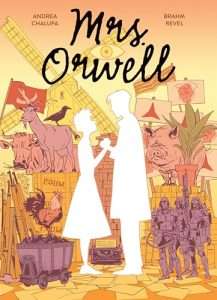 force behind the most famous works published by George Orwell—23rd Street Books dives into the life of Eileen O’Shaughnessy in Mrs. Orwell, written by journalist, author, and filmmaker Andrea Chalupa with art by Brahm Revel.
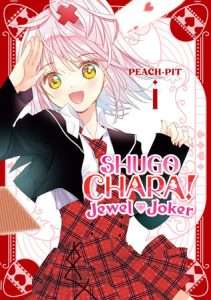 Guardians: rare kids who have tiny magical companions called Guardian Characters, which grant special powers. In fact, where most Guardians have a single Guardian Character each, Amu has four. Perhaps it’s no surprise that she is chosen for a special mission: unraveling a mystery at a prestigious but strange middle school called Arcana Academy.
 impoverished parents. Her new husband, Hans, is dashingly handsome, loves animals, and is pleasant and outgoing in public. But in private, he belittles her and subjects her to sexual violence and humiliation. Her only respite occurs when Hans takes a business trip to Portugal, leaving her to freely study what fascinates her more than anything: flight.

